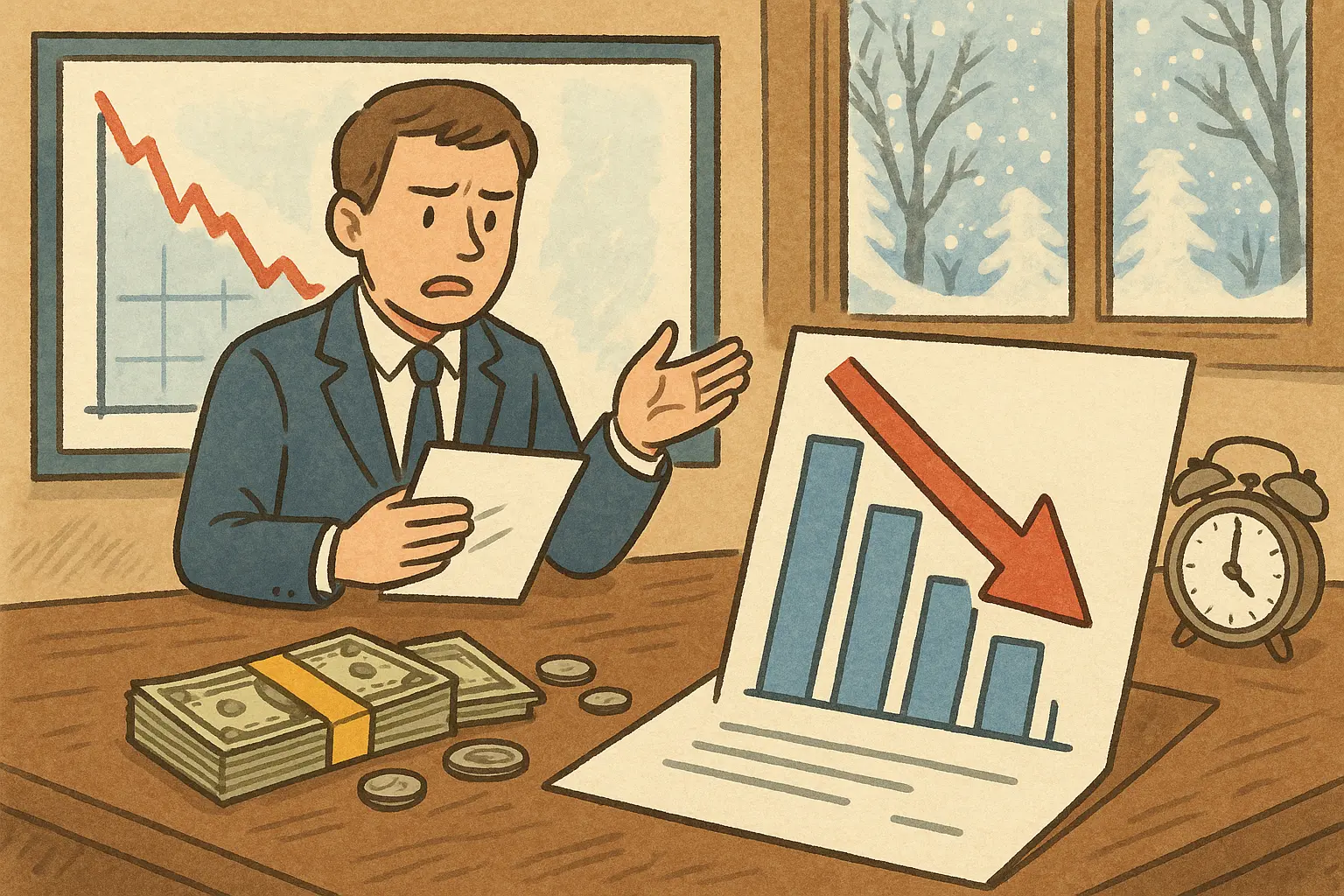
The U.S. Bureau of Labor Statistics will release the delayed January non-farm payrolls data later on Wednesday evening. Investors expect that, following a 50,000 increase in December non-farm employment, January will see a gain of 70,000 jobs. The unemployment rate is expected to remain steady at 4.4%, while the year-over-year growth rate of average hourly earnings is forecasted to slow from 3.8% to 3.6%. TD Securities analysts are more cautious, predicting only a 45,000 increase in employment for January.
January Non-Farm Payrolls Could Surprise to the Downside: Investors Expect Only 70,000 Jobs Added
The U.S. Bureau of Labor Statistics (BLS) will release the delayed January non-farm employment data at 13:30 GMT on Wednesday. The employment report could increase volatility in the dollar, as investors seek new insights into the Federal Reserve’s future interest rate path. Last week, the BLS announced that due to a partial government shutdown, the official employment report scheduled for Friday would be postponed. On Tuesday, the House of Representatives passed a bill to end the shutdown, and the agency announced it will release labor market data on Wednesday, February 11.
Investors expect that, following a 50,000 increase in December non-farm employment, January will see a rise of 70,000 jobs. During this period, the unemployment rate is expected to stay at 4.4%, while the annual wage inflation rate measured by average hourly earnings is forecasted to slow from 3.8% to 3.6%. The market consensus of 70,000 is already very low, well below the pre-pandemic normal of 180,000, but some institutions are even more pessimistic.
TD Securities analysts, when forecasting the employment report, expect moderate growth, with only a 45,000-job increase. “We expect the private sector to add 40,000 jobs, and the government sector to add 5,000 jobs. We anticipate private sector growth will be mainly concentrated in healthcare and construction. We expect the unemployment rate to remain stable at 4.4%. The labor market still shows low layoffs and low hiring rates. Average hourly earnings could increase by 0.3% month-over-month, and 3.3% year-over-year.”
Three Expectations for the Non-Farm Payrolls Report
Market consensus: 70,000 jobs added, unemployment rate 4.4%, annual wage growth 3.6%
TD Securities: only 45,000 jobs added, annual wage growth 3.3% (more pessimistic)
White House: Hassett says low employment figures shouldn’t cause panic; productivity gains are key
Although the difference between 45,000 and 70,000 may seem small, in the current sensitive market environment, if actual data approaches 45,000, it could be interpreted as a sign of a significant economic slowdown, triggering market turbulence. Conversely, if the number exceeds expectations and reaches over 100,000, it could reignite inflation concerns and dampen rate cut expectations.
Warsh Nomination and the Dollar’s Strength: The Logic
The dollar has strengthened this month, driven by market optimism over Kevin Warsh’s nomination as the new Federal Reserve Chair. Warsh previously served as a Fed governor from 2006 to 2011. Additionally, increased volatility in precious metals (especially silver and gold) and equities has also supported the dollar. Consequently, the dollar index, which measures the dollar against a basket of six major currencies, rose by 0.5% in the first week of February.
The logic behind the dollar’s rally on Warsh’s nomination seems contradictory. Markets generally expect Warsh to adopt dovish policies (more rate cuts), which would typically weaken the dollar. So why is the dollar strengthening? Possible explanations include: markets believe Warsh will maintain independence and a hawkish stance for a period to build credibility, Warsh’s nomination itself signals increased policy certainty (ending the long-standing conflict between Trump and Powell), or it’s simply a technical rebound (the dollar corrected after hitting multi-year lows in January).
Federal Reserve Governor Lisa Cook recently stated that last year’s rate cuts will continue to support the labor market. She further noted that the labor market has stabilized and is roughly in balance, adding that policymakers remain highly attentive to potential rapid changes. Similarly, Governor Philip Jefferson believes the employment market is currently in a low-hiring, low-layoff equilibrium.
The CME FedWatch Tool indicates that the market currently assigns about a 15% probability to a 25 basis point rate cut in March. This very low probability suggests that markets hardly expect a rate cut in March. A more realistic timing for a rate cut might be June (at the first meeting after Warsh’s appointment) or later. This “no rate cut” expectation is negative for risk assets, as the prolonged high-interest-rate environment could last longer than previously anticipated.
Three Data Scenarios and Market Reactions
If the non-farm payrolls data disappoints, with fewer than 30,000 jobs added and an unexpected rise in the unemployment rate, the dollar could weaken, opening the door for euro-dollar gains. Such extremely weak data might trigger recession fears but would also reinforce expectations for rate cuts. For risk assets like Bitcoin, this is a double-edged sword: recession fears are short-term negatives, but rate cut expectations are medium-term positives.
On the other hand, if non-farm payrolls meet or exceed expectations (70,000 or more), it could reaffirm the likelihood of no policy change next month. Market positioning suggests that, under this scenario, the dollar could still rise. Investors will also pay close attention to wage inflation details in the report. If average hourly earnings growth is below expectations, even if employment data aligns with forecasts, the dollar might struggle to strengthen.
Danish bank analysts believe that slowing wage growth could negatively impact consumer spending and pave the way for dovish Fed actions. “The Challenger job cut report showed that layoffs in January exceeded expectations, and December’s JOLTS job openings were 6.5 million (versus a consensus of 7.2 million). As a result, the December ratio of job openings to unemployed persons fell to 0.87. This cooling is generally a good sign of slowing wage growth and could threaten the outlook for private consumption.”
For the crypto market, the impact of non-farm data follows this path: data → Fed policy expectations → dollar trend → risk asset prices. If weak data sparks rate cut expectations, it could initially be negative (recession fears) but later positive (liquidity easing). If data meets expectations, the market may remain range-bound. If data exceeds expectations strongly, it could dampen rate cut hopes and continue to pressure Bitcoin.
Disclaimer: The information on this page may come from third parties and does not represent the views or opinions of Gate. The content displayed on this page is for reference only and does not constitute any financial, investment, or legal advice. Gate does not guarantee the accuracy or completeness of the information and shall not be liable for any losses arising from the use of this information. Virtual asset investments carry high risks and are subject to significant price volatility. You may lose all of your invested principal. Please fully understand the relevant risks and make prudent decisions based on your own financial situation and risk tolerance. For details, please refer to
Disclaimer.
Related Articles
U.S. stock index futures for the three major benchmarks surge in the short term, with Dow Jones futures up 0.12%
Gate News, on April 7, U.S. stock index futures for the three major benchmarks saw a quick rise. Dow Jones index futures rose 0.12%, S&P 500 index futures rose 0.03%, and Nasdaq 100 index futures edged down 0.01%.
GateNews43m ago
China’s central bank boosted its gold reserves to 2,313.48 tons by the end of March, marking the 17th consecutive month of accumulation
Gate News update: On April 7, the People’s Bank of China reported that its gold reserves at the end of March were 74.38 million ounces (about 2,313.48 tons), up 160k ounces (about 4.98 tons) month-over-month. Gold reserves at the end of February were 74.22 million ounces (about 2,308.5 tons). This is the 17th consecutive month that the People’s Bank of China has added to its gold holdings.
GateNews1h ago
U.S. Bankruptcy Filings Surge 14% in the First Quarter: High Inflation and Debt Pressures Drive a Wave of Small Business and Personal Bankruptcies
In the first quarter of 2026, U.S. bankruptcy filings surged 14% to 150,009 cases, largely driven by high inflation, high interest rates, and tightened credit, with small businesses hit the hardest. Personal bankruptcies also rose, as household debt and high borrowing costs intensified financial pressure. Lawmakers have proposed raising the thresholds for bankruptcy reorganization, but the economic outlook remains bleak.
GateNews2h ago
Polymarket: Iran ceasefire probability is only 3%, and the surge in oil prices is hitting Bitcoin’s price trend
The expected shift around Iran ceasefire talks is toward pessimism, and the trading market shows that the ceasefire success rate set by Trump is only 3%. Iran rejected a short-term ceasefire proposal and put forward long-term political and economic conditions, further compressing the room for negotiations. Energy markets are strengthening in expectation, and the probability that WTI crude for April, which hit $120, rises to 77%. Crypto assets such as Bitcoin are under pressure during the phase when risk appetite declines, with capital flowing into traditional safe-haven assets.
GateNews2h ago
Japan and South Korea’s stock markets closed higher on April 7; South Korea’s KOSPI index rose 0.82%
Gate News message: On April 7, Japan’s Nikkei 225 Index (Japan’s benchmark stock market index) closed up 15.88 points, a gain of 0.03%, at 53,429.56 points. On April 7, South Korea’s KOSPI Index (South Korea’s composite stock price index) closed up 44.44 points, a gain of 0.82%, at 5,494.77 points.
GateNews2h ago
U.S. technology industry employment fell for the second consecutive year, with 43k fewer jobs over the past year
Gate News news: On April 7, the number of jobs in the U.S. technology industry has fallen for the second consecutive year; over the past year, it has decreased by 43k positions. According to Cointelegraph, the number of job losses in this round exceeds the declines during the 2020 pandemic and the 2008 financial crisis.
GateNews2h ago


