GateUser-da94ddbc

vip
Age 1.5 Yıl
Peak Tier 0
No content yet
#XRPMarketAnalysis
XRP Market Analysis — Deep Dive (April 2026)
Current Price: $1.438 (-2.64% in 24h)
Step 1 — Market Overview: Consolidation with Underlying Strength
The current structure of XRP reflects a classic consolidation phase following recent volatility across the broader crypto market. While the token has experienced a short-term decline of 2.64% over the last 24 hours, this movement should not be viewed in isolation. On a broader timeframe, XRP remains relatively strong, maintaining a +4.51% gain over the past 7 days. This divergence between short-term weakness and medium-term stre
XRP1,68%
BTC4,64%
SOL3,68%
Vortex_King
#XRPMarketAnalysis
XRP Market Analysis — Deep Dive (April 2026)
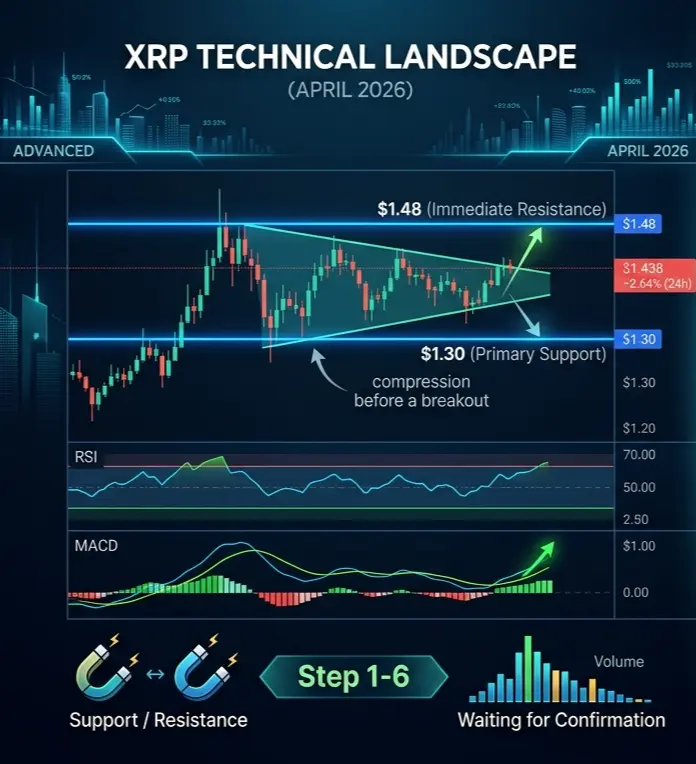
Current Price: $1.438 (-2.64% in 24h)
Step 1 — Market Overview: Consolidation with Underlying Strength
The current structure of XRP reflects a classic consolidation phase following recent volatility across the broader crypto market. While the token has experienced a short-term decline of 2.64% over the last 24 hours, this movement should not be viewed in isolation. On a broader timeframe, XRP remains relatively strong, maintaining a +4.51% gain over the past 7 days. This divergence between short-term weakness and medium-term strength is a key characteristic of markets that are preparing for their next directional move. At a current market capitalization of approximately $88.1 billion, XRP continues to hold its position among the top-tier digital assets. This ranking reflects sustained investor confidence, liquidity depth, and institutional relevance. The recent decline is mainly due to profit-taking after a rally and overall market hesitation led by Bitcoin’s sideways movement, but importantly, XRP has not broken any critical support levels, showing buyers are still active.
Step 2 — Price Structure: Understanding the Current Range
XRP is currently trading within a defined range between approximately $1.30 and $1.48. This range represents a balance between buyers and sellers. At the lower boundary, buyers consistently defend the price, while at the upper boundary, sellers cap the upside. This repeated interaction forms a compression pattern where volatility decreases but pressure builds. Such conditions often lead to a strong breakout once the range is resolved.
Step 3 — Support Zones: Where Demand Dominates
The primary support at $1.30–$1.32 is the most critical level and acts as the foundation of the current structure. Multiple retests have confirmed strong demand here, making it a key line in the sand for bulls. If this level holds, the bullish structure remains intact and increases the probability of upward movement. However, if it breaks, selling pressure could increase rapidly. The secondary support at $1.20–$1.23 serves as a deeper accumulation zone where institutional buyers are likely to step in. This level would act as a safety net in case of a deeper correction and could provide a stronger base for recovery.
Step 4 — Resistance Zones: Barriers to Bullish Expansion
Immediate resistance at $1.45–$1.48 is currently limiting price movement and aligns with recent highs. A breakout above this level would signal renewed bullish momentum and attract more buyers. The next key resistance is $1.60, a psychological level where selling pressure historically increases. Breaking this would confirm a stronger bullish trend. On a larger scale, $2.00+ remains a major resistance and long-term target, supported by institutional projections, though reaching this level requires broader market support.
Step 5 — Technical Indicators: Mixed but Promising
Technical indicators show mixed signals across timeframes. In the short term, the market shows slight bearish pressure but also early signs of recovery through MACD signals. On the 4-hour chart, the trend remains strong with bullish momentum and signs of potential continuation. On the daily timeframe, overbought conditions suggest caution, meaning the market may need to cool off before the next major move.
Step 6 — Volume Analysis: The Confirmation Factor
Volume remains relatively low compared to what is needed for a strong breakout. This indicates that traders are waiting for confirmation before entering large positions. For XRP to break above $1.48 convincingly, a noticeable increase in volume is required. Without this, any breakout attempt may fail and result in a false move.
Step 7 — Fundamental Strength: The Real Driver
XRP’s strength is not only technical but also fundamental. Over $1.5 billion in ETF inflows highlights strong institutional interest. The integration of XRP into the Solana ecosystem as wXRP expands its use case in DeFi. Additionally, the introduction of zero-knowledge proof technology enhances privacy and makes XRP more attractive for institutional use. Ongoing regulatory developments further improve market confidence and reduce long-term uncertainty.
Step 8 — Market Sentiment and Positioning
Market sentiment remains highly positive, with around 96% bullish sentiment across social platforms. This reflects strong confidence among investors. However, extreme optimism can sometimes lead to short-term corrections, as markets tend to move against overly crowded positions.
Step 9 — Relative Performance
XRP is slightly underperforming Bitcoin, indicating that capital is still concentrated in BTC. This is typical before an altcoin rally. Once capital rotates into altcoins, XRP could see stronger upward movement and outperform the broader market.
Step 10 — What Comes Next
If XRP successfully breaks above $1.48 with strong volume, the next target will be $1.60, followed by higher levels such as $1.80 and $2.00. If the price fails to hold above $1.30, a drop toward $1.20 becomes likely. The most probable scenario for now is continued consolidation within the range until a breakout occurs.
Final Conclusion
XRP is currently at a critical decision point. The market is not weak but preparing for its next major move. Strong fundamentals, institutional support, and growing adoption provide a solid foundation for future growth. However, short-term technical signals suggest caution. The key levels to watch are $1.30 for support and $1.48 for resistance. The breakout from this range will determine the next major trend. 🚀
repost-content-media
  • Reward
  • Comment
  • Repost
  • Share
#GatePreIPOsLaunchesWithSpaceX
The launch of pre-IPO opportunities tied to companies like SpaceX represents a powerful shift in how retail and global investors engage with innovation-driven markets. Traditionally, access to pre-IPO equity has been restricted to venture capital firms, institutional investors, and ultra-high-net-worth individuals. Now, with platforms exploring structured exposure to such assets, the boundaries between private and public market participation are beginning to blur. This evolution is not just about accessibility—it reflects a deeper transformation in capital flow
BTC4,64%
ETH3,89%
Vortex_King
#GatePreIPOsLaunchesWithSpaceX
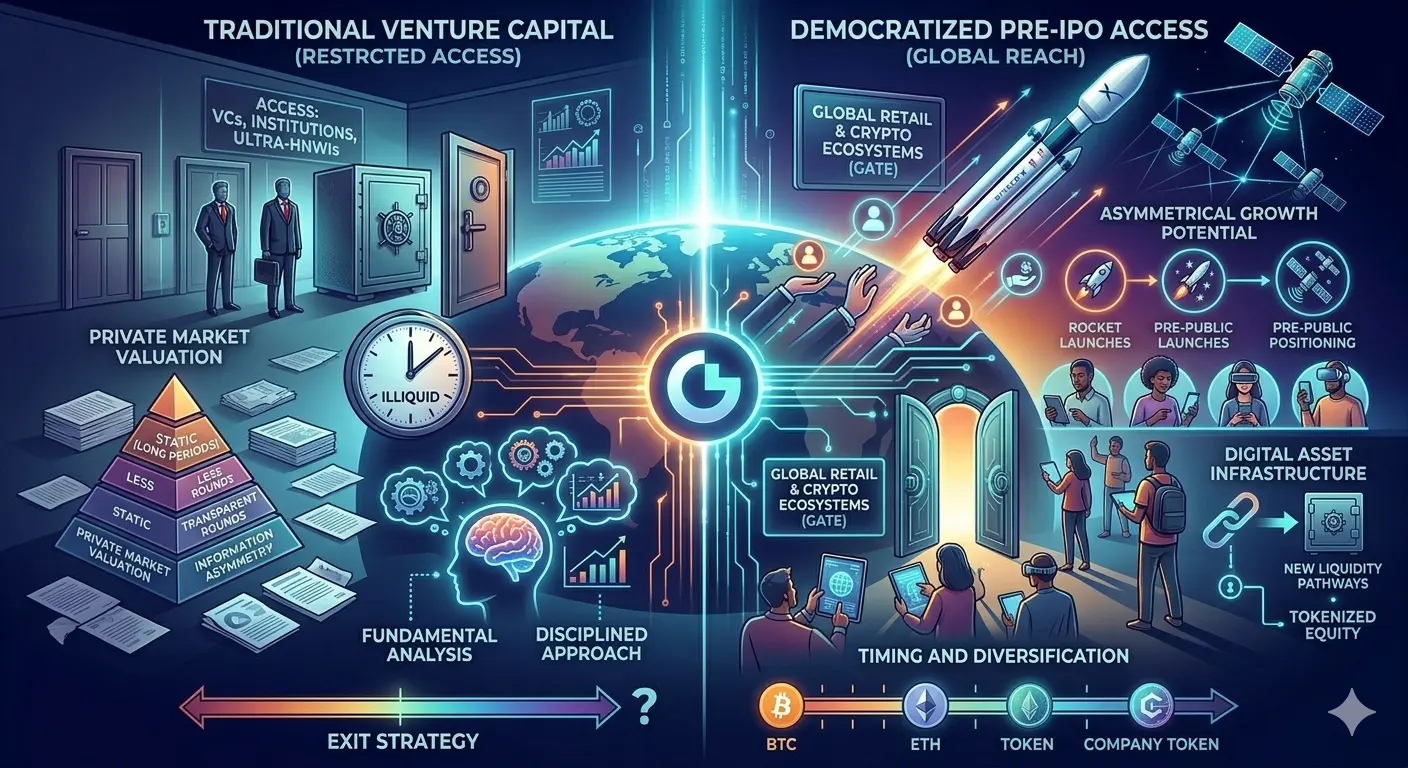
The launch of pre-IPO opportunities tied to companies like SpaceX represents a powerful shift in how retail and global investors engage with innovation-driven markets. Traditionally, access to pre-IPO equity has been restricted to venture capital firms, institutional investors, and ultra-high-net-worth individuals. Now, with platforms exploring structured exposure to such assets, the boundaries between private and public market participation are beginning to blur. This evolution is not just about accessibility—it reflects a deeper transformation in capital flow dynamics, where early-stage valuation growth is no longer exclusively captured behind closed doors.
At its core, the appeal of pre-IPO exposure lies in asymmetry. Companies like SpaceX operate at the frontier of technological disruption, spanning aerospace, satellite communications, and global connectivity infrastructure. Their growth trajectory is not linear—it is exponential, driven by innovation cycles, government partnerships, and commercial scalability. Entering at a pre-IPO stage allows participants to position themselves before broader market pricing mechanisms take over. However, this also introduces complexity, as valuations in private markets are often less transparent and influenced by negotiated funding rounds rather than continuous price discovery.
The integration of such opportunities into crypto-native ecosystems like Gate signals a convergence between traditional finance and digital asset infrastructure. This convergence is significant because it introduces new liquidity pathways. While private equity is historically illiquid, tokenized or structured representations can potentially enable more flexible participation models. This does not eliminate risk—in fact, it redefines it. Investors must now evaluate not only the underlying company fundamentals but also the structure, custody, and market mechanics of the platform offering exposure.
From a macro perspective, this move aligns with a broader trend of capital seeking high-growth sectors amid global economic uncertainty. Aerospace and space technology, once considered speculative, are now viewed as strategic industries. Governments and corporations alike are investing heavily in satellite networks, defense capabilities, and space exploration. SpaceX stands at the center of this transformation, with projects like Starlink reshaping global internet infrastructure and Falcon launches redefining cost efficiency in space travel. This positions the company not just as a technological leader, but as a critical node in future global systems.
However, the narrative is not purely bullish. Pre-IPO exposure carries inherent risks that require disciplined analysis. Valuation inflation, limited liquidity, regulatory uncertainty, and information asymmetry all play significant roles. Unlike publicly traded assets, where price reacts instantly to news and data, private market valuations can remain static for extended periods, creating a disconnect between perceived and real value. For participants entering through platforms, understanding these nuances is essential to avoid mispricing risk.
Another critical dimension is timing. Entering a pre-IPO opportunity too early can result in long holding periods with limited exit options, while entering too late reduces the upside potential that makes such investments attractive in the first place. This creates a strategic balancing act—investors must assess not only the company’s growth trajectory but also its proximity to public listing or liquidity events. In the case of SpaceX, speculation around future IPO possibilities has persisted for years, yet the company continues to leverage private funding to maintain strategic flexibility.
The psychological aspect of such opportunities cannot be overlooked. The association with a high-profile innovator like Elon Musk amplifies interest and often fuels hype-driven participation. While this can accelerate demand, it can also distort rational decision-making. Successful positioning in pre-IPO markets requires detachment from narrative-driven excitement and a focus on fundamentals, structure, and long-term viability.
From a trading and portfolio perspective, exposure to pre-IPO assets should be approached as a high-risk, high-reward allocation rather than a core holding. Diversification remains critical, especially in volatile macro environments where liquidity conditions can shift rapidly. Integrating such opportunities alongside more liquid assets like Bitcoin or Ethereum can create a balanced strategy that captures both stability and growth potential.
Ultimately, the introduction of pre-IPO access within crypto ecosystems represents more than just a new product—it signals a structural evolution in global finance. It challenges traditional gatekeeping mechanisms and opens the door to a more inclusive, albeit complex, investment landscape. For those who understand the risks and mechanics, it offers a unique opportunity to participate in the early stages of transformative companies. For those driven purely by hype, it presents a landscape where missteps can be costly.
As the market continues to evolve, the key to navigating opportunities like this lies in informed positioning, disciplined risk management, and a clear understanding of both the upside potential and the structural limitations. The intersection of private equity and digital assets is still in its early stages, but its trajectory suggests that it will play an increasingly important role in shaping how capital flows into the industries defining the future.
repost-content-media
  • Reward
  • Comment
  • Repost
  • Share
#Gate13thAnniversaryLive
The 13th anniversary celebration of Gate is more than just a milestone event—it represents a defining moment in the evolution of crypto exchanges from simple trading platforms into full-scale financial ecosystems. Over the years, the digital asset industry has transitioned through cycles of speculation, innovation, regulation, and institutional adoption. Events like this are not only symbolic of longevity but also reflective of resilience in a market that constantly tests the strength of its participants. Reaching a 13-year mark in crypto is not ordinary—it signals ad
Vortex_King
#Gate13thAnniversaryLive
The 13th anniversary celebration of Gate is more than just a milestone event—it represents a defining moment in the evolution of crypto exchanges from simple trading platforms into full-scale financial ecosystems. Over the years, the digital asset industry has transitioned through cycles of speculation, innovation, regulation, and institutional adoption. Events like this are not only symbolic of longevity but also reflective of resilience in a market that constantly tests the strength of its participants. Reaching a 13-year mark in crypto is not ordinary—it signals adaptability, strategic foresight, and the ability to navigate both bull euphoria and bear market pressure.
At the core of this anniversary lies the concept of community. Unlike traditional financial systems, crypto thrives on participation, engagement, and shared growth. The live celebration is not just about announcements or rewards—it is about reinforcing the relationship between the platform and its global user base. Traders, builders, investors, and enthusiasts all play a role in shaping the ecosystem. This interaction creates a feedback loop where innovation is driven not only by internal development but also by external demand and user behavior patterns.
From a market perspective, anniversary events often align with increased activity. Promotions, trading competitions, and reward campaigns introduce short-term liquidity boosts, attracting both new and existing participants. However, beyond the surface-level excitement, these events also provide insight into the platform’s strategic direction. Product launches, feature upgrades, and ecosystem expansions announced during such milestones often indicate where the next phase of growth will occur. This is particularly important in a competitive landscape where exchanges are no longer differentiated solely by fees, but by the depth of their offerings and the strength of their infrastructure.
Another critical layer to consider is timing. The anniversary arrives at a period where the broader crypto market is in a transitional phase—balancing between caution and opportunity. Sentiment remains mixed, with fear still influencing retail behavior, while institutional interest continues to build in the background. In such an environment, a large-scale event acts as a catalyst. It can reignite engagement, shift short-term sentiment, and even influence trading volume patterns across key assets. This does not necessarily change macro trends, but it can accelerate momentum within existing structures.
The psychological dimension of events like #Gate13thAnniversaryLive is equally significant. Markets are not driven purely by data—they are driven by perception. A well-executed global event creates a sense of momentum and confidence. It reminds participants that the ecosystem is active, evolving, and far from stagnant. This perception can translate into increased participation, which in turn feeds into liquidity and price action. In many cases, the emotional impact of such events can temporarily outweigh fundamental factors, especially in shorter timeframes.
From a strategic standpoint, experienced traders approach these events with a dual mindset. On one hand, they recognize the potential for volatility spikes driven by increased activity and promotional incentives. On the other hand, they remain cautious of overextension, understanding that hype-driven moves can reverse quickly once the event concludes. This balance between participation and discipline is what separates reactive trading from calculated positioning.
The anniversary also highlights the broader narrative of exchange evolution. Modern platforms are no longer limited to spot and futures trading—they encompass staking, structured products, AI-driven tools, and even access to emerging sectors like pre-IPO opportunities. This diversification is not accidental; it reflects a shift toward creating all-in-one financial hubs that can retain users within a single ecosystem. The more integrated the platform becomes, the stronger its network effect grows.
Looking forward, the significance of this milestone extends beyond the event itself. It sets the stage for the next phase of competition within the industry. As more platforms innovate and expand, the focus will increasingly shift toward user experience, security, transparency, and ecosystem depth. Anniversary events serve as checkpoints—moments where platforms showcase their progress and outline their vision for the future.
In conclusion, #Gate13thAnniversaryLive is not just a celebration—it is a signal. A signal of endurance in a volatile industry, a signal of growth in an evolving market, and a signal of opportunity for those who understand how to navigate both the excitement and the underlying structure. For participants, the key lies in observing beyond the surface—analyzing not just what is presented, but what it implies for the future of trading, liquidity, and digital asset innovation.
repost-content-media
  • Reward
  • Comment
  • Repost
  • Share
#WCTCTradingChallengeShare8MUSDT
The WCTC Trading Challenge is not just another competition—it is a high-stakes environment where strategy, discipline, and psychological control determine success far more than luck or short-term intuition. With an $8M USDT prize pool on the line, the structure of this challenge transforms trading from a routine activity into a performance battlefield where every decision carries amplified consequences. Understanding how to navigate this environment requires more than technical knowledge; it demands a complete framework that integrates market analysis, risk ma
BTC4,64%
Vortex_King
#WCTCTradingChallengeShare8MUSDT
The WCTC Trading Challenge is not just another competition—it is a high-stakes environment where strategy, discipline, and psychological control determine success far more than luck or short-term intuition. With an $8M USDT prize pool on the line, the structure of this challenge transforms trading from a routine activity into a performance battlefield where every decision carries amplified consequences. Understanding how to navigate this environment requires more than technical knowledge; it demands a complete framework that integrates market analysis, risk management, and behavioral control.
At the foundation of any successful approach in this challenge is clarity of market structure. Crypto markets operate in cycles—accumulation, expansion, distribution, and correction. Identifying which phase the market is currently in is critical because each phase requires a different strategy. During accumulation, patience and positioning matter more than aggressive trading. During expansion, momentum strategies dominate. In distribution, risk management becomes the priority, and in correction phases, capital preservation is the ultimate goal. Traders who fail to adapt their approach to these phases often find themselves consistently on the wrong side of the market.
Equally important is the ability to read liquidity. Markets move toward liquidity, not away from it. This means understanding where stop-loss clusters, leverage positions, and large orders are likely placed. Price often makes sharp moves not because of new information, but because it is seeking liquidity pockets. In a competition setting, this becomes even more critical, as many participants place predictable trades, creating exploitable patterns. Recognizing these patterns allows experienced traders to position themselves ahead of the crowd rather than reacting after the move has already begun.
Risk management is the defining factor between survival and elimination. In a high-reward competition, the temptation to over-leverage is strong, but this is also the fastest path to failure. Sustainable performance comes from controlled exposure—risking a small percentage of capital per trade, maintaining consistent position sizing, and avoiding emotional decision-making after wins or losses. The objective is not to win every trade, but to ensure that losses remain small while gains are allowed to grow. This asymmetry is what compounds performance over time.
Another key element is timing. Not every moment in the market offers opportunity. High-probability setups occur when multiple factors align—technical levels, volume confirmation, and broader market context. Entering trades without this confluence reduces the probability of success. In a competitive environment, patience becomes a strategic advantage. Waiting for the right setup often outperforms constant activity, especially when the majority of participants are driven by the urge to trade frequently.
Psychology plays an even larger role than strategy. The presence of a leaderboard, rewards, and competition creates emotional pressure that can distort decision-making. Fear of missing out leads to chasing trades, while the desire to recover losses can result in impulsive risk-taking. Successful traders maintain emotional neutrality—they treat each trade as an independent event, unaffected by previous outcomes. This level of control is what allows them to execute their strategy consistently, regardless of external pressure.
Market correlation is another dimension that cannot be ignored. Even when trading altcoins or derivatives, the influence of major assets like Bitcoin remains significant. Sudden movements in Bitcoin can override individual setups, leading to unexpected volatility across the market. Monitoring these correlations helps traders anticipate broader shifts and adjust their positions accordingly, rather than being caught off guard by systemic moves.
Leverage, when used correctly, can enhance performance—but it must be applied with precision. Instead of maximizing leverage on every trade, experienced traders use it selectively, increasing exposure only when confidence in a setup is high and risk is clearly defined. This controlled use of leverage allows for capital efficiency without exposing the account to unnecessary liquidation risk.
Another often overlooked aspect is adaptability. Markets are dynamic, and strategies that work in one condition may fail in another. The ability to recognize when a strategy is no longer effective and adjust accordingly is crucial. This requires continuous observation, self-assessment, and a willingness to evolve. In a competition setting, where conditions can shift rapidly, adaptability becomes a key differentiator.
From a strategic perspective, there are generally two approaches to such competitions. The first is a conservative approach, focusing on steady growth, low risk, and consistent performance. This approach increases the probability of finishing in a respectable position but may limit the ability to reach the very top of the leaderboard. The second is an aggressive approach, involving higher risk and aiming for exponential gains. While this can lead to top rankings, it also significantly increases the probability of early elimination. The optimal strategy often lies somewhere in between—balancing calculated risk with disciplined execution.
The final and perhaps most important element is consistency. One successful trade does not define a winning trader, just as one loss does not define a failure. What matters is the ability to execute a strategy repeatedly over time. Consistency in analysis, execution, and risk management is what ultimately determines performance in a competition of this scale.
In conclusion, #WCTCTradingChallengeShare8MUSDT is not just a test of trading skill—it is a comprehensive evaluation of a trader’s ability to think, adapt, and perform under pressure. The combination of market complexity and competitive intensity creates an environment where only those with a structured, disciplined approach can succeed. For participants, the goal should not simply be to chase rewards, but to refine their trading framework, strengthen their psychological resilience, and develop the habits that lead to long-term success in the ever-evolving world of crypto trading.
repost-content-media
  • Reward
  • Comment
  • Repost
  • Share
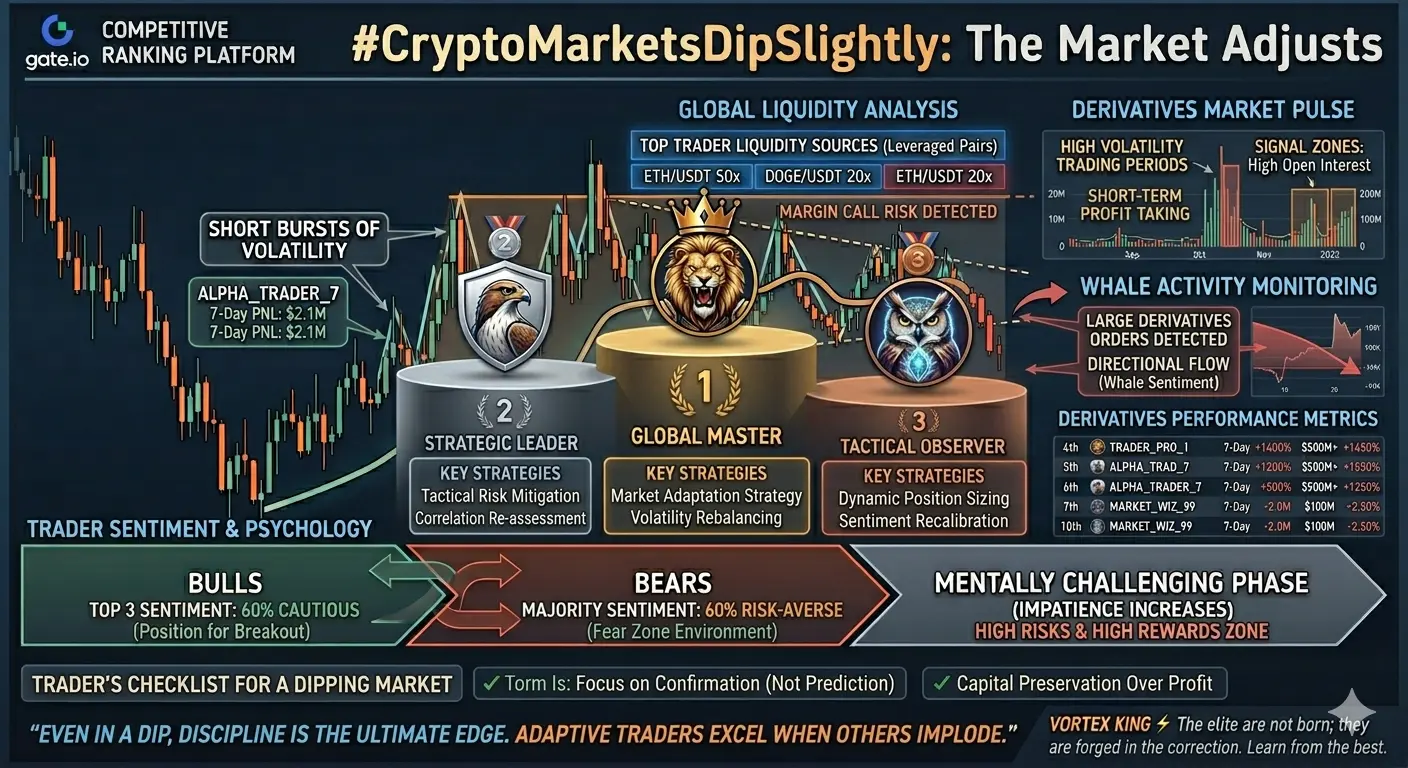
#CryptoMarketsDipSlightly
The recent dip across the crypto market is not a breakdown—it is a controlled cooling phase within a broader structural cycle. After periods of upward momentum or localized rallies, markets naturally retrace to rebalance liquidity, reset leverage, and establish stronger foundations for the next move. The slight decline seen in major assets like Bitcoin and Ethereum reflects this process rather than signaling a definitive trend reversal.
At the core of this dip lies profit-taking behavior. When prices move up, early participants begin to secure gains, creating tempora
BTC4,64%
ETH3,89%
Vortex_King
#CryptoMarketsDipSlightly
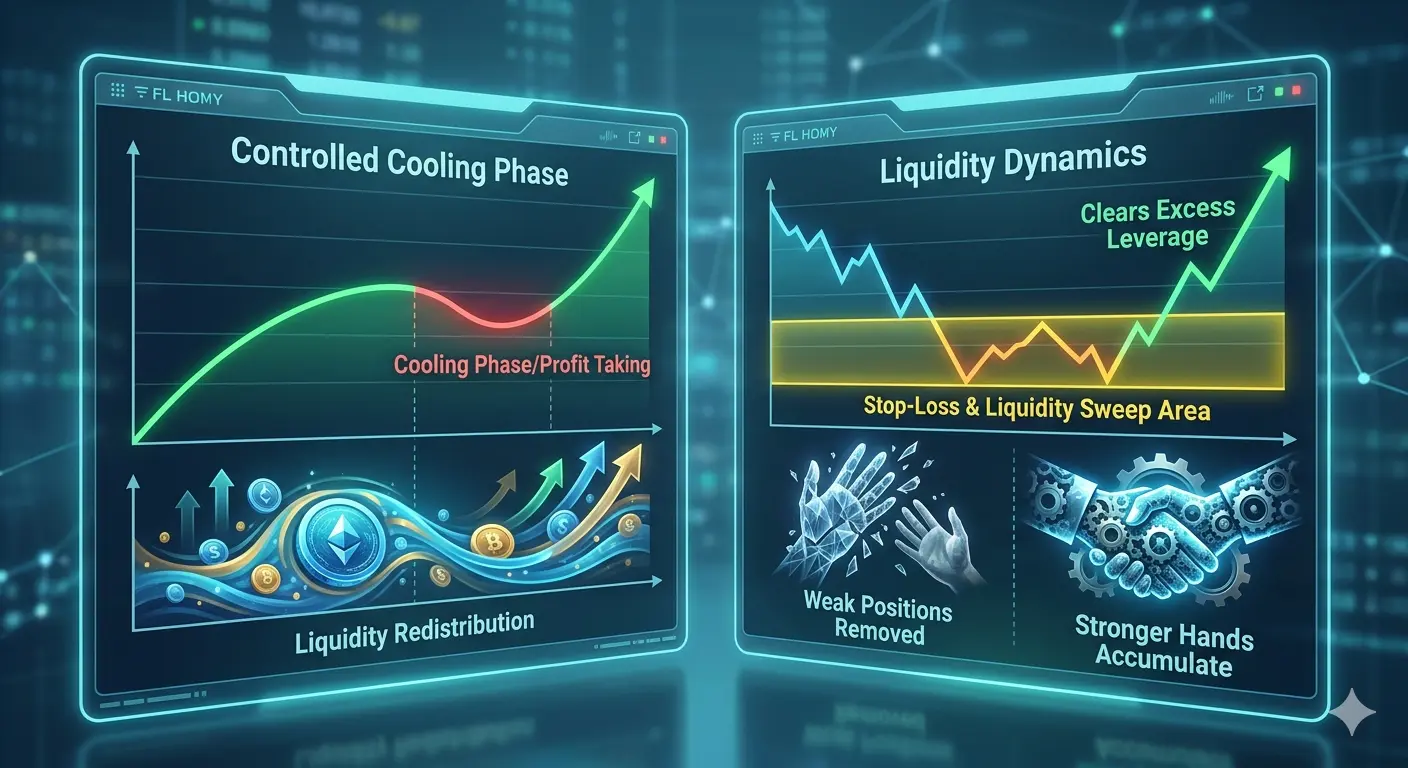
The recent dip across the crypto market is not a breakdown—it is a controlled cooling phase within a broader structural cycle. After periods of upward momentum or localized rallies, markets naturally retrace to rebalance liquidity, reset leverage, and establish stronger foundations for the next move. The slight decline seen in major assets like Bitcoin and Ethereum reflects this process rather than signaling a definitive trend reversal.
At the core of this dip lies profit-taking behavior. When prices move up, early participants begin to secure gains, creating temporary selling pressure. This is especially common in short-term rallies where leveraged positions amplify both upside and downside moves. As these positions unwind, the market experiences a pullback—not because the underlying narrative has changed, but because liquidity is being redistributed. This redistribution is essential for sustaining longer-term trends, as it prevents overextension and reduces the risk of sharper corrections later.
Another key factor is liquidity dynamics. Markets tend to move toward areas where orders are concentrated, including stop-loss levels and liquidation zones. A slight dip often serves to sweep these areas, triggering forced selling and clearing excess leverage from the system. This process, while uncomfortable for traders caught on the wrong side, ultimately strengthens the market by removing weak positions and allowing stronger hands to accumulate.
Sentiment also plays a crucial role. Even a minor decline can shift short-term perception from optimism to caution. Traders who entered late in the previous move may interpret the dip as the بداية of a larger سقوط, leading to reactive selling. However, experienced participants recognize this pattern as a typical “shakeout” phase—where the market tests conviction before deciding its next direction. The key distinction lies in whether the dip is accompanied by structural breakdowns or simply occurs within an intact range.
From a technical perspective, the market remains within a decision zone. Support levels are being tested, but not decisively broken, while resistance levels continue to cap upward movement. This creates a range-bound environment where price oscillates as it searches for direction. Such conditions often precede larger moves, as compression builds energy that eventually releases through a breakout or breakdown.
Macro factors cannot be ignored in this context. Broader financial conditions, including movements in equity markets and expectations around monetary policy, influence crypto behavior. For instance, strength in traditional markets or shifts in interest rate expectations tied to institutions like the Federal Reserve can impact liquidity flows into risk assets. A slight dip in crypto may therefore reflect not only internal dynamics but also external pressures adjusting capital allocation across markets.
The role of institutional activity is another important dimension. Large players often use periods of weakness to accumulate positions without significantly moving the market. This accumulation typically occurs quietly, during low-volatility pullbacks, rather than during aggressive rallies. As a result, what appears to be weakness on the surface may actually be a phase of strategic positioning by entities with longer time horizons.
Altcoins tend to amplify these movements. During a dip, they often experience larger percentage declines compared to Bitcoin, due to lower liquidity and higher volatility. This can create the illusion of widespread weakness, even when the overall market structure remains stable. However, it also sets the stage for stronger rebounds once stability returns, as oversold conditions attract opportunistic buyers.
Trader psychology during this phase is critical. The market is effectively testing patience and discipline. Those who react impulsively to minor dips often exit positions prematurely, while those who maintain a structured approach can use these moments to refine entries or strengthen existing positions. The difference between success and failure in such environments often comes down to emotional control rather than analytical ability.
Looking ahead, the key question is whether this dip evolves into a deeper correction or resolves as a continuation pattern. If support levels hold and buying interest returns, the market is likely to resume its upward trajectory. If, however, support breaks with strong volume and follow-through, it could signal a transition into a more extended consolidation or correction phase. At present, the evidence leans toward a temporary pullback rather than a structural shift.
In conclusion, #CryptoMarketsDipSlightly should be viewed in context. Markets do not move in straight lines, and minor declines are a natural and necessary part of any healthy trend. This phase represents a recalibration of liquidity, sentiment, and positioning. For informed participants, it is less a cause for concern and more an opportunity to observe, adapt, and prepare for the next decisive move.
repost-content-media
  • Reward
  • Comment
  • Repost
  • Share
#USIranTensionsShakeMarkets
The latest wave of volatility across global markets reflects a familiar but powerful catalyst—geopolitical tension between the United States and Iran. When uncertainty rises at the geopolitical level, markets do not wait for outcomes—they react to risk itself. This is exactly what we are witnessing now: a rapid repricing of assets driven not by confirmed events, but by the احتمال of escalation and its potential economic consequences.
At the center of this reaction lies the concept of risk-off behavior. Investors, when faced with uncertainty, tend to reduce exposure
BTC4,64%
Vortex_King
#USIranTensionsShakeMarkets
The latest wave of volatility across global markets reflects a familiar but powerful catalyst—geopolitical tension between the United States and Iran. When uncertainty rises at the geopolitical level, markets do not wait for outcomes—they react to risk itself. This is exactly what we are witnessing now: a rapid repricing of assets driven not by confirmed events, but by the احتمال of escalation and its potential economic consequences.
At the center of this reaction lies the concept of risk-off behavior. Investors, when faced with uncertainty, tend to reduce exposure to volatile or speculative assets and shift toward perceived safe havens. This shift can impact equities, commodities, and digital assets simultaneously. In the crypto space, assets like Bitcoin often experience mixed reactions—sometimes benefiting from their “alternative asset” narrative, while at other times declining due to overall liquidity contraction. The direction depends largely on the intensity and duration of the geopolitical shock.
One of the most immediate channels through which these tensions affect markets is energy. The strategic importance of the Strait of Hormuz cannot be overstated. A significant portion of the world’s oil supply passes through this narrow corridor, making it highly sensitive to any military or سیاسی disruption. Even the suggestion of conflict in this region can drive oil prices higher, which in turn feeds into inflation expectations globally. Rising inflation complicates monetary policy decisions, particularly for central banks like the Federal Reserve, which must balance economic growth with price stability.
This creates a cascading effect across financial markets. Higher oil prices can ضغط corporate margins, reduce consumer spending power, and slow economic growth. Equity markets may react negatively, while bond yields and currency markets adjust to new expectations. Crypto markets, being highly sensitive to liquidity conditions, often mirror these broader shifts. When liquidity tightens, speculative assets tend to face selling pressure, even if their long-term narratives remain intact.
However, the reaction is not purely fundamental—it is deeply psychological. Markets are forward-looking mechanisms that price in احتمالات rather than certainties. The coexistence of diplomatic signals and military readiness creates ambiguity, and ambiguity fuels volatility. Traders are forced to navigate multiple scenarios at once: escalation, de-escalation, or prolonged tension. This leads to fragmented positioning, where different participants act on different assumptions, amplifying price swings in both directions.
From a structural perspective, such घटनाएँ often trigger liquidity hunts. Sudden news-driven moves push prices into areas where stop losses and leveraged positions are concentrated. This can result in sharp, short-lived spikes or drops that are less about long-term direction and more about clearing positions. Once this process is complete, the market often stabilizes and reassesses based on more concrete developments.
Another important layer is the role of institutional players. Large funds and المؤسسات do not react impulsively to headlines—they adjust exposure based on risk models and احتمالات. In periods of geopolitical तनाव, they may reduce leverage, increase cash positions, or hedge through commodities and derivatives. These adjustments influence overall market liquidity and can either dampen or amplify volatility depending on the scale of repositioning.
For traders, the key challenge in such an environment is distinguishing between noise and signal. Not every headline leads to sustained impact, and overreacting to short-term moves can be costly. A disciplined approach involves monitoring key indicators—oil prices, official statements, military movements, and macroeconomic data—while maintaining strict risk management. Flexibility becomes essential, as the situation can evolve rapidly.
Looking ahead, the most likely scenario is continued volatility rather than immediate resolution. Geopolitical tensions of this nature rarely resolve quickly; they tend to unfold in stages, with periods of escalation followed by temporary stabilization. Markets will continue to react to each development, creating opportunities for those who can navigate the uncertainty with clarity and control.
In conclusion, #USIranTensionsShakeMarkets is a reminder that financial systems are deeply interconnected with geopolitical realities. Price movements are not driven solely by charts or data, but by the complex interplay of السياسة, الاقتصاد, and human perception. For market participants, success in such conditions depends not on predicting exact outcomes, but on managing risk, staying informed, and adapting to a constantly shifting landscape.
repost-content-media
  • Reward
  • Comment
  • Repost
  • Share
#RAVECrashes90%
The sudden 90% collapse of RAVE is not just a dramatic price event—it is a textbook example of how fragile low-liquidity crypto ecosystems can be when structural weaknesses, sentiment shifts, and liquidity dynamics collide. Moves of this magnitude rarely happen without underlying vulnerabilities, and when they do, they expose the hidden mechanics that many traders overlook during bullish phases.
At the surface level, a 90% drop appears shocking. But in reality, such crashes are often the result of a chain reaction rather than a single trigger. The first layer is liquidity. Sma
RAVE-13,29%
BTC4,64%
Vortex_King
#RAVECrashes90%
The sudden 90% collapse of RAVE is not just a dramatic price event—it is a textbook example of how fragile low-liquidity crypto ecosystems can be when structural weaknesses, sentiment shifts, and liquidity dynamics collide. Moves of this magnitude rarely happen without underlying vulnerabilities, and when they do, they expose the hidden mechanics that many traders overlook during bullish phases.
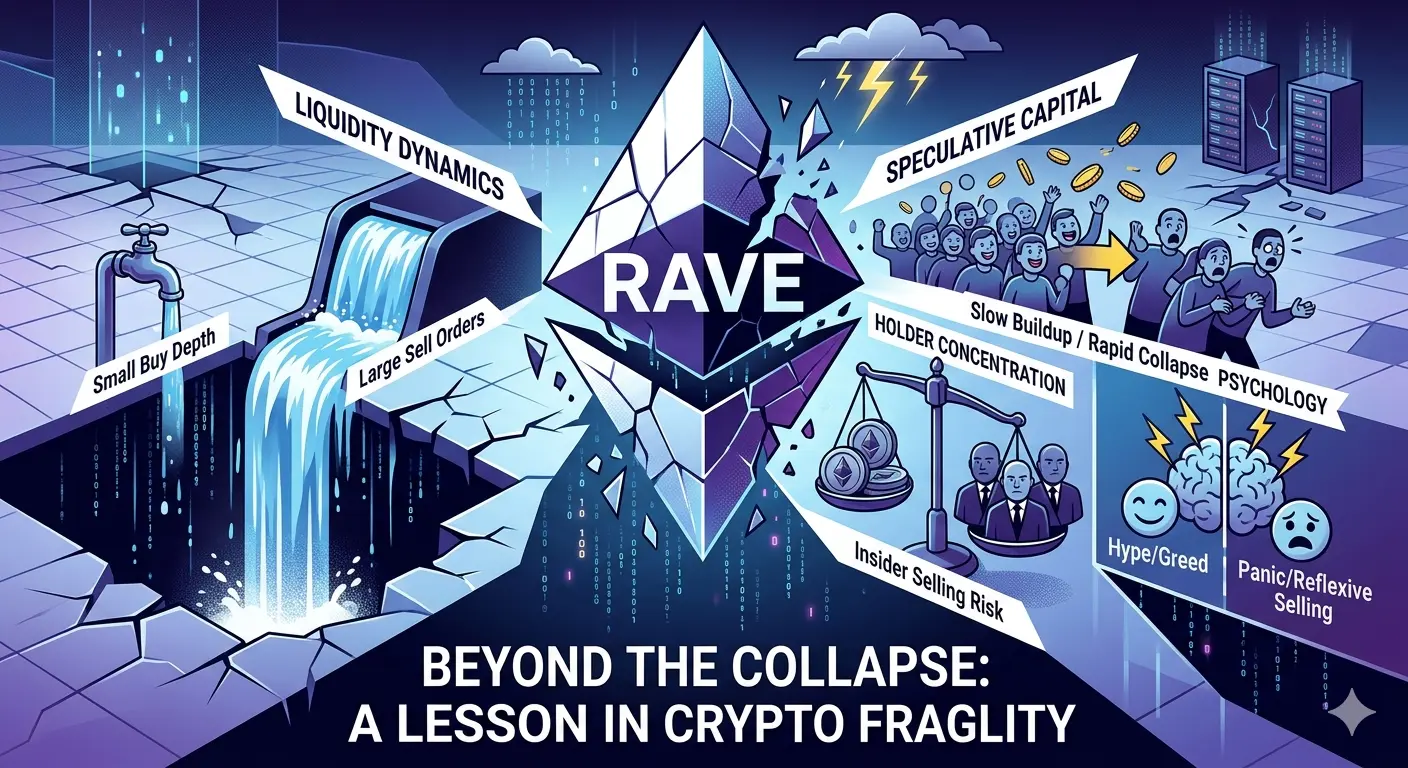
At the surface level, a 90% drop appears shocking. But in reality, such crashes are often the result of a chain reaction rather than a single trigger. The first layer is liquidity. Smaller-cap tokens like RAVE typically operate with thin order books, meaning there is limited depth to absorb large sell orders. When selling pressure increases—even slightly—it can cascade rapidly because there are not enough buyers at each price level. This creates a vacuum where price falls aggressively until it finds new demand, often much lower than expected.
The second layer is positioning. In many cases, tokens that experience rapid growth attract speculative capital rather than long-term investors. These participants are highly sensitive to momentum. When price rises, they buy aggressively. But when momentum shifts—even slightly—they exit just as quickly. This creates asymmetrical behavior: slow buildup followed by rapid collapse. Once the first wave of selling begins, it triggers stop losses, margin calls, and panic exits, accelerating the سقوط.
Another critical factor is concentration of supply. Many smaller tokens have a significant portion of their supply held by a limited number of wallets—often early investors, insiders, or liquidity providers. If even one or two large holders decide to exit, the impact on price can be devastating. This is especially true if those exits occur during periods of low liquidity or weak market sentiment. In such scenarios, the market does not have the capacity to absorb the selling, leading to extreme downward moves.
The role of narrative cannot be ignored. Tokens like RAVE often gain traction through hype cycles—social media momentum, community excitement, and speculative narratives about future potential. While these narratives can drive rapid upside, they rarely provide strong downside support. Once confidence breaks, the same narrative-driven participants who fueled the rally may disappear, leaving the token without a stable base of demand. This shift from hype to fear is one of the fastest transitions in crypto markets.
From a structural perspective, crashes of this scale often involve liquidity extraction. Early participants or large holders may use periods of high demand to distribute their holdings gradually. Once distribution is complete and buying pressure weakens, the market becomes vulnerable. A relatively small trigger—such as negative news, reduced volume, or broader market weakness—can then initiate the collapse. What appears as a sudden crash is often the final phase of a longer distribution process.
Market psychology amplifies the move. When traders see a sharp decline, they do not wait for confirmation—they react immediately. Fear replaces logic, and selling becomes reflexive. This creates a feedback loop where falling prices trigger more selling, which leads to further price declines. In extreme cases, the market enters a state of capitulation, where participants exit positions at any available price simply to avoid further losses.
The broader market environment also plays a role. If the overall crypto market is experiencing uncertainty or reduced liquidity, smaller tokens are disproportionately affected. Assets like Bitcoin often act as liquidity anchors. When Bitcoin is stable, risk appetite tends to increase, supporting altcoins. But when uncertainty rises, capital flows back into larger, more established assets, leaving smaller tokens exposed. This rotation of capital can accelerate declines in weaker projects.
For traders, events like this highlight the importance of risk management. The potential for high returns in small-cap tokens is always paired with the risk of extreme downside. Position sizing becomes critical. Allocating too much capital to a single high-risk asset can lead to significant losses if the market moves unexpectedly. Stop-loss strategies, while not perfect, can help limit downside exposure in volatile conditions.
Another key lesson is the importance of due diligence. Understanding tokenomics, liquidity distribution, and holder concentration can provide early warning signs. Projects with highly concentrated supply or low liquidity are inherently more volatile. While they may offer short-term opportunities, they require a different risk approach compared to more established assets. Ignoring these factors often leads to being caught off guard when volatility spikes.
From an opportunity perspective, such crashes can create two distinct scenarios. In some cases, the token may stabilize and recover partially if the underlying project retains value and community support. In other cases, the crash marks the نهاية of the project’s lifecycle, where confidence never returns and liquidity continues to fade. Distinguishing between these outcomes requires careful analysis of fundamentals, not just price action.
The long-term implication of events like #RAVECrashes90% is a reminder of how early-stage crypto markets still behave. Unlike traditional financial systems, where safeguards and regulations limit extreme moves, crypto remains largely driven by open market forces. This creates both opportunity and risk. Extreme gains are possible—but so are extreme losses.
In conclusion, the 90% collapse of RAVE is not an anomaly—it is a reflection of underlying market mechanics. Low liquidity, concentrated supply, speculative positioning, and psychological reactions combined to create a perfect storm. For participants, the takeaway is clear: success in crypto is not just about finding the next big opportunity, but about understanding the risks that come with it. Because in markets like this, the difference between profit and loss is often not timing—it is preparation.
repost-content-media
  • Reward
  • Comment
  • Repost
  • Share
#SaylorReleasesBitcoinTrackerUpdate
The latest Bitcoin Tracker update from Michael Saylor is not just a routine post—it’s a signal that the market has learned to take seriously. Over the past few years, these tracker updates have evolved into a recognizable pattern: whenever Saylor shares his iconic “orange dots” chart, it often precedes a new round of Bitcoin accumulation by his company, Strategy. This makes the update less of a passive data release and more of a strategic message to the market.
At its core, the Bitcoin Tracker reflects Strategy’s long-term accumulation strategy. The company
BTC4,64%
Vortex_King
#SaylorReleasesBitcoinTrackerUpdate
The latest Bitcoin Tracker update from Michael Saylor is not just a routine post—it’s a signal that the market has learned to take seriously. Over the past few years, these tracker updates have evolved into a recognizable pattern: whenever Saylor shares his iconic “orange dots” chart, it often precedes a new round of Bitcoin accumulation by his company, Strategy. This makes the update less of a passive data release and more of a strategic message to the market.
At its core, the Bitcoin Tracker reflects Strategy’s long-term accumulation strategy. The company has transformed itself from a traditional software business into one of the largest institutional holders of Bitcoin. Each dot on the tracker represents a purchase, and over time, these dots form a clear narrative: consistent, aggressive accumulation regardless of market conditions. The recent update continues this narrative, reinforcing the idea that Strategy is not reacting to short-term price movements but executing a long-term conviction-driven strategy.
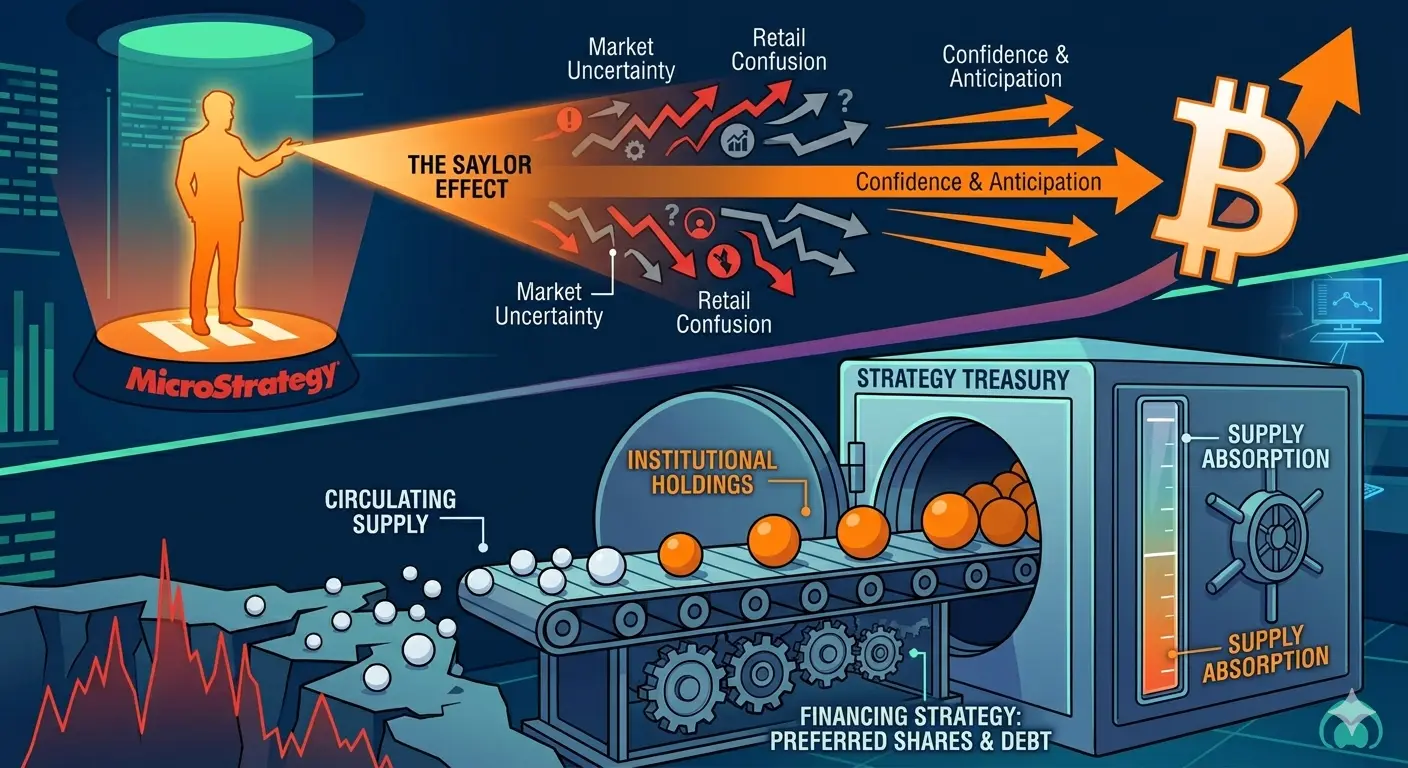
Historically, these updates are rarely random. Saylor often accompanies them with cryptic phrases like “More Orange” or “Stretch the Orange Dots,” which the market has come to interpret as pre-signals of incoming purchases. Data shows that in many cases, an official announcement of new Bitcoin acquisitions follows shortly after such posts. This pattern has created what traders now call the “Saylor Effect”—a psychological and strategic influence where his signals alone can shift market expectations.
What makes this particularly important is timing. These updates often come during periods of uncertainty, consolidation, or even weakness in Bitcoin’s price. Instead of waiting for confirmation or trend reversal, Strategy tends to accumulate during dips or sideways markets. This behavior sends a strong message: institutional conviction is not based on short-term volatility. In fact, recent data shows Strategy continuing to buy Bitcoin even when prices were below its average acquisition cost, reinforcing its long-term outlook.
This approach creates a structural impact on the market. When a large entity consistently buys, it absorbs available supply. Over time, this reduces circulating liquidity and can contribute to upward pressure on price—especially when demand increases. The tracker update, therefore, is not just informational; it’s a preview of potential liquidity shifts. Traders who understand this dynamic do not just watch price—they watch behavior.
Another key layer is financing strategy. Strategy has evolved how it funds these purchases, increasingly using instruments like preferred shares and structured capital rather than relying solely on equity dilution. This allows continued accumulation without significantly weakening shareholder value. It also signals a deeper institutionalization of Bitcoin exposure, where traditional financial tools are being adapted to support digital asset strategies.
From a psychological standpoint, the tracker update plays a powerful role. Markets are narrative-driven, and Saylor has become one of the most influential voices in shaping the Bitcoin narrative. When he signals accumulation, it reinforces confidence among long-term holders and can influence retail sentiment. Even without an immediate purchase, the expectation of one can create bullish anticipation.
However, it’s important to stay grounded. While these signals are historically reliable, they are not guarantees. Official purchases are confirmed through filings, not social media hints. The tracker should be seen as a leading indicator—not a confirmed event. Traders who blindly follow signals without risk management can still get caught in volatility.
From a broader perspective, this update also reflects the evolution of Bitcoin as an institutional asset. Strategy’s goal to continue accumulating—and even target massive long-term holdings—shows that Bitcoin is increasingly being treated as a treasury reserve asset rather than a speculative trade. This shift is critical because it changes how the market behaves. Long-term holders reduce sell pressure, while institutional demand creates a stronger price floor over time.
In conclusion, #SaylorReleasesBitcoinTrackerUpdate is not just a social media moment—it is a strategic signal embedded within a larger accumulation framework. It highlights the power of consistent institutional behavior, the importance of liquidity dynamics, and the growing role of narrative in shaping market sentiment. For traders, the key takeaway is clear: watch not just what the market is doing, but who is accumulating—and how consistently they are doing it.
repost-content-media
  • Reward
  • Comment
  • Repost
  • Share
📊 Crypto Market Update — Mild Dip Phase & Structural Outlook
The crypto market is currently experiencing a slight corrective dip, but the broader structure still remains within a controlled range rather than a full reversal.
🌍 1. What the Market Is Doing Right Now
Across major assets:
📉 Small pullbacks after recent upside attempts
⚖️ Range-bound price action continues
🧲 Liquidity being collected on both sides
⏳ No confirmed trend shift yet
👉 This is a healthy cooling phase, not panic selling.
🪙 2. Bitcoin Price Behavior
Bitcoin is showing:
Controlled retracement after momentum
Buyers ste
BTC4,64%
ETH3,89%
DOGE3,03%
Vortex_King
📊 Crypto Market Update — Mild Dip Phase & Structural Outlook
The crypto market is currently experiencing a slight corrective dip, but the broader structure still remains within a controlled range rather than a full reversal.
🌍 1. What the Market Is Doing Right Now
Across major assets:
📉 Small pullbacks after recent upside attempts
⚖️ Range-bound price action continues
🧲 Liquidity being collected on both sides
⏳ No confirmed trend shift yet
👉 This is a healthy cooling phase, not panic selling.
🪙 2. Bitcoin Price Behavior
Bitcoin is showing:
Controlled retracement after momentum
Buyers stepping in at key demand zones
No structural breakdown confirmed
Liquidity still stacked above resistance
👉 Interpretation: This dip looks more like liquidity reset before next move, not a cycle top signal.
💎 3. Ethereum Market Position
Ethereum is:
Slightly weaker than BTC in momentum
Holding mid-range support structure
Waiting for directional confirmation from BTC
👉 ETH often lags BTC, and currently reflects neutral accumulation pressure.
🐕 4. Meme Coin Reaction
Dogecoin and similar assets:
Higher volatility during dips
Quick liquidations on leveraged longs
Strong bounce attempts after each drop
👉 Meme coins are acting as liquidity shock absorbers in this phase.
🔍 5. Broader Market Sentiment
Current sentiment cycle:
😐 Retail: confused, reacting to every candle
🧠 Smart money: accumulating quietly
⚡ Traders: overreacting to minor dips
👉 This creates false fear during normal correction behavior.
📉 6. Why This Dip Is Happening
Main reasons:
Profit-taking after short-term rallies
Liquidity hunting below recent lows
Derivatives leverage reset
Market preparing for next expansion phase
👉 Nothing here suggests structural breakdown yet.
⚖️ 7. Key Levels Still Matter
Support zones are being defended
Resistance still acts as liquidity magnet
Mid-range consolidation remains active
👉 Market is still inside a decision zone, not a downtrend.
🚀 8. Possible Next Moves
🟢 Bullish Case
Support holds firmly
Rebound with volume
Break above resistance → continuation move
🔴 Bearish Case
Support breaks temporarily
Liquidity flush occurs
Fast recovery after shakeout
⚪ Neutral Case
Continued sideways movement
More time needed for accumulation
🧭 9. Trader Strategy in This Phase
✔ Avoid emotional selling during small dips
✔ Wait for confirmation, not panic reaction
✔ Focus on higher timeframes
✔ Respect liquidity zones
✔ Don’t overtrade range noise
🔥 Final Insight
This dip is not a signal of weakness — it is a structural reset inside an ongoing cycle.
Markets often shake weak hands before the next expansion.
VORTEX KING ⚡
Small dips are not fear — they are positioning.
VORTEX KING ⚡
And strong moves always begin after weak emotions exit the market.
#GateSquareAprilPostingChallenge
repost-content-media
  • Reward
  • Comment
  • Repost
  • Share
#GateSquareAprilPostingChallenge
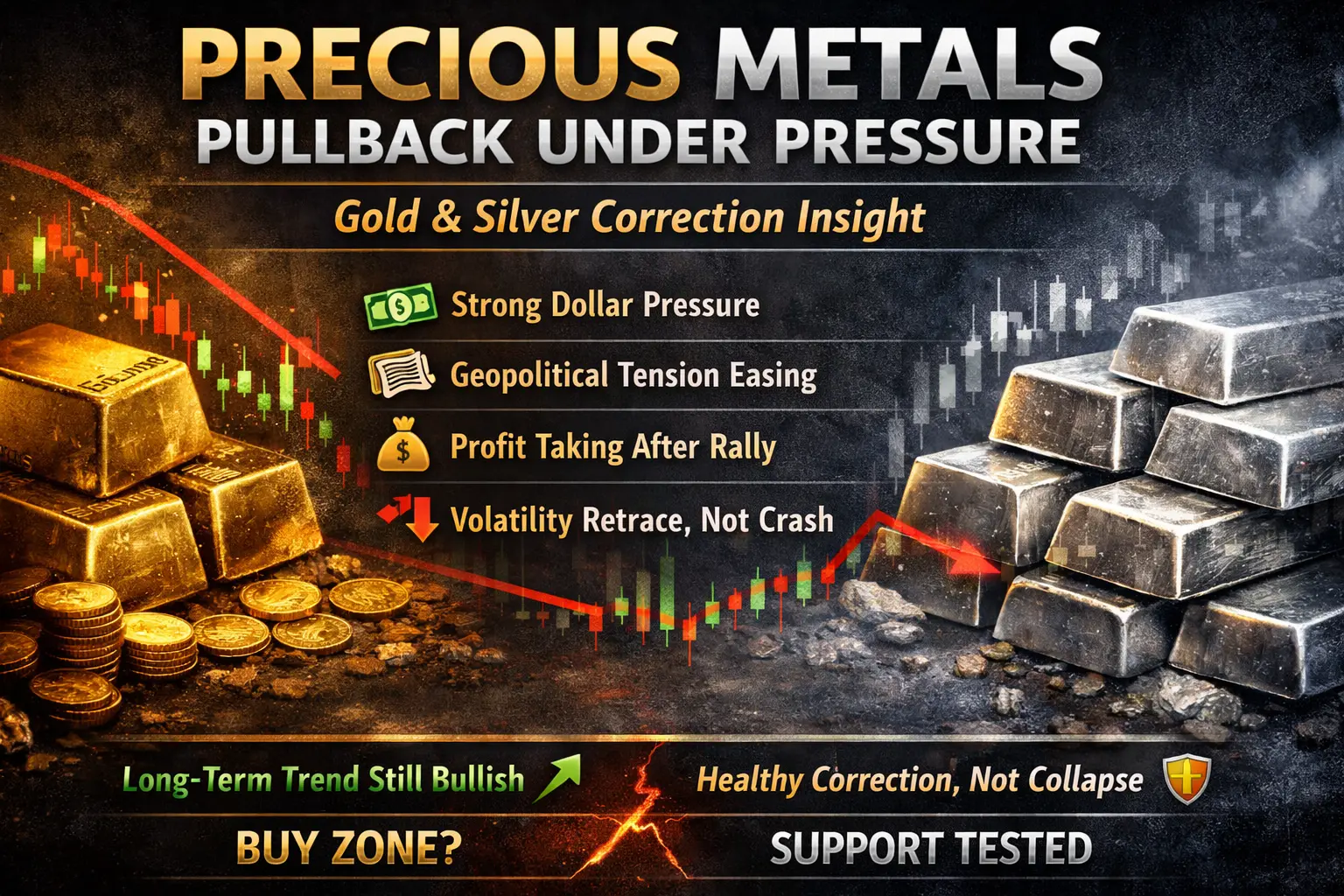
#PreciousMetalsPullBackUnderPressure
📊 Precious Metals Market Update — Gold & Silver Pullback Explained
The precious metals market is currently experiencing a controlled pullback under pressure, driven by a mix of geopolitical cooling, dollar strength, and short-term profit-taking. Despite the dip, the broader trend still reflects a long-term bullish structure with periodic corrections.
🌍 1. What Is Happening Right Now
Across global markets:
📉 Gold is pulling back from recent highs
📉 Silver is showing sharper volatility
💵 U.S. dollar strength is creating
Vortex_King
#GateSquareAprilPostingChallenge
#PreciousMetalsPullBackUnderPressure
📊 Precious Metals Market Update — Gold & Silver Pullback Explained
The precious metals market is currently experiencing a controlled pullback under pressure, driven by a mix of geopolitical cooling, dollar strength, and short-term profit-taking. Despite the dip, the broader trend still reflects a long-term bullish structure with periodic corrections.
🌍 1. What Is Happening Right Now
Across global markets:
📉 Gold is pulling back from recent highs
📉 Silver is showing sharper volatility
💵 U.S. dollar strength is creating headwinds
🧾 Traders are locking profits after strong rallies
⚖️ Market sentiment is shifting to “wait and watch” mode
Gold and
Silver are both reacting to macro pressure rather than structural breakdown.
🧠 2. Why This Pullback Is Happening
🔻 1. Dollar Strength
A stronger USD makes metals more expensive globally, reducing short-term demand.
🔻 2. Geopolitical Relief Moves
Temporary easing in geopolitical tension reduces immediate safe-haven demand (even though risks remain in the background).
🔻 3. Profit-Taking After Strong Rally
Metals had a powerful multi-month rally, so:
Early buyers are locking gains
Short-term traders are exiting positions
🔻 4. Risk Asset Rotation
Some capital is rotating back into equities and energy markets.
📉 3. Gold Market Structure
Gold remains in a bullish macro trend, but short-term:
Support zones are being tested
Momentum is cooling
Volatility is increasing but controlled
📊 Key interpretation: 👉 This is a healthy correction inside a larger uptrend, not a trend reversal.
⚡ 4. Silver Market Behavior (Higher Volatility Zone)
Silver is behaving more aggressively:
Bigger percentage swings than gold
Faster liquidation moves
Higher speculative trading impact
👉 Silver is acting like a leveraged version of gold, meaning:
Gains are sharper
Pullbacks are deeper
Liquidity is thinner
🧠 5. Market Psychology Right Now
Trader sentiment:
😐 Retail: confused by sudden pullback
🧠 Smart money: watching key support zones
⚡ Short-term traders: reacting to volatility
🏦 Institutions: still structurally positioned long-term
👉 This creates fear during normal correction behavior.
📊 6. Key Market Structure Insight
Even with pullback:
Higher timeframe trend is still intact
No confirmed breakdown structure yet
Pullback is occurring inside a broader bullish channel
Liquidity is being retested, not destroyed
👉 This is a re-accumulation phase inside volatility
🚀 7. What Happens Next (Possible Scenarios)
🟢 Bullish Continuation
Support holds
Buyers step in again
Metals resume upward trend after consolidation
🔴 Deeper Correction
Support breaks temporarily
Fast liquidity flush occurs
Strong rebound likely after shakeout
⚪ Sideways Phase
Range formation
Reduced volatility
Market builds energy for next move
⚖️ 8. Key Takeaway
This pullback is:
👉 Macro-driven + profit-taking + liquidity reset
NOT: ❌ Structural market crash
❌ End of precious metals rally
🔥 Final Insight
Precious metals are behaving like a bull market taking a breath, not a market losing strength.
Corrections like this are often what build the foundation for the next major move.
VORTEX KING ⚡
Pullbacks are not weakness—they are reset points.
VORTEX KING ⚡
And strong trends don’t end with fear… they pause before continuation.
repost-content-media
  • Reward
  • Comment
  • Repost
  • Share
#Gate13thAnniversaryDr.HanLetter
🎉 Gate 13th Anniversary — A Vision Beyond Time
The 13th anniversary of Gate.io is not just a celebration of years — it is a reflection of resilience, innovation, and a long-term vision that has survived multiple crypto cycles, global uncertainties, and rapid technological evolution.
At the center of this milestone stands the leadership voice of Dr. Han Lin, whose anniversary letter is more than a message — it is a roadmap for the future of Web3.
📜 The Meaning Behind Dr. Han’s Letter
Dr. Han’s anniversary letter highlights three powerful themes:
1️⃣ Long-Term
Vortex_King
#Gate13thAnniversaryDr.HanLetter
🎉 Gate 13th Anniversary — A Vision Beyond Time
The 13th anniversary of Gate.io is not just a celebration of years — it is a reflection of resilience, innovation, and a long-term vision that has survived multiple crypto cycles, global uncertainties, and rapid technological evolution.
At the center of this milestone stands the leadership voice of Dr. Han Lin, whose anniversary letter is more than a message — it is a roadmap for the future of Web3.
📜 The Meaning Behind Dr. Han’s Letter
Dr. Han’s anniversary letter highlights three powerful themes:
1️⃣ Long-Term Vision Over Short-Term Noise
Crypto markets are known for volatility. From bull runs to harsh corrections, many projects disappear along the way. But Gate.io’s journey shows one key principle:
👉 Sustainable growth beats temporary hype.
While others chased quick profits, Gate focused on building infrastructure, security, and user trust.
2️⃣ Security as the Foundation of Trust
In an industry often shaken by hacks and collapses, security is not optional — it is survival.
Gate.io has consistently invested in:
Advanced risk control systems
Proof of reserves transparency
User asset protection mechanisms
This aligns with the broader need for safer ecosystems in the age of decentralized finance.
3️⃣ Commitment to Web3 Expansion
Dr. Han emphasized the transition from centralized systems toward a decentralized future powered by Web3.
This includes:
DeFi ecosystem growth
NFT innovation
Cross-chain infrastructure
Global adoption strategies
Gate is not just adapting to Web3 — it is actively shaping it.
📊 Market Context — Why This Anniversary Matters
This anniversary comes at a critical time when the crypto market is in a cautious phase:
Liquidity remains selective
Institutional participation is increasing
Regulations are tightening globally
Investors are becoming more risk-aware
In such an environment, platforms with strong fundamentals — like Gate — are more likely to survive and dominate.
🔍 Strategic Position of Gate.io
Gate.io’s current position in the market can be understood through three strengths:
🔹 1. Global Reach
Millions of users across different regions, making it one of the most widely used exchanges.
🔹 2. Product Diversity
From spot trading to derivatives, staking, and Web3 tools — a complete ecosystem.
🔹 3. Innovation Track Record
Early adoption of trends like DeFi, NFTs, and new token listings.
🚀 Future Outlook — What Comes Next?
Based on Dr. Han’s vision, the next phase for Gate.io may include:
Expansion deeper into decentralized finance
Stronger compliance with global regulations
Enhanced AI-driven trading tools
Improved user experience and accessibility
Continued focus on transparency
⚖️ Bullish vs Bearish Perspective
🟢 Bullish Case
Strong leadership vision
Established reputation
Continuous innovation
Growing Web3 ecosystem
🔴 Bearish Risks
Regulatory pressure
Market competition from other exchanges
Crypto market volatility
🧠 Final Thought
The 13th anniversary of Gate.io is not just about looking back — it’s about understanding how far the industry has come and where it is heading.
Dr. Han’s letter sends a clear message:
👉 The future belongs to those who build, not those who chase trends.
In a world where uncertainty dominates, consistency becomes the strongest advantage.
✨ Conclusion
As the crypto industry moves forward, Gate.io’s journey serves as a powerful example of endurance, strategy, and innovation.
The next chapter will not be defined by hype — but by real utility, trust, and long-term value creation.
🔥 Stay sharp. Stay informed. The market rewards patience.
VORTEX KING 👑
VORTEX KING 🚀#GateSquareAprilPostingChallenge
repost-content-media
  • Reward
  • Comment
  • Repost
  • Share
📊 Crypto Market Outlook — Calm Before the Next Big Move
The crypto market is currently in a critical consolidation phase, where price action may look slow on the surface, but underneath, powerful forces are shaping the next major trend.
This is the stage where smart money prepares, while retail investors often become confused due to lack of clear direction.
🌍 Macro Pressure Still Dominating
Global economic conditions continue to influence crypto markets heavily:
Interest rate uncertainty remains high
Inflation trends are still unstable
Geopolitical tensions are affecting investor confidence
BTC4,64%
ETH3,89%
DOGE3,03%
Vortex_King
📊 Crypto Market Outlook — Calm Before the Next Big Move
The crypto market is currently in a critical consolidation phase, where price action may look slow on the surface, but underneath, powerful forces are shaping the next major trend.
This is the stage where smart money prepares, while retail investors often become confused due to lack of clear direction.
🌍 Macro Pressure Still Dominating
Global economic conditions continue to influence crypto markets heavily:
Interest rate uncertainty remains high
Inflation trends are still unstable
Geopolitical tensions are affecting investor confidence
👉 As a result, capital is flowing cautiously, not aggressively.
This creates a market where breakouts fail quickly and fake moves trap traders.
🪙 Bitcoin — The Market Anchor
Bitcoin is still leading the entire crypto ecosystem, and its current structure tells an important story.
📊 Current Situation
Moving in a tight range
Volume is declining
Volatility is compressing
👉 This usually signals that a large move is coming soon.
🧱 Key Levels
Support Zone: Strong buying interest area
Resistance Zone: Sellers defending aggressively
🔮 Outlook
Break above resistance → strong bullish momentum
Break below support → short-term bearish continuation
Right now, Bitcoin is building energy for its next expansion phase.
⚙️ Ethereum — Waiting for Momentum
Ethereum is showing stability but lacks strong bullish momentum.
📊 Current Behavior
Following Bitcoin closely
Holding key support levels
Slower recovery compared to past cycles
🔮 Insight
Ethereum often lags slightly before outperforming in bullish phases.
👉 If the market turns positive, ETH could lead the next altcoin rally.
📉 Altcoins — Pain Phase or Opportunity?
Altcoins are currently under pressure:
Lower liquidity
Sharp corrections
Weak short-term demand
But this phase historically creates:
👉 Best accumulation opportunities
Smart investors are focusing on:
Projects with real utility
Strong development teams
Long-term growth potential
🐕 Meme Coins — High Risk Zone
Coins like Dogecoin continue to attract attention, but remain highly volatile.
⚠️ Reality Check
Driven by hype, not fundamentals
Quick pumps followed by sharp dumps
👉 Best suited for experienced traders, not long-term investors.
📊 Market Structure — What’s Really Happening
The market is forming a classic pattern:
🟡 Accumulation
Big players quietly build positions.
🟠 Consolidation
Price moves sideways, creating uncertainty.
🔵 Expansion (Next Phase)
A strong move will follow — direction depends on macro and liquidity.
🧠 Smart Strategy for This Market
To navigate this phase successfully:
✅ Stay Patient
Avoid overtrading in a sideways market.
✅ Manage Risk
Protect capital — survival is key.
✅ Focus on Quality
Invest in strong assets, not hype-driven projects.
⚖️ Bullish vs Bearish Scenarios
🟢 Bullish Case
Strong support holds
Institutional buying increases
Positive macro developments
🔴 Bearish Case
Support breaks
Fear increases
Liquidity dries up further
🔮 The Bigger Picture
Despite short-term uncertainty, the long-term outlook remains strong because:
Blockchain adoption is increasing
Institutions are entering the space
Technology is evolving rapidly
👉 This phase is not weakness — it is preparation.
✨ Final Insight
Markets reward discipline, not emotion.
Right now is the time to:
Observe
Analyze
Prepare
Because when the next move comes, it will be fast and powerful.
🔥 Conclusion
The crypto market is currently in a low-noise, high-opportunity phase.
Those who stay patient and strategic now will benefit the most when momentum returns.
👑 VORTEX KING
🚀 VORTEX KING
#GateSquareAprilPostingChallenge
repost-content-media
  • Reward
  • Comment
  • Repost
  • Share
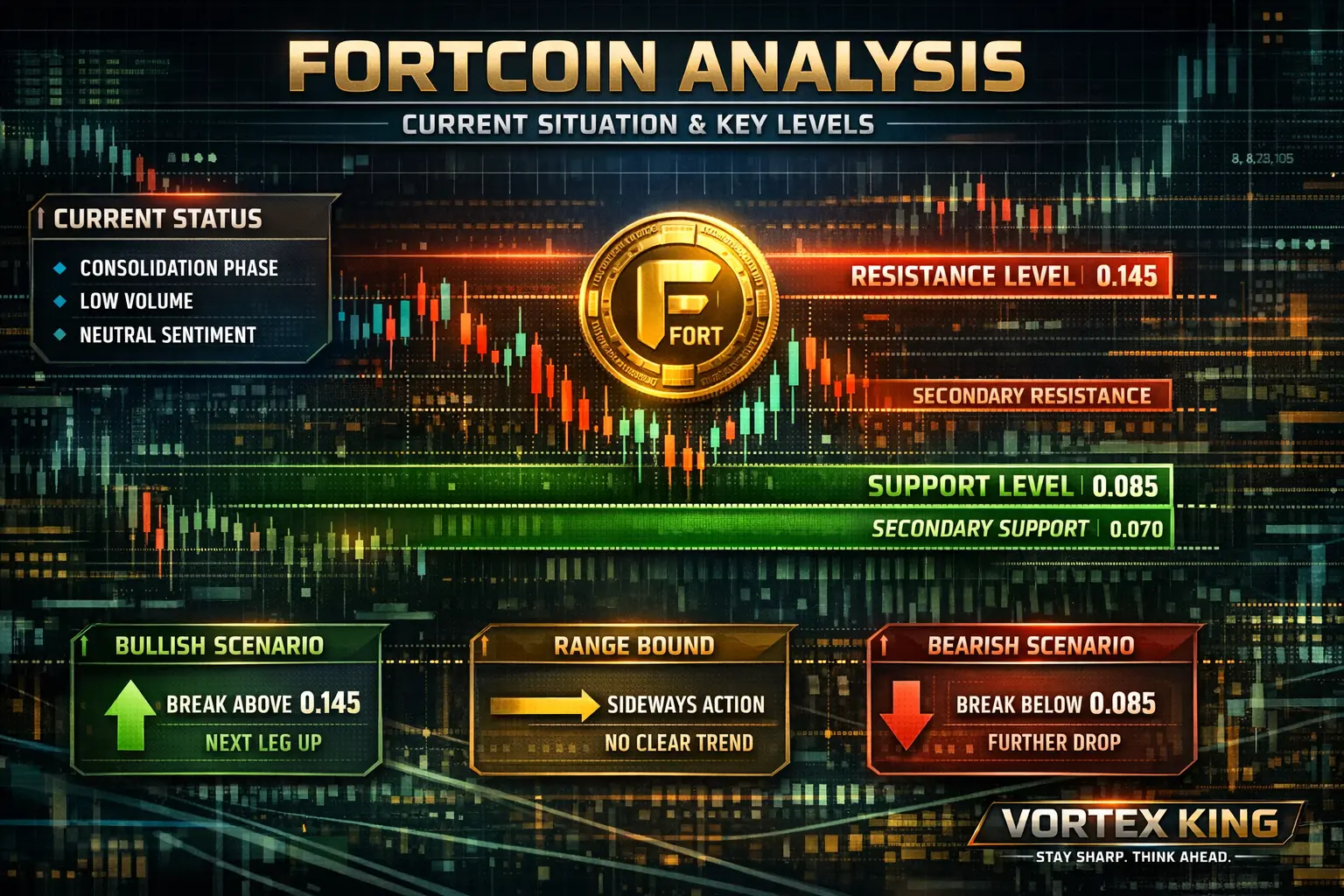
📊 Fortcoin Deep Analysis — Current Situation, Key Levels & Future Outlook
In today’s rapidly evolving crypto landscape, many emerging projects are gaining attention, and Fortcoin is one of those assets that traders and investors are starting to watch closely. While it may not yet have the dominance of giants like Bitcoin or Ethereum, its price behavior, liquidity patterns, and speculative interest make it an important coin to analyze deeply.
This analysis will break down Fortcoin’s current market situation, support and resistance levels, technical structure, sentiment, and future outlook in a
BTC4,64%
ETH3,89%
OP4,81%
Vortex_King
📊 Fortcoin Deep Analysis — Current Situation, Key Levels & Future Outlook
In today’s rapidly evolving crypto landscape, many emerging projects are gaining attention, and Fortcoin is one of those assets that traders and investors are starting to watch closely. While it may not yet have the dominance of giants like Bitcoin or Ethereum, its price behavior, liquidity patterns, and speculative interest make it an important coin to analyze deeply.
This analysis will break down Fortcoin’s current market situation, support and resistance levels, technical structure, sentiment, and future outlook in a detailed, easy-to-understand way.
🧠 1. Current Market Situation
At present, Fortcoin appears to be in a consolidation phase, which is a period where price moves sideways within a defined range. This typically happens after either a strong upward move (rally) or a sharp decline.
📉 Price Behavior
The coin is showing low volatility compared to earlier spikes
Buying and selling pressure are relatively balanced
No clear trend dominance (neither strong bullish nor bearish)
👉 This suggests that the market is in a decision-making phase
🔍 Volume Analysis
Volume is one of the most important indicators of market strength.
Current volume is moderate to low
Lack of strong volume indicates weak conviction
Big players are likely waiting before entering aggressively
👉 Low volume + sideways movement = accumulation or distribution phase
🧭 Market Sentiment
The sentiment around Fortcoin can be described as:
Cautious optimism among early investors
Uncertainty among new traders
Speculative interest remains active
This mixed sentiment creates a range-bound environment where price moves between support and resistance.
📊 2. Technical Structure
Fortcoin’s current structure reflects a classic sideways channel pattern.
🟡 Key Characteristics
Price is bouncing between horizontal levels
No breakout confirmation yet
Wicks indicate rejection on both sides
👉 This means both buyers and sellers are testing control.
📉 Trend Analysis
Short-term trend → Slightly bearish to neutral
Mid-term trend → Consolidation
Long-term trend → Depends on breakout direction
🧱 3. Support Levels
Support levels are areas where buyers step in and prevent further price decline.
🟢 Primary Support Zone
This is the strongest level currently holding price:
👉 A key demand area where:
Buyers accumulate
Selling pressure weakens
Price tends to bounce
If this level holds:
➡️ Market remains stable
If it breaks:
➡️ Bearish continuation likely
🟢 Secondary Support Zone
Below the main support, this level acts as a safety net:
Usually tested during panic or sudden drops
Strong long-term accumulation zone
👉 Break below this = strong bearish signal
🧠 Support Behavior Insight
Repeated testing of support weakens it over time.
👉 If Fortcoin keeps touching support without strong bounce:
⚠️ Breakdown probability increases
🚧 4. Resistance Levels
Resistance levels are areas where selling pressure increases.
🔴 Primary Resistance Zone
This is where price struggles to move higher:
Sellers dominate
Profit-taking happens
Breakouts often fail here
👉 A strong breakout above this level is needed for bullish continuation
🔴 Secondary Resistance Zone
Higher resistance area that acts as a long-term barrier:
Major selling pressure
Psychological level for traders
👉 Breaking this level = trend reversal confirmation
🧠 Resistance Behavior Insight
If price repeatedly tests resistance with higher lows:
👉 This builds pressure for a breakout
📊 5. Price Scenarios
🟢 Bullish Scenario
Fortcoin could move upward if:
Resistance breaks with strong volume
Buyers gain momentum
Market sentiment improves
📈 Expected Outcome
New higher highs
Increased trading activity
Entry of new investors
🔴 Bearish Scenario
Downward movement may occur if:
Support level breaks
Volume increases on selling side
Panic selling begins
📉 Expected Outcome
Sharp drop
Loss of confidence
Extended consolidation or downtrend
🟡 Neutral Scenario
If neither breakout nor breakdown occurs:
👉 Price continues sideways
Low volatility
Range trading opportunities
Market indecision continues
🧠 6. Smart Trading Strategy
✅ Range Trading
Buy near support, sell near resistance
✅ Breakout Trading
Wait for confirmation before entering
✅ Risk Management
Never risk more than you can afford to lose
📉 7. Market Risks
Low liquidity → High volatility risk
Whale manipulation → Sudden moves
Lack of fundamentals → Speculative behavior
🌍 8. Comparison With Major Coins
Compared to Bitcoin:
Much higher risk
Lower stability
Compared to Ethereum:
Less utility
More speculative
👉 Fortcoin is more suitable for short-term opportunities rather than long-term holding unless fundamentals improve.
🔮 9. Future Outlook
Fortcoin’s future depends on:
🔹 Market Conditions
If overall crypto market turns bullish → Fortcoin benefits
🔹 Volume Growth
More users = stronger price movement
🔹 Development Updates
Real utility increases long-term value
✨ 10. Final Insight
Fortcoin is currently in a calm but critical phase.
👉 The next big move will depend on:
Break of resistance (bullish)
Break of support (bearish)
Right now, patience is more important than prediction.
🔥 Conclusion
Fortcoin is not in a trend — it is in a setup phase.
This is where:
Smart traders prepare
Weak traders get confused
Big moves are built quietly
If you understand this phase, you can position yourself ahead of the next major move.
👑 VORTEX KING
🚀 VORTEX KING
#GateSquareAprilPostingChallenge
repost-content-media
  • Reward
  • Comment
  • Repost
  • Share
#GateSquareAprilPostingChallenge
Deep Market Analysis, Trading Psychology & Smart Money Strategy Guide (April 2026)
The crypto market is once again entering a phase of uncertainty, opportunity, and transformation. April 2026 is not just another month—it is a battlefield of narratives, liquidity movements, institutional positioning, and retail emotions. If you truly want to win in this environment, you must go beyond surface-level analysis and start thinking like smart money.
This post is a complete deep-dive analysis of the current market structure, Bitcoin behavior, altcoin rotation, macro i
BTC4,64%
Vortex_King
#GateSquareAprilPostingChallenge
Deep Market Analysis, Trading Psychology & Smart Money Strategy Guide (April 2026)
The crypto market is once again entering a phase of uncertainty, opportunity, and transformation. April 2026 is not just another month—it is a battlefield of narratives, liquidity movements, institutional positioning, and retail emotions. If you truly want to win in this environment, you must go beyond surface-level analysis and start thinking like smart money.
This post is a complete deep-dive analysis of the current market structure, Bitcoin behavior, altcoin rotation, macro influence, and advanced trading strategies that can help you survive and dominate the market.
1. Current Market Overview — Calm Before Expansion or Hidden Distribution?
The market right now is not clearly bullish or bearish. It is transitional.
Bitcoin is showing:
Periods of low volatility
Sudden spikes in liquidity grabs
Fake breakouts and breakdowns
This is a classic accumulation or distribution phase depending on higher timeframe confirmation.
Key Observations:
Liquidity is being engineered above highs and below lows
Retail traders are getting trapped in both directions
Large players are slowly positioning
This phase is dangerous for emotional traders but extremely profitable for those who understand structure.
2. Bitcoin Deep Analysis — The King Still Controls Everything
Bitcoin remains the heartbeat of the crypto market. Every altcoin move is still dependent on BTC direction.
Market Structure:
Higher timeframe: Neutral to slightly bullish
Mid timeframe: Range-bound
Lower timeframe: Highly volatile
Key Levels:
Resistance: Previous highs where liquidity sits
Support: Strong demand zones with unfilled orders
Smart money is doing three main things:
Creating fake breakouts
Inducing retail entries
Reversing price aggressively
This is called liquidity engineering.
3. Smart Money Concepts (ICT) — The Real Edge
To win in this market, you must understand how institutions think.
Core Concepts:
1. Liquidity Pools
These exist:
Above equal highs
Below equal lows
At obvious support/resistance
Price is attracted to liquidity like a magnet.
2. Order Blocks
These are zones where institutions place large orders.
Bullish order block → potential buy zone
Bearish order block → potential sell zone
3. Fair Value Gaps (FVG)
These are inefficiencies in price where the market tends to return.
They act as:
Entry zones
Continuation signals
4. High-Probability BTC Trading Setup
Here is a powerful setup used by professional traders:
Setup: Liquidity Sweep + Market Structure Shift
Step-by-step:
Identify equal highs or lows
Wait for price to sweep that liquidity
Look for a break of structure (BOS)
Enter on retracement to FVG or order block
Example Trade:
Entry: After liquidity sweep and confirmation
Stop Loss: Above/Below the sweep
Take Profit:
TP1: Nearest liquidity zone
TP2: Opposite range boundary
This setup filters out fake moves and aligns you with smart money.
5. Altcoin Market — Silent Opportunities
While Bitcoin is ranging, altcoins are quietly preparing for explosive moves.
Key Observations:
Many altcoins are at strong support
Volume is slowly increasing
Narratives are forming (AI, DeFi, RWA)
Strategy:
Accumulate during fear
Avoid chasing pumps
Focus on strong projects
Altcoins follow this cycle:
Accumulation
Expansion
Distribution
Collapse
Right now, many are in early accumulation.
6. Market Psychology — The Real Battle
Most traders lose not because of bad strategy, but because of bad psychology.
Common Mistakes:
Entering late (FOMO)
Exiting early (fear)
Overtrading
Ignoring risk management
Winning Mindset:
Think in probabilities, not certainty
Accept losses as part of the game
Focus on consistency
The market is designed to:
Trigger your emotions
Force bad decisions
Transfer money from impatient to patient traders
7. Risk Management — The Survival Weapon
Without risk management, even the best strategy will fail.
Golden Rules:
Risk only 1–2% per trade
Always use stop loss
Never revenge trade
Position Sizing:
Your trade size should depend on:
Account size
Stop loss distance
Risk tolerance
This ensures long-term survival.
8. Macro Influence — The Hidden Driver
Crypto does not move in isolation. It is heavily influenced by global events.
Key Factors:
Interest rates
Inflation
War tensions
Oil prices
When uncertainty rises:
Markets become volatile
Liquidity moves faster
Risk assets react sharply
Understanding macro helps you stay ahead.
9. Volatility Strategy — How to Trade Uncertain Markets
In volatile conditions, normal strategies fail. You need adaptive systems.
Strategy: Range Trading + Breakout Confirmation
In Range:
Buy at support
Sell at resistance
On Breakout:
Wait for confirmation
Avoid instant entries
Look for retest
This reduces false signals.
10. Chart-Based Visual Trading Guide (Conceptual)
Imagine this structure:
Price forms equal highs
Breaks above (liquidity grab)
Drops aggressively
Forms bearish structure
This is a trap for breakout traders.
Smart traders:
Wait
Observe
Enter after confirmation
11. Future Outlook — What Comes Next?
The market is preparing for a big move.
Two Possible Scenarios:
Bullish Case:
BTC breaks resistance
Strong volume follows
Altcoins explode
Bearish Case:
BTC fails at resistance
Drops to sweep lower liquidity
Panic selling occurs
Most Likely:
A liquidity sweep on both sides before real direction.
12. Final Strategy Blueprint
To succeed in April 2026:
Follow This System:
Identify liquidity
Wait for sweep
Confirm structure shift
Enter with discipline
Manage risk strictly
Avoid:
Random trades
Emotional decisions
Over-leverage
Conclusion
The crypto market is not random. It is a carefully engineered system driven by liquidity, psychology, and institutional behavior.
If you:
Understand smart money concepts
Control your emotions
Apply risk management
You can turn uncertainty into opportunity.
April 2026 is not just another trading period—it is a test of discipline, patience, and intelligence.
Those who adapt will win. Those who chase will lose.
Stay sharp. Stay patient. Trade like smart money.
VORTEX KING
VORTEX KING
repost-content-media
  • Reward
  • Comment
  • Repost
  • Share
#CircleToLaunchCirBTC
🚀 Deep Institutional & Market Analysis — The Next Evolution of Tokenized Bitcoin
The launch of cirBTC by Circle represents far more than just another wrapped Bitcoin product. It is a strategic financial infrastructure move that could redefine how Bitcoin interacts with decentralized finance, institutional capital, and global liquidity systems.
This analysis explores cirBTC in depth — its design, its economic implications, the power shift it represents, and the long-term consequences for the crypto market.
🧠 Understanding cirBTC at a Fundamental Level
At its core, cirBT
BTC4,64%
WBTC4,14%
TOKEN11,42%
Vortex_King
#CircleToLaunchCirBTC
🚀 Deep Institutional & Market Analysis — The Next Evolution of Tokenized Bitcoin
The launch of cirBTC by Circle represents far more than just another wrapped Bitcoin product. It is a strategic financial infrastructure move that could redefine how Bitcoin interacts with decentralized finance, institutional capital, and global liquidity systems.
This analysis explores cirBTC in depth — its design, its economic implications, the power shift it represents, and the long-term consequences for the crypto market.
🧠 Understanding cirBTC at a Fundamental Level
At its core, cirBTC is a tokenized representation of Bitcoin, issued by Circle, where each unit is backed by 1:1 real Bitcoin reserves.
But the deeper significance lies not in the concept of wrapping Bitcoin — that already exists — but in who is doing it and how it is structured.
Key Structural Elements:
Fully collateralized by native Bitcoin
Designed for institutional-grade usage
Built with real-time transparency mechanisms
Issued within a centralized but regulated framework
Targeted for integration across multiple blockchain ecosystems
This transforms Bitcoin from a passive store of value into a programmable, yield-generating financial instrument.
⚙️ Why This Move Is Strategically Critical
1. Bitcoin Is Still “Idle Capital” at Scale
Despite being the largest digital asset in the world, Bitcoin remains:
Non-yield-bearing
Limited in programmability
Underutilized in financial systems
This creates a massive inefficiency.
cirBTC aims to convert idle Bitcoin into productive capital, enabling it to participate in:
Lending markets
Liquidity provisioning
Collateralized finance
Automated trading strategies
This is a capital efficiency upgrade for the entire Bitcoin ecosystem.
2. The Institutional Gateway Effect
Institutional investors — hedge funds, asset managers, and financial institutions — require:
Regulatory clarity
Custodial security
Auditable transparency
Operational reliability
Circle is positioning cirBTC as a trusted gateway that bridges traditional finance with crypto markets.
This is critical because institutions collectively control trillions of dollars in capital. Even a small allocation into tokenized Bitcoin products could:
Increase market liquidity dramatically
Stabilize volatility over time
Accelerate adoption across global markets
3. Competing for Bitcoin Liquidity Dominance
cirBTC enters a competitive landscape where multiple forms of wrapped Bitcoin already exist.
However, the competition is not just about technology — it is about trust, liquidity control, and ecosystem dominance.
The key question becomes:
👉 Who controls the largest share of tokenized Bitcoin liquidity?
Because whoever controls liquidity:
Influences DeFi markets
Gains fee revenue
Shapes financial infrastructure standards
Becomes deeply embedded in global crypto flows
cirBTC gives Circle a direct path into this liquidity war.
🔍 Deep Dive: Technical & Financial Design
🔐 1. Reserve Backing Model
cirBTC is backed by real Bitcoin held in custody. This means:
Each token corresponds to a specific amount of BTC
The backing must remain verifiable
Reserve integrity is critical for trust
This model eliminates fractional risk if properly maintained.
🌐 2. Multichain Architecture
cirBTC is not restricted to a single blockchain.
It is designed to function across multiple environments such as:
Smart contract platforms
Layer 1 blockchains
Institutional settlement systems
This enables:
Cross-chain liquidity movement
Arbitrage opportunities
Unified Bitcoin exposure across ecosystems
📊 3. Transparency as a Competitive Weapon
One of the most powerful aspects of cirBTC is real-time reserve visibility.
This provides:
Continuous auditability
Reduced counterparty risk
Stronger trust for institutions
Enhanced credibility compared to less transparent systems
In financial markets, transparency = trust = adoption.
📈 Economic Impact on the Crypto Market
🔄 1. Liquidity Expansion Effect
cirBTC has the potential to increase overall market liquidity by enabling:
Bitcoin to flow into DeFi
Capital reuse across protocols
Enhanced trading depth
Reduced slippage in large transactions
More liquidity generally leads to:
Lower volatility over time
More efficient markets
Increased participation from large players
💰 2. Yield Generation on Bitcoin
Bitcoin itself does not generate yield natively.
But with cirBTC, Bitcoin holders can:
Earn yield through lending
Provide liquidity to markets
Use Bitcoin as collateral
Participate in structured financial products
This introduces a new economic layer on top of Bitcoin.
⚖️ 3. Price Dynamics & Market Behavior
The introduction of cirBTC could influence Bitcoin price dynamics in several ways:
Bullish Factors:
Increased institutional demand
More use cases for BTC
Capital inflows into wrapped ecosystems
Greater utility → higher valuation support
Neutral Factors:
Liquidity redistribution between tokens
No immediate change to supply dynamics
Risk Factors:
Centralization concerns
Regulatory pressure
Fragmentation of Bitcoin liquidity
⚠️ Risk Analysis — What Could Go Wrong?
🔒 1. Centralization Risk
cirBTC introduces a centralized issuer model, meaning:
Trust is concentrated in Circle
Custody is not fully decentralized
Governance is not community-driven
This may conflict with Bitcoin’s original ethos.
⚖️ 2. Regulatory Exposure
Because Circle operates within regulated financial systems, cirBTC may be subject to:
Compliance requirements
Government oversight
Jurisdictional limitations
Asset classification scrutiny
Regulation could either accelerate adoption or restrict usage depending on global policy decisions.
🧩 3. Liquidity Fragmentation
If multiple wrapped Bitcoin solutions compete:
Liquidity may become divided
Trading efficiency may decrease
Arbitrage complexity may increase
Fragmentation can weaken market cohesion if not managed properly.
🔗 Strategic Positioning: Why Circle Is Making This Move
Circle is not just launching a product — it is building a financial infrastructure ecosystem.
cirBTC allows Circle to:
Expand beyond stablecoins
Control a larger share of crypto liquidity
Integrate Bitcoin into its financial stack
Compete with other major crypto infrastructure providers
This positions Circle as:
👉 A bridge between traditional finance and decentralized finance
🌍 Broader Implications for the Crypto Industry
🏦 1. Convergence of TradFi and DeFi
cirBTC represents the ongoing convergence between:
Traditional financial systems
Blockchain-based systems
Tokenized asset markets
This convergence is one of the most important trends in modern finance.
📡 2. Bitcoin Becomes a Financial Layer
Bitcoin is evolving from:
Store of value →
Collateral asset →
Yield-generating instrument →
Programmable financial asset
cirBTC accelerates this transformation.
🧭 3. Standardization of Tokenized Assets
If successful, cirBTC could help establish:
Industry standards for tokenized Bitcoin
Best practices for reserve transparency
Institutional-grade token frameworks
This could influence future tokenized assets beyond Bitcoin.
🔮 Future Outlook Scenarios
🚀 Bullish Scenario
Rapid institutional adoption
Strong DeFi integration
Significant liquidity migration into cirBTC
Bitcoin becomes deeply embedded in global finance
⚖️ Neutral Scenario
Moderate adoption alongside existing wrapped BTC
Shared liquidity ecosystem
Gradual but steady growth
📉 Bearish Scenario
Regulatory limitations
Slow institutional uptake
Limited differentiation from competitors
Fragmented market share
🧠 Final Thoughts
The launch of cirBTC is not just another product release.
It is a strategic move to reshape the role of Bitcoin in global finance.
If successful, it could:
Unlock massive institutional capital
Increase Bitcoin’s utility
Bridge DeFi with traditional finance
Create a new standard for tokenized assets
But its success will depend on:
Trust
Regulation
Adoption
And execution
This is one of those rare moments where:
👉 Technology meets finance
👉 Innovation meets regulation
👉 And Bitcoin steps closer to becoming a true global financial layer
repost-content-media
  • Reward
  • Comment
  • Repost
  • Share
#DriftProtocolHacked
🧨 Deep Forensic Analysis — Inside One of the Largest DeFi Exploits
The Drift Protocol hack represents a defining moment in DeFi security history. It is not just a simple exploit—it is a multi-layered attack combining technical manipulation, governance compromise, and financial engineering, executed with precision and likely backed by highly sophisticated actors.
This detailed breakdown removes all surface-level explanations and dives deep into how the attack likely unfolded, why it worked, what it reveals about DeFi, and how it reshapes the entire crypto risk landscape.
DRIFT1,45%
Vortex_King
#DriftProtocolHacked
🧨 Deep Forensic Analysis — Inside One of the Largest DeFi Exploits
The Drift Protocol hack represents a defining moment in DeFi security history. It is not just a simple exploit—it is a multi-layered attack combining technical manipulation, governance compromise, and financial engineering, executed with precision and likely backed by highly sophisticated actors.
This detailed breakdown removes all surface-level explanations and dives deep into how the attack likely unfolded, why it worked, what it reveals about DeFi, and how it reshapes the entire crypto risk landscape.
🧠 The Bigger Picture — Why This Hack Matters
Before analyzing the mechanics, it’s critical to understand the context.
Decentralized finance is built on three pillars:
Smart contracts (code execution)
Governance systems (human + multisig control)
Oracles (external data inputs)
Most security discussions focus only on smart contracts.
But this attack proves something deeper:
👉 The weakest link in DeFi is not always code — it is governance and human trust layers.
This exploit targeted all three pillars simultaneously, which is why it was so devastating.
⚙️ Attack Architecture — A Multi-Stage Breakdown
This was not a single vulnerability.
It was a chain of coordinated attack vectors, likely executed in phases.
🔍 Phase 1 — Pre-Attack Reconnaissance
The attackers did not act suddenly.
They likely spent weeks or even months:
Monitoring protocol governance structure
Identifying key multisig signers
Mapping transaction approval patterns
Studying oracle dependencies
Analyzing liquidation thresholds and collateral rules
This phase is critical.
👉 In modern DeFi attacks, information gathering is the real first weapon.
🧩 Phase 2 — Governance or Multisig Compromise
Drift Protocol relied on a multisignature control system for administrative actions.
Multisig is designed to require multiple approvals before executing sensitive operations.
However, attackers exploited one or more of the following weaknesses:
Social engineering of key signers
Compromise of private keys
Manipulation of approval workflows
Exploitation of trust between governance members
Once enough signers were compromised, attackers gained:
👉 Administrative-level control over protocol functions
This is the moment the system effectively “breaks.”
🧪 Phase 3 — Transaction Pre-Authorization (Durable Execution)
A crucial technical component in this attack was likely the use of pre-signed or delayed execution transactions.
This works as follows:
Transactions are signed in advance
They remain valid until executed
They can bypass real-time review mechanisms
Attackers exploited this to:
Queue malicious transactions
Execute them rapidly in a short window
Avoid detection and response delays
👉 This turns the blockchain into a weaponized execution environment when combined with compromised governance.
🪙 Phase 4 — Fake Collateral Injection
The most financially destructive step involved introducing malicious or fake assets into the system.
Here’s how this likely worked:
A fake or manipulated token is created or injected
The oracle or price system incorrectly values the asset
The protocol accepts it as legitimate collateral
The attacker borrows real assets against it
The system is drained of valuable funds
This is a classic but highly dangerous exploit:
👉 Collateral mispricing = infinite leverage for the attacker
📉 Phase 5 — Liquidity Drain and Rapid Exit
Once the attacker gained access to funds:
Assets were rapidly withdrawn
Funds were bridged across multiple chains
Tokens were converted to reduce traceability
Liquidity pools were drained in a cascading effect
The speed of this phase is critical.
👉 The goal is always to exit before the system reacts.
🔐 Deep Security Failures Exposed
1. Multisig Is Not a Silver Bullet
Multisig is often seen as a strong security layer.
This attack proves:
👉 Multisig is only as secure as its weakest signer.
Risks include:
Social engineering attacks
Insider threats
Key compromise
Poor operational security
2. Governance = Attack Surface
DeFi protocols treat governance as decentralized.
But in reality:
👉 Governance often becomes a centralized attack vector disguised as decentralization.
If attackers gain governance control, they can:
Modify parameters
Approve malicious proposals
Disable safeguards
Override protections
3. Oracle Vulnerability Is Systemic
Oracles are the bridge between blockchain and real-world data.
But if manipulated:
Prices become inaccurate
Collateral values become inflated
Risk models fail completely
👉 Oracle manipulation remains one of the most dangerous attack vectors in DeFi.
4. Complexity Increases Risk Exponentially
Modern DeFi protocols are extremely complex.
With complexity comes:
More dependencies
More attack surfaces
More hidden vulnerabilities
👉 Complexity itself becomes a security risk.
📊 Economic Impact — Beyond the Immediate Loss
💥 Immediate Shock
Massive capital loss
Sudden drop in protocol trust
Sharp reduction in liquidity
Panic withdrawals from users
📉 Market Confidence Collapse
When a major protocol is hacked:
Traders reduce exposure to DeFi
Liquidity providers exit risky pools
Institutional participants pause activity
👉 Trust is the most valuable asset in DeFi — and it was damaged.
🔄 Liquidity Migration
Capital does not disappear — it moves.
After such an exploit:
Funds rotate into safer protocols
Stablecoins see increased demand
Centralized exchanges experience inflows
Risk appetite decreases temporarily
🧠 Strategic Lessons for Traders & Investors
📉 1. Avoid Overexposure to Single Protocols
Diversification is critical.
👉 Never concentrate too much capital in one DeFi protocol.
🛡️ 2. Evaluate Governance Risk
Before investing:
Who controls upgrades?
How many signers exist?
Are there time delays for critical changes?
👉 Governance structure = security structure.
📊 3. Monitor Oracle Dependencies
Check:
Number of price sources
Reliability of data feeds
Historical manipulation resistance
⚠️ 4. Watch for Unusual Activity
Early warning signs of attacks:
Sudden large transactions
Rapid governance changes
Unusual collateral activity
Liquidity spikes or drains
🌍 Broader Implications for the Crypto Industry
🏦 1. Institutional Hesitation Will Increase
Large institutions require:
Predictable risk models
Strong security guarantees
Regulatory clarity
Events like this:
👉 Slow down institutional adoption temporarily.
🧩 2. Security Will Become a Competitive Advantage
Protocols with:
Strong audits
Transparent governance
Robust risk systems
will attract more capital.
👉 Security = market edge.
🧠 3. Rise of On-Chain Risk Management
Expect new innovations in:
Real-time monitoring systems
AI-driven anomaly detection
Automated circuit breakers
Decentralized insurance models
🔐 4. Shift Toward Hybrid Security Models
Pure decentralization may evolve into:
Hybrid governance systems
Multi-layer approval structures
External validation systems
👉 Security will become layered, not single-point.
🔮 Future Outlook
🚀 Scenario 1 — Strong Recovery
Protocol rebuilds with stronger security
Community regains trust
New safeguards implemented
⚖️ Scenario 2 — Partial Recovery
Some users return
Others remain cautious
Liquidity partially restored
📉 Scenario 3 — Long-Term Decline
Trust permanently damaged
Capital shifts to competitors
Protocol loses relevance
🧠 Final Insight
The Drift Protocol hack is not just about stolen funds.
It reveals a deeper truth:
👉 DeFi security is not just a technical problem — it is a human, economic, and governance problem combined.
This attack demonstrates that:
Code can be secure
But systems can still fail
Because attackers no longer target just vulnerabilities.
👉 They target the structure of trust itself.
repost-content-media
  • Reward
  • Comment
  • Repost
  • Share
#CreatorLeaderboard
🚀 Deep Analysis & Growth Breakdown
The Creator Leaderboard is more than just rankings—it’s a dynamic system that reflects influence, consistency, engagement, and content quality across platforms. For creators, especially in competitive ecosystems like crypto, finance, and Web3 content, being on a leaderboard can significantly amplify visibility, credibility, and earning potential.
Let’s break it down deeply.
📊 1. What is a Creator Leaderboard?
A Creator Leaderboard ranks content creators based on performance metrics such as:
Engagement (likes, comments, shares)
Follower
Vortex_King
#CreatorLeaderboard
🚀 Deep Analysis & Growth Breakdown
The Creator Leaderboard is more than just rankings—it’s a dynamic system that reflects influence, consistency, engagement, and content quality across platforms. For creators, especially in competitive ecosystems like crypto, finance, and Web3 content, being on a leaderboard can significantly amplify visibility, credibility, and earning potential.
Let’s break it down deeply.
📊 1. What is a Creator Leaderboard?
A Creator Leaderboard ranks content creators based on performance metrics such as:
Engagement (likes, comments, shares)
Follower growth
Content quality
Posting consistency
Audience retention
Virality factor
Platforms use leaderboards to:
Reward top creators
Encourage healthy competition
Boost high-quality content visibility
Build community-driven ecosystems
🧠 2. Why Creator Leaderboards Matter
🔥 A. Visibility Explosion
Top-ranked creators get algorithmic boosts:
More impressions
More recommendations
Featured placements
This creates a snowball effect where visibility → engagement → ranking → even more visibility.
💰 B. Monetization Opportunities
High-ranking creators often unlock:
Brand partnerships
Affiliate deals
Platform incentives (cash rewards, tokens, bonuses)
Early access to features
In crypto ecosystems, leaderboards may even influence:
Token allocations
Airdrops
Whitelists
🏆 C. Authority & Reputation
Being on a leaderboard positions you as:
An authority in your niche
A trusted voice
A go-to influencer
This is crucial for building long-term audience trust.
⚙️ 3. How Leaderboard Algorithms Work (Simplified)
Most leaderboards evaluate a weighted score like this:
Engagement Rate → 30–40%
Content Consistency → 20–25%
Growth Rate → 15–20%
Content Quality Signals → 15–25%
👉 The exact formula varies, but the principle is always the same: Value + Consistency + Audience Impact
📈 4. Strategies to Rank Higher on Creator Leaderboards
🎯 A. Consistency > Perfection
Posting regularly beats occasional “perfect” posts.
Daily or high-frequency posting
Building content rhythm
Staying visible in feeds
🧩 B. Hook-Based Content Strategy
The first 3 seconds decide everything.
Examples of strong hooks:
“This chart is about to break the market…”
“Everyone is wrong about this…”
“Here’s what top 1% traders are doing…”
💡 C. High-Value Content Types
To rank higher, focus on:
Deep analysis posts
Market breakdowns
Educational threads
Data-driven insights
Exclusive alpha leaks
👉 Platforms reward value creators, not just entertainers.
🔁 D. Engagement Triggers
Increase interaction by:
Asking questions
Adding polls
Ending posts with discussions
Encouraging replies and debates
Engagement signals are a major ranking factor.
⏱️ E. Timing Strategy
Post when your audience is active:
Early morning
Market open hours (for finance/crypto creators)
Evening peak hours
Consistency in timing builds algorithm trust.
🧠 5. Advanced Creator Psychology
Top creators think differently:
They don’t chase virality—they build systems
They focus on audience retention, not just reach
They optimize every post for impact + shareability
👉 The leaderboard is not about one viral post—it’s about compounding content power.
📉 6. Common Mistakes That Kill Rankings
❌ Inconsistent posting
❌ Low-quality or copied content
❌ Ignoring engagement
❌ Not understanding the audience
❌ Posting without a strategy
👉 These mistakes keep creators stuck below leaderboard levels.
📊 7. The Compounding Effect of Rankings
Once you reach the leaderboard:
Your posts get more exposure automatically
You attract better collaborations
Your credibility multiplies
Your growth accelerates faster
This creates a loop of dominance:
Rank → Exposure → Engagement → Higher Rank
🧭 8. How to Build a Leaderboard-Worthy Profile
Focus on:
Strong niche identity (e.g., crypto analysis, trading insights)
Consistent branding
Unique voice and style
Data-backed content
Long-term audience value
🔮 9. Future of Creator Leaderboards
Leaderboards are evolving into:
On-chain reputation systems (Web3)
Tokenized creator rewards
AI-driven ranking algorithms
Decentralized content scoring
👉 In the future, your creator ranking could directly influence:
Earnings
Identity
Opportunities in digital ecosystems
⚡ Final Insight
The Creator Leaderboard is not just a ranking system—it’s a battlefield of attention, influence, and value creation.
To win:
Think long-term
Focus on value
Stay consistent
Master engagement
Build authority
repost-content-media
  • Reward
  • Comment
  • Repost
  • Share
#GateSquareAprilPostingChallenge
📊 The April Crypto Narrative — Deep Market Structure, Psychology & Opportunity
April is not just another month in crypto markets—it is often a transition point where liquidity, sentiment, and positioning align to create major moves. The is more than a trend; it is a reflection of how traders, analysts, and creators interpret market conditions through structure, psychology, and data.
🌍 1. The Macro Environment — Why April Matters
Crypto markets are deeply tied to global macro liquidity. Every major move in Bitcoin and altcoins is influenced by:
Central bank p
BTC4,64%
Vortex_King
#GateSquareAprilPostingChallenge
📊 The April Crypto Narrative — Deep Market Structure, Psychology & Opportunity
April is not just another month in crypto markets—it is often a transition point where liquidity, sentiment, and positioning align to create major moves. The is more than a trend; it is a reflection of how traders, analysts, and creators interpret market conditions through structure, psychology, and data.
🌍 1. The Macro Environment — Why April Matters
Crypto markets are deeply tied to global macro liquidity. Every major move in Bitcoin and altcoins is influenced by:
Central bank policy
Dollar strength
Global liquidity flows
Risk appetite shifts
When liquidity expands, capital flows into risk assets like crypto. When liquidity contracts, markets struggle and volatility increases.
👉 This is why April often becomes a pivot month—a time when markets reassess direction after Q1 positioning.
💧 2. Liquidity Is the Real Market Driver
Markets do not move randomly. They move toward liquidity.
Buy-side liquidity sits above resistance
Sell-side liquidity sits below support
Smart money hunts these zones to execute large positions.
👉 This creates:
Fake breakouts
Stop hunts
Sudden reversals
Understanding liquidity is the difference between:
reacting emotionally
and trading strategically
🧠 3. Smart Money Behavior — What Institutions Are Doing
Institutions don’t chase price. They:
Accumulate at lows
Distribute at highs
Manipulate in between
This creates the illusion of randomness, but in reality, the market is structured.
Key behaviors include:
Liquidity sweeps before reversals
False breakouts to trap retail
Gradual accumulation during low volatility
👉 If you follow structure, you follow smart money.
📊 4. Market Structure — The Foundation of Every Trade
Every market is built on structure:
Higher highs & higher lows = bullish
Lower highs & lower lows = bearish
Break of structure = trend confirmation
Change of character = potential reversal
Without understanding structure, trading becomes guesswork.
👉 Structure tells you:
Direction
Strength
Continuation or reversal
🔁 5. The Psychology of Retail Traders
Retail traders often behave in predictable ways:
Buy after large green candles
Sell after panic
Enter too early or too late
Over-leverage trades
This is exactly what institutions exploit.
👉 Markets are designed to take money from emotional participants.
⚙️ 6. Volatility — The Opportunity Engine
Volatility is often misunderstood as risk.
In reality:
👉 Volatility = Opportunity
Sharp moves create:
Liquidity gaps
Fair value gaps
Imbalance zones
These become high-probability entry points when combined with structure.
📉 7. The Role of Support & Resistance
Support and resistance are not just lines—they are:
Psychological levels
Liquidity pools
Decision zones
Price reacts at these levels because:
Orders are concentrated there
Market participants make decisions there
👉 The best trades happen at extremes—not in the middle.
🔥 8. Market Phases — Where Are We Now?
Markets move in cycles:
Accumulation
Expansion
Distribution
Correction
Most traders fail because they trade against the phase.
👉 Identifying the phase is critical:
Accumulation → prepare
Expansion → ride
Distribution → exit
Correction → wait or accumulate
🧩 9. Strategy Framework — How to Approach the Market
A professional trading approach includes:
1. Macro Analysis
Understand global conditions
Track liquidity cycles
2. Structure Analysis
Identify trend direction
Wait for confirmations
3. Liquidity Mapping
Mark highs and lows
Identify stop zones
4. Entry Execution
Enter after confirmation
Never predict—react
5. Risk Management
Control risk per trade
Focus on consistency
🚀 10. The Real Edge in Trading
The biggest edge is not indicators.
It is:
Patience
Discipline
Structure understanding
Emotional control
👉 Consistency beats intelligence in trading.
📌 Final Thought
The #GateSquareAprilPostingChallenge is not just about posting content—it’s about understanding the market at a deeper level.
Markets reward:
Prepared traders
Disciplined traders
Structured thinkers
And punish:
Emotional decisions
Random entries
Overconfidence
🧠 Closing Insight
👉 The market is a game of probabilities, not certainty
👉 Smart money controls direction
👉 Liquidity dictates movement
Trade with structure. Trade with logic. Trade with patience.
🔥 VORTEX KING
🔥 VORTEX KING
repost-content-media
  • Reward
  • Comment
  • Repost
  • Share
#CreatorLeaderboard
🐶 DOGE Market Analysis — Current Situation (Deep Breakdown)
Dogecoin is currently moving in a tight consolidation phase after a period of volatility. The market is showing indecision, meaning neither bulls nor bears have full control yet.
📊 Market Behavior Right Now
Price is hovering around a key psychological zone near $0.09
Volume is declining, indicating weak momentum
Market structure is forming a range between support and resistance
Traders are waiting for a clear breakout before committing capital
DOGE is still heavily influenced by Bitcoin direction and overall cry
DOGE3,03%
BTC4,64%
Vortex_King
#CreatorLeaderboard
🐶 DOGE Market Analysis — Current Situation (Deep Breakdown)
Dogecoin is currently moving in a tight consolidation phase after a period of volatility. The market is showing indecision, meaning neither bulls nor bears have full control yet.
📊 Market Behavior Right Now
Price is hovering around a key psychological zone near $0.09
Volume is declining, indicating weak momentum
Market structure is forming a range between support and resistance
Traders are waiting for a clear breakout before committing capital
DOGE is still heavily influenced by Bitcoin direction and overall crypto sentiment
👉 This phase is often called “accumulation or distribution zone” depending on who controls liquidity.
📉 KEY SUPPORT LEVELS (Demand Zones)
These are areas where buyers are expected to step in and defend price.
🔹 1. Immediate Support: $0.090 – $0.088
This is the current battle zone
Price has tested this level multiple times
If held → confirms short-term strength
If broken → triggers stop losses and liquidity sweep
👉 This level is critical because it defines the current structure
🔹 2. Secondary Support: $0.085 – $0.088
Acts as a buffer zone
Often used for accumulation by smart money
A breakdown here suggests weak market confidence
🔹 3. Strong Support: $0.079 – $0.080
Historical accumulation zone
Represents value area for long-term buyers
If price reaches here:
Expect strong reaction (bounce or reversal)
Market becomes oversold
🔹 4. Deep Support: $0.070
Major psychological and structural level
Seen as a panic zone
If reached:
Could trigger mass liquidation
But also potential high-risk accumulation
📈 KEY RESISTANCE LEVELS (Supply Zones)
These are areas where sellers are likely to enter.
🔹 1. Immediate Resistance: $0.100
The most important level right now
Strong psychological barrier
Break above this = bullish confirmation
👉 This is the make-or-break level
🔹 2. Mid Resistance: $0.102 – $0.116
Area where previous selling pressure appeared
Often leads to:
Fake breakouts
Liquidity traps
Needs strong volume to break
🔹 3. Strong Resistance: $0.15 – $0.18
Long-term supply zone
Historically rejected multiple rallies
Represents:
Profit-taking zone
Institutional sell pressure
🔹 4. Major Resistance: $0.20+
Long-term breakout region
Requires:
Strong Bitcoin rally
High market liquidity
Retail FOMO (fear of missing out)
👉 Breaking this could signal a new macro uptrend
📊 MARKET STRUCTURE ANALYSIS
🧠 Current Structure
Market is in a sideways consolidation
Forming a range between $0.088 and $0.100
This is a compression phase
👉 Compression usually leads to a strong breakout
🔍 What This Means
The longer the consolidation:
The stronger the eventual move
Liquidity builds above resistance and below support
Smart money is likely:
Accumulating at support
Distributing near resistance
🔮 NEXT POSSIBLE MARKET MOVES
🟢 Bullish Scenario (Upside Breakout)
Trigger:
Strong breakout above $0.100 with volume
Expected Moves:
First target: $0.102 – $0.116
Next target: $0.15
Extended rally: $0.18 – $0.20
Confirmation Signals:
Increasing volume
Strong bullish candles
Break of local highs
👉 This could start a new mini uptrend
🔵 Neutral Scenario (Range Trading)
Range:
$0.088 → $0.100
Behavior:
Price moves sideways
Rejections at both ends
Low volatility environment
Strategy:
Buy near support
Sell near resistance
Avoid breakout traps
👉 This is the most likely short-term scenario
🔴 Bearish Scenario (Breakdown)
Trigger:
Break below $0.088 support
Expected Moves:
Drop toward: $0.080
Further downside: $0.070
Confirmation Signals:
High selling volume
Breakdown with strong candles
Failure to reclaim support
👉 This may lead to a market correction phase
🧠 ADVANCED MARKET INSIGHT (SMART MONEY VIEW)
📌 Liquidity Concept
Above $0.100 = liquidity zone (buy stops)
Below $0.088 = liquidity zone (sell stops)
👉 Price often moves to hunt liquidity before reversing
📌 Likely Manipulation Pattern
Fake breakdown below support
Liquidity grab (stop-loss hunting)
Sharp reversal upward
OR
Fake breakout above resistance
Trap retail buyers
Strong dump afterward
📊 FINAL STRUCTURE SUMMARY
Type
Level
Current Price Zone
~$0.09
Immediate Support
$0.088 – $0.090
Strong Support
$0.079 – $0.080
Deep Support
$0.070
Immediate Resistance
$0.100
Breakout Target
$0.102 – $0.116
Major Resistance
$0.15 – $0.18
Macro Target
$0.20+
🧩 CONCLUSION
Dogecoin is currently in a decision zone:
Holding support = bullish continuation potential
Losing support = downside correction
Breaking resistance = new bullish momentum
👉 The next big move depends on $0.088 and $0.100 levels
#Gate广场 #GateSquare #创作者冲榜 #内容挖矿
repost-content-media
  • Reward
  • Comment
  • Repost
  • Share
#AreYouBullishOrBearishToday? Market Mood Check: Bullish or Bearish?
Crypto markets are showing mixed signals today. Bitcoin is hovering around key support levels, while Ethereum is seeing some accumulation pressure. Traders are split between optimism from macro bullish trends and caution due to regulatory whispers.
1. Bullish Signals
Institutional Interest Rising: Big players are still stacking BTC quietly. Whales have increased holdings, suggesting confidence in a longer-term upward trend.
On-Chain Metrics: Active addresses, transaction volume, and network health indicate accumulation rather
BTC4,64%
ETH3,89%
USDC-0,01%
ShainingMoon
#AreYouBullishOrBearishToday? Market Mood Check: Bullish or Bearish?
Crypto markets are showing mixed signals today. Bitcoin is hovering around key support levels, while Ethereum is seeing some accumulation pressure. Traders are split between optimism from macro bullish trends and caution due to regulatory whispers.
1. Bullish Signals
Institutional Interest Rising: Big players are still stacking BTC quietly. Whales have increased holdings, suggesting confidence in a longer-term upward trend.
On-Chain Metrics: Active addresses, transaction volume, and network health indicate accumulation rather than panic selling.
Technical Levels: BTC is sitting near a historically strong support zone. A rebound from this could trigger short-term rallies.
2. Bearish Signals
Macro Uncertainty: Global economic instability and potential interest rate hikes could limit crypto inflows.
Volatility Spikes: Sudden price swings are causing short-term traders to exit, increasing market fragility.
Resistance Zones: Key resistance levels are being tested. Failure to break above could mean sideways or downward movement in the near term.
3. Strategy Insights
Short-Term Traders: Watch BTC and ETH support/resistance zones closely. Consider tight stop losses to manage volatility.
Long-Term Holders: Accumulation phases may be favorable; ignore noise and focus on network fundamentals.
Risk Management: Diversification across coins and stablecoins can protect against sudden corrections.
4. Community Sentiment
Social media and trading forums show a slight bullish tilt, but sentiment is cautious. Many traders are hedging bets with partial allocations to safe havens like USDC or gold-backed tokens.
Conclusion:
Today’s market feels cautiously bullish. There’s optimism from accumulation and institutional activity, but volatility and macro uncertainty keep the overall mood mixed. Smart traders will navigate carefully, riding short-term opportunities while keeping an eye on key supports.
💡 SHAININGMOON Insight: Don’t follow hype blindly; focus on trends, on-chain data, and risk management. The crypto wave rewards patience more than impulsive moves.
repost-content-media
  • Reward
  • Comment
  • Repost
  • Share
  • Pin