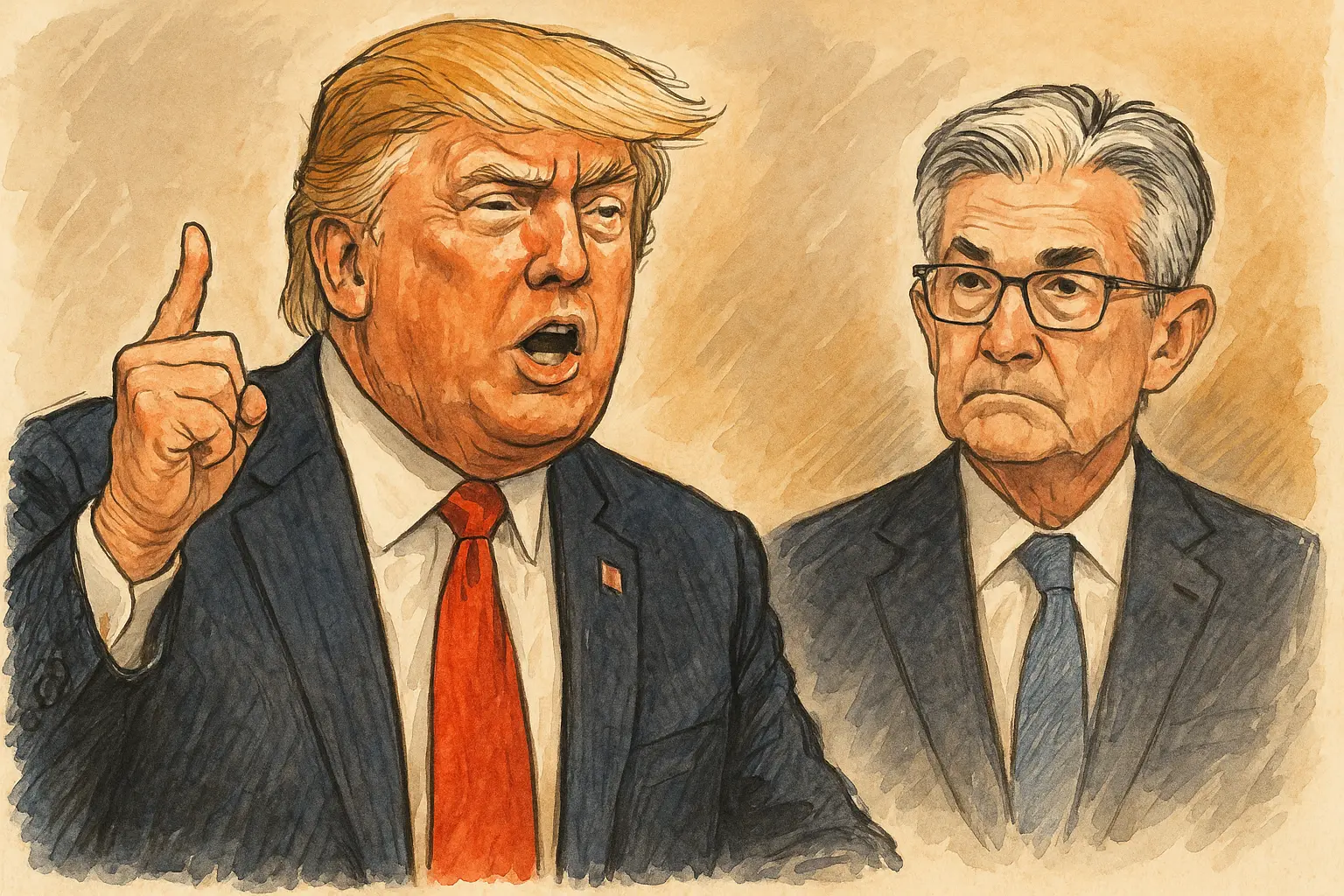
On February 10th, Donald Trump stated that choosing Jerome Powell as Federal Reserve Chair was a major mistake and that Kevin Warsh should have been selected. He repeatedly emphasized a growth-oriented vision, but the Fed has not been working toward that goal. Warsh served as a Fed governor from 2006 to 2011 and is known for his hawkish stance. Trump has been dissatisfied with Powell for some time; in 2018, during rate hikes, he publicly criticized Powell, believing he slowed down the economy.
Trump and Powell’s Resentment Resurfaces
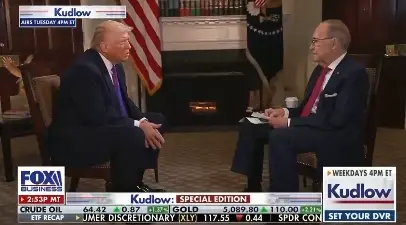
(Source: X)
President Trump revisited old grievances in an interview with Fox Business on February 10th, stating that choosing Jerome Powell as Fed Chair was a major mistake. More specifically, he claimed that selecting Kevin Warsh would have been the correct decision (implying he did not choose Warsh initially). These remarks were frank and unambiguous, immediately drawing market attention. Trump explained that this decision was inconsistent with his economic vision. He emphasized growth and momentum, but the Fed has not been aligned with these goals.
Such public criticism of the sitting Fed Chair is extremely rare in U.S. politics. The Federal Reserve was designed to be an independent institution, insulated from political interference. Past presidents, even if privately dissatisfied, rarely publicly criticized the Fed Chair. Trump broke this precedent, repeatedly attacking Powell on social media and in public, even threatening to fire him (though the President does not have legal authority to directly dismiss the Fed Chair).
Trump’s dissatisfaction with Powell has long been evident. In 2018, the Fed sharply raised interest rates, which Trump publicly condemned, believing that rate hikes slowed economic growth and harmed competitiveness. This conflict has persisted, and even after the easing of COVID-19, trust between the two has not been restored. This latest statement undoubtedly intensifies the conflict, bringing it back into focus.
Trump vs. Powell: Three Major Points of Conflict
2018 Rate Hikes: Trump thought they were too rapid; Powell insisted on data-driven decisions
Rate Cut Pace: Trump demanded aggressive rate cuts; Powell favored cautious, gradual easing
Independence: Trump wanted the Fed to cooperate with the government; Powell insisted on independence
Powell’s term runs until 2028. Trump’s comments are merely hints. If given the chance, he might pursue a different strategy—one favoring lower interest rates and focusing on asset growth. Such a shift would be significant, reshaping market expectations and altering capital flows. Markets have already begun to react.
Kevin Warsh’s Hawkish Label and Dovish Expectations
Kevin Warsh is not an outsider. He served as a Fed governor from 2006 to 2011. He was held responsible for the global financial crisis and is known for his hawkish stance on inflation. However, when necessary, he is also open to unconventional measures. In 2017, Warsh was a serious candidate, ultimately ranking second. Recent comments suggest Trump regrets this choice and hints that some things remain unfinished.
There is an interesting contradiction here. Warsh is historically hawkish, yet markets generally expect that if he takes the helm, he would adopt dovish policies. This expectation is based on several factors. First, Trump explicitly favors low interest rates; as a Trump nominee, Warsh might align more with the President’s policy preferences. Second, Warsh’s recent remarks emphasize productivity growth and technological innovation as potential inflation suppressors, providing a theoretical basis for looser monetary policy. Third, if Warsh aims to establish his legacy at the Fed, opposing Trump might not be wise.
However, some analysts believe Warsh could maintain independence. As a former Fed governor, he understands the importance of central bank independence. Overly accommodating Trump at the expense of the Fed’s credibility could be detrimental to the U.S. financial system and the dollar’s status in the long run. Warsh might initially demonstrate independence to build market trust in his judgment. This “hawkish first, dovish later” approach is not uncommon among Fed chairs.
Loose Monetary Policy and Bitcoin: A Double-Edged Sword
Risk assets are driven by monetary policy. Easing policies increase liquidity, which fuels speculation. History has shown this trend. During 2020-2021, aggressive easing coincided with Bitcoin’s 300% rally. Investors remember this cycle. Therefore, such statements are influential—they can impact long-term investment strategies and revive macro perceptions about money supply expansion and hard assets.
If Warsh indeed takes office in May 2026 and begins a rate-cutting cycle, the impact on Bitcoin could be: short-term positive (lower rates reduce opportunity cost of holding non-yielding assets, liquidity boosts risk assets), medium-term complex (if rate cuts are due to recession, risk assets might still decline), long-term positive (ongoing monetary easing supports Bitcoin as a hedge against fiat devaluation).
This is not just a disappointing statement; it signals potential policy shifts and heightens concerns. For traders, uncertainty creates opportunities; for long-term investors, uncertainty is a strategic factor. Either way, the Fed remains a focal point.
For the crypto market, Trump’s public criticism of Powell and hints at policy shifts are potentially bullish signals. They reinforce the narrative of a “crypto-friendly Trump administration” and suggest easing monetary policy expectations. But the key question remains: will Warsh truly be dovish as markets expect? If he takes office and adopts a hawkish stance to build credibility, markets could face a “missed expectation” shock. This uncertainty alone could continue to influence market volatility over the coming months.
Disclaimer: The information on this page may come from third parties and does not represent the views or opinions of Gate. The content displayed on this page is for reference only and does not constitute any financial, investment, or legal advice. Gate does not guarantee the accuracy or completeness of the information and shall not be liable for any losses arising from the use of this information. Virtual asset investments carry high risks and are subject to significant price volatility. You may lose all of your invested principal. Please fully understand the relevant risks and make prudent decisions based on your own financial situation and risk tolerance. For details, please refer to
Disclaimer.
Related Articles
The U.S. Senate Banking Committee is scheduled to review the nomination of the U.S. Federal Reserve Chair, named Wash, on April 16.
The U.S. Senate Banking Committee will hold a hearing on April 16 to review Kevin Wosch’s nomination to serve as the Chair of the Federal Reserve. At the same time, the ongoing criminal investigation into the current Chair, Powell, may affect Wosch’s confirmation process. Committee members have said they will not vote to confirm before the investigation concludes, which could create a potential clash between two tracks of the Trump administration.
GateNews11h ago
U.S. March jobs smash expectations, with 178,000 added
In March, the U.S. added 178,000 jobs, recovering from February's losses and reducing the unemployment rate to 4.3%. The stronger-than-expected report may influence future interest rate decisions by the Fed amidst fluctuating oil prices.
CoinDesk11h ago
U.S. added 178k jobs in March, and Federal Reserve officials say low growth may become the new normal, but it is fragile amid wartime conditions
A Federal Reserve watcher said that the U.S. added 178k jobs in March, the unemployment rate fell to 4.3%, but wage growth slowed to the lowest level in five years. The average monthly number of new jobs was only 22.5k, the economic outlook is fragile, and inflation concerns may further limit the room for rate cuts.
GateNews11h ago
Market pricing shows expectations for Federal Reserve rate cuts in 2026 have fallen
Gate News, April 4, market pricing shows that bets on the Federal Reserve cutting rates in 2026 have eased.
GateNews12h ago
World Gold Council: In February, central banks in various countries net purchased 19 tons of gold; China continued to add to its holdings for the 16th straight month
The World Gold Council report shows that in February 2026, central banks in various countries net bought 19 tons of gold. Although this is below the 2025 average, it is up from January’s 5 tons. Central banks’ acceptance of gold continues to strengthen, with both the Czech Republic and China maintaining consecutive gold-buying records. Goldman Sachs and UBS predict that gold prices may rise in the future.
GateNews13h ago
The IMF urges the Bank of Japan to keep raising interest rates, saying that the Middle East war poses major new risks
The International Monetary Fund recommends that the Bank of Japan continue raising interest rates, despite new risks to Japan’s economy stemming from the Middle East war. Rising oil prices and yen depreciation have intensified inflation pressures. The IMF expects inflation to return to the 2% target in 2027 and emphasizes the importance of a flexible interest-rate policy.
GateNews16h ago


