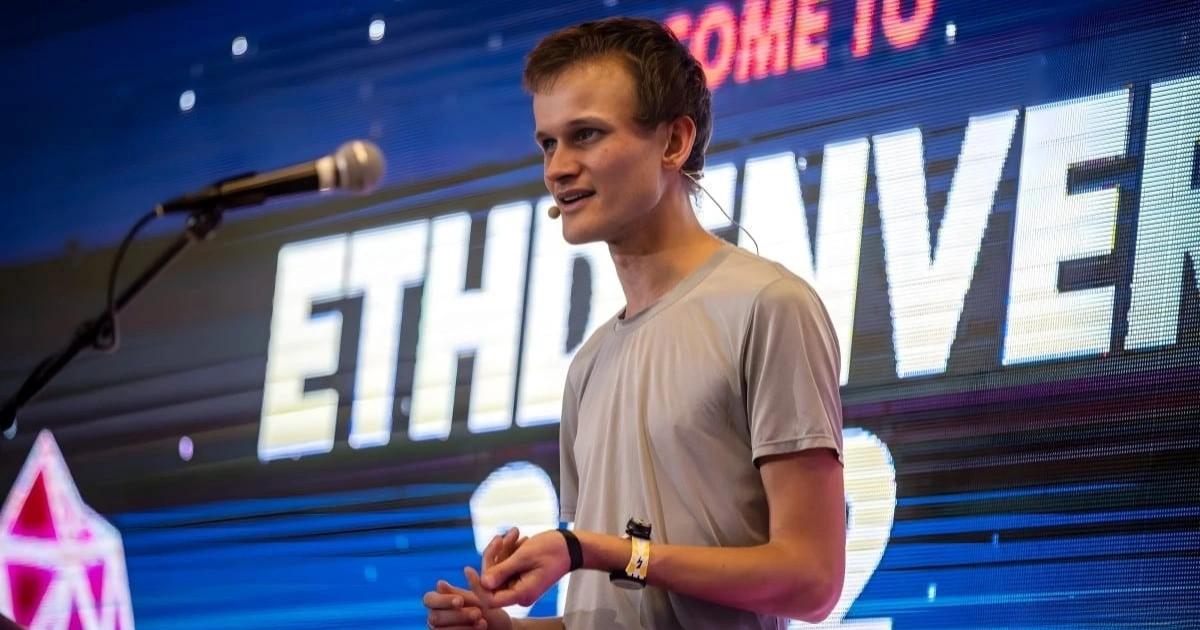
Vitalik Buterin straightforwardly states that the L2 ecosystem is stuck, copying EVM and repeating the old path of DeFi forks. He emphasizes that L2 must create added value for Ethereum, not just seek cheaper solutions.
Ethereum Co-founder Vitalik Buterin responded today to the controversy over his comments on L2 from two days ago, but his tone was not more restrained—in fact, it was more direct: the current L2 ecosystem is reenacting the old path of the DeFi era “crazy fork of Compound.” He bluntly states that over the past few years, the entire industry has become “overly comfortable with existing templates,” heavily copying EVM, which has essentially led to stagnation in innovation or even dead ends.
Vitalik: We don’t need another copy-paste EVM chain
Vitalik points out that many current L2 implementations are simply creating a new EVM chain with an optimistic bridge that has a finality time of up to a week. In his view, this is like the endless fork of Compound protocols in the DeFi world: effective in the short term but exhausting creativity in the long run. He quite bluntly states: we don’t need more copy-paste EVM chains, nor do we need more new L1s.
Without truly secure, trust-minimized links to L1, it’s just another chain. If what you’re doing is “an EVM that isn’t securely connected to Ethereum,” the situation will only worsen. Vitalik notes that Ethereum L1 itself is scaling and doing so faster than most people imagine.
Background: Why the original mission of L2 is no longer valid
Vitalik revisits the original intent of the rollup-centric roadmap: Ethereum needs a large amount of blockchain space fully backed by L1 (full faith and credit) to ensure that transactions occurring within it cannot be rolled back, censored, or tampered with.
But the situation has changed for two reasons:
- The progress of L2 upgrading to Stage 2 is much slower than expected, with some teams openly stating that they might “never move beyond Stage 1.” This is not just a technical issue but involves regulation and business needs, requiring retention of ultimate control.
- Ethereum L1 itself is beginning to scale rapidly. Gas fees are extremely low, and from 2026, gas limits are expected to increase significantly.
Against this backdrop, Vitalik believes that treating L2 as branded shards is no longer realistic or necessary. If your asset security ultimately depends on multisig bridges, you’re not really scaling Ethereum—you’re just creating another chain.
Don’t just scale; create added value
Vitalik clearly states that if he were to create a new L2 today, the first step wouldn’t be to make it faster or cheaper, but to answer a fundamental question: what additional value are you bringing to the Ethereum ecosystem?
He lists some possible directions:
- Privacy-focused VM / non-EVM design
- Highly customized efficiency for specific applications (e.g., prediction markets, trading)
- Extreme throughput or low latency that even after scaling L1 cannot satisfy
- Completely new designs for non-financial applications (social, identity, AI)
- Ultra-low latency, specialized sequencing features
- Built-in oracles, decentralized arbitration, and other “non-pure computation verifiable” functions
Just making a cheaper EVM no longer justifies existence.
Are Layer 2 solutions truly part of Ethereum?
He targets those L2s that pretend to be very Ethereum-like but are actually quite independent, citing two types of application chains:
Deeply dependent on Ethereum applications L2
For example, prediction markets: issuance, settlement, and accounts on L1, with transaction execution on L2 / based rollup. This architecture relies on Ethereum for real-time verification of signatures and state, making it impossible to operate without Ethereum. Maximizing composability and interoperability makes calling themselves Ethereum applications entirely reasonable, and this is the approach he advocates.
Institutional / organizational L2 (not Ethereum but still valuable)
For example:
- Government systems
- Community platforms
- Games or large databases
Merkle roots of data states and STARK proofs are posted on-chain, ensuring each update follows the rules. This isn’t about trustlessness or neutrality (rules can be changed at any time), but it provides verifiable algorithmic transparency, potentially opening new economic activities.
Ethereum-native rollup pre-compiled modules as the new key
In terms of technical direction, Vitalik has increasingly favored a path: native Ethereum rollup pre-compiled modules.
The core concept is:
- Built-in ZK-EVM proof verification within Ethereum
- Automatic upgrades with L1
- If bugs occur, Ethereum can hard fork to fix them (without needing a security committee)
This will make fully trust-minimized EVM verification cheaper, simpler, and standardized, enhancing interoperability and synchronous composability.
This article is reprinted with permission from: 《Chain News》
Original title: 《Vitalik strikes hard: the industry is too comfortable, we don’t need another copy-paste EVM》
Original author: Neo
Disclaimer: The information on this page may come from third parties and does not represent the views or opinions of Gate. The content displayed on this page is for reference only and does not constitute any financial, investment, or legal advice. Gate does not guarantee the accuracy or completeness of the information and shall not be liable for any losses arising from the use of this information. Virtual asset investments carry high risks and are subject to significant price volatility. You may lose all of your invested principal. Please fully understand the relevant risks and make prudent decisions based on your own financial situation and risk tolerance. For details, please refer to
Disclaimer.
Related Articles
Arthur Hayes Moves 3,000 ETH to Major CEX, Sparking Sell-Off Speculation
A wallet associated with Arthur Hayes transferred 3,000 ETH to exchanges, sparking speculation about potential selling pressure. While some interpret this as profit-taking, others suggest it may be for repositioning. The crypto community remains divided as traders monitor the situation closely.
GateNews1h ago
Ethereum Spot ETFs Record $127M Net Inflows, Fidelity FETH Leads with $84.13M
Ethereum spot ETFs saw $127 million in net inflows on April 17, with Fidelity's FETH leading at $84.13 million, followed by BlackRock's ETHA and other notable contributions from Grayscale and 21Shares.
GateNews2h ago
ETH breaks below 2400 USDT
Gate News bot message, Gate market data shows that ETH has broken below 2400 USDT, with the current price at 2399.93 USDT.
CryptoRadar4h ago
Ethereum Foundation Key Researcher Josh Stark Departs After Five Years
Josh Stark, a key researcher at the Ethereum Foundation, announced his departure after five years, expressing no future plans and emphasizing the Ethereum ecosystem's unexpected successes. His exit follows increased community scrutiny and recent leadership changes within the Foundation.
TheNewsCrypto5h ago
Aztec Network Completes Liquidation of Public Sale ETH, Transfers Over 15,000 ETH to Major CEX
Aztec Network has completed the liquidation of 19,388.4 ETH from its December public sale, transferring the final 5,020 ETH to a major CEX. The project raised around $59.13 million, with the AZTEC token price dropping nearly 50% post-auction.
GateNews5h ago
Arthur Hayes-Linked Wallet Deposits 3,000 ETH Worth $7.26M to Major CEX
On April 18, Onchain Lens reported that a wallet linked to Arthur Hayes deposited 3,000 ETH, worth about $7.26 million, to a major centralized exchange, highlighting notable whale activity.
GateNews7h ago


