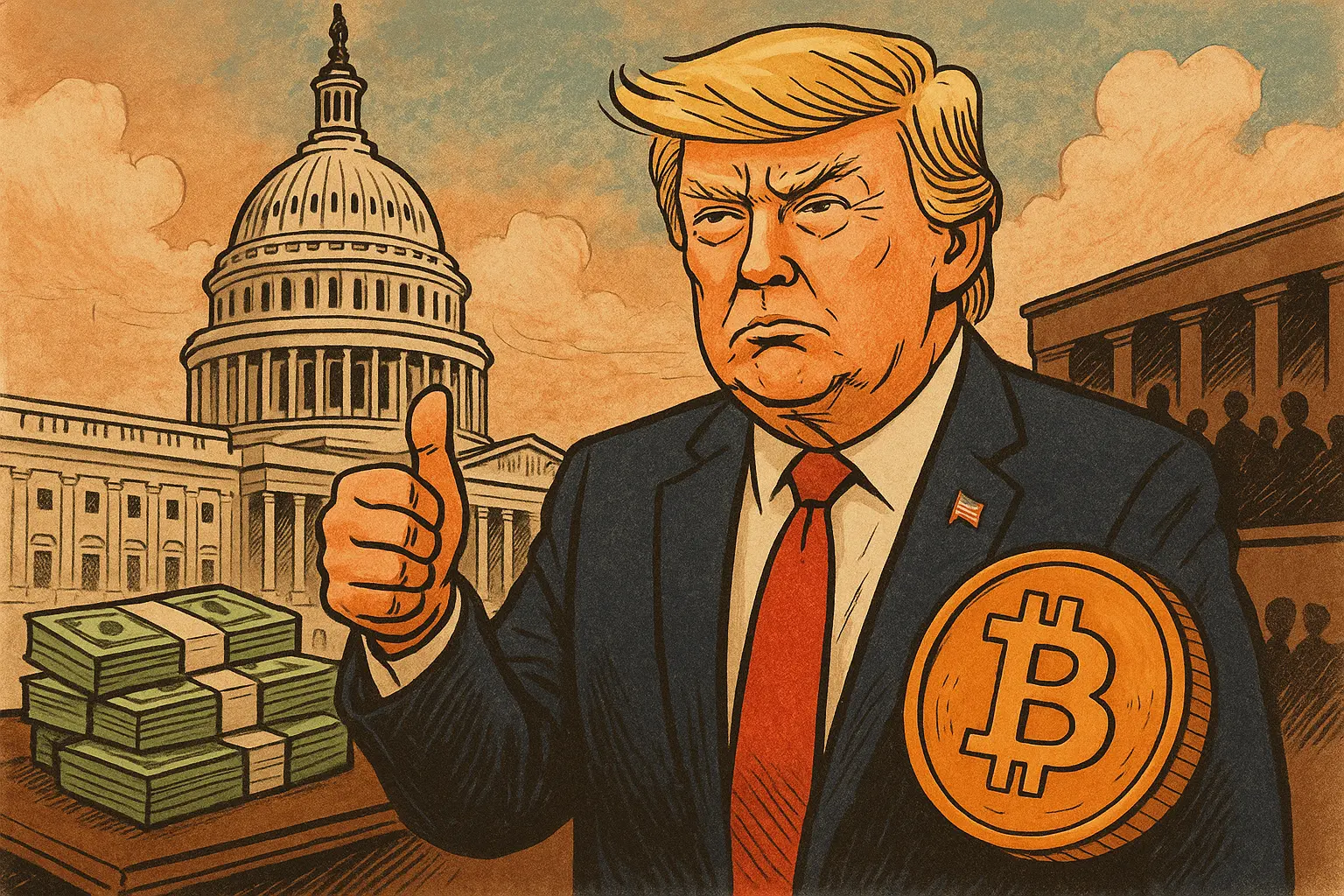
The House of Representatives passed a $1.2 trillion funding bill with a 217:214 vote, ending the four-day crisis of the Trump administration shutdown. President Trump is expected to sign the bill to reopen the government. Bitcoin received a positive boost from the news, rising slightly to around $76,000, but still has not fully shaken off its sluggish trend. The Senate’s Digital Asset Market Structure Bill is stalled due to Coinbase withdrawing support.
House narrowly passes by 3 votes revealing partisan split
The U.S. House of Representatives approved the funding bill on Tuesday with a vote of 217 in favor and 214 against, narrowly passing by just 3 votes. This roughly $1.2 trillion fiscal aid package, previously passed by the Senate, will fund most government departments until September 30, avoiding the risk of a prolonged Trump government shutdown.
The bill’s passage was supported by some Democrats, although many opposed certain immigration enforcement provisions in the bill. This bipartisan cooperation is rare in the highly polarized current U.S. political environment, showing that members of both parties recognize the significant damage a long-term government shutdown can cause. The 217:214 vote distribution indicates only a small number of Republicans opposed the bill due to disagreements with its content, while some Democrats also voted in favor for pragmatic reasons.
President Trump is expected to sign the bill and reopen the government, provided the Senate does not make any amendments. This condition is critical because if the Senate revises the bill, it would need to go back to the House for approval, potentially extending the shutdown by days or weeks. Currently, Senate leaders have signaled they will send the House version directly to the President for signature to avoid further delays.
However, this funding bill only provides two weeks of funding for the Department of Homeland Security, a deliberately left “unfinished task.” Republicans hope to use this short-term funding window to restart negotiations on immigration enforcement in two weeks, aiming for more budget for border wall construction, ICE deportation operations, and border patrol expansion. Democrats are trying to include protections for immigrant families and humanitarian aid in the negotiations. This means that although the current crisis is temporarily resolved, there is a risk of another government shutdown in two weeks.
This four-day event only partially limited the operations of the U.S. government, far less than the potential 43-day shutdown in 2025. The long shutdown in 2025 severely delayed efforts to pass legislation on digital asset market structure and other related laws, raising fears of a repeat among many crypto industry insiders. Fortunately, this shutdown lasted only four days, with limited disruption to the legislative process.
Bitcoin rebounds 2% on news
Bitcoin’s price rose about 2% to $74,620 following the House’s passage of the funding bill. This reaction reflects market optimism about the resolution of political uncertainty. During the government shutdown, federal agencies, including the SEC and CFTC, suspended operations, disrupting crypto industry approvals and legislative progress. The government reopening means these agencies will resume normal operations, allowing crypto-related approvals and regulation efforts to continue.
The 2% increase, while modest, is notable in the current weak market environment. Bitcoin has been declining over the past few weeks, falling from a high of $126,080 in October to around $75,000 now, with a nearly 40% decline. Any positive news can trigger a short-term rebound, and the resolution of the Trump shutdown crisis is such a catalyst. However, whether this rebound can sustain depends on upcoming macroeconomic data and legislative developments in crypto.
After the government reopens, the U.S. Bureau of Labor Statistics will release the January employment report, initially scheduled for Friday. The unemployment data in this report could significantly impact U.S. macroeconomic policy and markets. Strong employment figures may boost risk appetite, benefiting Bitcoin and other risk assets. Conversely, weak data could raise recession fears and lead funds to safe-haven assets. Crypto traders should closely watch this report, as it may determine Bitcoin’s short-term direction.
Digital Asset Market Structure Bill Still Stalled
Although the Trump shutdown crisis is temporarily resolved, the most critical legislation for the crypto industry remains blocked. The Senate is still discussing the market structure legislation, but progress is slow and contentious. Last week, the Senate Agriculture Committee voted along party lines to pass a digital asset market structure bill, expected to become one of the most significant laws affecting cryptocurrencies and banking. However, any amendments proposed by Democrats were not adopted, indicating a hardline stance by Republicans.
The Senate Banking Committee, responsible for reviewing the SEC-related bill, delayed its review after Coinbase CEO Brian Armstrong stated he does not support the current version of the bill. Armstrong’s opposition stems from provisions related to stablecoin yields, which are seen as overly favoring traditional banking and limiting crypto firms’ competitiveness. As the largest compliant crypto exchange in the U.S., Coinbase’s position significantly influences the bill’s passage.
Reports indicate that lawmakers are still meeting to discuss the bill, trying to find a compromise between the banking and crypto sectors. However, as of Tuesday, no new hearing schedule has been set, and the timeline for passage remains unclear. This delay is a setback for the crypto industry, as the market structure bill is viewed as key to establishing a clear regulatory framework, attracting institutional capital, and mainstreaming the industry.
Three major controversies stalling the Market Structure Bill
Stablecoin yield distribution: Crypto firms vs. banking sector over who can offer yields
Regulatory authority division: SEC vs. CFTC over oversight of crypto assets
Partisan divide: Republicans prioritize innovation, Democrats emphasize consumer protection
While the Trump shutdown has ended, the legislative stagnation could have longer-term impacts on the industry. Clear rules are needed for healthy development, and regulatory uncertainty remains the biggest obstacle for institutional investors. If the market structure bill continues to be delayed, it could slow the growth of the crypto industry in the U.S. or even push some companies to relocate to more friendly jurisdictions.
Disclaimer: The information on this page may come from third parties and does not represent the views or opinions of Gate. The content displayed on this page is for reference only and does not constitute any financial, investment, or legal advice. Gate does not guarantee the accuracy or completeness of the information and shall not be liable for any losses arising from the use of this information. Virtual asset investments carry high risks and are subject to significant price volatility. You may lose all of your invested principal. Please fully understand the relevant risks and make prudent decisions based on your own financial situation and risk tolerance. For details, please refer to
Disclaimer.
Related Articles
Bitmine gets promoted to the NYSE main board! Tom Lee: US stocks may have bottomed out, and sell pressure on Ether could ease
Bitmine has officially moved from the NYSE American board to the main board, marking an important milestone for the company. Despite the sharp decline in its share price, it has still increased the share repurchase plan amount to $4 billion. The company holds a large amount of Ethereum, and it expects that a rebound in the crypto market will help boost its assets and share price performance.
CryptoCity1h ago
Why Is Bitcoin Up Today? Hormuz Blockade Triggers Short Squeeze and a BTC Test of $75k
On April 13, Bitcoin rose from its early-session low of 70,741 to trade as high as $74,900 during the session, approaching the $75,000 level. The main drivers came from two directions: after Trump ordered the blockade of the Strait of Hormuz, traders began to view Bitcoin as a geopolitical hedge asset; and a massive net short position that had been building as funding rates stayed persistently negative was met with liquidation, triggering a chain of liquidations totaling millions of dollars near the $70,000 support level.
MarketWhisper3h ago
Bitmine gets promoted to the NYSE main board! Tom Lee: U.S. stocks may have bottomed out, and Ether’s selling pressure may ease
Bitmine has officially moved from the NYSE American board to the main board in the United States, marking an important milestone for the company. Despite a sharp drop in its stock price, it has still increased its share repurchase authorization to $4.0 billion. The company holds a large amount of Ether, and it predicts that a rebound in the crypto market will help boost its assets and stock price performance.
CryptoCity4h ago
U.S. stocks have recovered the losses since the Iran war, while Bitcoin pushes up to 74K
Due to market expectations that the United States and Iran will reach an agreement, the S&P 500 index has rebounded to its highest level since the war, and Bitcoin has also surged to $74,900. Despite the failure of peace talks between the U.S. and Iran, the U.S. has imposed a maritime blockade to pressure Iran. MicroStrategy once again made a large-scale purchase of Bitcoin, indicating that investor confidence is picking up.
ChainNewsAbmedia5h ago
BTC 15-minute surge up 0.77%: Spot buy-side demand and on-chain activity convergence drive short-term strength
2026-04-13 22:00 to 2026-04-13 22:15 (UTC), the BTC price fluctuated upward within 15 minutes, with a return of +0.77%. The high and low prices in the range were between 73178.0 and 73899.0 USDT, and the amplitude was 0.99%. During the event, market attention increased, volatility slightly intensified, and overall sentiment leaned positive.
The main driver behind this price deviation was active spot market buy orders stepping in, which pushed the BTC price higher in the short term. The number of active addresses on-chain remained at a high level, reflecting an increase in genuine trading demand. Trading volume was higher than in the previous period,
GateNews6h ago


