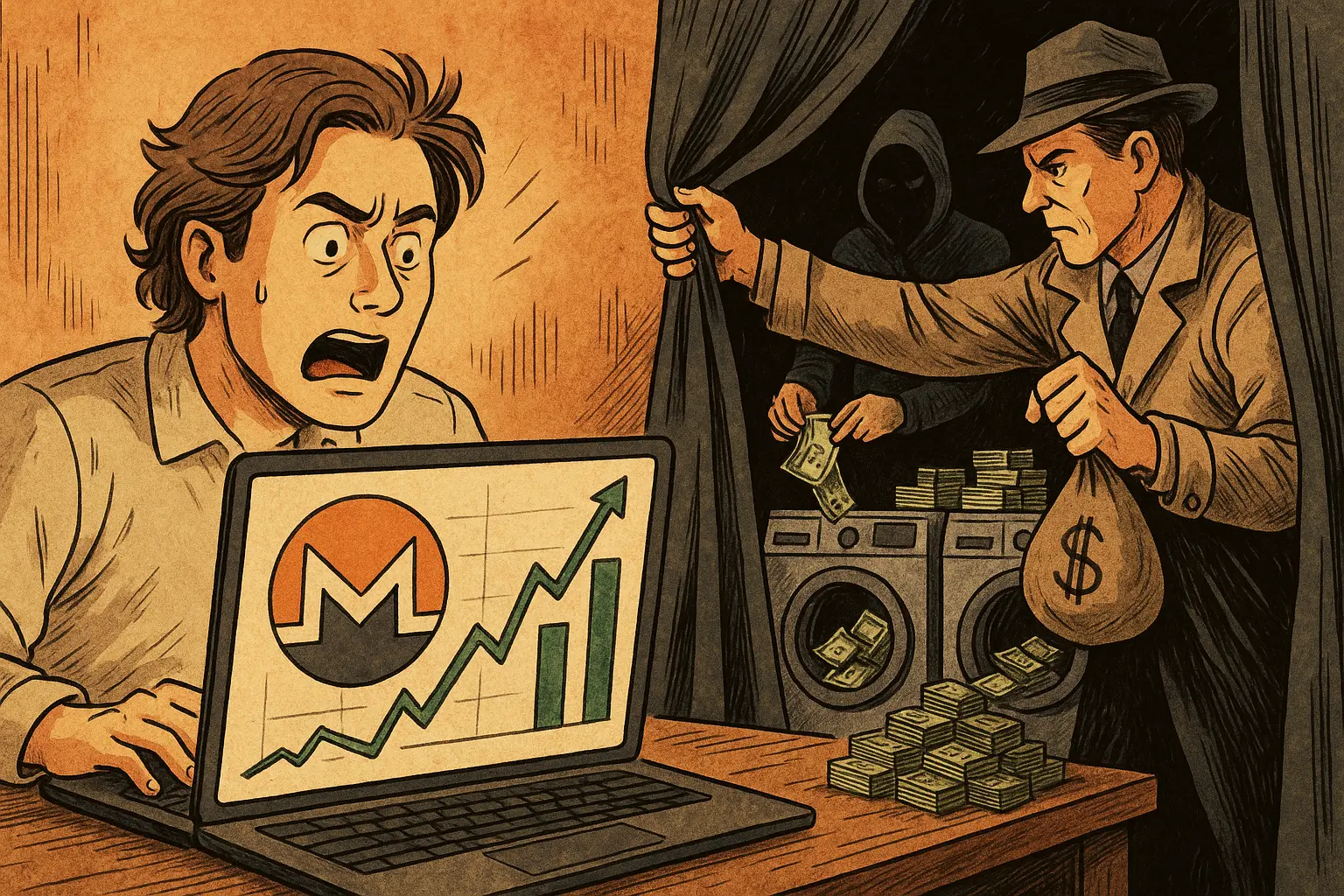
ZachXBT Reveals the Largest Personal Theft in History, Victims Lose $282 Million Due to Social Engineering Scams. Hackers Convert Stolen Funds into Monero for Money Laundering, Causing Price Surge from $450 to $797.73, an 80% Increase, Setting a New High. The Contradiction Between Increased Privacy Coin Demand and Stricter Regulations Is Highlighted.
The Largest Personal Theft in History of $280 Million
Since the beginning of 2026, the cryptocurrency industry has experienced one of the largest personal asset thefts in history. According to on-chain detective ZachXBT’s investigation, around 7:00 AM Taipei time on January 11, a cryptocurrency holder was targeted in a meticulously planned hardware wallet social engineering scam, losing assets valued at over $282 million.
The victim was reportedly misled by individuals impersonating Trezor customer support, who tricked them into revealing their hardware wallet seed phrase, leading to complete control loss. After gaining access, the attacker immediately emptied the assets from the compromised address, including approximately 1,459 BTC and up to 2.05 million LTC. Based on the market value at the time, this loss was extremely staggering.
This case exposes a critical vulnerability in crypto security. Hardware wallets are widely regarded as the safest way to store crypto assets because private keys never leave the device, theoretically defending against network attacks. However, social engineering scams bypass technical protections by targeting human weaknesses. Scammers impersonating official support create urgent scenarios (such as “Your wallet has security issues” or “Verification needed to prevent asset freeze”) to persuade victims to disclose seed phrases.
Typical Social Engineering Scam Tactics
Impersonating Official Identity: Using similar domains, fake customer support, counterfeit technical assistance
Creating Urgent Situations: Claiming account anomalies, imminent asset theft, immediate verification required
Asking for Key Information: Requesting seed phrases, private keys, or instructing “security upgrades”
Rapid Asset Drain: Transferring all assets immediately after gaining control
This incident is considered one of the largest single-wallet thefts in crypto history, even surpassing the 243 million social engineering cases previously tracked by ZachXBT. It highlights that even with hardware wallets for cold storage, insufficient security awareness can still fall prey to social engineering threats, ringing alarm bells for the crypto community regarding non-technical attacks.
Hackers Skilled in Money Laundering, Monero Becomes Core Tool
After acquiring the assets, the attackers demonstrated highly proficient and rapid money laundering techniques, attempting to completely sever the funds’ traceability. ZachXBT observed that within a short period, the hackers converted large amounts of BTC and LTC into highly anonymous privacy coins: Monero ($XMR), via multiple no-KYC “Instant Exchange” platforms.
Additionally, some stolen Bitcoin was cross-chain transferred via the decentralized protocol THORChain to different blockchain networks. Data shows that the hackers dispersed 818 BTC (worth about $78 million) into 19,631 ETH, 3.15 million XRP, and approximately 77,000 LTC. This multi-chain dispersal strategy exponentially increases tracking difficulty, as each cross-chain and transfer breaks a link in the trace.
Despite the hackers’ sophisticated methods, security firm ZeroShadow stated that within 20 minutes of the incident, they successfully identified and intercepted some of the funds before full conversion to privacy assets, freezing about $700,000 worth of stolen funds. Currently, several related wallet addresses are under monitoring, such as the consolidated address 0b4fc3e holding about 43.7 million BTC, and bc1qpsmh which received over 1,108 BTC. These funds are continuously being split and transferred.
Monero’s popularity for money laundering stems from its technical features. Unlike Bitcoin’s transparent ledger, Monero employs ring signatures, stealth addresses, and confidential transactions, making it impossible to trace sender, receiver, or amounts externally. Even chain analysts like ZachXBT can only track transactions up to the point they convert to Monero; subsequent flows are completely opaque.
Monero Surges 80%, Reaching Record High Driven by Non-Canonical Factors
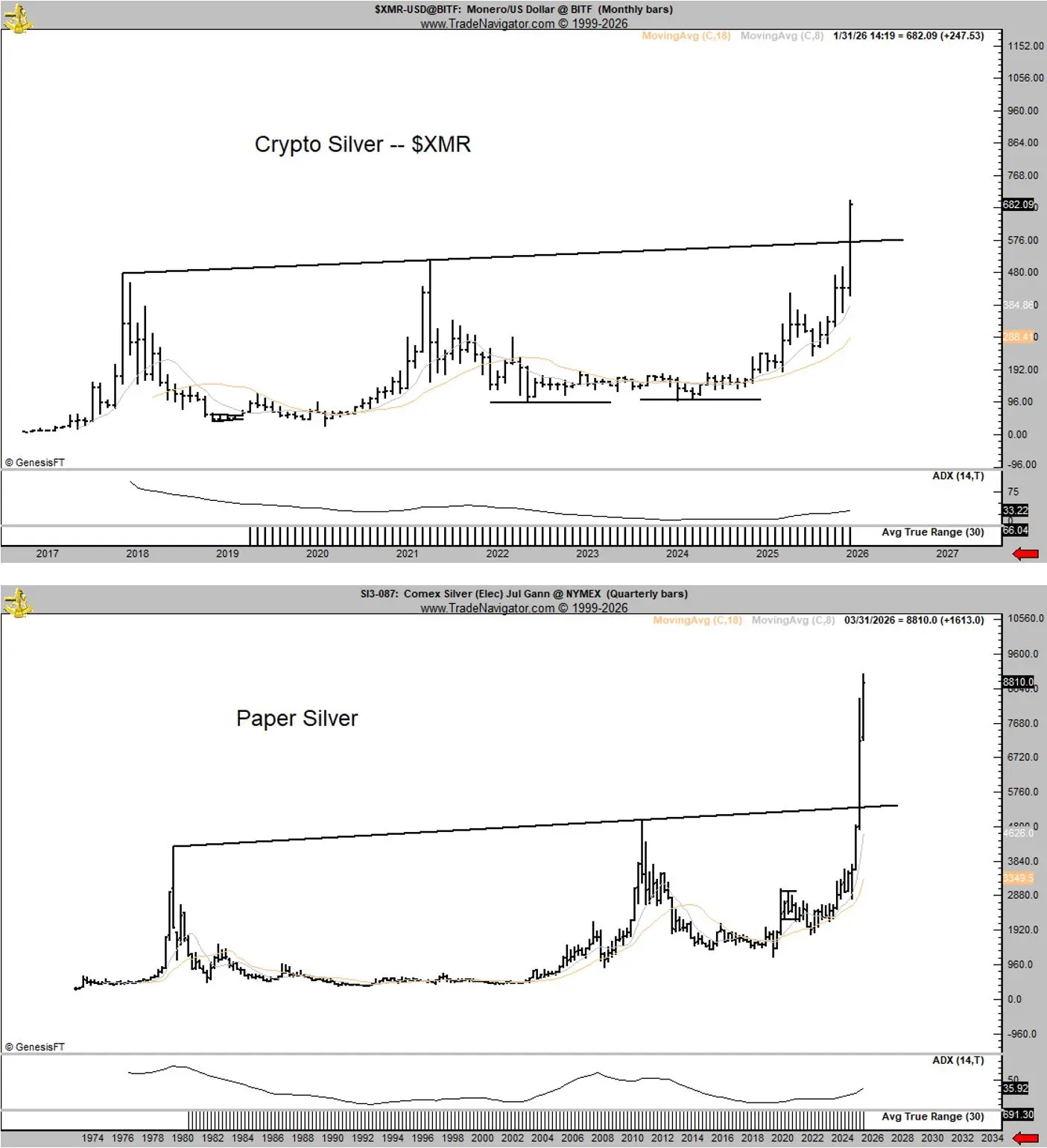
(Source: Peter Brandt)
This large-scale asset transfer directly triggered a fierce chain reaction in the crypto market, especially affecting Monero, a primary channel for money laundering. As attackers rapidly flooded the market with hundreds of millions of dollars in buy orders, in a relatively illiquid environment, a so-called “liquidity shock” occurred.
According to CoinGecko data, Monero’s price skyrocketed from around $450 before the incident, briefly surpassing $797.73 within days, an almost 80% increase, setting a new all-time high. Although it later retreated to around $600, the weekly gain remained over 20%.
Market analysis indicates that this atypical price movement was not driven by fundamental improvements but purely by the attackers’ forced exchange demands. Notably, Monero has recently faced regulatory pressure in Dubai and other regions, even being delisted in some jurisdictions. Paradoxically, this “illegal demand” has fueled its price growth. Legendary trader Peter Brandt also revealed that he profited handsomely from Monero during this volatility, further sparking discussions about privacy coins as wealth storage and trading tools.
Monero’s limited liquidity is a key factor behind its price surge. Compared to Bitcoin or Ethereum, Monero’s daily trading volume is usually only a few hundred million dollars. When hackers need to quickly convert hundreds of millions of dollars into Monero, such large buy orders cause significant price impacts within the limited liquidity pool. The supply-demand imbalance drives short-term price spikes, and many traders buy in after the price rises, further amplifying the surge.
Stricter Regulations and Privacy Demand Worsen Contradiction
This $280 million theft is not an isolated incident but part of a series of wallet attack waves since January 2026. ZachXBT reports that hundreds of wallets have been emptied during widespread attack campaigns this year, though most victims suffered smaller losses (usually under $2,000), the total damage is rapidly increasing.
Meanwhile, the global regulatory environment is undergoing dramatic changes. The EU’s DAC8 directive, enacted in January 2026, mandates service providers to report user transaction data, making transparent ledgers like Bitcoin more susceptible to government surveillance. The US IRS is also implementing the 1099-DA form, further reducing user privacy. In this environment of shifting from pseudo-anonymity to full transparency, demand for privacy coins like Monero is rising, becoming an alternative for evading regulation or safeguarding assets.
However, the reality that privacy coins are used as major tools for criminal money laundering has deepened the policy dilemma for regulators worldwide—balancing privacy protection with anti-money laundering efforts. Stricter regulation pushes legitimate users to seek privacy tools, but these same tools are exploited by criminals, providing further justification for bans or delistings in many regions. This vicious cycle may lead to privacy coins being prohibited or removed from exchanges more broadly.
From an investment perspective, Monero’s surge creates short-term profit opportunities, but its price is driven by illegal demand rather than fundamentals, raising questions about sustainability. Once hackers complete laundering and exit the Monero market, the lack of subsequent buy support could cause prices to fall rapidly. Investors considering Monero should recognize the dark attributes behind its rapid rise and the potential regulatory crackdown risks at any time.
Three Major Risks of Investing in Monero
Regulatory Risks: Many countries have banned or plan to ban privacy coin trading, which could sharply reduce liquidity
Illegal Demand: Price increases mainly driven by money laundering needs; once laundering is complete, buy orders may vanish
Exchange Delisting Risks: Major exchanges might delist Monero due to compliance pressures, limiting liquidity and exit options


