Pi Network opinion leader Cryptocurrencypi posted screenshots of the Pi browser code repository on social media, revealing shocking findings: Pi Network has pre-integrated external blockchain assets such as Bitcoin (BTC), Ethereum (ETH), and others into its GitHub code, establishing cross-chain bridges through a anchoring system, indicating that the Pi Network ecosystem is far larger than market perception.
GitHub Code Leak: Pi Network Cross-Chain Integration Exposed
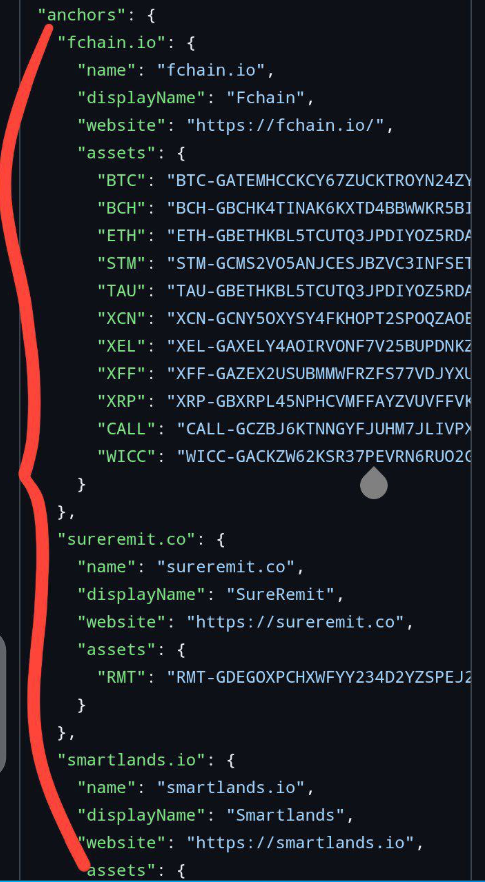
(Source: Cryptocurrencypi post)
To understand the true scale of Pi Network, we must start with the GitHub code leak incident. Although Cryptocurrencypi is a community opinion leader rather than an official team, the code screenshots it posted indeed originate from Pi Network’s public code repository. GitHub commit history cannot conceal ongoing development progress; the code is a continuously evolving product. Even discoveries by fan accounts can often provide genuine information.
The external blockchain assets pre-integrated into Pi Network’s code include Bitcoin and Ethereum networks. This integration is achieved via the anchoring system on fchain.io, meaning that in the future, Pi Network users may hold and trade BTC and ETH directly within the Pi wallet. If this cross-chain functionality becomes reality, it will fundamentally change Pi Network’s positioning, transforming it from a single public chain project into a multi-chain asset aggregation platform.
More notably, the code mentions SureRemit and Smartlands.io, both of which are real blockchain projects. SureRemit focuses on cross-border remittances, while Smartlands involves asset tokenization. The integration of Pi Network with these projects suggests its ecosystem may extend beyond payments to include DeFi, asset management, and other complex financial services.
These integrations are not experimental but are already connected to Pi Network’s infrastructure. The code structure indicates that these features are in the late planning stages and may be launched simultaneously when the mainnet is fully open. This “stealth development and sudden release” strategy is consistent with Pi Network’s style and is a core reason why market pricing has not reflected its true value.
Pre-Integration Strategy: A Leap from Zero to One
Pi Network’s development strategy is markedly different from most blockchain projects. Traditional projects usually launch the mainnet first and then gradually introduce applications and features, resulting in an initial ecosystem void where users face an empty dashboard. Pi Network chooses the opposite approach: pre-establishing connections before the app goes live, ensuring a complete set of features at mainnet launch.
Three Major Advantages of Pi Network’s Pre-Integration Strategy
Avoid Initial Congestion: Verified applications pre-launch prevent traffic surges at mainnet start, allowing a smooth transition
Immediate Usability: Users can see available dApps, cross-chain bridges, DeFi services as soon as they open their wallets, without waiting for ecosystem development
Reduce Deployment Risks: Developers complete testing and connections before public release, minimizing technical issues post-launch
Establish First-Mover Advantage: While other projects are still recruiting developers, Pi Network already has a ready ecosystem
Enhance User Experience: The 35 million users won’t face the embarrassment of “nothing to do,” immediately experiencing platform value
This pre-integration strategy explains why Pi Network’s mainnet has been delayed in fully opening. The team is not inactive but is building a complete ecosystem behind the scenes. The GitHub code leak confirms this: many applications and asset integrations are underway but have not yet been publicly revealed.
Pi Network conducts pre-checks on applications to ensure they can be used immediately. Although this review process prolongs development, it also improves ecosystem quality. Unlike many low-quality projects flooding other chains, Pi Network’s pre-integrated applications have undergone rigorous validation. When the mainnet fully opens, users will experience a mature ecosystem rather than early experimental products.
Market Mispricing: $0.2 Significantly Below True Value
Pi Network is currently trading at about $0.20 on secondary markets, severely undervaluing its ecosystem depth. Market pricing is based on what is visible, but Pi Network’s design intentionally conceals information. This asymmetry leads to a significant divergence between skeptics and long-term holders.
By the end of 2025, analysts predict Pi Network’s price will range between $0.450 and $0.600, representing a 125% to 200% upside from current levels. However, these forecasts are still based on limited public information. If the cross-chain integrations and pre-integrated applications revealed by GitHub come true, Pi Network’s real value could far exceed these conservative estimates.
The market’s failure to correctly price Pi Network’s core stems from a lack of transparency. Most investors see only an unreleased mainnet and long development delays. They do not see the thousands of lines of code in GitHub, the pre-integrated BTC/ETH bridges, and the ready-to-deploy ecosystem applications. This information gap creates huge arbitrage opportunities.
Pi Network has not engaged in aggressive marketing but has focused more on backend development. This strategy temporarily hampers short-term price performance but lays the foundation for long-term explosive growth. When the mainnet fully opens and all hidden features are revealed at once, the market will be forced to reassess Pi Network’s value. At that point, $0.20 may look like a historic buying opportunity.
35 Million User Base: An Overlooked Core Competitiveness
Pi Network has over 35 million users, making it its most underestimated asset. In the blockchain industry, user acquisition costs are extremely high; most projects have only tens of thousands of active users after years of operation. Pi Network already has 35 million users before the mainnet is fully open, a scale that is rare across the entire crypto industry.
This massive user base can accelerate ecosystem development. When dApp developers choose a platform, user numbers are one of the most critical considerations. Pi Network’s 35 million users provide a ready market, an attraction other new blockchains cannot match. Once the mainnet fully opens, Pi Network could attract a large number of high-quality applications in a short period.
User reactions are mixed, but this divergence itself is a source of value. Some users are confident in Pi Network’s scale, while others are cautious due to past delays. Both perspectives coexist, reflecting that the market has not yet reached consensus, and the lack of consensus often means the price has not fully reflected its value. When Pi Network finally delivers on its promises, skeptics will turn into believers, and this emotional shift will drive prices sharply higher.
Pi Network’s long development history is both a disadvantage and an advantage. The extended timeline has tested some users’ patience but also allowed the team to build a solid infrastructure. The GitHub code leak proves that delays are not due to inaction but to building a far more advanced ecosystem behind the scenes.
Disclaimer: The information on this page may come from third parties and does not represent the views or opinions of Gate. The content displayed on this page is for reference only and does not constitute any financial, investment, or legal advice. Gate does not guarantee the accuracy or completeness of the information and shall not be liable for any losses arising from the use of this information. Virtual asset investments carry high risks and are subject to significant price volatility. You may lose all of your invested principal. Please fully understand the relevant risks and make prudent decisions based on your own financial situation and risk tolerance. For details, please refer to
Disclaimer.
Related Articles
Ethereum Foundation researcher: The zkAttester client can eliminate the burden of re-executing blocks, so even consumer-grade hardware can participate in verification
An Ethereum Foundation researcher presented the zkAttester client solution at the EthCC conference, addressing the computational burden of node re-execution, allowing validators to verify zero-knowledge proofs directly, lowering CPU performance requirements, shortening the time for new node synchronization, and helping enable Ethereum light verification and scaling.
GateNews23m ago
Ethereum Foundation: Has completed roughly 20% of its quantum-resistance preparations and plans to achieve full quantum resistance by 2032.
An Ethereum Foundation researcher, Antonio Sanso, updated the progress on Ethereum’s post-quantum security at the EthCC conference, noting that quantum computing will threaten the ECDSA algorithm in the mid-2030s. Ethereum has completed about 20% of its post-quantum readiness and plans to fully implement quantum resistance from 2028 to 2032. The main challenge is signature size, and the research team will address it through account abstraction and the introduction of LeanVM.
GateNews23m ago
Ethereum Foundation Researcher: The VOPS scheme can reduce node storage requirements by 25x
Ethereum Foundation researcher CPerezz introduced the VOPS technology at the EthCC conference, aiming to solve Ethereum’s state bloat problem and reduce the storage requirements for full nodes. VOPS nodes only need to store basic fields, reducing storage requirements by 25x, enabling users to participate in transactions, and accelerating Ethereum’s move toward statelessness.
GateNews1h ago
Alameda Research today releases a $3.56 million ETH collateral pledge, and still holds more than $300 million in tokens
Gate News message. On April 1, according to Arkham monitoring, Alameda Research today cleared the pledge of $3.56 million worth of Ethereum. Three weeks ago, the firm had allocated $17 million worth of SOL tokens. Currently, Alameda Research still holds $300 million in SOL, $35 million in Bitcoin, and $20 million in USDT.
GateNews2h ago
Tom Lee’s Bitmine Acquires 71,179 ETH As Holdings Near The 5% Target
Bitmine Immersion Technologies reported $10.7 billion in assets and accumulated 4.73M ETH, representing 3.92% of the total supply. It launched the MAVAN staking platform, generating $177M annually while navigating market dynamics influenced by rising oil prices.
CryptoFrontNews2h ago
A certain CEX had $1.104 billion in 24-hour trading volume, with XRP, BTC, and ETH ranking in the top three.
According to CoinGecko data, on April 1, a certain CEX saw trading volume of $1.104 billion within the past 24 hours. XRP, BTC, ETH, USDT, and ONT each ranked among the top five by trading volume. This trading-volume ranking shows that XRP had the largest trading volume, reaching $113.3 million.
GateNews2h ago


