On December 1, Chairman Jerome Powell appeared before the cameras at the George Shultz memorial event organized by the Hoover Institution, with three audiences watching closely: bond traders pricing in an 87% chance of a December rate cut, a divided Federal Open Market Committee ((FOMC)) preparing for possible dissenting votes, and the Bitcoin market, which lost $4.3 billion from US spot ETFs in November.
The event was introduced as an academic discussion on Shultz’s economic legacy, but the market viewed it as the “final checkpoint” before next week’s Fed meeting, as well as the only chance to guess whether the easing cycle will continue or pause.
Bitcoin closed November at $90,360, down nearly 20% from the October peak above $126,000. On-chain data showed trading below key cost basis levels, while the options market skewed toward downside protection. ETF flows in the last trading days of the month recorded just over $220 million net inflow, not enough to offset the structural losses for the month, with BlackRock’s IBIT alone losing $1.6 billion from the end of October to mid-November.
The macro backdrop ahead of Powell’s remarks was extremely fragile: thin liquidity, compressed positioning, and a market highly sensitive to any adjustment in the Fed’s rate path.
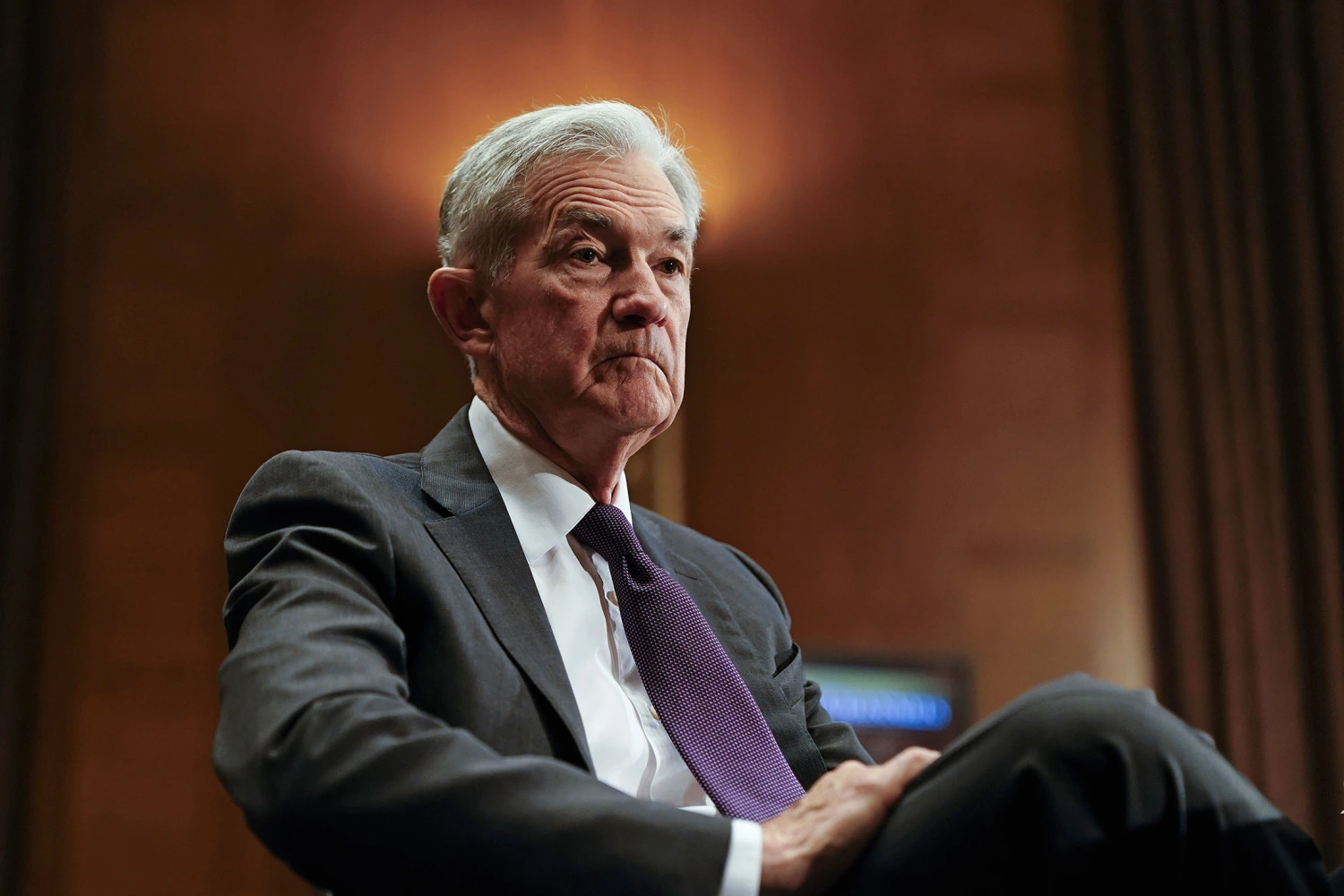 Fed Chairman Jerome Powell## What the Market Wants to Hear
Three main questions dominate the FOMC meeting:
- Will Powell confirm or temper expectations for a December rate cut? The Fed cut twice in September and October, and the market is almost certain of another 25 basis point cut this month. However, Powell said in October that the December decision was “far from certain,” and recent reports show the FOMC is divided, with the possibility of multiple dissenting votes if easing continues. The market needs to know whether Powell is preparing for a cut or signaling a pause.
- How will he balance inflation and growth? Inflation remains above the Fed’s 2% target, the ISM manufacturing index continues to contract, and the government shutdown has delayed key data such as PCE. Powell could emphasize “disinflation is on track, growth is slowing but under control,” providing a basis for easing without sparking recession fears, or he could stress persistent inflation, reducing the urgency for easing.
- What does Powell signal about the path after December? On December 1, the Fed halted balance sheet runoff, marking the end of quantitative tightening. Investors want to know whether Powell sees the need for further cuts in 2026 or considers December the final step of this cycle. Bank of America forecasts a December cut, followed by two more in mid-2026, based on weak labor data and a dovish Fed stance. If Powell confirms, the easing narrative is extended; if he pushes back, expectations are compressed and real yields rise.
The Fed’s Signal Impact on Bitcoin
Every Fed decision impacts Bitcoin, but through different channels. The most direct impact is the rate path. Bitcoin trades like a high-risk asset when rates are low and real yields decline, boosting ETF flows, stablecoin issuance, and risk allocation.
Research shows that unexpected tightening ((2-year yield rising above expectations on FOMC day)) is associated with significant Bitcoin price drops. Conversely, unexpected easing that reduces short-term and real yields often drives BTC higher. NYDIG has analyzed that real yields are the most important macro factor for Bitcoin.
An example from October 2025: after the October 29 FOMC meeting, Powell refused to commit to further rate cuts, iShares’ IBIT lost $1.6 billion in three weeks, including a single-day $447 million outflow, Bitcoin dropped over 20%, and flows shifted into gold. This is clear evidence: hawkish signals → yields rise → ETF outflows → Bitcoin declines.
Balance sheet decisions matter in a second way: ending quantitative tightening keeps USD liquidity stable. If Powell emphasizes that the current balance sheet is stable or could expand, this supports a “friendly” liquidity scenario—an important driver for institutional Bitcoin adoption. If he hints at restarting QT, that’s a headwind for risk assets.
Internal dissent, political pressure, rumors of dissenting votes, and speculation about Powell’s successor also indirectly affect Bitcoin by increasing policy uncertainty, which makes markets more volatile and liquidity thinner.
Three Scenarios for Traders
Powell’s tone leads to three possible outcomes:
- Dovish Surprise: Powell leans toward a December cut, sees inflation as moderate, and opens the door for more easing in 2026. Two-year and real yields drop, ETF flows reverse, and Bitcoin could recover to $100,000 and rise further if inflows continue.
- ETF Flows Reverse: After $4.3 billion in outflows in November, a dovish signal could halt net outflows and spark inflows, leading to a positive Bitcoin response.
- Cautious Stance Maintained: Powell says “a cut is possible” but emphasizes data dependence, offering no forward guidance. Fed expectations remain broadly unchanged, real yields fluctuate slightly, ETF flows are mixed, and Bitcoin trades within a narrow range.
The Relationship Between Bitcoin and US Real Yields
Bitcoin and the 10-year real yield have moved inversely from mid-2024 to November 2025, both peaking in March 2025. If Powell avoids new shocks, Bitcoin’s volatility will mainly be driven by crypto’s internal factors, with a tendency to reverse around current levels.
If Powell turns hawkish, sees no need for cuts, and emphasizes inflation risks, Bitcoin could fall further from the mid-$80,000s, possibly more sharply if ETF outflows accelerate. This wouldn’t break the long-term structure, but would trigger a “sell first, reassess later” reaction.
The Shultz talk is academic, but what matters for Bitcoin and risk assets is whether Powell:
- Confirms a December rate cut already priced in by the market
- Signals the easing cycle could extend into 2026
- Affirms the Fed has ended the liquidity withdrawal phase
If Powell confirms dovishness, real yields fall and Bitcoin rebounds from oversold levels. If he is cautious or pushes back, yields reprice, ETFs keep seeing outflows, and Bitcoin may extend its decline until the market finds a new “floor.”
Powell’s December 2 speech is the last major Fed signal before next week’s meeting, and the clearest indicator of whether Bitcoin’s November drop was just a sell-off reaction or the start of a deeper correction.
Han Tin
Disclaimer: The information on this page may come from third parties and does not represent the views or opinions of Gate. The content displayed on this page is for reference only and does not constitute any financial, investment, or legal advice. Gate does not guarantee the accuracy or completeness of the information and shall not be liable for any losses arising from the use of this information. Virtual asset investments carry high risks and are subject to significant price volatility. You may lose all of your invested principal. Please fully understand the relevant risks and make prudent decisions based on your own financial situation and risk tolerance. For details, please refer to
Disclaimer.


