GateUser-373e0984

vip
Age 1.6 Yıl
Peak Tier 2
No content yet
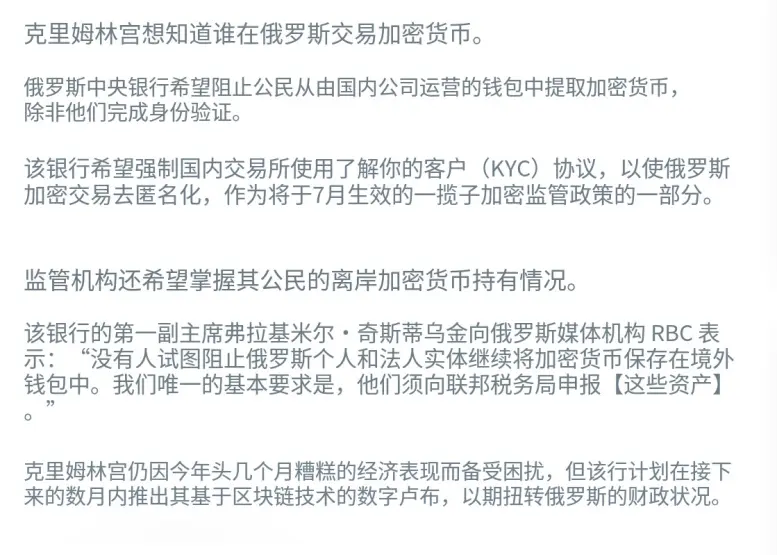
The Russian Central Bank has recently proposed new regulations: requiring all crypto traders to complete KYC real-name verification, restricting unverified users from withdrawing assets from domestic platforms, and banning funds from flowing from domestic custodial wallets to overseas non-custodial wallets.
At the same time, it will also require residents to declare the crypto assets they hold overseas, and the relevant rules are expected to take effect this July.
If you look at these provisions only, you might feel that they are tightening controls, but in fact they are redoing something
View Original
post-image
  • Reward
  • Comment
  • Repost
  • Share
Korea payment service provider NHN KCP and Ava Labs are collaborating to create a dedicated Layer 1 for payments, used for faster authorization, on-chain data, and later for stablecoin settlements and cross-border scenarios. Launch depends on the progress of Korean regulations.
If you look at this from the perspective of another chain, it loses meaning. The key point is simple: it’s not about the payment action, but about clearing.
Front-end experiences like card swipes and QR codes have long been competitive, and users hardly perceive any delay. The real slow, expensive, and convoluted pa
View Original
post-image
  • Reward
  • Comment
  • Repost
  • Share
Many people look at the Sui ecosystem and still stay at the level of "new chain + high performance," but if you dig a layer deeper, you'll find that what’s truly starting to compete is liquidity itself.
What @ferra_protocol is doing can be simply understood as: not just building a DEX, but trying to become the liquidity distribution layer on Sui.
The core lies in three fee-issuing designs: DLMM, DAMM, CLMM.
First, let's talk about DLMM (Discrete Liquidity Market Maker).
Its essence is to split liquidity into a series of price range grids, each of which can be priced and distributed ind
SUI-0,95%
View Original
post-image
  • Reward
  • 1
  • Repost
  • Share
Watton:
Long-term, SUI coin still has unlimited potential and is very powerful!
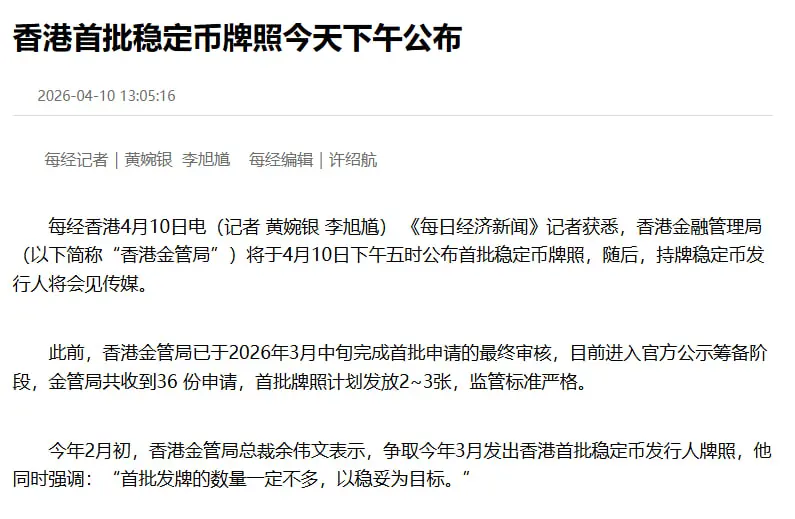
The Hong Kong Monetary Authority will announce the first batch of stablecoin issuer licenses at 5 p.m. today.
36 applications, only 2–3 licenses issued, and even after the initial review, strict control of issuance volume remains. This indicates that the screening criteria are not about whether one can do it, but whether one can back it up.
Once stablecoins are incorporated into the regulatory system, they face not only on-chain liquidity issues but also trust pressures in the real world. If they lose their peg or experience a bank run, who bears the responsibility, and what assets are use
View Original
post-image
  • Reward
  • Comment
  • Repost
  • Share
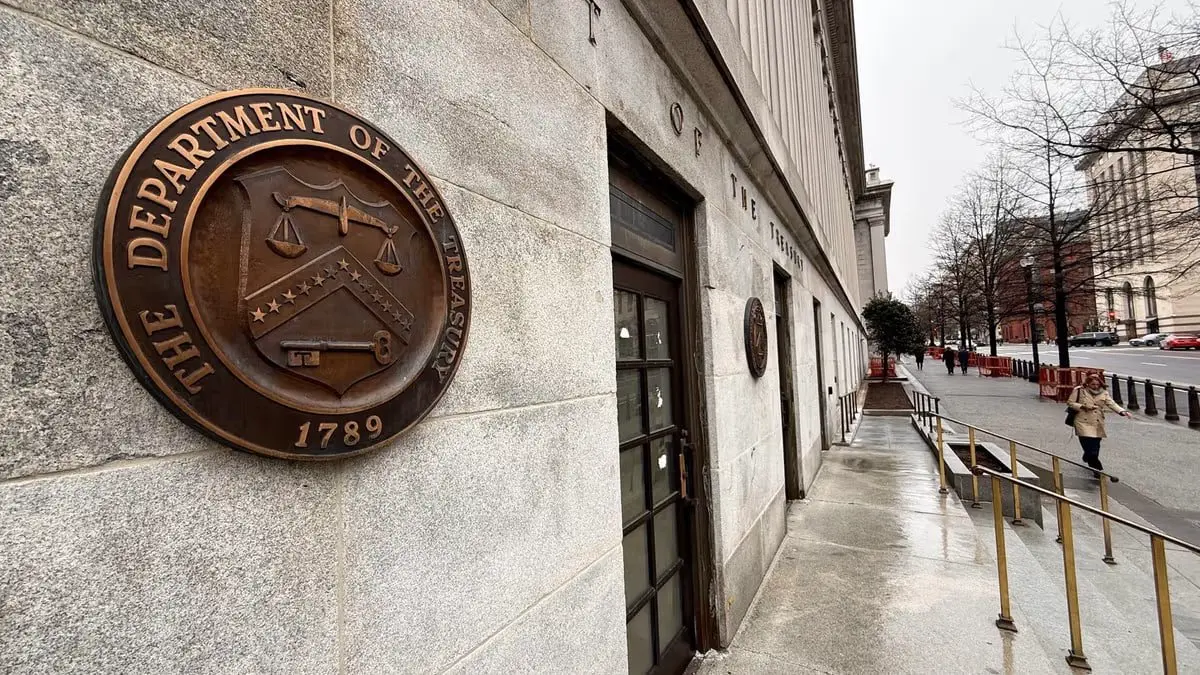
The U.S. Department of the Treasury is about to release proposed rules requiring stablecoin issuers to establish standards for combating money laundering and sanctions violations.
This version of stablecoin regulations continues to strengthen the compliance obligations of issuers. Based on the GENIUS Act, driven by the Financial Crimes Enforcement Network (FinCEN) and the Office of Foreign Assets Control (OFAC), the focus is on two main points: first, issuers must have the capability to handle suspicious transactions (such as suspending or rejecting them); second, they must cooperate with sc
View Original
post-image
  • Reward
  • Comment
  • Repost
  • Share
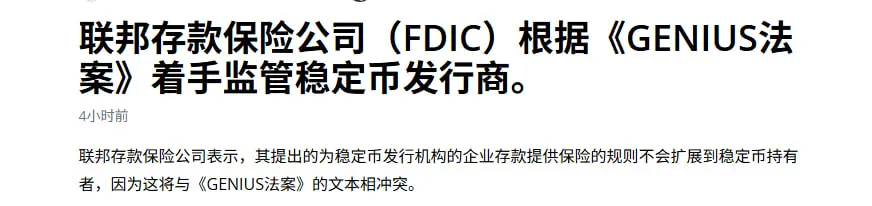
The Federal Deposit Insurance Corporation (FDIC) has released a draft regulation on stablecoins, based on the GENIUS Act. It proposes requirements for issuers within its scope, including reserves, redemption, capital, risk management, and custody. It also clarifies that reserve deposits are insured, but the stablecoin itself is not covered by insurance. The public comment period is currently open for 60 days.
The key point of this draft isn't just the specific provisions, but that it dissects the credit structure of stablecoins.
In the past, the market defaulted to the assumption that stableco
View Original
post-image
  • Reward
  • Comment
  • Repost
  • Share
Today I saw a news report that the U.S. Securities and Exchange Commission has submitted the crypto safe harbor proposal to the White House for review. The core idea is to allow projects to raise funds without immediately needing to complete registration.
In the past, compliance came first, then action, but the problem is that early-stage crypto projects are often not fully developed yet, making it difficult to apply a mature financial framework to them. As a result, many projects get stuck at the starting line—either going overseas or simply not proceeding.
This safe harbor essentially pr
View Original
post-image
  • Reward
  • Comment
  • Repost
  • Share
Today I came across two pieces of news. One is the delay in licensing for stablecoins in Hong Kong, and the other is Hong Kong's upcoming legislation on a crypto asset reporting framework. At first, I thought these two pieces of information were unrelated, but after some reflection, I realized they are connected.
Let's start with the licensing. Originally, the first batch was supposed to be issued in March, but it hasn't happened yet. The market has been speculating whether HSBC or Standard Chartered will get the license. However, based on the information released, the regulators are still rep
View Original
post-image
  • Reward
  • Comment
  • Repost
  • Share
Ant Group's acquisition of Hong Kong stablecoin concept stock Yao Cai Securities has officially completed the transaction, taking a 50.55% stake for HKD 2.814 billion.
This move is actually quite bold.
Ant doesn't lack a brokerage license; what it truly needs is a compliant container that can connect stablecoins, capital flows, and user accounts. Yao Cai Securities just happens to be that interface.
Many people still see stablecoins as a substitute for US dollars on the chain, but in the eyes of players like Ant, they are more like a settlement layer tool.
In the past, cross-border capital flo
View Original
post-image
  • Reward
  • Comment
  • Repost
  • Share
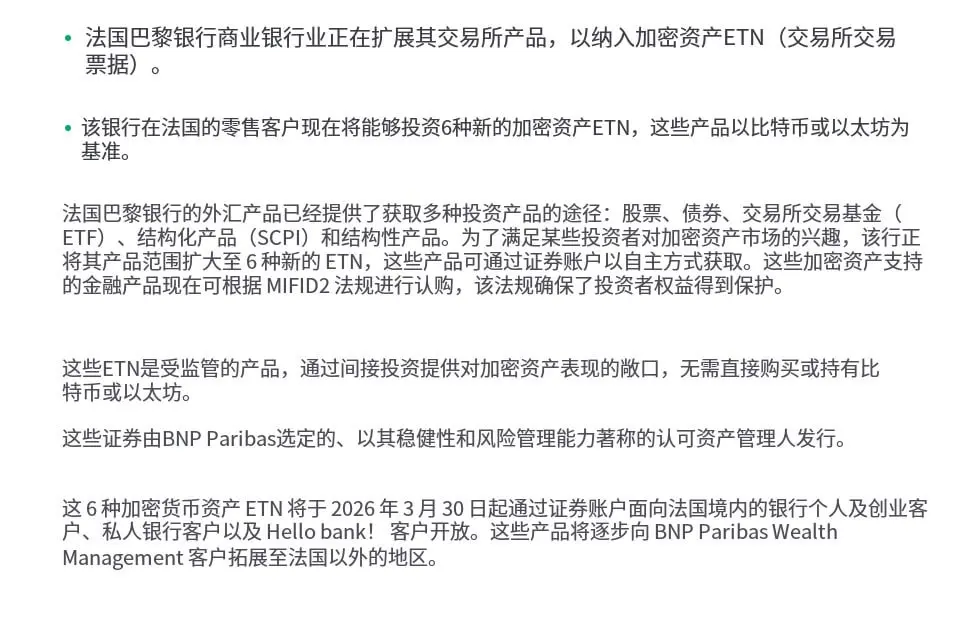
BNP Paribas officially announced that starting today, it will offer 6 crypto-related ETNs to individual and high-net-worth clients in France.
They are packaging the price movements of assets like Bitcoin and Ethereum into a traditional financial product and selling it under the full regulatory framework of MiFID II.
The key point isn't the product itself but the approach.
It provides an alternative way to participate in crypto asset price fluctuations without entering exchanges, touching wallets, or understanding on-chain logic. For many funds restricted by compliance, this is essentiall
BTC-0,6%
ETH-2,08%
View Original
post-image
  • Reward
  • Comment
  • Repost
  • Share
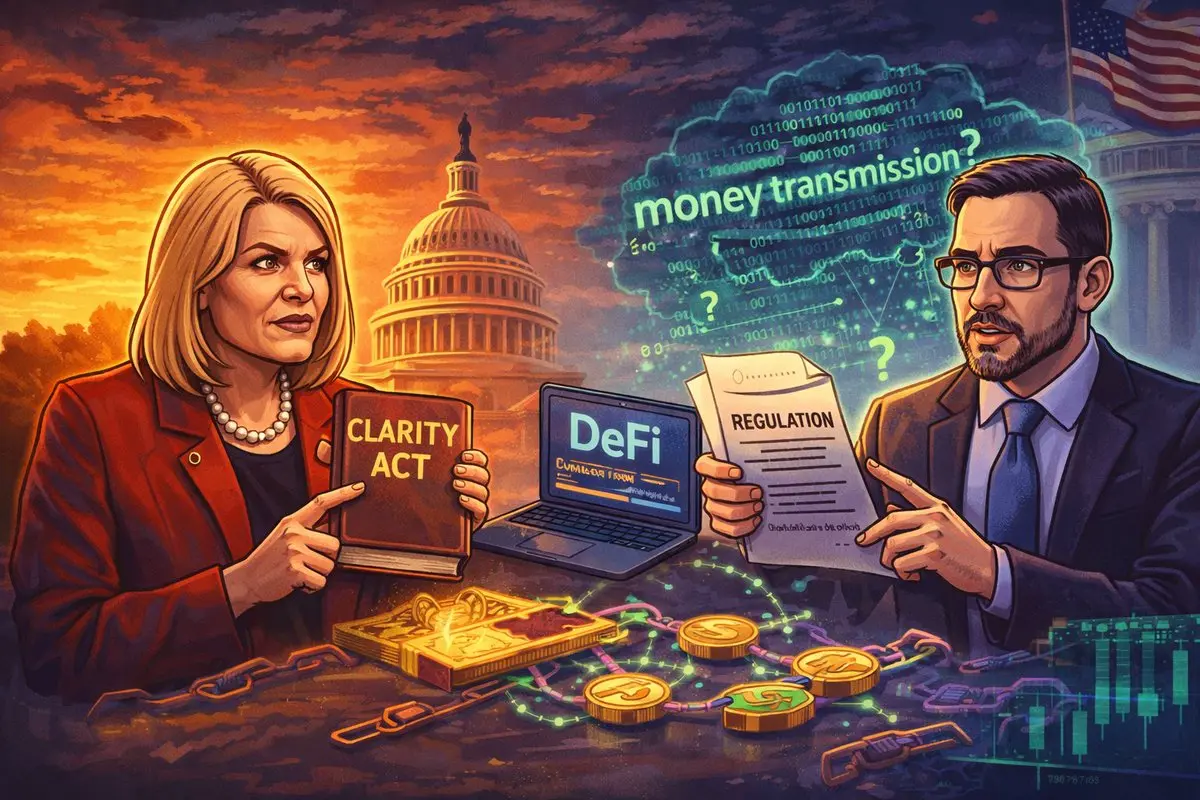
U.S. Senator Cynthia Lummis has announced that after revisions, the CLARITY Act will provide the strongest protection for DeFi developers. It sounds impressive, but a closer look reveals some doubts.
Crypto lawyer Jake Chervinsky pointed out that the more critical issue is that the definition of fund transmission has not been clarified. As long as this point isn't tightened, many DeFi projects—even just writing code—could be interpreted as participating in fund flows, which still carries legal liability risks.
It can only be said that the current version verbally protects developers, but l
View Original
post-image
  • Reward
  • Comment
  • Repost
  • Share
This time, the UK sanctioned Xinbi, which operates crypto channels, and also took down the scam operations in Cambodia along with the entire underlying financial network behind them.
According to Chainalysis data, between 2021 and 2025, Xinbi processed over $19.9 billion in funds. Such a scale is no small operation; it’s already a mature underground financial system.
It’s not just a single service; it combines scams, money transfers, information trading, and more, forming a complete industry chain.
Many used to think that crypto was mainly a tool, and problems arose from bad actors misus
View Original
post-image
  • Reward
  • Comment
  • Repost
  • Share
Futu Holdings is turning Cheetah Trading (Hong Kong) Limited into a licensed exchange and integrating it with Futu Securities. On the surface, it appears to be a combination of brokerage + crypto, but the core is actually three key aspects: unified accounts, unified collateral, and a rewritten risk control model.
First, let's talk about accounts. Traditional brokerage accounts are fundamentally a highly regulated, tightly cleared system, backed by mature structures like T+2 settlement, margin rules, and forced liquidation mechanisms. In contrast, crypto exchanges operate on a different logic—b
BTC-0,6%
ETH-2,08%
View Original
post-image
  • Reward
  • Comment
  • Repost
  • Share
Ripple's participation in the Monetary Authority of Singapore's pilot is actually doing something very pragmatic—truly putting stablecoins to work in cross-border trade.
Its solution with Unloq integrates key elements like trade obligations and settlement conditions into one layer. Once conditions are met, payments are automatically completed on the XRP Ledger using RLUSD. Processes that originally relied on manual review and multilayered banking relationships are transformed into condition-triggered execution. The core shift is moving trust from intermediaries to the system.
The significance
XRP-1,01%
View Original
post-image
  • Reward
  • 9
  • Repost
  • Share
GateUser-5e89bf15:
The bullish market is at its peak 🐂
View More
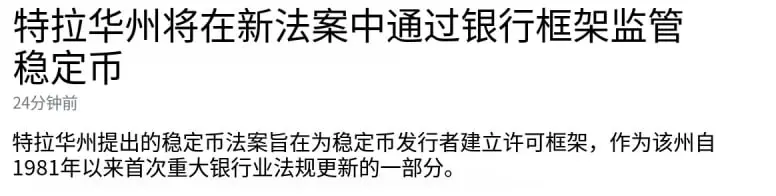
Delaware this time can be said to have given stablecoins a truly usable set of rules.
The relevant legislation introduced by Spiros Mantzavinos and Bill Bush is not just a simple regulatory update, but rather an attempt to formally integrate stablecoins into a framework that closely resembles the banking system.
For example, reserve redemption mechanisms, mandatory redemption timelines, capital requirements, and anti-money laundering obligations—when these designs are pieced together, they're essentially answering a core question: can stablecoins truly be used as reliable financial instruments
View Original
post-image
  • Reward
  • Comment
  • Repost
  • Share
Morgan Stanley has submitted revised Bitcoin spot ETF documentation to the US Securities and Exchange Commission again, planning to list as MSBT on NYSE Arca, while introducing BNY Mellon as custodian and Coinbase as prime broker. This entire configuration is essentially the standard combination of traditional finance + crypto-native already.
If approved, this could be the first major US bank to directly issue and underwrite a Bitcoin spot ETF. The significance lies not in the product itself, but in the role shift—Wall Street is beginning to move from selling products to making products.
In my
BTC-0,6%
View Original
post-image
  • Reward
  • Comment
  • Repost
  • Share
Traditional finance is starting to use blockchain as basic infrastructure.
This tokenized stock pilot, approved by the U.S. Securities and Exchange Commission and advanced by Nasdaq, is essentially not creating new assets—it's moving something more fundamental: settlement.
In the past, stock trading was fast trading and slow settlement. You see execution in seconds, but the actual clearing and delivery still relied on centralized infrastructure like the Depository Trust & Clearing Corporation.
What this pilot is doing is attempting to move the settlement step onto the chain.
There are two key
View Original
post-image
  • Reward
  • Comment
  • Repost
  • Share
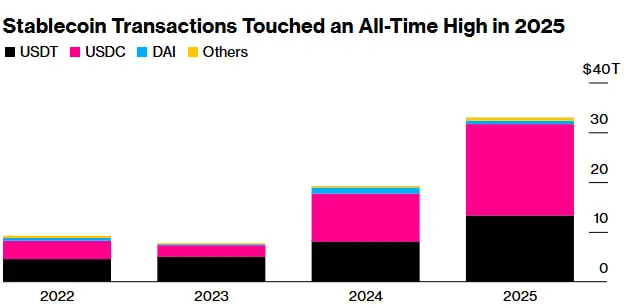
RedotPay's financing and IPO progress is quite representative—stablecoin payments are transitioning from narrative to scale validation.
On one hand, there's data: annualized payment volume exceeding $10 billion, rapid user and revenue growth, showing this track is no longer just a concept but something people are actually using and paying for. Especially in cross-border payments and emerging market scenarios, stablecoins are indeed replacing some traditional channels, and this is becoming increasingly clear.
On the other hand, there's capital momentum: consecutive funding rounds, pushing for h
View Original
post-image
post-image
  • Reward
  • Comment
  • Repost
  • Share
  • Pin