MrSanwal

vip
Age 0.1 Yıl
Peak Tier 0
No content yet
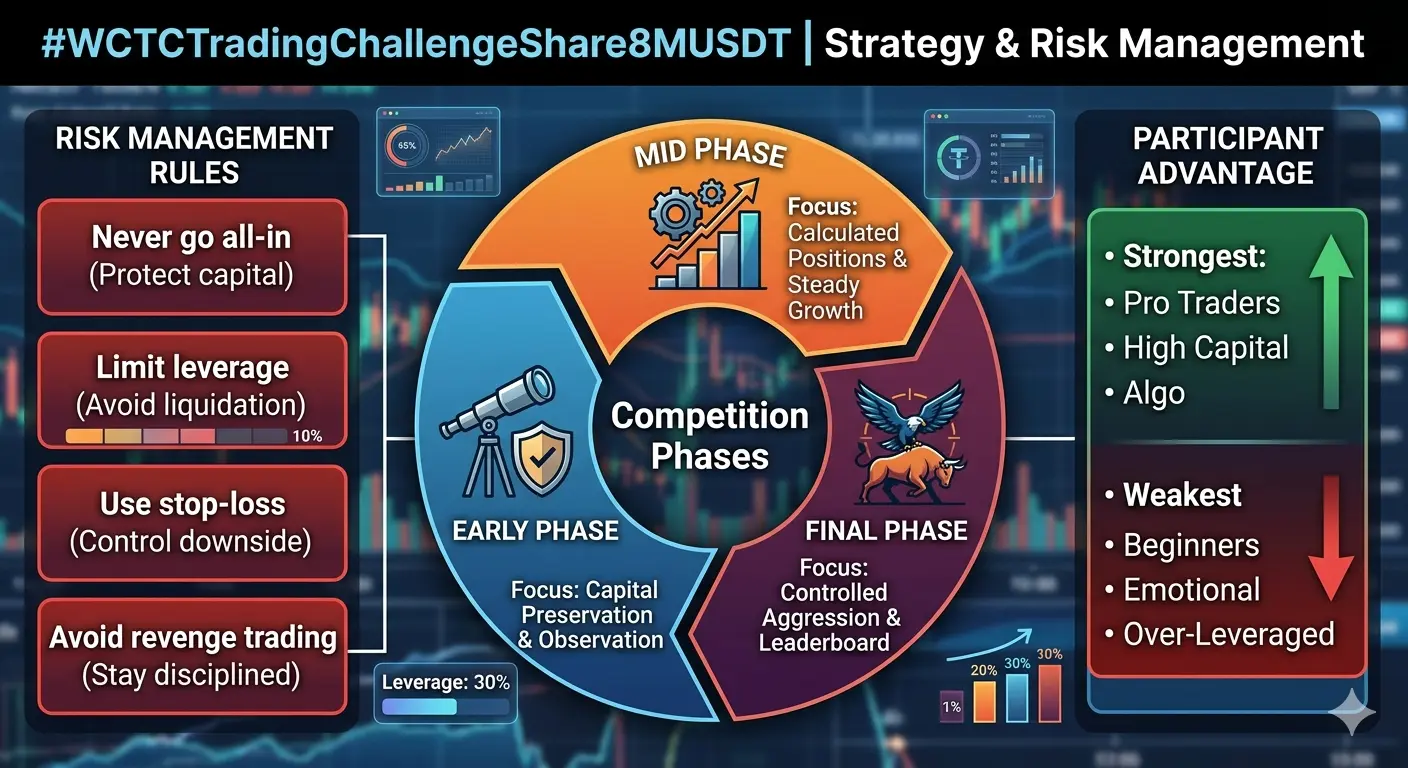
#WCTCTradingChallengeShare8MUSDT
1. Introduction: More Than Just a Trading Competition
The announcement of the WCTC S8 Global Trading Competition with an $8 million prize pool is not just another promotional campaign—it represents a growing trend in the crypto industry where exchanges gamify trading to drive engagement, liquidity, and user acquisition.
At first glance, it looks like a golden opportunity:
Massive prize pool
Multiple competition formats
Signup bonuses
Team incentives
But beneath the surface, there is a deeper strategic structure at play—one that benefits both traders and the ex
Vortex_King
#WCTCTradingChallengeShare8MUSDT
1. Introduction: More Than Just a Trading Competition
The announcement of the WCTC S8 Global Trading Competition with an $8 million prize pool is not just another promotional campaign—it represents a growing trend in the crypto industry where exchanges gamify trading to drive engagement, liquidity, and user acquisition.
At first glance, it looks like a golden opportunity:
Massive prize pool
Multiple competition formats
Signup bonuses
Team incentives
But beneath the surface, there is a deeper strategic structure at play—one that benefits both traders and the exchange itself.
This post is a complete deep-dive into what this competition really means, how it works, who benefits the most, and how you should approach it if you plan to participate.
---
2. Understanding WCTC S8: Structure and Format
The competition is designed to attract a wide range of participants—from beginners to professional traders.
Key Components:
Feature Description
Prize Pool $8 Million USDT
Modes Team Battle, Individual, 1v1 PK
Duration ~1 Month
Entry Incentive 20 USDT voucher
Bonus Team leader incentives
This multi-layered structure ensures that:
Beginners feel welcome
Experienced traders stay engaged
High-volume traders dominate rewards
---
3. The Psychology Behind Trading Competitions
Before diving into strategy, it's important to understand the psychology these events leverage.
3.1 Gamification of Trading
Competitions turn trading into a game:
Leaderboards create competition
Rewards trigger motivation
Deadlines increase urgency
This leads to:
👉 More trades
👉 Higher risk-taking
👉 Emotional decision-making
3.2 Fear of Missing Out (FOMO)
Marketing phrases like:
“$8 Million Prize Pool”
“Limited team bonuses”
“Daily rewards”
are designed to create urgency and participation spikes.
3.3 Overconfidence Bias
Traders often believe they can outperform others—especially in short-term contests.
But statistically:
👉 Most participants lose or underperform
👉 Only a small percentage capture the majority of rewards
---
4. How Exchanges Benefit from These Competitions
While traders focus on prizes, exchanges focus on something else: volume and growth.
4.1 Increased Trading Volume
Competitions encourage:
Frequent trades
Larger position sizes
High leverage usage
This directly increases:
Fee revenue
Liquidity depth
Market activity
4.2 User Acquisition
The event attracts:
New users (via bonuses)
Dormant users (re-engagement)
Social sharing (team formation)
4.3 Capital Retention
Participants keep funds on the platform longer, increasing:
Exchange stability
Internal liquidity
Key Insight:
👉 The exchange always wins—regardless of who wins the competition.
---
5. Prize Pool Reality: $8M Sounds Big, But…
An $8 million prize pool sounds massive—but distribution matters.
Typical Distribution Pattern:
Tier Participants Reward Share
Top 1% Elite traders Majority share
Top 10% Skilled traders Moderate rewards
Remaining 90% Majority Minimal or none
This means:
👉 Most participants will not win significant rewards
👉 Top traders dominate payouts
---
6. Competition Modes: Opportunities and Risks
6.1 Team Battle
Pros:
Shared rewards
Lower individual pressure
Community support
Cons:
Dependence on team performance
Coordination challenges
6.2 Individual Competition
Pros:
Full control
Maximum reward potential
Cons:
High competition
Requires consistent performance
6.3 1v1 PK Mode
Pros:
Direct competition
Quick results
Cons:
High volatility
High risk of rapid loss
---
7. The Role of Leverage: Double-Edged Sword
Most trading competitions heavily involve leveraged trading.
Why Leverage Matters:
Amplifies gains
Increases leaderboard ranking quickly
But also:
Amplifies losses
Can wipe accounts instantly
Reality Check:
👉 High-ranking traders often take extreme risks
👉 Survivorship bias makes winners look easier than they are
---
8. Strategy: How to Approach the Competition
If you plan to participate, strategy is everything.
8.1 Phase-Based Strategy
Phase 1: Early Stage
Focus on capital preservation
Avoid aggressive trades
Observe market trends
Phase 2: Mid Competition
Gradually increase risk
Take calculated positions
Aim for steady growth
Phase 3: Final Stage
Controlled aggression
Target leaderboard jumps
Avoid emotional trading
---
8.2 Risk Management Rules
Rule Explanation
Never go all-in Protect capital
Limit leverage Avoid liquidation
Use stop-loss Control downside
Avoid revenge trading Stay disciplined
---
9. Who Has the Real Advantage?
Not all participants are equal.
Strongest Participants:
Professional traders
High-capital accounts
Algorithmic traders
Experienced derivatives traders
Weakest Participants:
Beginners
Emotional traders
Over-leveraged participants
Insight:
👉 This is not a level playing field.
---
10. Hidden Risks Most People Ignore
10.1 Emotional Burnout
Constant competition leads to:
Stress
Overtrading
Poor decisions
10.2 Capital Loss
Many participants:
Lose initial capital
Chase losses
Exit worse than they entered
10.3 False Expectations
Marketing creates unrealistic beliefs about winning.
---
11. The Role of Bonuses and Incentives
20 USDT Voucher
Designed to attract new users
Encourages platform engagement
Team Leader Bonuses
Incentivizes recruitment
Expands user base organically
Daily Rewards
Keeps users active daily
Increases trading frequency
---
12. Is It Worth Participating?
YES, if:
You treat it as a learning experience
You manage risk properly
You use small capital
NO, if:
You expect guaranteed profit
You over-leverage
You trade emotionally
---
13. Market Impact of Competitions
Large competitions can influence market behavior:
Increased volatility
Sudden price spikes
Liquidity surges
This creates both:
👉 Opportunities
👉 Traps
---
14. Final Strategic Insight
The WCTC S8 competition is not just about trading—it’s about:
Psychology
Discipline
Risk control
Strategic execution
Winning is not about being lucky—it’s about surviving long enough while making smart moves.
---
15. Conclusion: Opportunity or Trap?
The #WCTCTradingChallengeShare8MUSDT event represents both:
Opportunity:
Large rewards
Skill development
Market exposure
Risk:
High competition
Capital loss
Emotional pressure
---
Final Line:
This competition is not designed for everyone to win.
It is designed for everyone to participate.
The real winners are those who understand the rules behind the game—not just the game itself.
repost-content-media
  • Reward
  • Comment
  • Repost
  • Share
#TrumpUltimatumtoPowell
1. Introduction: When Politics Meets Monetary Power
The phrase #TrumpUltimatumtoPowell captures a high-stakes confrontation at the heart of the global financial system—political authority versus central bank independence.
At its core, this issue is not just about personalities or short-term policy disagreements. It reflects a deeper structural tension:
Governments want faster economic growth
Central banks aim for long-term stability
When these goals diverge, conflict becomes inevitable.
In 2026, this tension has resurfaced dramatically, with renewed pressure from polit
Vortex_King
#TrumpUltimatumtoPowell
1. Introduction: When Politics Meets Monetary Power
The phrase #TrumpUltimatumtoPowell captures a high-stakes confrontation at the heart of the global financial system—political authority versus central bank independence.
At its core, this issue is not just about personalities or short-term policy disagreements. It reflects a deeper structural tension:
Governments want faster economic growth
Central banks aim for long-term stability
When these goals diverge, conflict becomes inevitable.
In 2026, this tension has resurfaced dramatically, with renewed pressure from political leadership on the Federal Reserve—particularly its chairman—to align monetary policy with broader economic and political objectives.
---
2. Understanding the Key Players
To fully grasp the situation, we need to understand the roles of the two central figures:
Donald Trump
Represents political leadership and economic agenda
Focuses on growth, employment, and market performance
Sensitive to public sentiment and electoral outcomes
Jerome Powell
Head of the U.S. central bank
Responsible for monetary policy
Mandate: control inflation and support employment
---
3. What Is the “Ultimatum”?
The term “ultimatum” suggests strong, direct pressure—either explicit or implied—on the Federal Reserve to act in a certain way.
Key Areas of Pressure:
Policy Area Political Demand Fed Perspective
Interest Rates Cut rates quickly Wait for inflation control
Liquidity Inject more money Avoid overheating economy
Growth Accelerate economy Maintain balance
The conflict arises because:
👉 Short-term growth often conflicts with long-term stability
---
4. Why This Conflict Is Happening Now
4.1 Economic Context in 2026
The U.S. economy is in a complex phase:
Growth is slowing but not collapsing
Inflation remains persistent
Labor markets are still relatively strong
This creates a dilemma:
Cutting rates too early risks inflation
Keeping rates high risks slowing growth
---
4.2 Political Incentives
Political leadership prefers:
Lower borrowing costs
Strong stock markets
Rapid economic expansion
These outcomes are more visible to voters and markets.
---
4.3 Federal Reserve Constraints
The Federal Reserve must consider:
Inflation data
Long-term economic stability
Global financial conditions
It cannot act purely based on political demands.
---
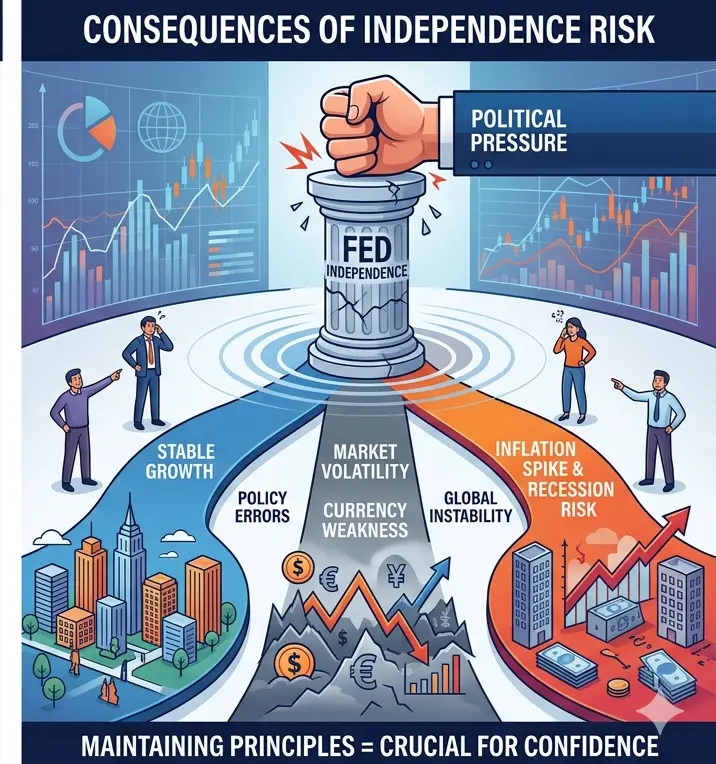
5. Central Bank Independence: Why It Matters
Central bank independence is one of the most important principles in modern economics.
Why Independence Exists:
Reason Explanation
Credibility Markets trust unbiased decisions
Stability Avoids politically driven inflation
Long-term focus Prevents short-term manipulation
If central banks lose independence:
👉 Inflation can spiral
👉 Currency confidence can weaken
👉 Markets can become unstable
---
6. Historical Context: This Isn’t New
Pressure on the Federal Reserve is not unprecedented.
Past examples show similar tensions:
Political leaders pushing for rate cuts
Disagreements during economic slowdowns
Public criticism of Fed decisions
However, what makes the current situation unique is:
👉 The intensity and public nature of the pressure
---
7. Market Reaction: Why Investors Care
Markets closely monitor any tension between political leadership and the Federal Reserve.
7.1 Stock Market Impact
Rate cut expectations → bullish
Policy uncertainty → volatility
7.2 Bond Market Impact
Yields fluctuate based on rate expectations
Increased uncertainty raises risk premiums
7.3 Currency Impact
Perceived political interference can weaken the dollar
Confidence in monetary policy becomes critical
---
8. The Core Conflict: Growth vs Inflation
This entire situation boils down to a fundamental economic trade-off.
Growth Focus:
Lower interest rates
More liquidity
Higher consumption and investment
Inflation Control:
Higher interest rates
Reduced liquidity
Controlled demand
The Balance:
Scenario Outcome
Too much growth Inflation spike
Too much control Economic slowdown
---
9. Strategic Interpretation: What Trump Wants vs What Powell Must Do
Political Strategy:
Push for aggressive rate cuts
Stimulate economic activity
Support financial markets
Central Bank Strategy:
Wait for clear inflation decline
Avoid premature easing
Maintain credibility
Key Insight:
👉 Both sides are rational—but operating under different priorities
---
10. Risks of Escalation
If pressure intensifies, several risks emerge.
10.1 Policy Mistakes
Premature rate cuts
Over-tightening
10.2 Market Volatility
Sudden shifts in expectations
Increased uncertainty
10.3 Institutional Damage
Loss of trust in Federal Reserve independence
Long-term credibility risks
---
11. Global Implications
The U.S. Federal Reserve is not just a domestic institution—it affects the entire world.
Global Effects:
Emerging markets depend on U.S. rates
Global liquidity influenced by Fed policy
Currency stability tied to dollar strength
If Conflict Escalates:
👉 Global markets could experience increased volatility
---
12. Crypto Market Connection
Interestingly, situations like this often impact crypto markets.
Why?
Crypto seen as alternative to traditional systems
Hedge against monetary instability
Reaction to fiat currency uncertainty
Potential Outcomes:
Scenario Crypto Reaction
Fed loses credibility Bullish crypto
Stable policy Neutral
Tight liquidity Bearish short-term
---
13. Possible Scenarios Going Forward
Scenario 1: Compromise
Gradual rate cuts
Balanced messaging
Market stability
Scenario 2: Continued Tension
Mixed signals
Volatile markets
Delayed decisions
Scenario 3: Policy Shift Under Pressure
Faster rate cuts
Short-term market rally
Long-term risks
---
14. What Investors Should Watch
Key indicators to monitor:
Inflation data
Federal Reserve statements
Political messaging
Bond yields
Dollar strength
These signals will reveal which direction policy is moving.
---
15. Final Insight: Power vs Principle
The #TrumpUltimatumtoPowell situation represents more than a policy debate.
It is a test of:
Institutional independence
Economic discipline
Political influence
---
16. Conclusion: A Defining Moment
The outcome of this conflict will shape:
U.S. economic trajectory
Global financial markets
Trust in central banking systems
Final Thought:
Markets can handle bad news.
They struggle with uncertainty.
Right now, this situation creates exactly that—uncertainty.
---
Final Line:
This is not just about interest rates.
It is about who controls the future of money—
politics
repost-content-media
  • Reward
  • Comment
  • Repost
  • Share
#AllbirdsPivotstoAI
1. Introduction: A Surprising Pivot That Signals a Bigger Trend
The phrase #AllbirdsPivotstoAI might sound unexpected at first.
A company known for eco-friendly footwear suddenly shifting focus toward artificial intelligence raises an important question:
👉 Why would a sustainable shoe brand move into AI?
The answer lies not just in Allbirds’ internal challenges, but in a broader transformation happening across industries. In 2026, AI is no longer limited to tech companies—it has become a core operational tool for survival, efficiency, and growth.
This is not a random pivo
Vortex_King
#AllbirdsPivotstoAI
1. Introduction: A Surprising Pivot That Signals a Bigger Trend
The phrase #AllbirdsPivotstoAI might sound unexpected at first.
A company known for eco-friendly footwear suddenly shifting focus toward artificial intelligence raises an important question:
👉 Why would a sustainable shoe brand move into AI?
The answer lies not just in Allbirds’ internal challenges, but in a broader transformation happening across industries. In 2026, AI is no longer limited to tech companies—it has become a core operational tool for survival, efficiency, and growth.
This is not a random pivot. It is a strategic response to pressure, competition, and the need to reinvent.
---
2. Understanding Allbirds
Before analyzing the pivot, it’s important to understand where Allbirds stands.
Company Identity:
Founded as a sustainable footwear brand
Known for eco-friendly materials (wool, sugarcane, recycled fibers)
Positioned as a premium yet minimalist lifestyle brand
Original Strengths:
Strength Description
Sustainability Strong environmental narrative
Brand Identity Clean, simple, ethical
Direct-to-Consumer Strong online presence
Emerging Problems:
Slowing sales growth
Increasing competition
Profitability challenges
Changing consumer behavior
👉 In simple terms: strong brand, but weakening business momentum
---
3. Why the Pivot Became Necessary
3.1 Market Reality in 2026
Retail and consumer brands are facing a new reality:
Rising customer acquisition costs
Demand volatility
Supply chain inefficiencies
Margin compression
Traditional strategies are no longer enough.
---
3.2 Competitive Pressure
Allbirds is no longer alone in its niche.
Competitors now include:
Established giants adopting sustainability
Fast fashion brands replicating designs
New startups with stronger tech integration
👉 Differentiation is shrinking.
---
3.3 Internal Financial Pressure
Like many modern brands, Allbirds has faced:
Declining margins
Inventory challenges
Operational inefficiencies
This creates urgency:
👉 Optimize or fall behind.
---
4. What Does “Pivot to AI” Actually Mean?
This is where many misunderstand the story.
Allbirds is not becoming a tech company.
Instead, it is becoming an AI-powered consumer brand.
Key Areas of AI Integration:
Area Application
Supply Chain Demand forecasting
Marketing Personalized campaigns
Inventory Smart stock management
Design Data-driven product development
Customer Experience AI recommendations
👉 AI is not the product—it is the engine behind the business
---
5. Step-by-Step Breakdown of the AI Strategy
Step 1: Data Collection and Integration
AI starts with data.
Allbirds is likely focusing on:
Customer purchase behavior
Website interactions
Product performance
Regional demand patterns
Goal:
👉 Build a centralized data ecosystem
---
Step 2: Predictive Analytics
Using AI models to forecast:
Which products will sell
When demand will rise
Where inventory is needed
Impact:
Reduced overproduction
Lower costs
Higher efficiency
---
Step 3: Personalization Engine
AI allows hyper-personalized experiences:
Product recommendations
Email targeting
Dynamic pricing strategies
Result:
👉 Higher conversion rates
---
Step 4: AI in Product Design
This is one of the most interesting areas.
AI can analyze:
Consumer preferences
Material performance
Market trends
Outcome:
👉 Faster, smarter product development
---
Step 5: Operational Automation
AI reduces manual processes:
Logistics optimization
Customer service chatbots
Inventory allocation
Benefit:
👉 Cost reduction + scalability
---
6. Strategic Advantage of the AI Pivot
6.1 Efficiency Gains
AI helps eliminate waste:
Better inventory control
Reduced returns
Optimized production
---
6.2 Margin Improvement
By reducing inefficiencies:
👉 Profit margins improve without raising prices
---
6.3 Competitive Differentiation
AI creates a new edge:
Faster decision-making
Better customer targeting
Smarter operations
---
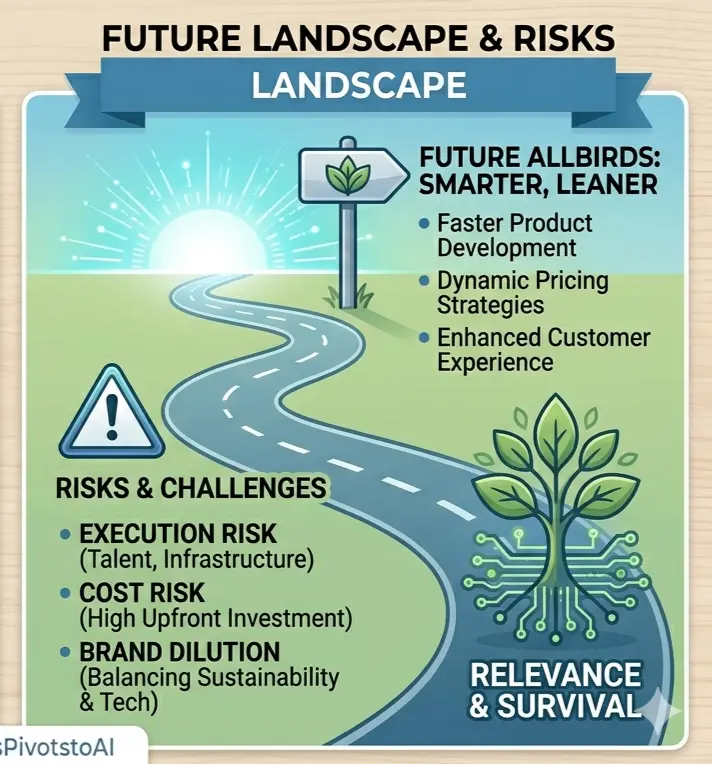
7. Risks of the Pivot
No strategy is without risk.
7.1 Execution Risk
AI implementation is complex
Requires talent and infrastructure
7.2 Cost Risk
High upfront investment
Delayed return on investment
7.3 Brand Risk
Allbirds’ identity is sustainability.
👉 Over-focusing on tech could dilute brand perception
---
8. Industry Trend: AI is Reshaping Retail
Allbirds is not alone.
Across industries, companies are adopting AI to survive and grow.
Broader Trend:
Retail → Data-driven
Marketing → Algorithmic
Supply chains → Predictive
Key Insight:
👉 AI is becoming the backbone of modern business
---
9. Investor Perspective
Why Investors May Like This Move:
Signals innovation
Shows proactive strategy
Addresses efficiency issues
Concerns:
Execution timeline
Cost vs benefit
Impact on growth
---
10. What This Means for the Future of Allbirds
The success of this pivot depends on:
Speed of implementation
Quality of AI models
Alignment with brand identity
Possible Outcomes:
Scenario Outcome
Successful pivot Strong recovery
Partial success Moderate improvement
Failed execution Continued decline
---
11. Lessons from This Pivot
Lesson 1:
👉 Even strong brands must evolve
Lesson 2:
👉 Sustainability alone is not enough—efficiency matters
Lesson 3:
👉 AI is not optional anymore
---
12. Strategic Insight: This Is Not About Shoes
At a deeper level, this pivot represents something bigger:
👉 The transformation of traditional companies into tech-enabled ecosystems
Allbirds is not changing what it sells.
It is changing how it operates.
---
13. Final Conclusion
The story is a reflection of modern business reality.
Markets are more competitive
Consumers are more demanding
Margins are tighter
In this environment:
👉 AI is not innovation—it is survival
---
Final Line:
Allbirds is not becoming a tech company.
It is becoming a smarter company.
repost-content-media
  • Reward
  • Comment
  • Repost
  • Share
#US-IranTalksVSTroopBuildup
US–Iran Geopolitics: Markets Are Pricing Peace — But Is It Real?
This isn’t just another geopolitical headline.
It’s a live macro event shaping global markets, oil flows, inflation expectations, and crypto sentiment — all at once.
Let’s break it down clearly 👇
---
🌍 What’s Actually Happening Right Now?
A real conflict began roughly 7 weeks ago, and since then, the situation has evolved into a high-stakes geopolitical chess game.
Key Timeline:
April 7: A temporary ceasefire (2 weeks) triggered a sharp rally in the S&P 500
April 11–12: US–Iran talks in Islamabad co
BTC-2,12%
ETH-3,15%
USDC-0,02%
Vortex_King
#US-IranTalksVSTroopBuildup
US–Iran Geopolitics: Markets Are Pricing Peace — But Is It Real?
This isn’t just another geopolitical headline.
It’s a live macro event shaping global markets, oil flows, inflation expectations, and crypto sentiment — all at once.
Let’s break it down clearly 👇
---
🌍 What’s Actually Happening Right Now?
A real conflict began roughly 7 weeks ago, and since then, the situation has evolved into a high-stakes geopolitical chess game.
Key Timeline:
April 7: A temporary ceasefire (2 weeks) triggered a sharp rally in the S&P 500
April 11–12: US–Iran talks in Islamabad collapsed — major disagreements remained unresolved
April 14–15: Renewed optimism pushed markets higher → S&P 500 hit a fresh all-time high
April 16 (Now): Reports suggest an “in-principle” ceasefire extension, but no official US confirmation yet
⚠️ Meanwhile:
US naval blockade on Iranian ports is still active
Strait of Hormuz tensions remain unresolved
---
⚠️ The 3 Core Issues Blocking a Deal
1. Nuclear Program (Uranium Enrichment Limits)
2. Strait of Hormuz Control (Oil Flow Lifeline)
3. War Damage Compensation
These are not minor disagreements — they are structural conflicts.
---
❓ Q1 — Peace or Escalation?
📊 Realistic View: Fragile Stability (Not Full Peace)
Both sides WANT a deal:
Iran’s economy is under pressure due to oil export restrictions
The US wants to avoid prolonged war amid inflation concerns
Regional players (Pakistan, Qatar) pushing mediation
BUT…
🚧 Major Barriers:
Nuclear enrichment = red line for both sides
US reluctant to lift blockade without concessions
Trust gap remains extremely high
🧭 Most Likely Outcome:
Ceasefire gets extended (short-term relief)
No full agreement yet
Risk of escalation still exists (low probability, high impact)
---
📈 Q2 — Market Reaction: Rally or “Sell the News”?
Here’s the key insight:
👉 Markets have already priced in optimism.
S&P 500 at all-time highs
Bitcoin around $74K
Risk sentiment recovering
🟢 If Peace Deal Succeeds:
Oil drops → inflation pressure eases
Risk assets spike briefly
Then likely profit-taking (3–7% pullback)
🔴 If Talks Fail:
Oil spikes sharply
Inflation fears return
Stocks drop
Crypto follows short-term downside
Safe havens like Gold benefit
🎯 Bottom Line:
Upside is limited, downside risk is stronger right now
---
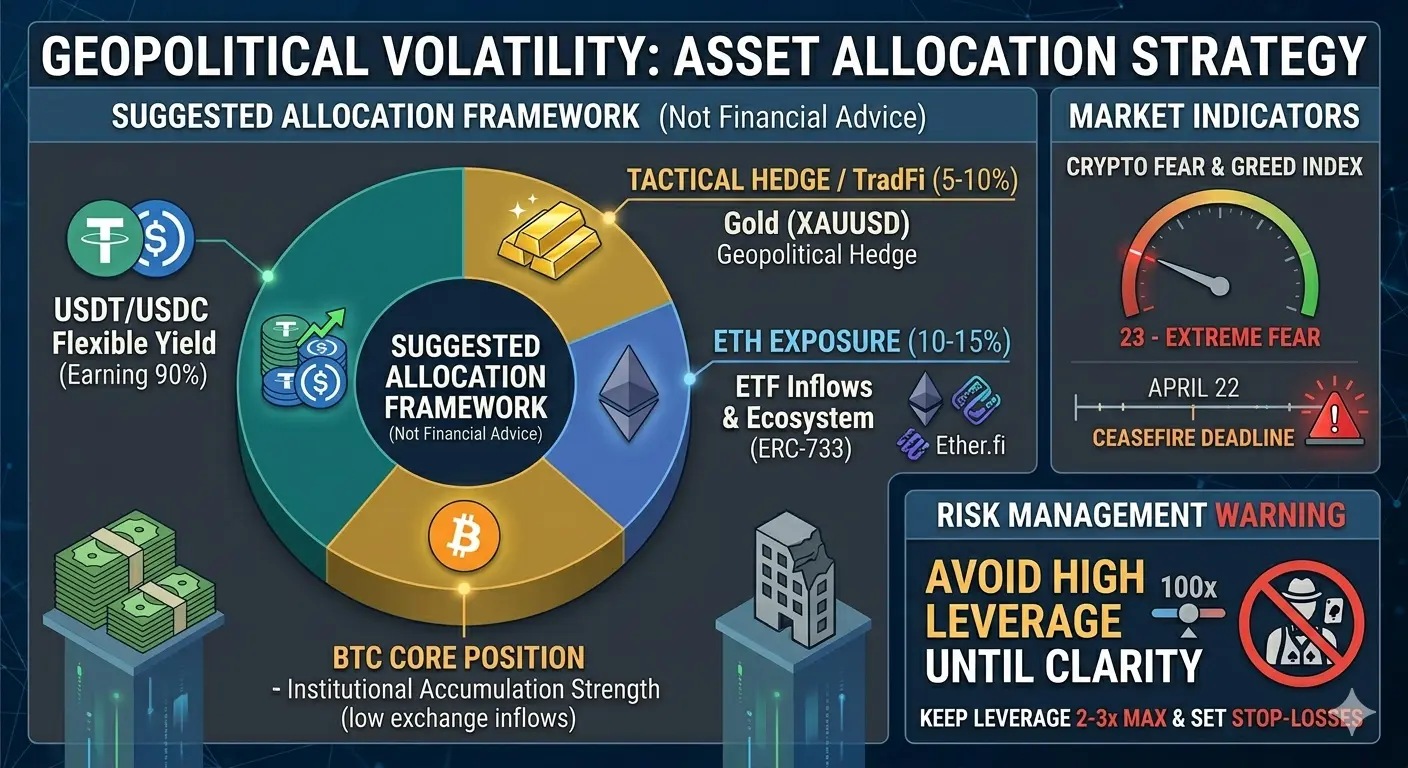
💼 Q3 — Smart Asset Allocation Strategy
🧠 Current Sentiment:
Fear & Greed Index: Extreme Fear (23)
→ historically a buy zone, but volatility still high
---
🪙 Suggested Strategy Framework:
1️⃣ Stable Base (40–50%)
USDT / USDC
Earn passive yield
Keep liquidity for dips
---
2️⃣ BTC Core (25–35%)
Bitcoin = strongest macro asset
Institutional accumulation remains strong
Key zone: $73K–$76K
---
3️⃣ ETH Exposure (10–15%)
Ethereum still undervalued vs BTC
Strong ecosystem growth
Better upside potential
---
4️⃣ Hedge Layer
Add Gold exposure
Protects against geopolitical shocks
---
5️⃣ Avoid High Leverage ⚠️
April 22 = key catalyst
High leverage = high risk
If used → keep it minimal (2–3x max)
---
🧭 Key Market Insight
This is not a “clear trend” market.
It’s a headline-driven volatility market.
👉 Peace = already priced
👉 Conflict = not fully priced
---
🧠 Final Take
Markets are betting on stability…
But stability is not guaranteed.
---
🎯 One-Line Summary
Hold your core positions, keep liquidity ready, and don’t chase highs — April 22 could decide the next major
repost-content-media
  • Reward
  • Comment
  • Repost
  • Share
#GatePreIPOsLaunchesWithSpaceX
SpaceX is not just a company — it represents a shift in how humanity approaches technology, exploration, and long-term ambition. From reusable rockets to interplanetary vision, it has redefined what is considered possible in the private sector. What once belonged only to governments is now being executed — and accelerated — by a single commercial entity.
Over the past decade, SpaceX has evolved from a high-risk startup into arguably the most influential aerospace company in the world. Its achievements are not incremental; they are exponential. The successful dev
GUSD-0,02%
Vortex_King
#GatePreIPOsLaunchesWithSpaceX
SpaceX is not just a company — it represents a shift in how humanity approaches technology, exploration, and long-term ambition. From reusable rockets to interplanetary vision, it has redefined what is considered possible in the private sector. What once belonged only to governments is now being executed — and accelerated — by a single commercial entity.
Over the past decade, SpaceX has evolved from a high-risk startup into arguably the most influential aerospace company in the world. Its achievements are not incremental; they are exponential. The successful development of reusable launch systems has dramatically reduced the cost of space access. Its satellite network ambitions are reshaping global connectivity. And its long-term goal — making humanity a multi-planetary species — pushes it far beyond the boundaries of a typical corporation.
Now, something equally significant is happening on the financial side: access to SpaceX-like exposure before a traditional IPO structure becomes available to broader participants.
This opens up a serious discussion — not just about SpaceX itself, but about how investment access is evolving.
---
1. What Are Your Thoughts on SpaceX / SPCX?
Let’s begin with the bigger picture.
SpaceX operates in a domain where barriers to entry are extremely high. Aerospace is capital-intensive, technologically complex, and historically dominated by government contracts and legacy institutions. Yet SpaceX has managed to outperform many incumbents through innovation, speed, and vertical integration.
Its core strengths include:
Reusable rocket technology (cost disruption)
Strong government and private contracts (revenue stability)
Rapid iteration cycles (engineering advantage)
Expansion into satellite internet (diversification)
From an investment perspective, this creates a unique narrative: a company that is both visionary and already commercially viable.
However, the central question remains:
Does early exposure to such a company actually translate into long-term financial advantage?
Traditionally, early-stage or pre-IPO investors have enjoyed significant upside — but they also bear elevated risk. In SpaceX’s case, the risk profile is unusual. It is not an unproven startup, yet it is also not a publicly regulated, fully transparent entity.
This places it in a gray zone:
Less risk than early startups
More uncertainty than public companies
Another key factor is valuation.
The implied valuation sits around $1.4 trillion, which immediately raises questions.
Is this justified?
To answer that, we need to think in layers:
A. Current Business Value
SpaceX already generates billions in revenue through launch services and contracts. This provides a solid baseline.
B. Future Growth Potential
Its satellite network and space infrastructure ambitions could unlock entirely new markets.
C. Strategic Positioning
It has a first-mover advantage in several critical areas of space commercialization.
But even with all of that, a trillion-dollar valuation implies massive future expectations are already priced in.
So the real debate becomes:
Are you paying for what SpaceX is today?
Or for what it might become over the next 10–20 years?
If it successfully dominates multiple verticals (launch, satellite internet, deep space logistics), the valuation could be justified — even conservative.
If growth slows or competition increases, the valuation may appear overstretched.
This is where personal conviction plays a role.
Some investors see SpaceX as:
The “next-generation infrastructure layer” of humanity
Others see it as:
A highly ambitious company already priced for perfection
---
2. How the Subscription Model Works (In Simple Terms)
Now let’s simplify the structure behind SPCX.
SPCX is designed as a mirror instrument — meaning it reflects the valuation movement of SpaceX both before and after a potential IPO event.
Think of it like this:
You are not directly owning SpaceX equity, but you are gaining exposure to its valuation trajectory through a structured financial product.
Here are the key elements:
Entry Mechanics
Price per SPCX: $590
Minimum participation: $100 (USDT or GUSD)
Maximum allocation per user: 339 SPCX
This creates a relatively accessible entry point while still capping large-scale concentration.
Allocation System
The most critical feature is time-weighted allocation.
This means:
The earlier you subscribe, the higher your allocation weight
Late participants receive smaller portions
This system rewards early decision-making rather than last-minute entry.
In simple terms:
Early commitment = stronger positioning
This is very different from traditional IPO allocations, where retail participants often receive minimal shares regardless of timing.
Subscription Window
Total duration: 48 hours
This creates urgency, but also forces participants to make quick decisions based on limited information.
That alone introduces an important behavioral factor:
Some will act early with conviction
Others will hesitate and risk reduced allocation
Distribution Structure
100% unlocked at distribution
No lock-up period
No delayed vesting
This is significant.
In many traditional investment structures, early participants are subject to lock-ups, meaning they cannot exit for a fixed period.
Here, that restriction is removed.
So participants retain full liquidity from the start.
This creates flexibility — but also introduces volatility, since participants are free to enter and exit immediately.
---
Key Considerations Before Forming a View
To make a balanced judgment, it helps to step back and evaluate both sides.
Potential Advantages
Early exposure to a high-impact company
Lower entry barrier compared to traditional private markets
Liquidity without lock-ups
Time-based allocation rewards early action
Potential Risks
Indirect exposure (not actual equity ownership)
Valuation uncertainty
Limited transparency compared to public markets
Short decision window (48 hours)
Market sentiment-driven pricing behavior
This is not a typical investment scenario.
It sits somewhere between:
Venture capital access
Structured financial product
Speculative opportunity
And because of that, it requires a different mindset.
---
The Bigger Question
Beyond the mechanics, there is a deeper shift happening here.
Access to high-profile, pre-IPO opportunities is gradually expanding beyond traditional elite circles.
Historically, such opportunities were limited to:
Institutional investors
Venture capital firms
Ultra-high-net-worth individuals
Now, that barrier is being challenged.
But with increased access comes increased responsibility.
The key question is no longer just:
“Is this a good opportunity?”
It becomes:
“Do I understand what I’m participating in?”
Because accessibility without understanding can quickly turn into misjudgment.
---
Final Thoughts — Your Perspective Matters
This discussion is not about giving a definitive answer.
It’s about exploring perspectives.
Some participants will see this as:
A rare early entry into a generational company
Others will see it as:
A high-risk structure built around future expectations
Both views can be valid.
What matters is how you interpret:
The valuation
The structure
The timing
The long-term vision
---
Discussion Questions
Let’s bring it back to you:
1. Do you believe SpaceX is still an early opportunity — or is most of its growth already priced in?
2. How do you feel about mirror-based exposure like SPCX compared to direct equity ownership?
3. Does the “early subscription advantage” system encourage smart participation — or rushed decision-making?
4. Would you prioritize early allocation, or wait for more clarity even if it means reduced
repost-content-media
  • Reward
  • Comment
  • Repost
  • Share
#GateMarchTransparencyReport
Gate March 2026 Transparency Report: Key Highlights and Insights
Gate, one of the world’s leading digital asset exchanges, continues to strengthen user trust through high transparency and robust risk management. The March 2026 Transparency Report outlines its latest performance across reserves, trading activity, user growth, security, and platform innovation.
Below is a clear breakdown of the most important updates.
---
Step 1: Review of Reserves and Proof of Reserves
Gate maintains a strong reserve position well above industry standards.
Total reserve ratio incre
BTC-2,12%
ETH-3,15%
GT-1,5%
Vortex_King
#GateMarchTransparencyReport
Gate March 2026 Transparency Report: Key Highlights and Insights
Gate, one of the world’s leading digital asset exchanges, continues to strengthen user trust through high transparency and robust risk management. The March 2026 Transparency Report outlines its latest performance across reserves, trading activity, user growth, security, and platform innovation.
Below is a clear breakdown of the most important updates.
---
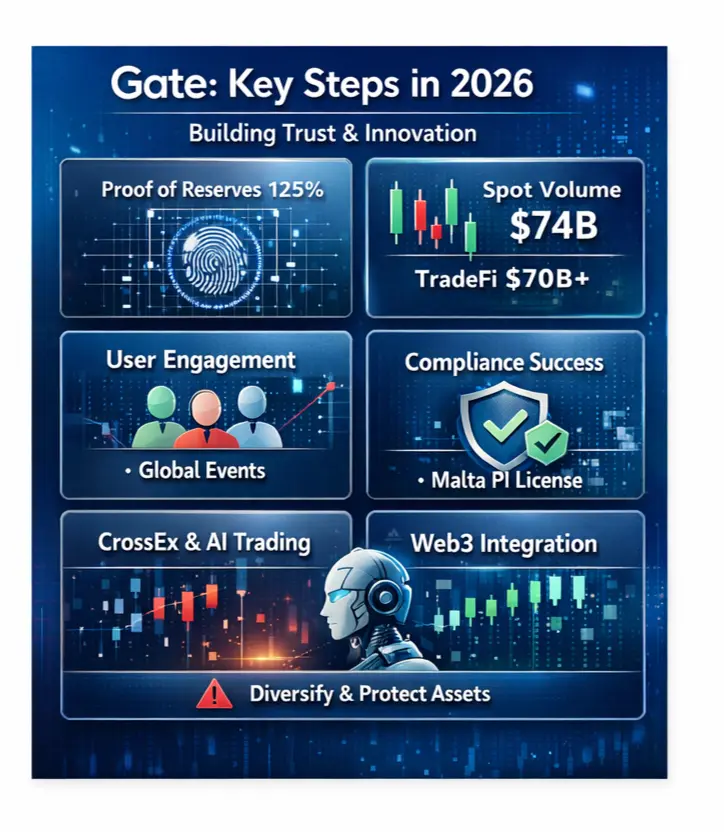
Step 1: Review of Reserves and Proof of Reserves
Gate maintains a strong reserve position well above industry standards.
Total reserve ratio increased to 125%
Total reserves reached $9.478 billion
Covers approximately 500 user assets
Key asset coverage:
BTC: 140.69%
ETH: 124.22%
USDT: 109.47%
GT: Over 100%
The platform uses Merkle Tree verification, allowing users to independently confirm that their assets are fully backed.
---
Step 2: Trading Volume and Market Position
Gate continues to rank among the top global exchanges.
Spot trading volume: $74 billion (Feb 2026)
Global spot ranking: Top 3
Derivatives ranking: Top 4 (11% market share)
TradeFi system performance:
Total volume exceeded $70 billion
Daily peak surpassed $10 billion
This highlights Gate’s growing strength in bridging traditional finance and crypto markets.
---
Step 3: User Growth and Ecosystem Expansion
While exact active user numbers are undisclosed, the platform shows strong ecosystem engagement.
Expansion of content platforms like Gate Square and Gate Live
Increased creator and institutional participation
Active presence at global industry events such as Consensus Hong Kong
These initiatives enhance user engagement and long-term retention.
---
Step 4: Security and Compliance Progress
Security and regulatory alignment remain core priorities.
All major assets are overcollateralized
Regular Proof of Reserves reporting ensures transparency
Third-party verification strengthens credibility
Compliance milestone:
Gate Technology Ltd obtained a Payment Institution (PI) license from the Malta Financial Services Authority under PSD2
This supports expansion into the European market.
---
Step 5: Technology and Product Innovation
Gate continues to invest in infrastructure and next-generation features.
Launch of CrossEx cross-exchange trading system
Introduction of natural language trading
Deployment of 17 MCP tools for advanced users
Ongoing API and system performance upgrades
---
Step 6: AI and Web3 Strategy
Gate is accelerating its vision for intelligent finance.
Integration of AI-driven trading tools
Expansion of TradeFi + Web3 ecosystem
Focus on automation, analytics, and smarter user experience
This positions the platform at the forefront of the next wave of financial innovation.
---
Step 7: Risk Considerations
Despite strong fundamentals, users should remain cautious.
Crypto markets remain volatile
Regulatory environments continue to evolve
Security risks still exist across the industry
Best practices:
Diversify assets
Use stop-loss strategies
Manage risk exposure carefully
---
Step 8: Overall Assessment
Gate demonstrates strong performance across all key metrics:
High reserve coverage ensures user fund safety
Competitive trading volume and rankings
Expanding ecosystem and global presence
Ongoing compliance and licensing progress
Continuous innovation in AI and Web3
---
Final Takeaway
The March 2026 Transparency Report reinforces Gate’s position as a leading global digital asset platform. Its commitment to transparency, security, and innovation provides a solid foundation for future growth.
As AI and Web3 continue to reshape the industry, Gate is well-positioned to remain a major player in the evolving financial landscape.
repost-content-media
  • Reward
  • Comment
  • Repost
  • Share
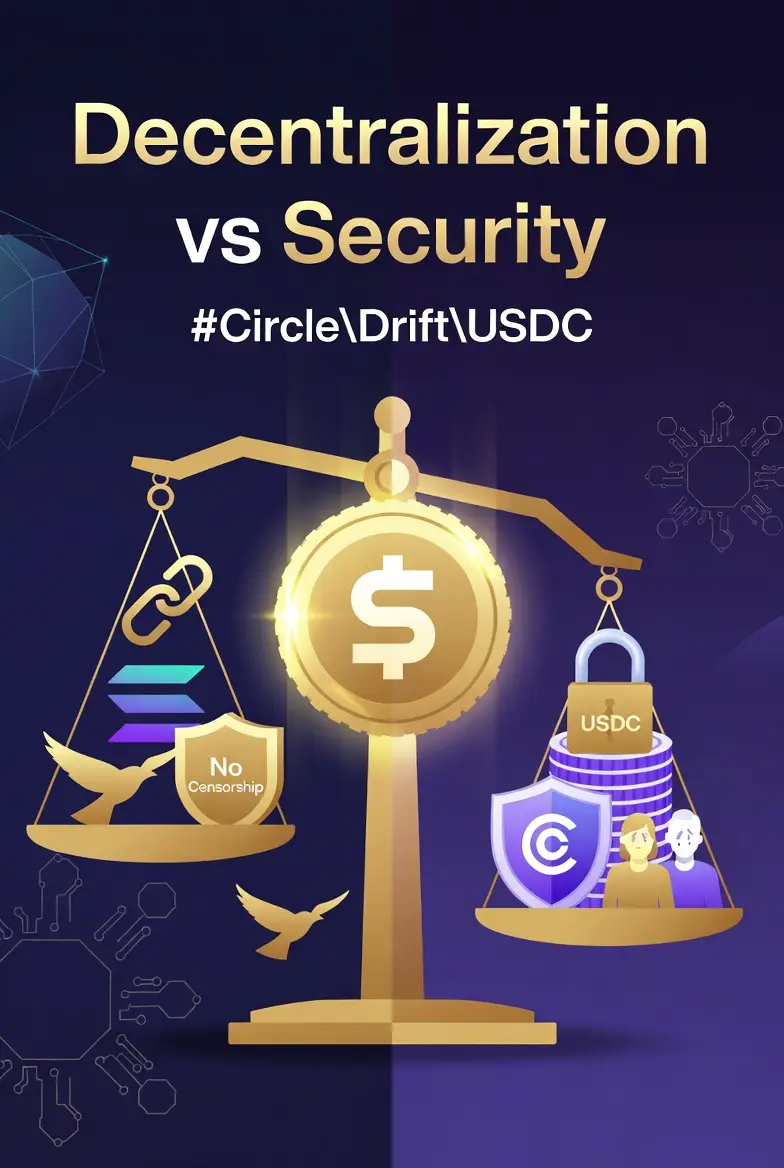
#Circle拒冻结Drift被盗USDC The recent controversy surrounding has sparked intense debate across the crypto community, raising critical questions about decentralization, responsibility, and the evolving role of stablecoin issuers. At the center of this discussion is Circle, the issuer of USD Coin (USDC), and Drift Protocol, a decentralized exchange operating on the Solana blockchain.
Following a recent exploit involving Drift Protocol, a significant amount of USDC was reportedly stolen. In similar past incidents, Circle has taken swift action by freezing stolen funds to prevent further misuse. Howev
DRIFT-14,95%
USDC-0,02%
SOL-3,49%
ShainingMoon
#Circle拒冻结Drift被盗USDC The recent controversy surrounding has sparked intense debate across the crypto community, raising critical questions about decentralization, responsibility, and the evolving role of stablecoin issuers. At the center of this discussion is Circle, the issuer of USD Coin (USDC), and Drift Protocol, a decentralized exchange operating on the Solana blockchain.
Following a recent exploit involving Drift Protocol, a significant amount of USDC was reportedly stolen. In similar past incidents, Circle has taken swift action by freezing stolen funds to prevent further misuse. However, this time, Circle has refused to freeze the compromised USDC, marking a surprising shift in its operational stance. This decision has divided the crypto world into two opposing camps.
On one side, decentralization advocates argue that Circle’s refusal reinforces the fundamental ethos of blockchain technology—permissionless control and censorship resistance. Freezing funds, they argue, undermines trust in decentralized finance (DeFi) by introducing centralized intervention. If stablecoin issuers can arbitrarily freeze assets, then users are ultimately subject to centralized authority, contradicting the very principles that crypto was built upon.
On the other hand, critics believe that Circle has a moral and practical obligation to act in such scenarios. By refusing to freeze stolen assets, Circle may inadvertently enable malicious actors to benefit from exploits. This raises concerns about user protection, especially for retail investors who rely on stablecoins like USDC for security and stability. In traditional finance, institutions often intervene to prevent fraud—so should crypto be any different?
The situation also highlights a deeper structural issue within DeFi. Platforms like Drift Protocol operate in a highly innovative but still maturing ecosystem where smart contract vulnerabilities remain a risk. While decentralization offers transparency and autonomy, it also places the burden of security on protocols and users themselves. This incident serves as a reminder that “code is law” comes with both power and responsibility.
Another layer to consider is the regulatory environment. Circle operates within a regulated framework, particularly in the United States, and its decisions may be influenced by legal constraints or long-term strategic positioning. Choosing not to freeze funds could signal a move toward neutrality, avoiding selective intervention that might invite regulatory scrutiny or accusations of bias.
Ultimately, the #Circle拒冻结Drift被盗USDC incident is more than just a single event—it is a reflection of the growing pains of the crypto industry. It forces us to confront a difficult question: Should stablecoin issuers act as guardians of user funds, or should they remain neutral infrastructure providers?
As the market evolves, striking the right balance between decentralization and security will be crucial. Whether Circle’s decision is seen as principled or problematic, one thing is certain—this moment will shape future expectations for how major players respond to crises in DeFi.
In the end, the future of crypto depends not just on innovation, but on trust, transparency, and accountability.
repost-content-media
  • Reward
  • Comment
  • Repost
  • Share
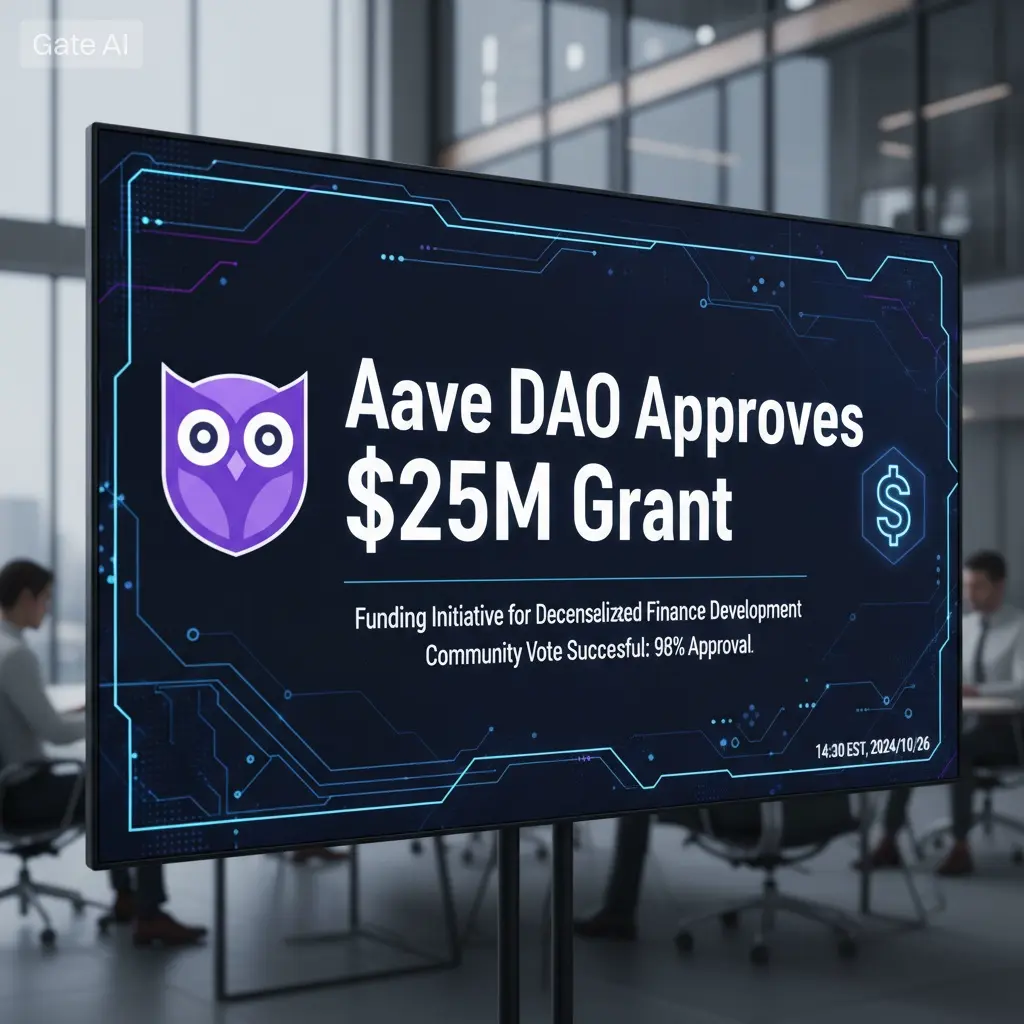
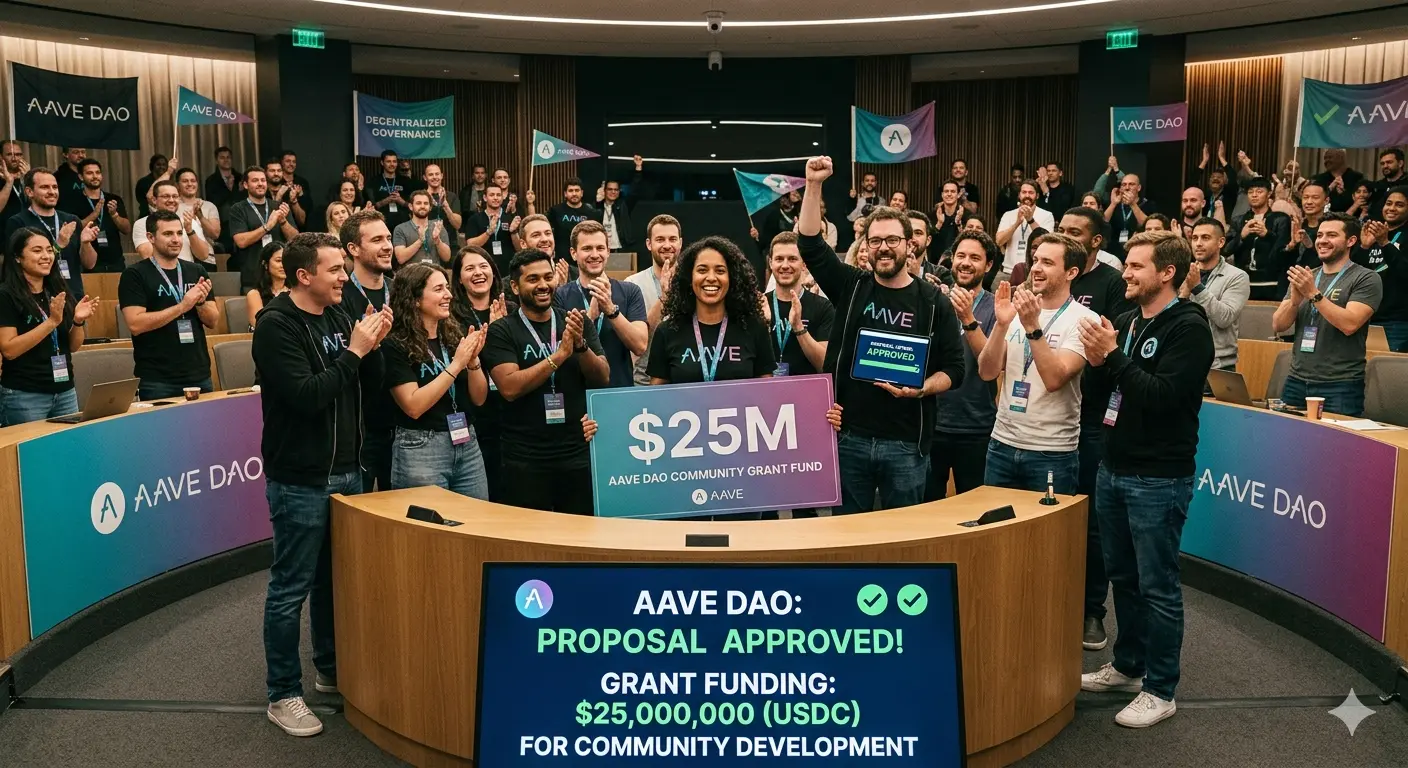
#AaveDAOApproves$25MGrant The decentralized finance (DeFi) ecosystem continues to evolve at a rapid pace, and one of the most significant recent developments is highlighted under the hashtag #AaveDAOApproves$25MGrant. This event reflects not just a financial decision, but a broader strategic move by the Aave ecosystem to strengthen its position as one of the leading protocols in decentralized lending and liquidity infrastructure.
Aave DAO’s Strategic Vision
The Aave DAO has always been known for its forward-thinking governance structure, where token holders actively participate in shaping the
AAVE-14,23%
ShainingMoon
#AaveDAOApproves$25MGrant The decentralized finance (DeFi) ecosystem continues to evolve at a rapid pace, and one of the most significant recent developments is highlighted under the hashtag #AaveDAOApproves$25MGrant. This event reflects not just a financial decision, but a broader strategic move by the Aave ecosystem to strengthen its position as one of the leading protocols in decentralized lending and liquidity infrastructure.
Aave DAO’s Strategic Vision
The Aave DAO has always been known for its forward-thinking governance structure, where token holders actively participate in shaping the future of the protocol. The approval of a $25 million grant signals a strong commitment toward long-term ecosystem sustainability, innovation, and expansion.
Rather than focusing only on short-term incentives, this kind of allocation is typically aimed at improving core infrastructure, funding developer initiatives, supporting security enhancements, and encouraging ecosystem partnerships that can bring more utility to the protocol.
In the competitive DeFi landscape, where protocols constantly compete for liquidity, users, and institutional trust, such strategic funding decisions play a crucial role in maintaining leadership.
Why This Grant Matters for DeFi
A $25M grant is not just a number—it represents confidence in decentralized governance and the future of on-chain financial systems. The DeFi space has matured significantly over the past few years, moving from experimental yield farming to structured financial products that resemble traditional banking systems, but without centralized control.
This grant can potentially support:
Expansion of cross-chain liquidity solutions
Development of new risk management frameworks
Improved protocol security audits and upgrades
Incentives for developers building on Aave
Integration with real-world asset (RWA) platforms
Each of these areas is critical for ensuring that DeFi continues to grow in a safe, scalable, and user-friendly way.
Market and Community Impact
Whenever a major DAO like Aave announces large-scale funding decisions, the market usually pays attention. Investors and users interpret such moves as signs of confidence in future growth and protocol stability.
Community governance also becomes more active during such decisions. Discussions around treasury allocation, sustainability, and return on investment often intensify, reflecting a healthy decentralized governance model.
In the long term, such grants can help strengthen trust between users and the protocol, especially when transparency and accountability remain at the center of decision-making.
The Bigger Picture
The approval of this grant also highlights a broader trend in Web3: decentralized organizations are now managing capital at a scale that rivals traditional financial institutions. DAOs like Aave are no longer experimental—they are becoming structured financial entities capable of deploying millions of dollars toward ecosystem development.
This evolution suggests that the future of finance will likely be hybrid, combining decentralized protocols with real-world financial integration.
Final Thoughts
The #AaveDAOApproves$25MGrant milestone is more than just a funding announcement—it is a signal of maturity in the DeFi space. It shows that decentralized governance can efficiently allocate large-scale resources while focusing on innovation, security, and long-term ecosystem health.
As the DeFi sector continues to expand, such strategic decisions will define which protocols remain dominant in the years ahead.
SHAININGMOON
repost-content-media
  • Reward
  • Comment
  • Repost
  • Share
#AreYouBullishOrBearishToday? The global financial and crypto markets are once again standing at a critical decision point where traders are divided into two clear camps: bullish believers expecting continuation of upside momentum, and bearish strategists preparing for potential downside correction. The question #AreYouBullishOrBearishToday? is not just a casual poll—it reflects the deeper psychology of the market, liquidity conditions, macro signals, and investor behavior across Bitcoin, altcoins, equities, and commodities.
To understand today’s sentiment, we must first look at market structu
BTC-2,12%
ShainingMoon
#AreYouBullishOrBearishToday? The global financial and crypto markets are once again standing at a critical decision point where traders are divided into two clear camps: bullish believers expecting continuation of upside momentum, and bearish strategists preparing for potential downside correction. The question #AreYouBullishOrBearishToday? is not just a casual poll—it reflects the deeper psychology of the market, liquidity conditions, macro signals, and investor behavior across Bitcoin, altcoins, equities, and commodities.
To understand today’s sentiment, we must first look at market structure. Bitcoin and major cryptocurrencies have recently been moving in sharp but controlled waves, showing that volatility is still active. This type of price behavior often indicates accumulation phases where smart money positions itself quietly before a major directional breakout. Bulls interpret this as strength building for the next leg up, while bears see it as distribution before a potential pullback.
From a bullish perspective, several factors are supporting optimism. Liquidity conditions in global markets remain relatively flexible, and risk-on appetite has not completely disappeared. Institutional interest in digital assets continues to grow, and long-term adoption narratives remain intact. In addition, every dip in recent sessions has been met with aggressive buying, suggesting strong demand zones are still active. For bullish traders, this signals that the market is simply consolidating before continuation.
However, the bearish argument is equally strong in the short term. Markets have already experienced significant upside moves in recent weeks, which naturally increases the probability of profit-taking. Volatility spikes, sudden liquidations, and rejection from resistance zones all indicate that sellers are still active. Macro uncertainty, including interest rate expectations and global risk sentiment, can quickly shift momentum downward. Bears believe that the market may need a deeper correction before any sustainable rally can continue.
When analyzing Bitcoin dominance and altcoin behavior, we also see mixed signals. Bitcoin stability often attracts capital away from altcoins, causing uneven performance across the crypto market. This divergence is a key reason why traders remain uncertain today. Some altcoins are showing strength, while others are lagging significantly, reflecting a lack of unified market direction.
The most important factor right now is emotional positioning of traders. Fear and greed are both active simultaneously. Retail traders often chase short-term pumps, while experienced traders wait for confirmation signals. This emotional split is exactly what creates the current “tug of war” between bullish and bearish narratives.
So, are we bullish or bearish today? The most realistic answer is: the market is neutral with a slight bullish bias, but not confirmed yet. This means opportunities exist on both sides, but risk management is extremely important. Traders should avoid overconfidence in either direction until a clear breakout or breakdown occurs.
In conclusion, #AreYouBullishOrBearishToday? is not just a question—it is a reflection of market uncertainty and opportunity. Smart traders do not predict blindly; they react to structure, volume, and confirmation. Whether bullish or bearish, discipline remains the key to survival in this fast-moving environment.
SHININGMOON
repost-content-media
  • Reward
  • Comment
  • Repost
  • Share
#GateSquareAprilPostingChallenge The is emerging as one of the most engaging community-driven campaigns in the Web3 ecosystem, bringing together creators, traders, analysts, and blockchain enthusiasts under one unified digital movement. In an industry where attention is the most valuable currency, this challenge is not just about posting content—it is about shaping narratives, influencing perception, and contributing to the evolving identity of decentralized finance.
At its core, the GateSquare April Posting Challenge represents the power of community participation in the crypto space. Platfor
ShainingMoon
#GateSquareAprilPostingChallenge The is emerging as one of the most engaging community-driven campaigns in the Web3 ecosystem, bringing together creators, traders, analysts, and blockchain enthusiasts under one unified digital movement. In an industry where attention is the most valuable currency, this challenge is not just about posting content—it is about shaping narratives, influencing perception, and contributing to the evolving identity of decentralized finance.
At its core, the GateSquare April Posting Challenge represents the power of community participation in the crypto space. Platforms like Gate.io have consistently emphasized the importance of user-driven growth, and this campaign is a direct reflection of that philosophy. Instead of relying solely on institutional marketing or traditional outreach, GateSquare empowers individuals to become storytellers of the blockchain revolution.
What makes this challenge particularly impactful is the timing. The crypto market is currently experiencing rapid shifts in sentiment, driven by innovation in AI integration, ETF discussions, Layer-2 scaling solutions, and increasing institutional interest. In such a dynamic environment, community voices play a crucial role in interpreting market movements and highlighting opportunities that may otherwise go unnoticed. The gives participants a structured yet creative space to express these insights.
For content creators, this challenge is more than just engagement metrics. It is a chance to build authority in the Web3 ecosystem. Every post contributes to a larger digital footprint, helping creators position themselves as thought leaders in blockchain analysis, DeFi trends, NFT evolution, or emerging crypto narratives. In the long term, such visibility can translate into collaboration opportunities, audience growth, and even professional recognition within the industry.
Another important dimension of this initiative is education. Many new entrants into crypto struggle to understand complex concepts such as liquidity pools, derivatives trading, staking mechanisms, or tokenomics. Through community posts generated under campaigns like this, knowledge becomes more accessible, simplified, and relatable. The challenge indirectly contributes to onboarding the next wave of crypto users by making information more digestible and engaging.
From a market perspective, engagement campaigns like this also reflect the growing importance of social sentiment in crypto valuation. Unlike traditional markets, digital assets are heavily influenced by community perception, online discussions, and viral narratives. A strong, active, and informed community can significantly amplify a platform’s relevance and trustworthiness.
The also encourages creativity in storytelling. Whether through market analysis, opinion pieces, trend predictions, or educational breakdowns, participants are free to explore multiple content formats. This diversity strengthens the ecosystem by ensuring that information is not one-dimensional but rather multi-perspective and inclusive.
In conclusion, the GateSquare April Posting Challenge is more than just a hashtag campaign—it is a reflection of how decentralized communities are reshaping financial communication. It represents the shift from passive consumption to active participation, where every individual has the power to influence the narrative of the crypto world.
As Web3 continues to evolve, initiatives like this will play a critical role in defining how information is shared, interpreted, and valued across global digital communities.
— SHAININGMOON
repost-content-media
  • Reward
  • Comment
  • Repost
  • Share
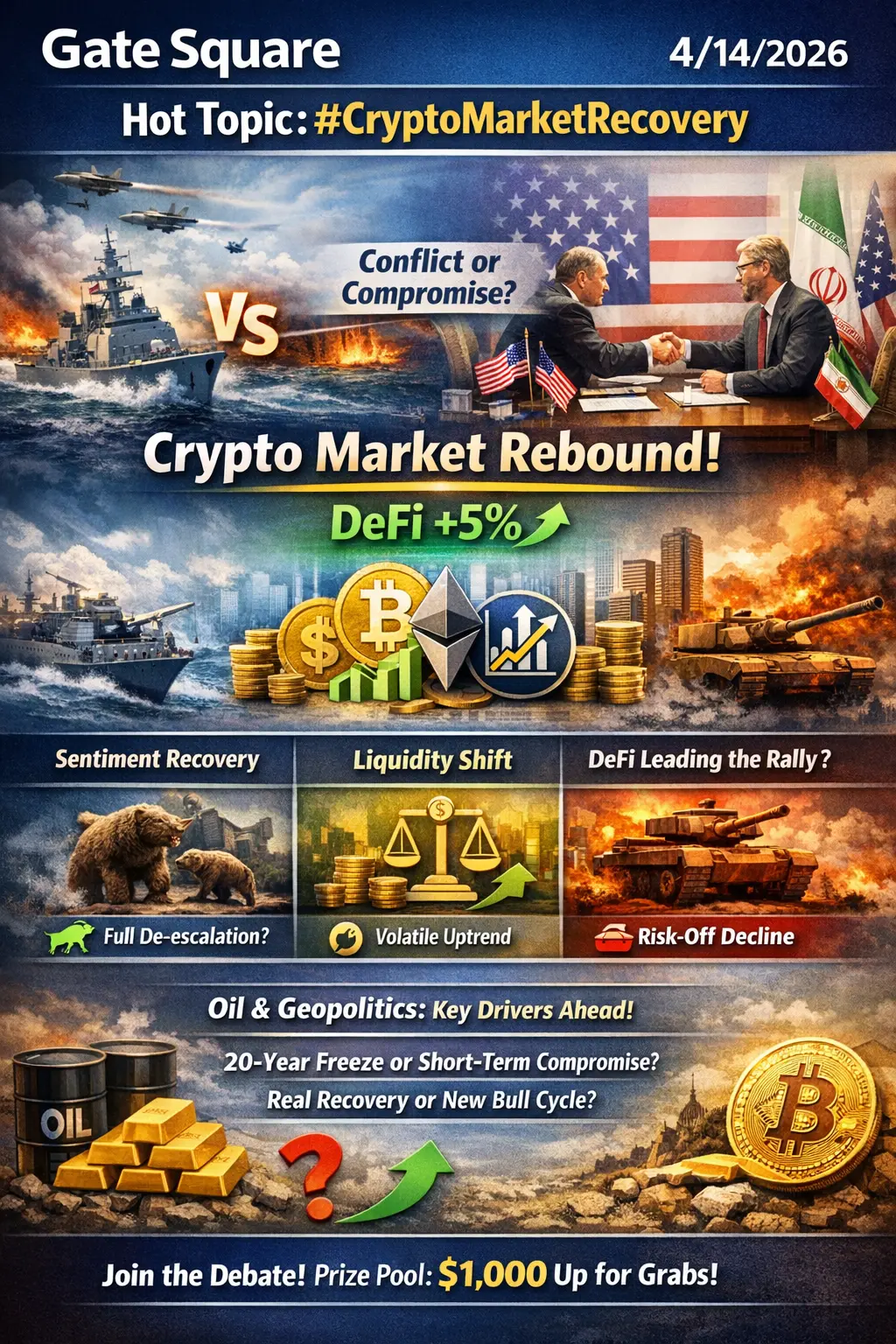
#CryptoMarketRecovery
On this critical date of April 14, 2026, global financial markets once again stand at a crossroads. The interaction between geopolitics and financial markets has been amplified to a new level—on one side, the maritime blockade between the United States and Iran has officially taken effect, increasing regional tensions; on the other side, diplomatic negotiations are still progressing simultaneously, bringing potential expectations of easing. This complex situation of “confrontation and dialogue coexisting” has gradually shifted market sentiment from panic toward cautious
DEFI2,22%
BTC-2,12%
Vortex_King
#CryptoMarketRecovery
On this critical date of April 14, 2026, global financial markets once again stand at a crossroads. The interaction between geopolitics and financial markets has been amplified to a new level—on one side, the maritime blockade between the United States and Iran has officially taken effect, increasing regional tensions; on the other side, diplomatic negotiations are still progressing simultaneously, bringing potential expectations of easing. This complex situation of “confrontation and dialogue coexisting” has gradually shifted market sentiment from panic toward cautious optimism.
Against this backdrop, the crypto market has experienced a strong rebound. The overall sector has risen broadly, with the DeFi sector leading the way, up about 5% in 24 hours. This phenomenon is not just driven by short-term capital inflows, but also reflects a structural shift in market confidence.
So what does this “crypto market recovery” really mean? Is it just a short-term sentiment repair, or the beginning of a new trend? Next, we will conduct a deep analysis from multiple dimensions including macroeconomics, market structure, capital flows, asset allocation, and future scenario modeling.
---
🌍 1. Geopolitical Game: Crisis or Opportunity?
The long-standing geopolitical confrontation between the United States and Iran has always been a key variable in global financial markets. The current combination of “maritime blockade + diplomatic negotiations” creates a highly tense situation.
From historical experience, any escalation in Middle East tensions directly affects:
Global oil supply expectations
Global inflation trends
Risk asset appetite
However, the uniqueness of the current situation lies in the fact that:
Instead of a typical panic-driven sell-off, risk assets are actually rebounding.
This reflects a shift in market expectations—investors believe:
👉 The conflict may be a “pressure tactic” rather than a final objective
👉 Negotiations may still lead to some form of agreement
---
🔍 Key Question 1: 20-Year Freeze or Short-Term Compromise?
This is currently the core market debate.
📊 Long-Term Freeze (20-Year Agreement)
If a long-term freeze agreement were to occur, it would imply:
Significant reduction in geopolitical risk
Stabilization of oil supply expectations
Strong increase in global risk appetite
Market impact:
Crypto assets enter a long-term bullish structure
Broad rally across risk assets
Massive capital inflow into emerging markets
However, realistically, the probability of such a long-term agreement is low, due to:
National sovereignty issues
Strategic resource competition
Political rivalry
---
📊 Short-Term Compromise (More Likely Scenario)
The more realistic outcome is:
👉 A phased agreement
👉 Temporary easing of tensions, but no full resolution
Market impact:
Short-term positive reaction
Mid-term volatility
Long-term uncertainty remains
👉 The current market rally is largely based on expectations of this “short-term compromise.”
---
📈 2. Core Drivers of the Crypto Market Recovery
This rebound is not driven by a single factor, but by a convergence of multiple forces.
---
🔹 1. Sentiment Recovery
During the previous market downturn:
Investors were fearful
Leverage was flushed out
Liquidity contracted
Now:
Fear is fading
Dip-buying capital is entering
The market is being re-priced
👉 This creates a classic “sentiment reversal rally.”
---
🔹 2. Liquidity Expectation Improvement
A core global market logic:
👉 As long as liquidity is not tightening, risk assets remain supported.
When geopolitical uncertainty rises:
Governments tend to stabilize markets
Monetary policy avoids excessive tightening
This is bullish for crypto markets.
---
🔹 3. Significance of DeFi Leading Gains
The 5% rise in DeFi is not random. It signals three key points:
✅ Risk appetite is improving
Investors are willing to take higher risks for returns
✅ Capital is shifting into “aggressive positioning”
Not just BTC accumulation, but high-beta assets
✅ Ecosystem confidence is strengthening
Markets still believe in long-term blockchain utility
---
🔹 4. Technical Rebound
From a technical perspective:
Market was at a key support zone
Oversold conditions were evident
Bearish momentum weakened
👉 The current rise is partly a “technical correction + sentiment rebound.”
---
🚀 3. Where Is the Ceiling of This Rally?
This is the most important question for investors.
We analyze three dimensions:
---
📊 1. Macro Ceiling
Key macro variables include:
Geopolitical outcome
Oil price direction
Inflation trends
Central bank policy
👉 If tensions ease: upside expands
👉 If conflict escalates: upside is capped
---
📊 2. Liquidity Ceiling
Market upside requires capital inflows:
Institutional inflows
Stablecoin supply growth
Leverage re-expansion
👉 Currently, liquidity is only in a “tentative return phase,” not a full expansion yet.
---
📊 3. Sentiment Ceiling
Market sentiment defines short-term limits.
Current state:
👉 Cautious optimism phase
Not yet:
👉 Full FOMO / euphoric phase
Meaning:
👉 Upside still exists, but not unlimited.
---
🛢️ 4. Oil Market: The Real Hidden Driver
Many underestimate oil, but in reality:
👉 Oil = core of inflation
👉 Inflation = core of monetary policy
👉 Monetary policy = liquidity driver
Two possible oil paths:
---
🔺 Upward Scenario
Geopolitical escalation
Supply concerns rise
Result:
Inflation increases
Crypto markets come under pressure
---
🔻 Downward Scenario
Successful negotiations
Supply stabilizes
Result:
Risk assets rise
Crypto markets benefit
---
🪙 5. Precious Metals: Changing Safe-Haven Behavior
Gold and silver are showing signs of “momentum fatigue.”
Reason:
👉 The market is not in full panic mode
This implies:
Weak safe-haven demand
Recovery in risk appetite
However:
👉 If conditions worsen, gold could surge rapidly.
---
⚖️ 6. Asset Allocation Strategy (Core Section)
In the current environment, prediction matters less than allocation.
---
🔹 Crypto Allocation
Recommended approach:
Increase exposure, but avoid full leverage
Prefer blue-chip assets + DeFi
Control risk exposure
---
🔹 Oil Allocation
Recommended:
Use as a hedge tool
Do not overweight
---
🔹 Precious Metals Allocation
Recommended:
Act as insurance assets
Hold a long-term portion
---
🔹 Cash / Liquidity
Must be maintained:
👉 To respond to sudden risks
---
🔄 7. Three Future Scenarios
🟢 Scenario 1: Full De-escalation (Strong Bull Market)
Agreement reached
Oil stabilizes
Liquidity expands
👉 Crypto enters a new cycle
---
🟡 Scenario 2: Partial De-escalation (Volatile Uptrend)
Temporary agreement
Uncertainty remains
👉 Market rises with volatility
---
🔴 Scenario 3: Escalation (Risk-Off Decline)
Negotiations fail
Military escalation
👉 Sharp market correction
---
🔥 8. Final Conclusion: Recovery Confirmed, But Trend Not Yet Defined
The current “crypto market recovery” can be confirmed as:
👉 A real recovery
But whether it is:
👉 The start of a new bull cycle
is still uncertain and requires further observation.
---
📌 Key Takeaways:
✔ Market sentiment is improving
✔ DeFi leadership is a positive signal
✔ Geopolitics is the main variable
✔ Oil is the key transmission mechanism
✔ Current phase is an early-stage recovery
---
💬 Discussion Section
1️⃣ Do you think Iran will choose long-term freeze or short-term compromise?
2️⃣ Where do you think the top of this rebound is?
3️⃣ How would you adjust your oil, crypto, and gold allocation?
🎁 Join the discussion for a chance to share a $1,000 bonus pool!
📢 The market is already changing.
The real opportunities always belong to those who see it early.
repost-content-media
  • Reward
  • Comment
  • Repost
  • Share
#Gate13thAnniversaryDr.HanLetter
🎉 Gate 13th Anniversary — A Journey of Vision, Survival, and Global Crypto Growth
The 13th anniversary of Gate.io is not just a celebration of time. It is a powerful story of survival, adaptation, innovation, and belief in a technology that was once considered impossible.
When we look back at the early days of crypto, Bitcoin was still an experiment, blockchain was a theory for most people, and global financial systems did not take digital assets seriously. Yet, platforms like Gate continued building silently, step by step, cycle after cycle.
Today, Gate stan
BTC-2,12%
DEFI2,22%
Vortex_King
#Gate13thAnniversaryDr.HanLetter
🎉 Gate 13th Anniversary — A Journey of Vision, Survival, and Global Crypto Growth
The 13th anniversary of Gate.io is not just a celebration of time. It is a powerful story of survival, adaptation, innovation, and belief in a technology that was once considered impossible.
When we look back at the early days of crypto, Bitcoin was still an experiment, blockchain was a theory for most people, and global financial systems did not take digital assets seriously. Yet, platforms like Gate continued building silently, step by step, cycle after cycle.
Today, Gate stands as a global ecosystem serving millions of users, multiple markets, and a wide range of digital asset services.
This is not just growth.
This is evolution.
---
🧠 The Early Vision — Before the World Understood Crypto
In the beginning, crypto was misunderstood:
Many called it a bubble
Many believed it had no real value
Many governments were uncertain or hostile
Infrastructure was weak and fragmented
But vision is not based on popularity. It is based on belief.
The founders and early builders behind Gate.io focused on one idea:
> “Finance will eventually become digital, borderless, and decentralized.”
That belief became the foundation of everything built afterward.
---
🌍 Building Through Market Cycles
Crypto is not a straight line upward.
It moves in cycles:
📉 Bear Markets
Prices fall heavily
Public interest disappears
Media declares “crypto is dead”
Only strong projects survive
📈 Bull Markets
New users flood in
Innovation accelerates
Capital enters aggressively
Infrastructure gets stress-tested
Through all of these cycles, Gate continued to build.
Not loudly.
But consistently.
That consistency is what created trust.
---
🔐 Security and Trust — The Core Foundation
In crypto, there is one truth:
> Without security, there is no future.
Exchanges live and die by trust.
Over the years, Gate.io focused heavily on:
Asset protection systems
Risk control engines
Cold and hot wallet separation
Security audits
Anti-fraud mechanisms
Because in digital finance, users don’t just trade assets — they trust the platform with their financial future.
---
📊 Market Evolution and Gate’s Role
The crypto market has evolved dramatically:
1. Early Phase
Bitcoin dominance
Simple spot trading
Limited infrastructure
2. Growth Phase
Altcoins expansion
Derivatives trading
DeFi ecosystem growth
3. Institutional Phase
ETFs and regulated products
Large funds entering crypto
Advanced derivatives and hedging tools
Gate evolved alongside all three phases.
It did not stay a simple exchange.
It became an ecosystem.
---
🚀 Innovation as a Survival Strategy
In crypto, innovation is not optional.
It is survival.
Over the years, platforms like Gate.io expanded into:
Spot trading
Futures and derivatives
Web3 infrastructure
Launchpad ecosystems
Investment products
Copy trading systems
Global liquidity networks
Each innovation was a response to one question:
> “What do users need next?”
That question is what separates surviving platforms from forgotten ones.
---
🔄 Lessons From 13 Years of Crypto
The journey of 13 years teaches powerful lessons:
🧩 1. Patience wins
Most people lose money not because of markets, but because of impatience.
🧩 2. Infrastructure matters more than hype
Hype dies. Infrastructure remains.
🧩 3. Trust is the strongest currency
Once trust is lost, recovery is difficult.
🧩 4. Cycles are normal
Every bull market is followed by correction.
🧩 5. Real builders survive everything
Regulations, crashes, fear, uncertainty — builders continue.
---
📉 Current Market Reflection
The crypto market today is different from the early years:
More mature
More institutional
More regulated
More interconnected with global finance
But it is also more competitive.
Liquidity shifts quickly. Narratives change faster. And traders must be more disciplined than ever.
Platforms like Gate.io now operate in a world where:
Speed matters
Security is mandatory
User experience defines success
Global compliance is essential
---
🌐 The Global Expansion Story
One of the biggest achievements of Gate over 13 years is global reach.
Crypto is not local.
It is borderless.
Gate expanded by:
Supporting multiple regions
Building multilingual ecosystems
Offering global liquidity access
Adapting to regulatory frameworks
This global approach is what transformed it from a regional platform into an international exchange.
---
💡 The Philosophy Behind Longevity
Why do some crypto platforms survive over a decade while others disappear?
The answer is simple:
They think long-term.
Short-term platforms chase:
Trends
Quick profit
Aggressive marketing
Long-term platforms focus on:
Stability
Security
User trust
Continuous improvement
Gate.io represents that long-term philosophy.
---
🔥 The Future of Crypto After 13 Years
The next phase of crypto will likely include:
Mass adoption of tokenized assets
Integration with traditional banking systems
AI-driven trading systems
On-chain identity and compliance
Cross-chain financial ecosystems
Exchanges will no longer just be trading platforms.
They will become:
> Full financial operating systems.
Gate’s evolution suggests it is moving in that direction.
---
🧭 Final Reflection — A 13-Year Legacy
Thirteen years in crypto is not just time.
It is survival through:
Multiple crashes
Regulatory uncertainty
Technological shifts
Market cycles
Global adoption phases
And through it all, Gate.io continues to stand as part of the infrastructure layer of the crypto world.
---
✨ Closing Message
The story of Gate is not finished.
In fact, it is only entering a new chapter.
A chapter where crypto becomes mainstream, integrated, and globally accepted.
And in that future, platforms that survived the early chaos will define the next financial era.
---
🔥 VORTEX KING — Witnessing the evolution of crypto from chaos to structure.
🔥 VORTEX KING — Building vision beyond cycles, beyond time, beyond limits.
repost-content-media
  • Reward
  • Comment
  • Repost
  • Share
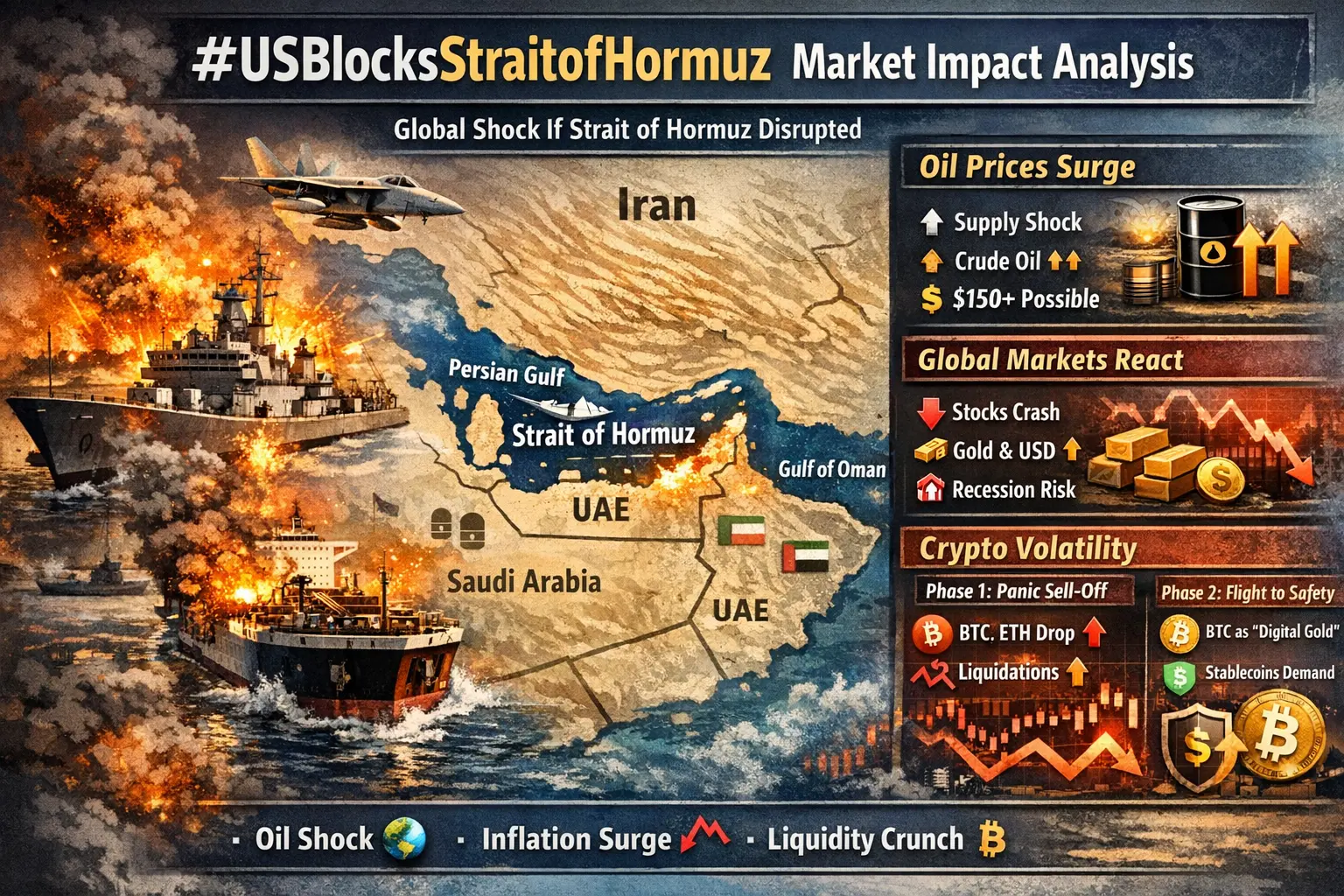
#USBlocksStraitofHormuz
The hashtag #USBlocksStraitofHormuz refers to one of the most extreme geopolitical risk scenarios in global markets — any disruption, blockade, or military escalation involving the Strait of Hormuz.
The Strait of Hormuz is not just a waterway. It is the single most important energy chokepoint on Earth. Roughly one-fifth of global oil supply and a massive portion of liquefied natural gas (LNG) exports pass through it daily.
Because of this, even rumors of disruption trigger:
Oil price spikes 📈
Stock market volatility 📉
Crypto liquidation cascades ₿
Global inflation fe
BTC-2,12%
ETH-3,15%
Vortex_King
#USBlocksStraitofHormuz
The hashtag #USBlocksStraitofHormuz refers to one of the most extreme geopolitical risk scenarios in global markets — any disruption, blockade, or military escalation involving the Strait of Hormuz.
The Strait of Hormuz is not just a waterway. It is the single most important energy chokepoint on Earth. Roughly one-fifth of global oil supply and a massive portion of liquefied natural gas (LNG) exports pass through it daily.
Because of this, even rumors of disruption trigger:
Oil price spikes 📈
Stock market volatility 📉
Crypto liquidation cascades ₿
Global inflation fears 🌐
So when people say “US blocks Hormuz,” the real meaning is not just military tension — it signals a global liquidity shock scenario.
This analysis breaks down the geopolitical reality, historical patterns, macroeconomic consequences, and crypto market reactions in a structured way.
---
⚔️ 1. Strategic Importance of the Strait of Hormuz
The Strait is only about 33 km wide at its narrowest point, yet it carries one of the largest energy flows on Earth.
Key facts:
Connects Persian Gulf → Gulf of Oman → Arabian Sea
Major exporters: Saudi Arabia, Iran, UAE, Kuwait, Iraq
Major importers: China, India, Japan, Europe
Why it matters:
If blocked, there is no easy alternative route for most Gulf oil exports. Pipelines exist, but they cannot replace full shipping capacity.
This creates a global dependency:
Energy markets = highly sensitive
Global inflation = directly exposed
Shipping insurance costs = spike immediately
In short:
👉 The Strait of Hormuz is a “global oil valve.”
If it tightens, the entire world economy feels it.
---
🧠 2. What “US Blocks Hormuz” Really Means
A full U.S. blockade is highly unlikely in reality, but markets react even to:
Naval escalation
Sanctions enforcement
Regional conflict risk
Interception of tankers
Proxy war intensification
So we analyze it as a risk scenario, not a prediction.
Three escalation layers:
🔴 Level 1: Tension Escalation
Naval presence increases
Shipping warnings issued
Insurance premiums rise
🔴 Level 2: Partial Disruption
Tanker delays
Limited shipping avoidance
Oil flow reduced 10–30%
🔴 Level 3: Full Blockade / War Scenario
Major shipping halted
Oil supply shock globally
Emergency energy policies activated
Each level has different market impacts, which we break down next.
---
🛢️ 3. Oil Market Reaction: The First Shockwave
Oil is the first and strongest responder.
Why oil reacts instantly:
Physical supply disruption risk
Futures market speculation
Panic hedging by institutions
Expected price behavior:
📊 Mild tension:
Oil +5% to +12%
Volatility increases sharply
📊 Partial disruption:
Oil +15% to +40%
Energy stocks outperform
📊 Full blockade:
Oil potentially $120–$200+ range (scenario-based)
Global recession risk increases
Secondary effects:
Shipping costs surge
Airline profits collapse
Fertilizer and manufacturing costs rise
Oil is the “first domino.”
---
📉 4. Global Financial Markets Impact
When energy shocks occur, risk assets react violently.
📊 Equity markets:
Initial sell-off across global indices
Tech stocks hit hardest (liquidity-sensitive)
Energy stocks temporarily rise
📊 Safe havens:
US Dollar strengthens
Gold demand increases
Government bonds see inflows
📊 Inflation expectations:
Rise immediately
Central banks face policy dilemma
This creates a classic macro environment:
> “Risk-off + inflation shock + liquidity tightening”
---
₿ 5. Crypto Market Impact — The Most Volatile Reaction
Crypto is one of the fastest reacting asset classes during geopolitical shocks.
Phase 1: Panic Sell-Off (First Hours to Days)
Bitcoin drops with global risk assets
Ethereum follows stronger downside
Altcoins crash harder (liquidity exit)
Liquidations spike in derivatives markets
Why?
High leverage
Thin weekend liquidity
Algorithmic trading reactions
---
Phase 2: Correlation Breakdown (Short-Term Stabilization)
After panic:
Bitcoin starts decoupling slightly
Investors reassess macro narrative
Stablecoins see inflows
Exchange volume rises
---
Phase 3: Macro Hedge Narrative (Medium Term)
If conflict persists:
Bitcoin can shift into:
> “Digital gold + inflation hedge narrative”
BTC dominance increases
Long-term holders accumulate dips
Institutional flows return cautiously
However, this depends heavily on:
Duration of crisis
Global liquidity conditions
USD strength
---
📊 6. Historical Parallels (Important for Modeling)
⚓ 1980s Tanker War
During the Iran-Iraq war:
Tanker attacks disrupted shipping
Oil prices surged repeatedly
Global naval escorts were introduced
Lesson: 👉 Even partial disruption creates prolonged volatility cycles.
---
⚓ 2011 Hormuz Threats
Iran threatened closure multiple times
Oil spiked on headlines alone
No actual closure occurred
Lesson: 👉 Narrative risk alone moves markets.
---
⚓ 2019 Tanker Attacks
Oil tankers were attacked near the region
Oil jumped short-term
Then retraced when escalation stopped
Lesson: 👉 Markets price fear faster than reality
---
🧩 7. Scenario Modeling Framework
We can divide outcomes into three realistic models:
---
🟡 Scenario A: Controlled Tension (Most Likely)
Diplomatic pressure
No full closure
Shipping continues with higher insurance
Market outcome:
Oil: +5–15%
Crypto: short dip → recovery
Equities: temporary volatility
---
🟠 Scenario B: Regional Disruption
Partial shipping interruptions
Military incidents
Increased sanctions
Market outcome:
Oil: +20–40%
Crypto: sharp correction then stabilization
Inflation expectations rise globally
---
🔴 Scenario C: Full Blockade / War Expansion
Severe shipping disruption
Global supply shock
Emergency intervention by major powers
Market outcome:
Oil: extreme spike
Equities: global bear market risk
Crypto: initial crash, then structural hedge narrative
---
🧠 8. Key Macro Mechanism: Why Everything Moves Together
This scenario creates a “three-layer shock system”:
1. Supply Shock
Oil shortages → production cost increases
2. Inflation Shock
Prices rise globally → purchasing power declines
3. Liquidity Shock
Central banks tighten or hesitate → markets de-risk
This combination is extremely dangerous for:
Stocks
Crypto
Emerging markets
---
📉 9. Crypto Trader Psychology During Such Events
Most traders go through:
😨 Stage 1: Fear
Panic selling
Liquidation fear
High volatility confusion
😐 Stage 2: Confusion
Market rebounds unpredictably
False breakouts
Mixed signals
🧠 Stage 3: Opportunity
Long-term accumulation begins
Smart money re-enters
Volatility stabilizes
---
🔥 10. Strategic Insights for Traders
✔ Do:
Reduce leverage during geopolitical spikes
Watch oil as leading indicator
Track USD strength
Accumulate only after volatility peaks
❌ Avoid:
Overtrading during headline shocks
Emotional long/short decisions
Ignoring liquidity conditions
---
🌐 11. Final Macro Conclusion
The Strait of Hormuz is not just a regional geopolitical hotspot — it is a global financial pressure valve.
The Strait of Hormuz connects:
Energy markets
Inflation systems
Global trade flows
Risk asset behavior
A “US blocks Hormuz” scenario is best understood not as a literal prediction, but as a stress test for global markets.
Core takeaway:
👉 Oil reacts first
👉 Equities follow
👉 Crypto amplifies volatility
👉 Macro narrative decides recovery
---
🧠 Final Words
In every geopolitical shock cycle, one pattern remains constant:
> Fear moves faster than fundamentals — but liquidity decides the final direction.
So in this scenario, survival is not about predicting headlines — it is about managing exposure, liquidity, and emotional discipline.
---
🔥 VORTEX KING
Markets don’t reward fear — they reward structure.
And in chaos like Hormuz scenarios, structure is the only edge.
🔥 VORTEX KING
repost-content-media
  • Reward
  • Comment
  • Repost
  • Share
#StrategyBuys13,927BTC
The crypto market has once again been shaken by a powerful signal: alarge-scale Bitcoin accumulation of this size is not just another transaction—it is a market-moving event that reflects deep conviction, strategic positioning, and long-term expectations from major players.
In this detailed analysis, we will break down what this purchase means, why it matters, how it impacts market structure, and what traders and investors should expect next.
---
1. Understanding the Signal Behind 13,927 BTC Purchase
A buy of 13,927 BTC is massive in any market condition. At current Bit
BTC-2,12%
Vortex_King
#StrategyBuys13,927BTC
The crypto market has once again been shaken by a powerful signal: alarge-scale Bitcoin accumulation of this size is not just another transaction—it is a market-moving event that reflects deep conviction, strategic positioning, and long-term expectations from major players.
In this detailed analysis, we will break down what this purchase means, why it matters, how it impacts market structure, and what traders and investors should expect next.
---
1. Understanding the Signal Behind 13,927 BTC Purchase
A buy of 13,927 BTC is massive in any market condition. At current Bitcoin valuation levels, this represents hundreds of millions of dollars in capital allocation.
But the real question is not “how much,” rather:
> WHY would an entity accumulate this much Bitcoin at this stage?
Large-scale Bitcoin buys usually come from:
Institutional investors
Hedge funds
Corporate treasuries
Long-term crypto funds
High-net-worth strategic wallets
Such entities do not chase short-term hype. Instead, they accumulate during:
Market uncertainty
Price consolidation phases
Macro liquidity shifts
Anticipation of long-term upside
This means the move is likely strategic accumulation, not speculative trading.
And this is where the market psychology shifts.
---
2. Market Psychology: What This Buy Communicates
When the market sees a large BTC accumulation like . it sends a psychological signal:
1. Confidence in Bitcoin’s Long-Term Value
Big buyers believe Bitcoin is still undervalued relative to future potential.
2. Liquidity Absorption Phase
Large purchases remove supply from circulating markets, tightening available liquidity.
3. Smart Money Positioning
Retail traders often react late, but institutions position early.
This creates a familiar cycle:
Smart money accumulates
Market remains neutral or slightly bearish
Retail doubts continue
Price eventually trends upward
This is how major bull cycles quietly begin.
---
3. On-Chain Implications of Large BTC Accumulation
A purchase of nearly 14,000 BTC creates visible on-chain effects:
(A) Exchange Supply Reduction
If coins are moved from exchanges into cold storage, it indicates:
Lower sell pressure
Long-term holding intent
Reduced circulating supply
(B) Whale Wallet Concentration Increase
Large wallets grow stronger, meaning:
Market becomes more sensitive to whale behavior
Smaller liquidity movements can create bigger price swings
(C) Supply Shock Potential
Bitcoin already has a fixed supply model. When large amounts are locked:
> Available BTC for trading becomes thinner
This sets the stage for price acceleration during demand spikes.
---
4. Macro Market Context
To fully understand this move, we must look at the macro environment:
Inflation & Monetary Policy
Global central banks continue balancing:
Inflation control
Interest rate stability
Economic growth support
When uncertainty exists, Bitcoin often becomes:
> A hedge against monetary instability
Institutional Adoption Trend
Over the last cycles, we’ve seen:
ETFs increasing exposure
Corporate balance sheets diversifying
Traditional funds entering crypto allocations
This purchase aligns with that broader trend.
---
5. Technical Market Structure of Bitcoin
Let’s break down Bitcoin’s current structural behavior:
(A) Consolidation Phase
Bitcoin is currently showing:
Range-bound movement
Reduced volatility compared to earlier cycles
Accumulation behavior near key support zones
(B) Support Zones
Strong long-term accumulation typically forms around:
Historical demand levels
Psychological price floors
High liquidity zones
These zones often act as “launch pads” for future rallies.
(C) Resistance Zones
Resistance remains where:
Previous highs rejected price
Heavy sell orders exist
Profit-taking clusters are located
Large buy orders like itoften aim to absorb supply before these resistance zones break.
---
6. Why Institutions Accumulate in Bulk
Institutions do not buy gradually like retail traders. They prefer:
(A) Block Accumulation
Large orders reduce slippage risk over time.
(B) OTC Desks
Over-the-counter trades avoid impacting spot price directly.
(C) Strategic Timing
They accumulate when:
Sentiment is neutral or fearful
Market is not in extreme hype
Liquidity is stable
This ensures better entry efficiency.
---
7. Historical Pattern Comparison
We’ve seen similar accumulation phases before major bull runs:
2020–2021 Cycle
Large BTC accumulation during COVID crash recovery
Followed by explosive rally
2018–2019 Bottom Formation
Quiet institutional buying
Long consolidation
Eventual breakout into 2020 cycle
Current Structure
The present environment resembles early accumulation phases rather than late-cycle distribution.
---
8. Retail vs Smart Money Behavior
A key dynamic in crypto is the divergence between:
Retail Traders
React to price movement
Buy during hype
Panic during dips
Smart Money
Accumulates during uncertainty
Distributes during euphoria
Focuses on long-term positioning
The event fits clearly into smart money accumulation behavior.
---
9. Liquidity Impact and Market Pressure
A purchase of this size affects liquidity in several ways:
(A) Reduced Sell Pressure
Fewer coins available on exchanges reduces immediate downside pressure.
(B) Volatility Compression
Markets may enter low-volatility phases before breakout.
(C) Breakout Fuel Formation
Once liquidity is absorbed:
> Even moderate buying can push prices rapidly upward
This is how “explosive moves” often begin.
---
10. Risk Perspective (Important)
Despite bullish interpretation, risks remain:
(1) Short-Term Volatility
Large accumulation does not guarantee immediate price increase.
(2) Macro Shock Risk
Global economic or regulatory events can override on-chain signals.
(3) Fake-Out Possibility
Not all large buys represent directional conviction—some are:
Internal transfers
Custodial restructuring
Hedging positions
So interpretation must remain balanced.
---
11. What Traders Should Watch Next
If is true accumulation, watch these indicators:
1. Exchange Outflows
More BTC leaving exchanges = bullish sign
2. Funding Rates
If stable or negative while price rises = healthy rally
3. Whale Wallet Growth
Continued accumulation confirms trend
4. Volume Expansion
Breakout requires real market participation
---
12. Possible Market Scenarios
Scenario A: Bullish Continuation
Accumulation continues
Supply tightens
Breakout above resistance
Momentum rally begins
Scenario B: Sideways Accumulation
Price stays range-bound
Institutions accumulate more
Volatility stays low
Breakout delayed but stronger
Scenario C: Temporary Pullback
Short-term selling pressure
Shakeout of weak hands
Followed by re-accumulation
---
13. Strategic Interpretation
The most important takeaway from is not the number itself, but the message:
> Large capital is still entering Bitcoin during uncertainty.
This is typically not a bearish signal in long-term market cycles.
It suggests:
Confidence in future upside
Expectation of higher valuations
Long-term positioning over short-term speculation
---
14. Final Outlook
Bitcoin remains in a phase where:
Smart money accumulation is active
Retail sentiment is still uncertain
Market structure is preparing for a larger move
Whether that move is immediate or delayed depends on liquidity conditions, macro stability, and continued accumulation behavior.
But historically, when large BTC buys like this occur:
> The market is rarely at its final top.
---
Conclusion
The event is a strong signal of strategic accumulation in the Bitcoin ecosystem. It reflects confidence, liquidity absorption, and long-term positioning from major players.
While short-term volatility may continue, the underlying structure suggests that Bitcoin is still in a broader accumulation phase rather than distribution.
And in crypto history, accumulation phases are often the quiet beginning of the next major expansion cycle.
---
If you want, I can next:
Make a chart-based technical analysis of BTC levels
Or create a viral Gate Square post + image prompt for this topic
Or break down who might be behind this accumulation (whale analysis)
repost-content-media
  • Reward
  • Comment
  • Repost
  • Share
#BitmineAdds71524ETH
A single entity acquiring 71,524 ETH is not a small market event—it is a structural liquidity shift in the Ethereum ecosystem. This type of accumulation often reflects deeper strategic positioning, long-term conviction, and expectations of major upside movement in the coming cycle.
In this detailed breakdown, we will analyze:
What this massive ETH purchase means
Why institutions accumulate at this scale
How it impacts supply, price structure, and sentiment
What it signals for the broader crypto market
And what traders should expect next
---
1. Understanding the Scale of 7
Vortex_King
#BitmineAdds71524ETH
A single entity acquiring 71,524 ETH is not a small market event—it is a structural liquidity shift in the Ethereum ecosystem. This type of accumulation often reflects deeper strategic positioning, long-term conviction, and expectations of major upside movement in the coming cycle.
In this detailed breakdown, we will analyze:
What this massive ETH purchase means
Why institutions accumulate at this scale
How it impacts supply, price structure, and sentiment
What it signals for the broader crypto market
And what traders should expect next
---
1. Understanding the Scale of 71,524 ETH
To understand the importance of this move, we first need to understand the magnitude.
71,524 ETH represents:
A large institutional-sized position
Significant liquidity removal from circulating supply
Long-term conviction accumulation rather than short-term trading
At current Ethereum market conditions, this is a multi-hundred-million-dollar position depending on ETH price levels.
And the key question is:
> Why would a major player accumulate this much Ethereum at this stage of the cycle?
The answer usually lies in long-term structural positioning rather than short-term speculation.
---
2. Why Ethereum Is the Target of Large Accumulation
Ethereum (Ethereum) is not just a digital asset—it is the backbone of decentralized finance and Web3 infrastructure.
Large players accumulate ETH because of:
(A) Network Utility Demand
Ethereum powers:
Smart contracts
DeFi protocols
NFT infrastructure
Layer-2 ecosystems
Tokenization systems
This creates continuous organic demand for ETH.
---
(B) Staking Yield Mechanism
With Ethereum’s proof-of-stake model:
ETH can be staked
Generates yield
Reduces circulating supply
This turns ETH into a yield-bearing digital asset, similar to digital bonds.
---
(C) Institutional Infrastructure Growth
Ethereum is increasingly used in:
Tokenized real-world assets
Stablecoin settlement layers
Institutional DeFi systems
This positions ETH as a core financial settlement layer for the future internet economy.
---
3. What #BitmineAdds71524ETH Signals to the Market
A large-scale ETH accumulation like this typically signals:
1. Long-Term Bullish Conviction
Big buyers do not accumulate during uncertainty without strong conviction.
They anticipate:
Higher future valuation
Strong ecosystem expansion
Increased institutional adoption
---
2. Supply Absorption Phase
When 71,524 ETH is removed from active circulation:
Exchange supply decreases
Liquidity tightens
Sell pressure reduces
This creates conditions for future price expansion.
---
3. Strategic Positioning Before Major Market Movement
Historically, large ETH accumulation happens:
Before bull market expansions
During consolidation phases
Ahead of liquidity shifts in global markets
This is often a pre-move positioning signal.
---
4. On-Chain Impact of Large ETH Accumulation
Let’s break down the on-chain effects of this event.
(A) Exchange Outflow Pressure
If this ETH is moved to:
Cold wallets
Staking contracts
Custodial vaults
Then it reduces liquid supply available for trading.
This is bullish because:
> Lower exchange supply = higher price sensitivity to demand
---
(B) Whale Wallet Expansion
A transaction of this size increases:
Whale wallet concentration
Market sensitivity to large holders
Impact of future whale movements
Whales begin to influence price action more significantly in low-liquidity environments.
---
(C) Supply Locking Effect
If ETH is:
Staked
Locked in DeFi
Stored long-term
Then circulating supply decreases permanently or semi-permanently.
This creates a supply squeeze environment.
---
5. Market Psychology Behind the Move
Large accumulation events affect sentiment in three phases:
Phase 1: Ignorance
Most retail traders ignore accumulation signals.
Market remains neutral or slightly bearish.
---
Phase 2: Awareness
On-chain data spreads:
Social media discussion increases
Analysts highlight whale activity
Market sentiment shifts
---
Phase 3: Reaction
Once price responds:
FOMO begins
Momentum trading increases
Retail enters late
This is a classic crypto cycle structure.
---
6. Institutional Behavior Explained
Institutions do not buy ETH randomly. They follow structured accumulation strategies:
(A) Over-the-Counter (OTC) Accumulation
Large buyers often avoid exchanges to:
Prevent slippage
Avoid price spikes
Accumulate quietly
---
(B) Basket Strategy Allocation
ETH is often part of:
Multi-asset crypto portfolios
Infrastructure plays
Blockchain exposure baskets
---
(C) Long-Term Treasury Positioning
Some institutions treat ETH as:
Digital infrastructure exposure
Yield-bearing reserve asset
Web3 infrastructure hedge
---
7. Ethereum Market Structure Context
To understand impact, we must look at ETH market behavior:
(A) Consolidation Behavior
ETH often trades in:
Range-bound accumulation phases
Low volatility environments before expansion
---
(B) Key Support Zones
Strong accumulation typically occurs near:
Historical demand levels
Previous breakout retests
High liquidity zones
---
(C) Resistance Structure
ETH resistance forms where:
Previous highs rejected price
Large sell orders cluster
Profit-taking zones exist
Large accumulation helps absorb future resistance pressure.
---
8. Supply Shock Potential
Ethereum supply dynamics are unique:
ETH can be staked
ETH is burned through transaction fees (EIP-1559 mechanism)
ETH demand increases with network usage
Now combine that with:
> 71,524 ETH being removed from active supply
This creates a potential supply shock scenario if demand increases.
---
9. Historical Pattern Comparison
Similar accumulation patterns have occurred before:
2020–2021 Cycle
Massive ETH accumulation during early DeFi boom
Followed by strong bull expansion
2019 Recovery Phase
Slow accumulation by smart money
Low retail interest
Later explosive price growth
Current Phase
The present structure resembles early accumulation stages rather than distribution.
---
10. Risks and Bearish Scenarios
Even though accumulation is bullish, risks remain:
(1) Macro Market Pressure
Global factors can override crypto-specific signals:
Interest rate changes
Liquidity tightening
Risk-off sentiment
---
(2) Short-Term Volatility
Large buys do not guarantee immediate price increases.
Markets may:
Consolidate
Retrace
Shake out weak hands
---
(3) Misinterpretation Risk
Not all large ETH movements represent pure buying:
Internal wallet restructuring
Custodial rebalancing
Strategic hedging positions
So context is critical.
---
11. What Traders Should Watch Next
To confirm bullish continuation, monitor:
(A) Exchange Net Flows
Outflows = bullish
Inflows = bearish
---
(B) Staking Activity
Increasing ETH staking indicates:
Long-term holding behavior
Reduced liquid supply
---
(C) Whale Wallet Behavior
Continued accumulation strengthens bullish thesis.
---
(D) Volume Expansion
Price movement must be supported by:
Real trading volume
Market participation
Not just low-liquidity spikes
---
12. Possible Market Scenarios
Scenario 1: Bullish Expansion
Continued ETH accumulation
Breakout above resistance
Momentum-driven rally
---
Scenario 2: Sideways Consolidation
ETH trades in range
Accumulation continues quietly
Volatility remains compressed
---
Scenario 3: Short-Term Pullback
Temporary sell pressure
Liquidity shakeout
Followed by re-accumulation
---
13. Strategic Interpretation
The most important takeaway from is not just the number itself—but what it represents:
> Smart money continues to accumulate Ethereum during uncertain or neutral market conditions.
This suggests:
Confidence in Ethereum’s long-term role
Expectation of ecosystem expansion
Strategic positioning before future demand growth
Ethereum is increasingly viewed not just as a crypto asset—but as core digital infrastructure.
---
14. Final Outlook
Ethereum remains in a structural phase where:
Institutional accumulation is active
Supply is gradually tightening
Market sentiment is still forming
Historically, such phases precede:
> Major expansion cycles in ETH price and ecosystem activity.
The signal reinforces a simple but powerful idea:
> The strongest players accumulate when uncertainty is highest—not when hype is at its peak.
---
Conclusion
The accumulation of 71,524 ETH under the hashtag is a strong indicator of strategic positioning in the Ethereum ecosystem.
It reflects:
Long-term institutional confidence
Supply absorption from the market
Potential preparation for future bullish cycles
While short-term volatility may continue, the structural message is clear:
> Ethereum continues to attract smart money at scale.
And in crypto history, that is rarely a neutral signal.
repost-content-media
  • Reward
  • Comment
  • Repost
  • Share
#AaveDAOApproves$25MGrant
The decentralized finance ecosystem has once again demonstrated its strength in collective governance and capital allocation. The latest development under the hashtag highlights a major milestone in DeFi treasury deployment and protocol expansion strategy.
At the center of this decision is Aave DAO, one of the most influential governance systems in decentralized finance. The approval of a $25 million grant is not just a funding decision—it is a strategic signal about the future direction of liquidity markets, protocol growth, and DeFi ecosystem expansion.
This 2000-w
AAVE-14,23%
Vortex_King
#AaveDAOApproves$25MGrant
The decentralized finance ecosystem has once again demonstrated its strength in collective governance and capital allocation. The latest development under the hashtag highlights a major milestone in DeFi treasury deployment and protocol expansion strategy.
At the center of this decision is Aave DAO, one of the most influential governance systems in decentralized finance. The approval of a $25 million grant is not just a funding decision—it is a strategic signal about the future direction of liquidity markets, protocol growth, and DeFi ecosystem expansion.
This 2000-word deep analysis will break down:
What the $25M grant means
Why Aave DAO is deploying capital at this scale
How it impacts liquidity and market structure
What it signals for DeFi growth
Institutional implications
Risk considerations
And future outlook for Aave and broader DeFi markets
---
1. Understanding the Significance of the $25M Grant
A $25 million grant within decentralized finance is not a routine decision. It represents:
Strategic capital allocation
Ecosystem expansion funding
Liquidity incentive structuring
Long-term protocol strengthening
In traditional finance terms, this is similar to:
> A central bank or major financial institution injecting capital into a strategic infrastructure layer.
But in DeFi, the process is decentralized, transparent, and governed by token holders.
---
2. What Aave DAO Actually Is
The decision is driven by Aave DAO, the governance layer behind one of the largest lending protocols in crypto.
Aave is a decentralized money market protocol that allows users to:
Borrow assets without intermediaries
Lend crypto and earn yield
Participate in liquidity markets
Access algorithmic interest rate systems
The DAO (Decentralized Autonomous Organization) is responsible for:
Treasury management
Protocol upgrades
Risk parameters
Incentive programs
Ecosystem expansion
This makes it one of the most powerful decentralized financial governing bodies in Web3.
---
3. Why the $25M Grant Matters
The approval of a $25M grant signals several important shifts:
(A) Aggressive Ecosystem Expansion
The DAO is actively investing in:
Developer incentives
Liquidity mining programs
Cross-chain deployment growth
Institutional onboarding
This indicates a growth-focused strategy rather than a conservative treasury approach.
---
(B) Competitive DeFi Positioning
DeFi is a competitive landscape with protocols such as:
Lending platforms
Decentralized exchanges
Yield aggregators
Aave’s grant suggests:
> A strategic move to maintain dominance in lending markets.
---
(C) Liquidity Strengthening
Grants of this size often aim to:
Increase liquidity depth
Reduce borrowing costs
Improve capital efficiency
This strengthens protocol stability during volatile market conditions.
---
4. Market Structure Impact
The $25M grant has direct and indirect effects on crypto markets.
(A) Liquidity Injection Effect
When capital enters DeFi ecosystems:
Liquidity increases
Spreads tighten
Borrowing becomes cheaper
This improves overall market efficiency.
---
(B) Token Demand Pressure
Governance tokens linked to the DAO may experience:
Increased attention
Higher trading activity
Speculative inflows
---
(C) Capital Rotation Effect
Funds deployed into DeFi often lead to:
Rotation from stablecoins into yield strategies
Increased TVL (Total Value Locked)
Higher on-chain activity
---
5. Why DAOs Use Grants Instead of Traditional Funding
In traditional finance, capital allocation is centralized. In DeFi, DAOs like Aave DAO use grants because:
(A) Transparency
All decisions are:
On-chain
Publicly visible
Community-voted
---
(B) Incentive Alignment
Grants align:
Developers
Liquidity providers
Governance token holders
---
(C) Rapid Ecosystem Growth
Grants allow:
Faster expansion
Early-stage ecosystem support
Competitive positioning
---
6. Institutional Perspective on Aave’s Strategy
Institutions closely monitor protocols like Aave because they represent:
On-chain lending infrastructure
Transparent credit systems
Programmable liquidity markets
A $25M grant signals to institutions:
> The protocol is actively investing in long-term scalability.
This may attract:
Hedge funds
Crypto-native asset managers
Institutional DeFi participants
---
7. Risk Considerations
Despite the bullish narrative, there are risks:
(1) Capital Efficiency Risk
If grants are misallocated:
ROI may decline
Treasury value could be diluted
---
(2) Market Dependency Risk
DeFi growth is tied to:
Crypto market cycles
Liquidity availability
Risk appetite
---
(3) Governance Risk
DAO-based systems depend on:
Voter participation
Proposal quality
Governance decentralization
Weak governance can impact effectiveness.
---
8. Competitive Landscape in DeFi Lending
The grant is also a competitive move against other ecosystems.
Aave competes with:
Other lending protocols
Emerging DeFi platforms
Cross-chain liquidity systems
The goal is clear:
> Maintain leadership in decentralized lending infrastructure.
---
9. Liquidity Flywheel Effect
One of the most important outcomes of grants like this is the liquidity flywheel:
Step 1: Grant Deployment
Capital is allocated to ecosystem growth.
Step 2: Incentives Increase Participation
Users and developers join ecosystem.
Step 3: TVL Increases
More assets flow into protocol.
Step 4: Revenue Growth
Protocol earns more fees and usage.
Step 5: Treasury Strengthens
DAO becomes stronger financially.
This cycle reinforces long-term sustainability.
---
10. On-Chain Activity Expectations
Following a $25M grant approval, we typically see:
Increase in wallet interactions
Higher smart contract deployment activity
More liquidity pool participation
Rising borrowing and lending volume
This leads to stronger ecosystem engagement.
---
11. Historical Context of DAO Grants
DAO-based grant systems have historically driven:
DeFi Summer growth phases
Layer-2 ecosystem expansion
NFT infrastructure development
In many cases, early grants have led to:
> Massive ecosystem value creation over time.
---
12. Market Sentiment Impact
The hashtag creates a bullish sentiment loop:
Retail Perspective
Seen as “growth signal”
Increases interest in DeFi tokens
Institutional Perspective
Viewed as capital efficiency strategy
Signals ecosystem maturity
Developer Perspective
Encourages participation
Strengthens builder confidence
---
13. Strategic Importance for Aave Ecosystem
For Aave DAO, this grant reinforces:
Leadership in DeFi lending
Commitment to ecosystem growth
Long-term treasury utilization strategy
It also strengthens Aave’s position as:
> A foundational pillar of decentralized finance infrastructure.
---
14. Future Outlook
The impact of this $25M grant will depend on execution, but likely scenarios include:
Scenario 1: Strong Growth Cycle
TVL increases significantly
Lending activity expands
Ecosystem adoption grows
---
Scenario 2: Moderate Growth
Gradual increase in usage
Stable but controlled expansion
Long-term sustainable growth
---
Scenario 3: Weak Allocation Outcome
Limited ROI on grant
Slower ecosystem response
Governance reconsideration
---
15. Final Insight
The approval of is not just a financial decision—it is a governance-driven signal of confidence in decentralized financial infrastructure.
It reflects:
Maturing DAO governance systems
Strategic capital deployment in DeFi
Continued expansion of decentralized lending markets
Most importantly:
> It shows that decentralized governance is no longer experimental—it is actively shaping real financial infrastructure at scale.
---
Conclusion
The $25M grant approved by Aave DAO marks another important step in the evolution of decentralized finance.
It represents:
Strategic ecosystem investment
Liquidity expansion efforts
Competitive positioning in DeFi markets
Strengthening of decentralized governance models
While risks exist, the long-term direction is clear:
> DeFi is transitioning from experimental finance to structured, capital-efficient global infrastructure.
repost-content-media
  • Reward
  • Comment
  • Repost
  • Share
The crypto market in April is shaping up to be one of the most narrative-driven and macro-sensitive environments of the year. Unlike purely technical cycles where price action follows predictable patterns, this phase is being shaped by a combination of geopolitical tension, liquidity rotation, institutional positioning, and sentiment acceleration across risk assets.
What makes this period especially important is not just the volatility itself—but the reason behind it. Markets are no longer moving in isolation. Instead, crypto has become tightly connected to global macro forces, including energ
Vortex_King
The crypto market in April is shaping up to be one of the most narrative-driven and macro-sensitive environments of the year. Unlike purely technical cycles where price action follows predictable patterns, this phase is being shaped by a combination of geopolitical tension, liquidity rotation, institutional positioning, and sentiment acceleration across risk assets.
What makes this period especially important is not just the volatility itself—but the reason behind it. Markets are no longer moving in isolation. Instead, crypto has become tightly connected to global macro forces, including energy markets, inflation expectations, and geopolitical stability.
In this breakdown, we go deep into the current structure of the crypto market, why sentiment is shifting rapidly, and how traders should interpret this environment strategically rather than emotionally.
---
🌍 1. The Macro Reality: Why Crypto Is Reacting Faster Than Ever
One of the most important changes in recent market cycles is the increasing sensitivity of crypto to macro events.
Previously, crypto was seen as a relatively independent asset class. Today, it behaves more like a high-beta macro derivative reacting instantly to global news.
Key macro forces influencing the market right now:
Rising geopolitical uncertainty across energy corridors
Fluctuations in crude oil expectations
Shifting inflation outlook due to supply chain risk
Central bank policy ambiguity
Rapid liquidity movement between traditional and digital assets
This creates a situation where:
> Crypto no longer waits for confirmation—it reacts to probability.
Even rumors of escalation or negotiation can trigger immediate price movement across Bitcoin, Ethereum, and altcoins.
---
📊 2. Market Structure: From Consolidation to Reaction Phase
The current crypto market structure can be broken into three phases:
🔹 Phase 1: Consolidation
Low volatility environment
Accumulation of positions by smart money
Weak retail participation
Sideways price action in major assets
🔹 Phase 2: Shock Trigger
Macro or geopolitical event hits
Sudden spike in volatility
Liquidations of overleveraged positions
Rapid sentiment reversal
🔹 Phase 3: Reaction Expansion (Current Phase)
Capital rotation begins
Sector divergence increases
Narrative-driven trading dominates
Short-term trends accelerate sharply
We are currently in Phase 3, where markets are not just moving—they are reacting emotionally and structurally at the same time.
---
📈 3. Bitcoin: Still the Macro Anchor
Bitcoin remains the most important asset in the crypto ecosystem during macro-driven cycles.
Current behavior patterns suggest:
BTC is acting as a liquidity magnet
Institutional flows remain dominant in spot markets
Derivatives positioning is highly sensitive to news flow
Volatility compression followed by rapid expansion cycles
Bitcoin’s role is now clear:
> It is no longer just a digital asset—it is a global risk sentiment indicator.
When uncertainty rises, BTC often becomes the first destination for capital rotation before flows spread into altcoins.
---
⚙️ 4. Ethereum & Layer-1 Networks: The Infrastructure Trade
Ethereum and major Layer-1 ecosystems are benefiting from structural positioning rather than pure speculation.
Key drivers:
Increased DeFi activity during volatility cycles
Stablecoin settlement expansion
Layer-2 scaling adoption improving transaction efficiency
Institutional interest in programmable finance
Ethereum in particular is evolving into:
> The settlement layer of digital liquidity.
This means ETH performance is increasingly tied to network usage rather than short-term sentiment alone.
---
💧 5. DeFi Sector: The 5%+ Signal of Liquidity Return
One of the strongest signals in the current market is the renewed strength in DeFi.
When DeFi outperforms the broader market, it usually indicates:
Rising on-chain liquidity
Increased borrowing and lending activity
Higher stablecoin circulation
Return of yield-seeking capital
This is not random—it is structural.
In volatile macro environments, investors often seek:
Non-custodial yield opportunities
Permissionless financial systems
Hedging tools outside traditional banking exposure
DeFi becomes the natural beneficiary of this shift.
---
🧠 6. Market Psychology: Fear, Hope, and Acceleration
Market psychology is currently transitioning through three emotional stages:
🔴 Fear Phase
Triggered by macro uncertainty
High volatility and liquidation events
Defensive positioning dominates
🟡 Transition Phase (Now)
Mixed signals from macro headlines
Partial recovery in risk appetite
Uncertainty still present but weakening
🟢 Hope & Acceleration Phase (Potential Ahead)
Liquidity returns more aggressively
Retail participation increases
Altcoins begin outperforming BTC
Narrative-driven rallies accelerate
The transition phase is the most dangerous—but also the most profitable.
Why?
Because it is where positioning is unclear, yet volatility is expanding.
---
🛢️ 7. Oil, Gold, and Crypto: Competing Narratives of Safety
A key development in this cycle is the competition between traditional safe havens and crypto assets.
🛢️ Oil
Oil is currently behaving as a fear-based macro instrument:
Reacts strongly to geopolitical tension
Drives inflation expectations
Highly volatile in short timeframes
🪙 Gold
Gold remains the traditional hedge:
Stable long-term demand
Moderate inflows during uncertainty
Less speculative volatility compared to crypto
₿ Crypto
Crypto is evolving into a new hybrid category:
Part risk asset
Part hedge against systemic uncertainty
Part liquidity-driven speculation engine
This creates a unique environment where:
> Capital does not choose one hedge—it rotates between them.
---
🔄 8. Capital Rotation Strategy: Where Money Moves Next
Understanding capital flow is more important than predicting price direction.
Current rotation pattern:
1. Macro shock → liquidity exits risk assets
2. Stabilization → Bitcoin absorbs capital
3. Confidence returns → Ethereum strengthens
4. Risk appetite increases → DeFi and altcoins surge
5. Speculation peaks → meme and high-beta assets rally
We are currently between steps 2 and 3.
This means the next phase depends on one key factor:
> Whether macro conditions stabilize enough to allow risk expansion.
---
📉 9. Risk Factors: Why Volatility Is Not Over
Despite recovery signals, risks remain elevated:
Geopolitical uncertainty still unresolved
Liquidity can reverse quickly
Derivatives leverage remains high
Retail sentiment is fragile
News-driven market structure dominates
This means:
> Every rally must be treated as conditional, not permanent.
Traders should avoid assuming linear upside movement in this environment.
---
📊 10. Scenario Analysis: What Happens Next?
🟢 Bullish Scenario
If macro tensions ease:
Strong crypto breakout
Altcoin season potential
DeFi expansion continues
Bitcoin reaches new short-term highs
🟡 Neutral Scenario
If uncertainty persists:
Sideways volatility
Sector rotation without clear trend
Frequent fake breakouts
🔴 Bearish Scenario
If escalation increases:
Risk-off across all markets
Liquidity contraction
Sharp corrections in altcoins
Bitcoin dominance increases
---
💡 11. Strategic Thinking for Traders
In this environment, strategy matters more than prediction.
Key principles:
Focus on liquidity, not emotion
Avoid over-leveraging during news cycles
Follow sector rotation instead of isolated assets
Respect volatility expansion phases
Stay adaptive, not fixed in bias
The biggest mistake traders make in this phase is trying to “guess the outcome” instead of reacting to structure.
---
🚀 12. Final Outlook: The Market Is Entering a Narrative War
The crypto market is no longer driven by a single factor. It is now shaped by competing narratives:
Macro uncertainty vs liquidity optimism
Geopolitical risk vs diplomatic resolution
Inflation fear vs growth expectation
Traditional finance vs decentralized systems
Who wins this narrative battle will define the next major crypto cycle phase.
For now, the market remains in a transition zone, where every move is both an opportunity and a risk.
---
🔥 Conclusion
The highlights a critical truth about today’s crypto landscape:
> The market is no longer just trading price—it is trading probability, liquidity, and global uncertainty.
In such an environment, success belongs not to the most aggressive trader, but to the most adaptable one.
And as always, cycles do not reward certainty—they reward awareness.
---
VORTEX KING
Markets don’t wait for clarity—they create it through volatility.
VORTEX KING
#GateSquareAprilPostingChallenge
repost-content-media
  • Reward
  • Comment
  • Repost
  • Share
📊 Bitcoin (BTC) Next Move Prediction — Deep Market Analysis (2026 Outlook)
When analyzing the next move of Bitcoin, it’s important to understand that the market is currently sitting at a critical inflection point. The recent rebound in crypto markets—driven by macroeconomic shifts, geopolitical tensions, and renewed institutional interest—has created a fragile but potentially explosive setup.
This is not a simple bullish or bearish moment. It is a decision zone, where multiple forces are colliding: liquidity, sentiment, technical structure, and macro risk.
Let’s break this down in a professio
BTC-2,12%
Vortex_King
📊 Bitcoin (BTC) Next Move Prediction — Deep Market Analysis (2026 Outlook)
When analyzing the next move of Bitcoin, it’s important to understand that the market is currently sitting at a critical inflection point. The recent rebound in crypto markets—driven by macroeconomic shifts, geopolitical tensions, and renewed institutional interest—has created a fragile but potentially explosive setup.
This is not a simple bullish or bearish moment. It is a decision zone, where multiple forces are colliding: liquidity, sentiment, technical structure, and macro risk.
Let’s break this down in a professional, deep, and structured analysis so you can clearly understand what comes next.
---
🔍 1. Current Market Structure: Compression Before Expansion
Bitcoin is currently trading in what traders call a range-bound consolidation phase.
Key Observations:
Price is moving between strong support and resistance zones
Volatility has decreased significantly
Market liquidity is building on both sides
This type of structure usually leads to: 👉 A large breakout move (up or down)
Historically, Bitcoin behaves like a coiled spring in these moments. The longer the consolidation, the stronger the breakout.
---
📉 2. Technical Analysis: Critical Levels to Watch
🟢 Support Zone
Major support: $60,000 – $62,000
Secondary support: $56,000
This area has shown:
Strong buyer interest
Institutional accumulation signals
Reduced selling pressure
If BTC holds this level, it confirms: 👉 Bullish continuation structure
---
🔴 Resistance Zone
Immediate resistance: $68,000 – $70,000
Major resistance: $73,000+ (previous highs)
This zone is critical because:
Sellers are defending aggressively
Profit-taking occurs here
Breakout confirmation depends on volume
If BTC breaks above this: 👉 Expect rapid price expansion
---
📊 3. Market Indicators: What They Are Saying
📌 RSI (Relative Strength Index)
Currently neutral (45–60 range)
Indicates no extreme overbought/oversold condition
👉 This means: There is room for a big move in either direction
---
📌 Moving Averages
BTC is hovering near key EMAs (50 & 200)
No clear trend dominance yet
👉 Interpretation:
Market is undecided
Waiting for a catalyst
---
📌 Volume Analysis
Volume has been declining
Indicates accumulation phase
👉 Low volume + consolidation = ⚠️ Explosive breakout incoming
---
🌍 4. Macro Factors Driving Bitcoin
Bitcoin is no longer just a crypto asset—it is now a macro-sensitive instrument.
Key Drivers:
🛢️ Geopolitical Tension
Recent events like the U.S.–Iran maritime situation have:
Increased global uncertainty
Driven interest in alternative assets
👉 Bitcoin benefits from:
Fear
Capital flight
Currency instability
---
💵 Monetary Policy
Central banks are signaling:
Potential liquidity injections
Rate stabilization
👉 This is bullish for BTC because:
More liquidity = more risk appetite
Weak fiat = stronger Bitcoin narrative
---
🏦 Institutional Activity
Large players continue accumulating BTC:
ETFs inflows remain stable
Whales are buying dips
👉 This creates: Strong downside protection
---
🧠 5. Market Sentiment: Smart Money vs Retail
Current Sentiment:
Retail: Cautious / Neutral
Institutions: Quietly Bullish
This divergence is important.
👉 Historically: Big moves happen when:
Retail is unsure
Smart money accumulates
---
🔄 6. On-Chain Data Insights
📌 Exchange Flows
BTC moving out of exchanges
Indicates long-term holding behavior
📌 Whale Activity
Large wallets increasing holdings
No major distribution yet
📌 Miner Behavior
Selling pressure has stabilized
No panic selling
👉 Conclusion: Supply is tightening
---
⚖️ 7. Bullish Scenario (High Probability Setup)
If Bitcoin:
Holds above $60K
Breaks $70K resistance with volume
Then we can expect:
🚀 Next Targets:
$75,000
$80,000
$88,000+
Why this happens:
Short liquidations
FOMO buying
Institutional breakout entries
👉 This would trigger: Parabolic phase
---
🐻 8. Bearish Scenario (Risk Case)
If Bitcoin:
Loses $60K support
Breaks down with volume
Then:
📉 Downside Targets:
$56,000
$52,000
$48,000 (extreme case)
Why:
Panic selling
Liquidity grab
Stop-loss cascades
👉 Important: Even this scenario is likely: Temporary correction, not trend reversal
---
🔥 9. Most Likely Scenario (Balanced View)
Based on:
Technical structure
Macro environment
On-chain data
Institutional flows
👉 The most likely outcome is:
✅ Short-Term:
Sideways movement → Fake breakout → Real breakout
✅ Mid-Term:
Bullish continuation
✅ Long-Term:
New all-time highs
---
🧩 10. Key Catalysts to Watch
Bitcoin is waiting for a trigger.
Major Catalysts:
ETF inflow spikes
Global financial instability
Regulatory clarity
Institutional announcements
Any of these can: 👉 Ignite the next move
---
📊 11. Trader Psychology: The Hidden Driver
Markets move based on emotion:
Current Emotional State:
Fear of entering too high
Fear of missing out
Uncertainty
👉 This creates: Liquidity traps
Smart money exploits this by:
Pushing price down briefly
Then launching upward
---
🧭 12. Strategic Outlook for Traders
🟢 Bullish Strategy
Accumulate near support
Hold for breakout
🔴 Bearish Strategy
Short only on confirmed breakdown
Avoid emotional trades
⚠️ Neutral Strategy
Wait for confirmation
Trade breakout, not prediction
---
🧠 Final Verdict: What Will Bitcoin Do Next?
Bitcoin is preparing for a major move, not a minor fluctuation.
🎯 Most Probable Outcome:
👉 Upside breakout after consolidation
⚡ Short-Term Expectation:
Choppy, sideways movement
Fakeouts in both directions
🚀 Mid-Term Expectation:
Strong bullish breakout
New highs formation
---
🔥 Conclusion
Bitcoin is currently in one of the most important phases of its market cycle:
👉 Accumulation + Compression = Explosion
This is not the time to chase price.
This is the time to:
Observe
Prepare
Position wisely
Because when Bitcoin moves…
👉 It moves fast, aggressively, and without warning.
#GateSquareAprilPostingChallenge
repost-content-media
  • Reward
  • Comment
  • Repost
  • Share
#Gate13thAnniversaryDr.HanLetter
🎉 Gate 13th Anniversary — A Vision Beyond Time
The 13th anniversary of Gate.io is not just a celebration of years — it is a reflection of resilience, innovation, and a long-term vision that has survived multiple crypto cycles, global uncertainties, and rapid technological evolution.
At the center of this milestone stands the leadership voice of Dr. Han Lin, whose anniversary letter is more than a message — it is a roadmap for the future of Web3.
📜 The Meaning Behind Dr. Han’s Letter
Dr. Han’s anniversary letter highlights three powerful themes:
1️⃣ Long-Term
Vortex_King
#Gate13thAnniversaryDr.HanLetter
🎉 Gate 13th Anniversary — A Vision Beyond Time
The 13th anniversary of Gate.io is not just a celebration of years — it is a reflection of resilience, innovation, and a long-term vision that has survived multiple crypto cycles, global uncertainties, and rapid technological evolution.
At the center of this milestone stands the leadership voice of Dr. Han Lin, whose anniversary letter is more than a message — it is a roadmap for the future of Web3.
📜 The Meaning Behind Dr. Han’s Letter
Dr. Han’s anniversary letter highlights three powerful themes:
1️⃣ Long-Term Vision Over Short-Term Noise
Crypto markets are known for volatility. From bull runs to harsh corrections, many projects disappear along the way. But Gate.io’s journey shows one key principle:
👉 Sustainable growth beats temporary hype.
While others chased quick profits, Gate focused on building infrastructure, security, and user trust.
2️⃣ Security as the Foundation of Trust
In an industry often shaken by hacks and collapses, security is not optional — it is survival.
Gate.io has consistently invested in:
Advanced risk control systems
Proof of reserves transparency
User asset protection mechanisms
This aligns with the broader need for safer ecosystems in the age of decentralized finance.
3️⃣ Commitment to Web3 Expansion
Dr. Han emphasized the transition from centralized systems toward a decentralized future powered by Web3.
This includes:
DeFi ecosystem growth
NFT innovation
Cross-chain infrastructure
Global adoption strategies
Gate is not just adapting to Web3 — it is actively shaping it.
📊 Market Context — Why This Anniversary Matters
This anniversary comes at a critical time when the crypto market is in a cautious phase:
Liquidity remains selective
Institutional participation is increasing
Regulations are tightening globally
Investors are becoming more risk-aware
In such an environment, platforms with strong fundamentals — like Gate — are more likely to survive and dominate.
🔍 Strategic Position of Gate.io
Gate.io’s current position in the market can be understood through three strengths:
🔹 1. Global Reach
Millions of users across different regions, making it one of the most widely used exchanges.
🔹 2. Product Diversity
From spot trading to derivatives, staking, and Web3 tools — a complete ecosystem.
🔹 3. Innovation Track Record
Early adoption of trends like DeFi, NFTs, and new token listings.
🚀 Future Outlook — What Comes Next?
Based on Dr. Han’s vision, the next phase for Gate.io may include:
Expansion deeper into decentralized finance
Stronger compliance with global regulations
Enhanced AI-driven trading tools
Improved user experience and accessibility
Continued focus on transparency
⚖️ Bullish vs Bearish Perspective
🟢 Bullish Case
Strong leadership vision
Established reputation
Continuous innovation
Growing Web3 ecosystem
🔴 Bearish Risks
Regulatory pressure
Market competition from other exchanges
Crypto market volatility
🧠 Final Thought
The 13th anniversary of Gate.io is not just about looking back — it’s about understanding how far the industry has come and where it is heading.
Dr. Han’s letter sends a clear message:
👉 The future belongs to those who build, not those who chase trends.
In a world where uncertainty dominates, consistency becomes the strongest advantage.
✨ Conclusion
As the crypto industry moves forward, Gate.io’s journey serves as a powerful example of endurance, strategy, and innovation.
The next chapter will not be defined by hype — but by real utility, trust, and long-term value creation.
🔥 Stay sharp. Stay informed. The market rewards patience.
VORTEX KING 👑
VORTEX KING 🚀#GateSquareAprilPostingChallenge
repost-content-media
  • Reward
  • Comment
  • Repost
  • Share
🚀 Pi Network (PI) Deep Analysis — Mining Crypto Situation Explained
🔥 Pi is not a normal trading coin yet — it is still in a transition phase between mining ecosystem and open market reality.
Many people misunderstand Pi. Some think it is already fully a market cryptocurrency like BTC or ETH. But the truth is different.
Let’s break it down in a simple, clear, and deep way.
🌍 1. What is Pi Network Really?
Pi Network is a mobile-based mining project where users earn coins by:
Daily tapping (check-in mining)
Building security circles
Growing network referrals
👉 Important truth:
It is not trad
PI-4,28%
BTC-2,12%
ETH-3,15%
Vortex_King
🚀 Pi Network (PI) Deep Analysis — Mining Crypto Situation Explained
🔥 Pi is not a normal trading coin yet — it is still in a transition phase between mining ecosystem and open market reality.
Many people misunderstand Pi. Some think it is already fully a market cryptocurrency like BTC or ETH. But the truth is different.
Let’s break it down in a simple, clear, and deep way.
🌍 1. What is Pi Network Really?
Pi Network is a mobile-based mining project where users earn coins by:
Daily tapping (check-in mining)
Building security circles
Growing network referrals
👉 Important truth:
It is not traditional Proof-of-Work mining like Bitcoin
It is a social-based mining system
So instead of heavy machines, Pi uses: 👉 human participation + network growth
⚙️ 2. Current Situation of Pi Network
Right now, Pi Network is in a transition phase:
What this means:
Mainnet ecosystem is still developing
Full global exchange liquidity is limited
Some internal ecosystem apps exist
Market pricing is not fully stable worldwide
👉 Simple meaning: Pi is not fully a free-traded global crypto yet
🧠 3. Why Pi is Different from Other Cryptos
Most cryptocurrencies:
Are fully tradable on exchanges
Have clear market price discovery
Are driven by supply & demand
But Pi:
Is still building its ecosystem
Has controlled migration to mainnet
Depends on adoption + utility growth
👉 So Pi value depends on:
Real usage inside ecosystem
Network expansion
Exchange listing progress
📊 4. Mining Concept of Pi
Pi mining is very simple:
Daily Process:
Open app
Click mining button
Stay active in network
👉 But here is the key: Mining is NOT power-based
It is trust-based contribution mining
You earn more when:
You are active
You invite trusted users
You secure your circle
🔐 5. Strengths of Pi Network
✅ 1. Massive User Base
Millions of users globally joined early.
✅ 2. Easy Entry
No hardware needed, just mobile.
✅ 3. Strong Community Growth
Network effect is powerful.
✅ 4. Long-Term Vision
Focus is on real-world usage, not just trading.
⚠️ 6. Risks & Concerns
Let’s be honest and real:
❌ 1. Limited Open Market Trading
Pi is not fully free on all global exchanges yet.
❌ 2. Unclear Price Discovery
Real market value is still developing.
❌ 3. Ecosystem Still Growing
Apps and utility are not fully mature.
❌ 4. High Speculation
Many people expect high value without full utility.
📈 7. “Support & Resistance” in Pi Context
Since Pi is not fully open-market priced globally, we cannot treat it like BTC or ETH technical chart trading.
But we can understand behavioral zones:
🟢 Support (User Confidence Zones):
Strong community holding phase
Low selling pressure periods
High accumulation sentiment
👉 Meaning: Users continue holding instead of selling
🔴 Resistance (Unlock Pressure Zones):
When trading access increases
When users try to take profits
When supply enters market
👉 Meaning: Selling pressure increases during liquidity expansion
🧠 8. Smart Understanding of Pi Value
Pi value will depend on:
1. Real Utility
Payments
Apps inside ecosystem
Merchant adoption
2. Exchange Integration
Wider trading access
Liquidity growth
3. Supply Control
How much unlocked supply enters market
👉 Simple truth: Value will come from usage, not hype
🔮 9. Possible Future Scenarios
🚀 Scenario 1: Strong Ecosystem Growth
Apps increase
Real usage grows
Demand increases
👉 Pi becomes a functional crypto economy
⚖️ Scenario 2: Slow Adoption
Limited utility growth
Slow ecosystem expansion
👉 Price remains uncertain for longer time
⚠️ Scenario 3: High Selling Pressure After Unlock
Many users sell early
Price becomes unstable
Market takes time to stabilize
💡 10. Key Insight for Users
Most people make mistake in Pi thinking:
❌ “It will become rich quickly”
❌ “It is already like Bitcoin”
But reality is:
👉 Pi is still building foundation
👉 Value comes later, not immediately
🧭 11. Strategy Mindset (Very Important)
If you are involved in Pi:
Stay patient
Understand long-term vision
Avoid emotional expectations
Focus on ecosystem updates
👉 Think like a builder, not a trader
🔥 Final Motivation
Pi Network is not just a coin.
It is an experiment in mass adoption mining and social crypto growth.
But remember:
Early stage projects take time
Real value comes from real use
Patience is more powerful than hype
✍️ Signature
VORTEX JING 🚀
Build understanding first, profit comes after.
#GateSquareAprilPostingChallenge
repost-content-media
  • Reward
  • Comment
  • Repost
  • Share
  • Pin