GateUser-1c5ab2b5

vip
Age 0.1 Yıl
Peak Tier 0
No content yet
Last night when I placed the order, I felt a bit scared: I almost used the default path to exchange a coin, and only later did I realize that many transactions nowadays are actually "packaged and handed over to the builder," where the order, whether it’s front-run, whether it can be front-run, and whether someone can monitor it all depend on who you give the transaction to. To put it simply, retail investors just need to know this much: don’t worry about how the block builder auctions blocks, remember two things—try to use a reliable wallet/router (with anti-front-running or private channels),
View Original
  • Reward
  • Comment
  • Repost
  • Share
Monday, charge forward, let's get started.
View Original
CryptoRevolutionMaster
Good morning everyone. Happy Monday. Have a great and successful week ahead 🔥💪
  • Reward
  • Comment
  • Repost
  • Share
Lately, I've been really into testing the testnet points, claiming it's practice, but everyone’s really calculating in their minds how much they can exchange in the future... Once it becomes an expectation, it’s easy to get more and more invested. My stop-loss is pretty simple: set a limit for myself (time/number of attempts/fees), and when it hits, I close the webpage, even if the group is still shouting “weighted voting tonight.” I thought more interaction would be more stable, but when on-chain data tools and tags changed, the “active addresses” from a few days ago looked misleading, and my
View Original
  • Reward
  • Comment
  • Repost
  • Share
Recently, many people have been using "on-chain data" as real-time ECG, but what you're seeing might already be a bit outdated. Nodes have their own synchronization speeds, RPCs also queue and limit traffic, and indexers scan first then organize; when there's congestion or reorganization, the displayed data is often a half-beat late, or they might even give you a "seems correct" version first. To put it simply, what you think is monitoring the market is actually watching a replay.
So now, when I see anomalies, I don't get excited right away. I compare with two more RPCs or browsers, especially
View Original
  • Reward
  • Comment
  • Repost
  • Share
I set a rule for myself: when I see stablecoin supply picking up and ETF net inflows looking good, don’t get excited right away—and don’t rush to treat “money coming in = an immediate pump” as a cause-and-effect relationship. In many cases, it’s just off-market funds finding a more convenient parking spot; if they truly want to act, they still have to see whether the sentiment and narrative can pick it up. If they can’t, then they’ll just keep lying low—stay there and do nothing.
Recently, I’ve seen a lot of backlash against that “shared security + yield stacking” re-staking setup, calling i
View Original
  • Reward
  • Comment
  • Repost
  • Share
NIL This wave is a bit interesting, pay attention first.
NIL-2,88%
View Original
CryptoSat
💰 $NIL – Quiet Accumulation
🔼 LONG
✳️ ENTRY : 0.0391 - 0.0383 - 0.0373
🎯 Targets check below 👇
  • Reward
  • Comment
  • Repost
  • Share
ROBO long position logic is simple: follow the trend, admit mistakes if wrong.
ROBO-3,63%
View Original
CryptoManMab
Long $ROBO
{future}(ROBOUSDT)
  • Reward
  • Comment
  • Repost
  • Share
I'm more concerned: Is there a corresponding increase in spot trading volume for absorption? Otherwise, it's just futures sentiment.
View Original
CryptoManMab
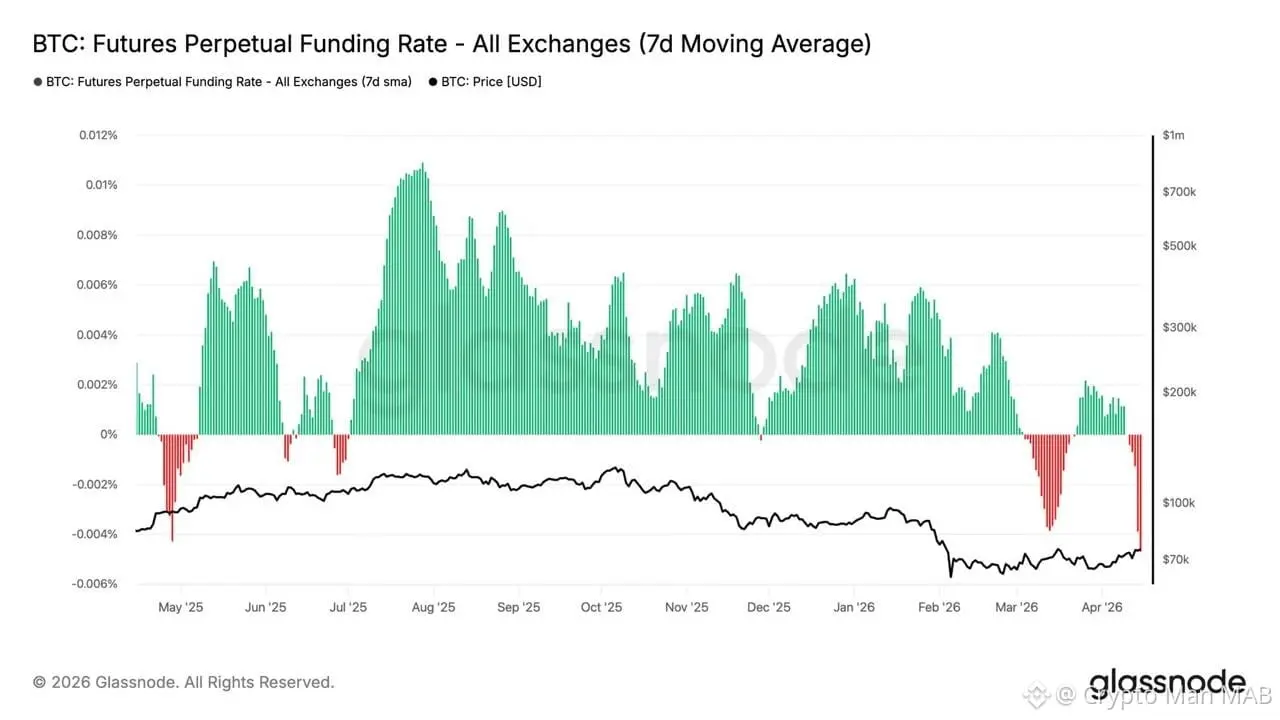
$BTC funding rates have hit their most negative levels since 2023, per Glassnode.
{future}(BTCUSDT)
Historically, deeply negative funding rates have coincided with local bottoms, including March 2020, mid-2021 and the FTX collapse in 2022.
repost-content-media
  • Reward
  • Comment
  • Repost
  • Share
Don't get too full of yourself yet; look at the data and actual user feedback first.
View Original
Original content no longer visible
  • Reward
  • Comment
  • Repost
  • Share
Lately, I've been looking at those "coincidental transfers" on the blockchain, and I no longer really believe in coincidences. Basically, they are just a few common patterns pieced together: the same funds are split into smaller amounts, jump addresses every few blocks, then go through a DEX for a round of swaps, finally ending up at an address that looks "clean." In other words, it's layering their own transaction trail. The community has been arguing about privacy coins/mixing and regulatory boundaries these days. I understand both sides' emotions, but from a data perspective, the more someo
View Original
  • Reward
  • Comment
  • Repost
  • Share
  • Pin