

#USIranTalksProgress: A Detailed Look at the Latest Diplomatic Breakthrough
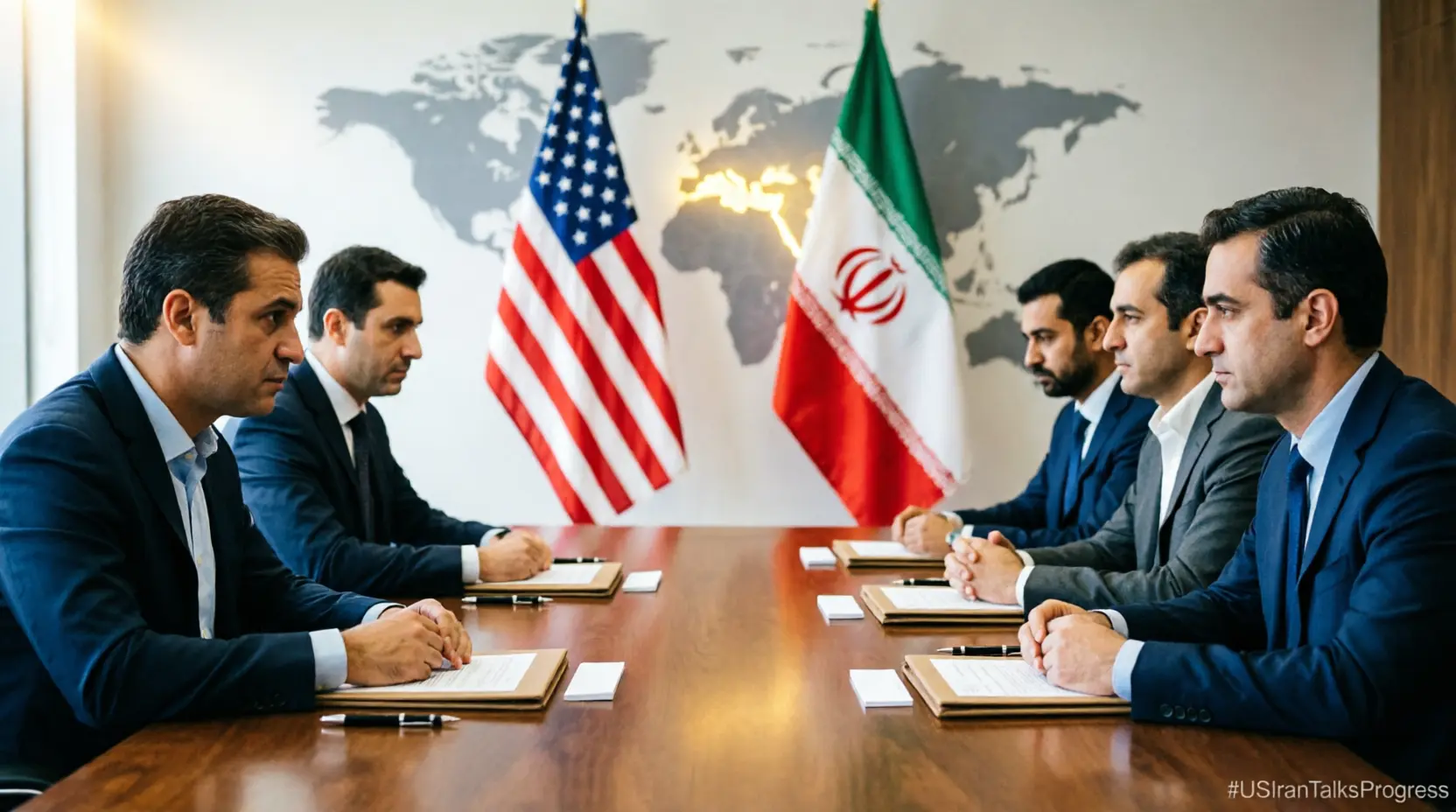
After months of stalemate, the latest round of negotiations between the United States and Iran in Muscat has shown tangible signs of progress. While official statements remain cautious, multiple sources indicate that both sides have moved closer to a limited interim agreement — one that could ease economic sanctions in exchange for verifiable curbs on Iran’s nuclear activities. Here’s a comprehensive breakdown of where things stand, what has been achieved, and the road ahead.
Background: From Deadlock to Dialogue
The talks, mediated by Oman and with indirect Swiss and Qatari facilitation, resumed in early April 2026 after a six-month hiatus. The previous negotiations had collapsed over disagreements on the scope of sanctions relief and Iran’s uranium enrichment levels (now reportedly close to 60%, just below weapons-grade). The Biden administration’s stated goal has been a “longer and stronger” deal, while Iran seeks guaranteed economic benefits and a removal of the “maximum pressure” policy.
Key Areas of Progress in the Current Round
1. Nuclear Enrichment Caps
The most critical breakthrough concerns enrichment limits. Under the emerging framework, Iran has reportedly agreed to cap enrichment at 3.67% — the same level as the 2015 JCPOA — for a period of 12 months. In return, the US would provide written assurances against further snapback sanctions during that window. International Atomic Energy Agency (IAEA) inspectors would gain enhanced access to Fordow and Natanz facilities, including real-time monitoring systems installed last month.
2. Sanctions Relief on Humanitarian and Energy Sectors
While comprehensive oil and financial sanctions remain largely intact, the US has agreed to unblock $12 billion of Iranian assets held in Iraqi and South Korean banks. These funds can only be used for food, medicine, and agricultural imports. Additionally, eight Iranian banks will be removed from the SDN (Specially Designated Nationals) list, allowing limited transactions for energy spare parts and civilian aviation safety equipment.
3. Prisoner Exchange and Humanitarian Gestures
Parallel to nuclear talks, a quiet prisoner swap is nearing finalization. The US would secure the release of four dual nationals detained on espionage charges, while Iran would receive several Iranian-Americans convicted of sanctions violations. The deal also includes a mutual commitment to avoid further hostage-taking for political leverage — a significant trust-building step.
4. Regional De-escalation Channels
For the first time, the talks have included a separate “track 1.5” dialogue on regional behavior. Iran has indicated willingness to discuss limits on its missile programs and support for proxy groups, though no concrete commitments have been made. The US, in turn, has proposed a “cooling-off mechanism” for maritime incidents in the Strait of Hormuz, including a direct military-to-military hotline to prevent accidental confrontations.
Sticking Points Still Under Negotiation
Despite the optimism, several issues remain unresolved:
· Verification timeline: Iran insists on upfront sanctions relief before IAEA access expansions; the US demands sequential, verifiable steps.
· Advanced centrifuges: Iran wants to keep its IR-6 centrifuges for research; the US requires their dismantlement or storage under IAEA seal.
· Sunset clauses: Washington seeks to extend restrictions beyond 2030; Tehran refuses any extension beyond the original JCPOA timeline.
Reactions from Key Players
United States: State Department spokesperson described the talks as “the most constructive in over two years,” but stressed “nothing is agreed until everything is agreed.” A senior official noted that a preliminary understanding could be announced within two weeks if Iran accepts the verification protocol.
Iran: Foreign Minister Hossein Amir-Abdollahian called the progress “a step forward but insufficient,” demanding faster removal of oil sanctions. Iranian negotiators have publicly downplayed expectations but privately signaled flexibility on enrichment caps in exchange for a fixed timetable for lifting all sanctions.
Israel and Gulf States: Israel has warned Washington against a “weak interim deal,” insisting any agreement must dismantle Iran’s nuclear infrastructure. Saudi Arabia and the UAE have welcomed reduced tensions but remain wary of Iran’s regional ambitions. Both have requested to be kept informed and offered to host follow-up technical talks.
Europe and IAEA: The E3 (UK, France, Germany) praised the renewed momentum and offered to help implement verification mechanisms. The IAEA director-general confirmed that recent Iranian cooperation has improved, though several outstanding safeguards issues remain.
What Happens Next?
The next 10 days will be crucial. Technical working groups will meet in Vienna to draft annexes on enrichment limits and sanctions removal. If successful, a political-level signing could take place in Doha by late May. Even a modest interim deal would mark the first significant US-Iran agreement since 2018, potentially reducing regional tensions and oil market volatility.
However, critics warn that hardliners in both Tehran and Washington could still derail the process. Iran’s Supreme Leader has not yet endorsed the emerging terms, and the US Congress may seek to block any deal that does not require Senate approval.
Bottom Line
Progress is real but fragile. The #USIranTalksProgress hashtag reflects cautious optimism, but the path from a framework to full implementation remains littered with political landmines. For now, the world watches as diplomats edge closer to a breakthrough that could reshape Middle Eastern security — or fall apart in the final hours. Stay tuned for daily updates as negotiations continue behind closed doors.
After months of stalemate, the latest round of negotiations between the United States and Iran in Muscat has shown tangible signs of progress. While official statements remain cautious, multiple sources indicate that both sides have moved closer to a limited interim agreement — one that could ease economic sanctions in exchange for verifiable curbs on Iran’s nuclear activities. Here’s a comprehensive breakdown of where things stand, what has been achieved, and the road ahead.
Background: From Deadlock to Dialogue
The talks, mediated by Oman and with indirect Swiss and Qatari facilitation, resumed in early April 2026 after a six-month hiatus. The previous negotiations had collapsed over disagreements on the scope of sanctions relief and Iran’s uranium enrichment levels (now reportedly close to 60%, just below weapons-grade). The Biden administration’s stated goal has been a “longer and stronger” deal, while Iran seeks guaranteed economic benefits and a removal of the “maximum pressure” policy.
Key Areas of Progress in the Current Round
1. Nuclear Enrichment Caps
The most critical breakthrough concerns enrichment limits. Under the emerging framework, Iran has reportedly agreed to cap enrichment at 3.67% — the same level as the 2015 JCPOA — for a period of 12 months. In return, the US would provide written assurances against further snapback sanctions during that window. International Atomic Energy Agency (IAEA) inspectors would gain enhanced access to Fordow and Natanz facilities, including real-time monitoring systems installed last month.
2. Sanctions Relief on Humanitarian and Energy Sectors
While comprehensive oil and financial sanctions remain largely intact, the US has agreed to unblock $12 billion of Iranian assets held in Iraqi and South Korean banks. These funds can only be used for food, medicine, and agricultural imports. Additionally, eight Iranian banks will be removed from the SDN (Specially Designated Nationals) list, allowing limited transactions for energy spare parts and civilian aviation safety equipment.
3. Prisoner Exchange and Humanitarian Gestures
Parallel to nuclear talks, a quiet prisoner swap is nearing finalization. The US would secure the release of four dual nationals detained on espionage charges, while Iran would receive several Iranian-Americans convicted of sanctions violations. The deal also includes a mutual commitment to avoid further hostage-taking for political leverage — a significant trust-building step.
4. Regional De-escalation Channels
For the first time, the talks have included a separate “track 1.5” dialogue on regional behavior. Iran has indicated willingness to discuss limits on its missile programs and support for proxy groups, though no concrete commitments have been made. The US, in turn, has proposed a “cooling-off mechanism” for maritime incidents in the Strait of Hormuz, including a direct military-to-military hotline to prevent accidental confrontations.
Sticking Points Still Under Negotiation
Despite the optimism, several issues remain unresolved:
· Verification timeline: Iran insists on upfront sanctions relief before IAEA access expansions; the US demands sequential, verifiable steps.
· Advanced centrifuges: Iran wants to keep its IR-6 centrifuges for research; the US requires their dismantlement or storage under IAEA seal.
· Sunset clauses: Washington seeks to extend restrictions beyond 2030; Tehran refuses any extension beyond the original JCPOA timeline.
Reactions from Key Players
United States: State Department spokesperson described the talks as “the most constructive in over two years,” but stressed “nothing is agreed until everything is agreed.” A senior official noted that a preliminary understanding could be announced within two weeks if Iran accepts the verification protocol.
Iran: Foreign Minister Hossein Amir-Abdollahian called the progress “a step forward but insufficient,” demanding faster removal of oil sanctions. Iranian negotiators have publicly downplayed expectations but privately signaled flexibility on enrichment caps in exchange for a fixed timetable for lifting all sanctions.
Israel and Gulf States: Israel has warned Washington against a “weak interim deal,” insisting any agreement must dismantle Iran’s nuclear infrastructure. Saudi Arabia and the UAE have welcomed reduced tensions but remain wary of Iran’s regional ambitions. Both have requested to be kept informed and offered to host follow-up technical talks.
Europe and IAEA: The E3 (UK, France, Germany) praised the renewed momentum and offered to help implement verification mechanisms. The IAEA director-general confirmed that recent Iranian cooperation has improved, though several outstanding safeguards issues remain.
What Happens Next?
The next 10 days will be crucial. Technical working groups will meet in Vienna to draft annexes on enrichment limits and sanctions removal. If successful, a political-level signing could take place in Doha by late May. Even a modest interim deal would mark the first significant US-Iran agreement since 2018, potentially reducing regional tensions and oil market volatility.
However, critics warn that hardliners in both Tehran and Washington could still derail the process. Iran’s Supreme Leader has not yet endorsed the emerging terms, and the US Congress may seek to block any deal that does not require Senate approval.
Bottom Line
Progress is real but fragile. The #USIranTalksProgress hashtag reflects cautious optimism, but the path from a framework to full implementation remains littered with political landmines. For now, the world watches as diplomats edge closer to a breakthrough that could reshape Middle Eastern security — or fall apart in the final hours. Stay tuned for daily updates as negotiations continue behind closed doors.