Bitcoin’s next major move hinges on central bank balance sheets, with Arthur Hayes arguing that liquidity expansion, currency stress and bond market distortions could mechanically lift crypto prices regardless of short-term sentiment.
Arthur Hayes Links Bitcoin Upside to Central Bank Balance Sheet Growth
Arthur Hayes, co-founder of crypto exchange Bitmex and chief investment officer at Maelstrom Fund, shared a market outlook on Jan. 27 detailing how central bank balance sheet expansion could determine the next major move for bitcoin and crypto.
In his analysis, Hayes focused on the interaction between currency markets, sovereign bonds, and liquidity conditions as the dominant drivers of crypto price action. He included a chart comparing the U.S. dollar-yen exchange rate with long-dated Japanese government bond yields, showing the two rising together rather than moving inversely. The visual highlighted a period in which yen weakness coincided with higher borrowing costs, a combination Hayes views as a warning sign of structural stress rather than a normal market fluctuation. Against that backdrop, Hayes stated:
“ Bitcoin (white) will pump alongside a growing Fed balance sheet ( gold). It might not happen on your timeframe if you are 100x leveraged trading 1m candles on some shitcoin perp, but bitcoin and quality shitcoins will mechanically levitate in fiat terms as the quantity of paper money rises.”
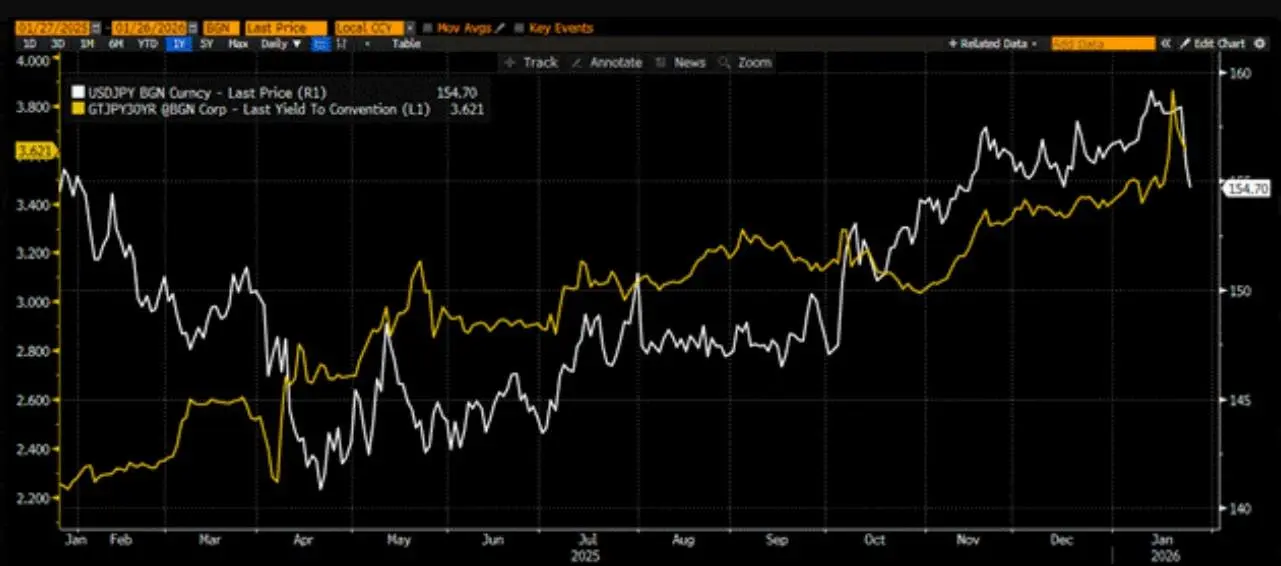
He used the chart to reinforce his thesis that when traditional relationships break down, policymakers tend to respond with liquidity measures. In Hayes’ framework, balance sheet expansion increases the supply of fiat currency relative to scarce assets, creating a mechanical tailwind for bitcoin regardless of narrative sentiment or short-term positioning.
Read more: Arthur Hayes Discusses How the Price of Bitcoin and Certain Cryptos Will Skyrocket
Later in the essay, Hayes explained: “ Bitcoin fell as the yen strengthened against the dollar. I will not increase risk before I confirm the Fed is printing money to intervene in the yen and JGB markets.” He treated currency-driven volatility as a timing mechanism rather than a refutation of his broader thesis, noting that rapid yen appreciation often coincides with short-term risk reduction across global markets. Hayes added:
“If the Foreign Currency Denominated Assets line item on the Fed’s balance sheet rises w-o-w then it’s time to increase my holdings of bitcoin.”
“I stopped myself out of my long Strategy (MSTR US) and Metaplanet (3350 JP) trades before the yen moves thankfully. I will re-enter these levered Bitcoin proxies if my hypothesis is correct,” the Bitmex co-founder added. His approach emphasized confirmation over anticipation, with balance sheet data serving as the primary signal. Hayes projected that once intervention-driven liquidity becomes visible, bitcoin would lead higher, followed by ethereum and select decentralized finance tokens as higher-beta expressions of the same monetary expansion dynamic.
FAQ ⏰
- Why does Arthur Hayes link bitcoin to central bank balance sheets?
He argues that balance sheet expansion increases fiat supply relative to scarce assets like bitcoin.
- What market signals is Hayes watching before buying bitcoin?
He is monitoring Fed balance sheet data, especially foreign currency asset changes.
- How does the yen factor into Hayes’ bitcoin outlook?
Rapid yen moves signal risk shifts and potential central bank intervention.
- Which crypto assets could benefit after bitcoin, according to Hayes?
He expects ethereum and select DeFi tokens to follow as higher-beta plays.
Disclaimer: The information on this page may come from third parties and does not represent the views or opinions of Gate. The content displayed on this page is for reference only and does not constitute any financial, investment, or legal advice. Gate does not guarantee the accuracy or completeness of the information and shall not be liable for any losses arising from the use of this information. Virtual asset investments carry high risks and are subject to significant price volatility. You may lose all of your invested principal. Please fully understand the relevant risks and make prudent decisions based on your own financial situation and risk tolerance. For details, please refer to
Disclaimer.
Related Articles
Bitcoin has traded in a tight range for nearly 50 days – but this is not a "bear flag"
Bitcoin's recent price action suggests a period of indecision rather than a continuation of a downtrend. Despite concerns about a bear flag, the prolonged consolidation indicates balanced market dynamics. Unlike the significant retracement seen in 2022, the current cycle shows strong demand and a solid support base.
CoinDesk15m ago
The White House approves cryptocurrency inclusion in 401(k) plans, opening the door to the $10 trillion retirement market.
The White House has completed regulatory review of the proposed rule by the Department of Labor, aimed at allowing 401(k) plans to invest in cryptocurrencies and paving the way for their entry into the retirement market. If approved, this rule will provide new investment options for digital assets, private equity, and more, marking an increase in the prominence of digital assets within traditional finance and having a significant impact on the retirement market.
GateNews25m ago
Bitcoin has been fluctuating for nearly 50 days, but this is not a bear flag. The market has entered a state of indecision.
Bitcoin has recently been fluctuating between $65,000 and $75,000, with market sentiment hesitant. Technically, it appears to form a bear flag pattern, but the bearish momentum is weakening, and the market is moving toward balance. Compared to the pullback in 2022, current demand remains solid, and prolonged sideways movement could indicate potential upside, but traders should watch for breakout signals.
GateNews26m ago
QCP: Macroeconomic and geopolitical situations still dominate market sentiment; Bitcoin remains resilient amid panic.
QCP Capital reports that Bitcoin is fluctuating around $70,000. The market reacts quickly to inflation shocks, but geopolitical risks still suppress risk appetite. Bitcoin shows resilience, with outflows indicating tokens being moved rather than sold off. Overall market sentiment is cautious; dips are being accumulated but there’s no chasing of rallies. It is expected to remain in a range and fluctuate in the short term.
BlockBeatNews30m ago


