Amnesty International on Tuesday warned that the wave of escapes and releases from online scam complexes in Cambodia has created a humanitarian crisis, leaving thousands stranded on the streets without support from the state.
“The mass migration from scam sites has caused a humanitarian crisis on the streets but is being ignored by the Cambodian government,” said Montse Ferrer, the organization’s Regional Research Director. She described the situation as chaotic and distressing, where “thousands of victims suffering psychological trauma are trying to cope without any support from authorities.”
Ferrer called this an “international crisis occurring on Cambodian territory,” noting that researchers from the organization have met people from Asia, Africa, Europe, and the Americas who are “urgently in need of consular support to return home safely.”
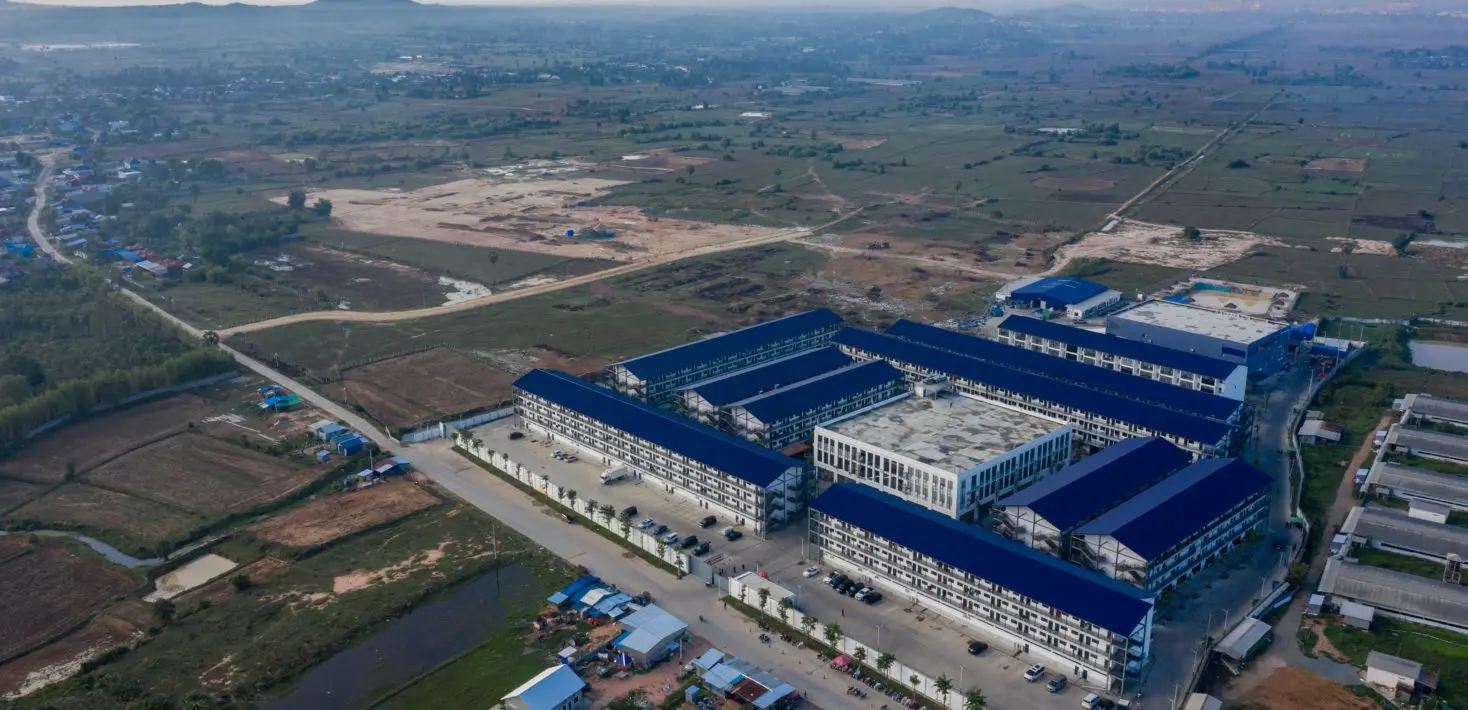 An online scam farm in Cambodia## Crypto scam sites in Cambodia
Cambodia has emerged as a major hub of industrial-scale online scam activities, including “pig farming” investment scams, where crypto is often used as a tool to defraud victims.
Human rights organizations report that workers in these sites are often trafficked from abroad, have their passports confiscated, and are forced to work under threats of violence for criminal networks, which generate illegal revenues of up to billions of USD.
According to Amnesty International, interviews reveal chaotic and dangerous conditions for those leaving these sites without passports, money, medical care, or a clear safe route. All interviewees have escaped or been released within the past six weeks, including at least 11 just in the past week.
Survivors describe severe and widespread abuse inside the complexes. Some report sexual assault by managers, including two pregnant women. Others recount brutal punishments, including one man having his fingers cut off.
The organization states that victims’ testimonies align with evidence from over 25 geolocated videos the organization has identified in the past month, showing mass departures from scam sites. Many of these individuals are now stranded in Phnom Penh and urgently need food, shelter, and medical assistance.
The interviewees come from countries such as Brazil, Indonesia, Myanmar, Nigeria, Sierra Leone, Liberia, Uganda, Kenya, Bangladesh, India, the Philippines, and Madagascar.
Victims report little to no police or military presence during and after their escape, raising concerns about the role of Cambodian authorities. Some say guards beat those trying to leave, while others describe managers allowing escapes, letting detainees freely leave the premises.
One survivor recounts witnessing a man being killed by a manager after attempting to escape. Ten others say police frequently visit these sites, even to remove bodies, but take no action against the operators. In fact, Cambodian police seem more like accomplices than protectors of justice.
Another victim, named Delilah, says many people have died in the site where she was held near Phnom Penh. “People are sick but they don’t help us,” she said. “We had to break the gate and run out because someone was seriously ill and didn’t want to die.”
Human trafficking organizations say the Cambodian government is failing (or unwilling) to properly identify and protect trafficking victims, making them vulnerable to continued exploitation by organized crime groups.
Southeast Asia scam networks
Amnesty International’s warning comes amid increasing international scrutiny of scam activities in Southeast Asia. Earlier this month, Mr. Trần Chí, Chairman of Prince Holding Group, was arrested in Cambodia and extradited to China after being indicted by US authorities on charges of online fraud conspiracy and money laundering related to scam sites believed to have stolen billions of USD from victims.
The US Department of Justice has designated this network as a transnational organized crime group and is seeking to seize over 127,000 BTC, worth over $11 billion at current prices, linked to the scam operation.
In Myanmar, law enforcement supported by China has also conducted raids on notorious scam centers, including KK Park. Several leaders and key figures of these gangs have been transferred to China, with some sentenced to death.
However, observers and human rights groups say many crackdown campaigns are merely symbolic. Reports indicate that operators have been forewarned, leaving complexes empty during raids, as seen in recent South Korea cases.
Amnesty calls for urgent action from the Cambodian government and foreign authorities to provide humanitarian aid, restore identification documents, and facilitate the repatriation of survivors.
“The people we meet are living in extreme fear,” Ferrer said. “They desperately need their governments to intervene and help.”
Disclaimer: The information on this page may come from third parties and does not represent the views or opinions of Gate. The content displayed on this page is for reference only and does not constitute any financial, investment, or legal advice. Gate does not guarantee the accuracy or completeness of the information and shall not be liable for any losses arising from the use of this information. Virtual asset investments carry high risks and are subject to significant price volatility. You may lose all of your invested principal. Please fully understand the relevant risks and make prudent decisions based on your own financial situation and risk tolerance. For details, please refer to
Disclaimer.


