


Token crash 94%, hitting a new all-time low! Is the RSI oversold and a bottom-fishing opportunity or a sign to abandon ship and escape?
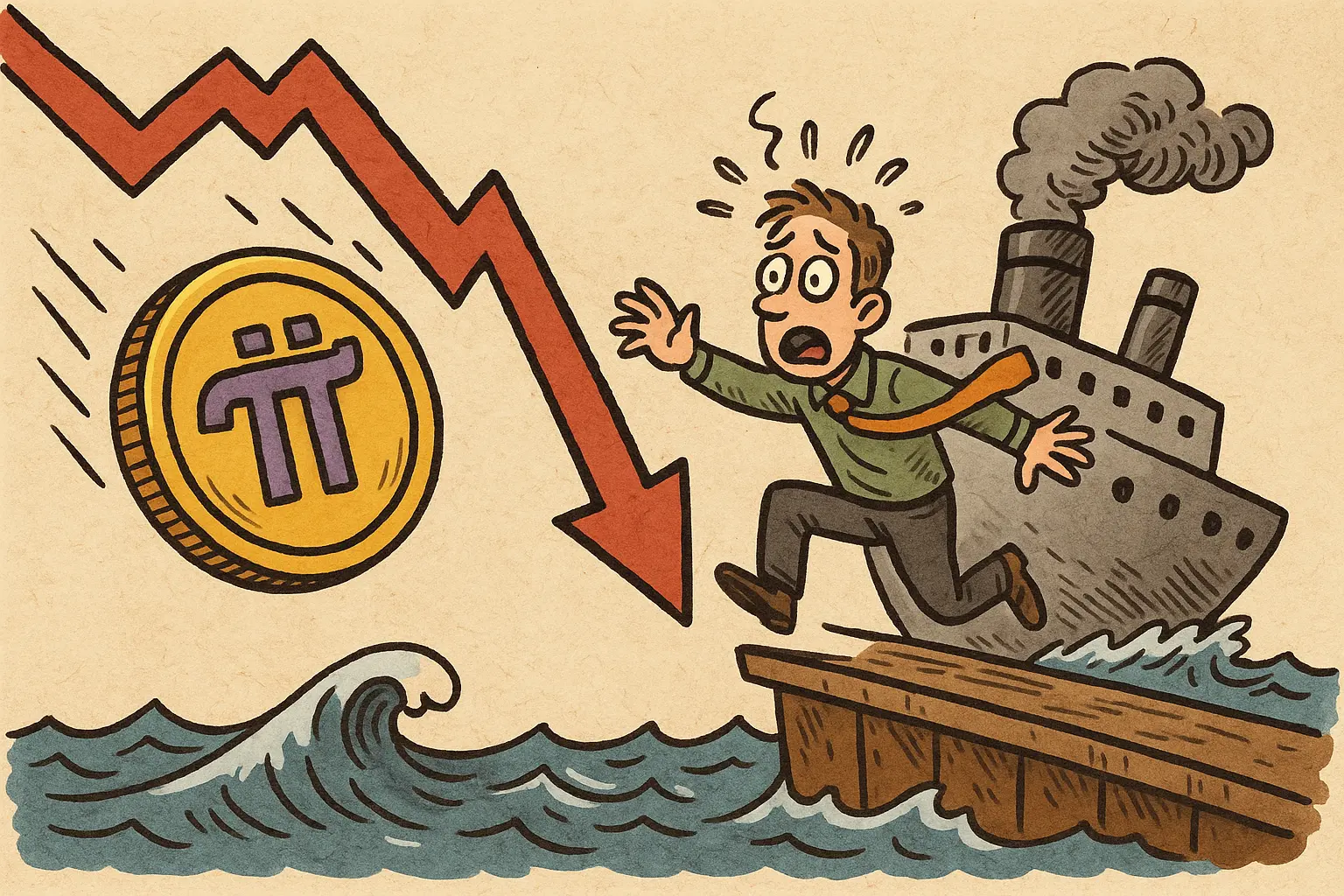
Dogecoin plummeted 94%, hitting a new low, with RSI dropping to 27 indicating oversold conditions. Multiple bearish factors compound: 200 million tokens unlocking in February, daily trading volume only $20 million leading to liquidity exhaustion, the largest whale transferring $2.73 million off the market, and the team holding billions in highly centralized control. Despite technical oversold signals, the fundamentals are deteriorating, making bottom-fishing extremely risky.
Technical Oversold Signals and Potential for Rebound
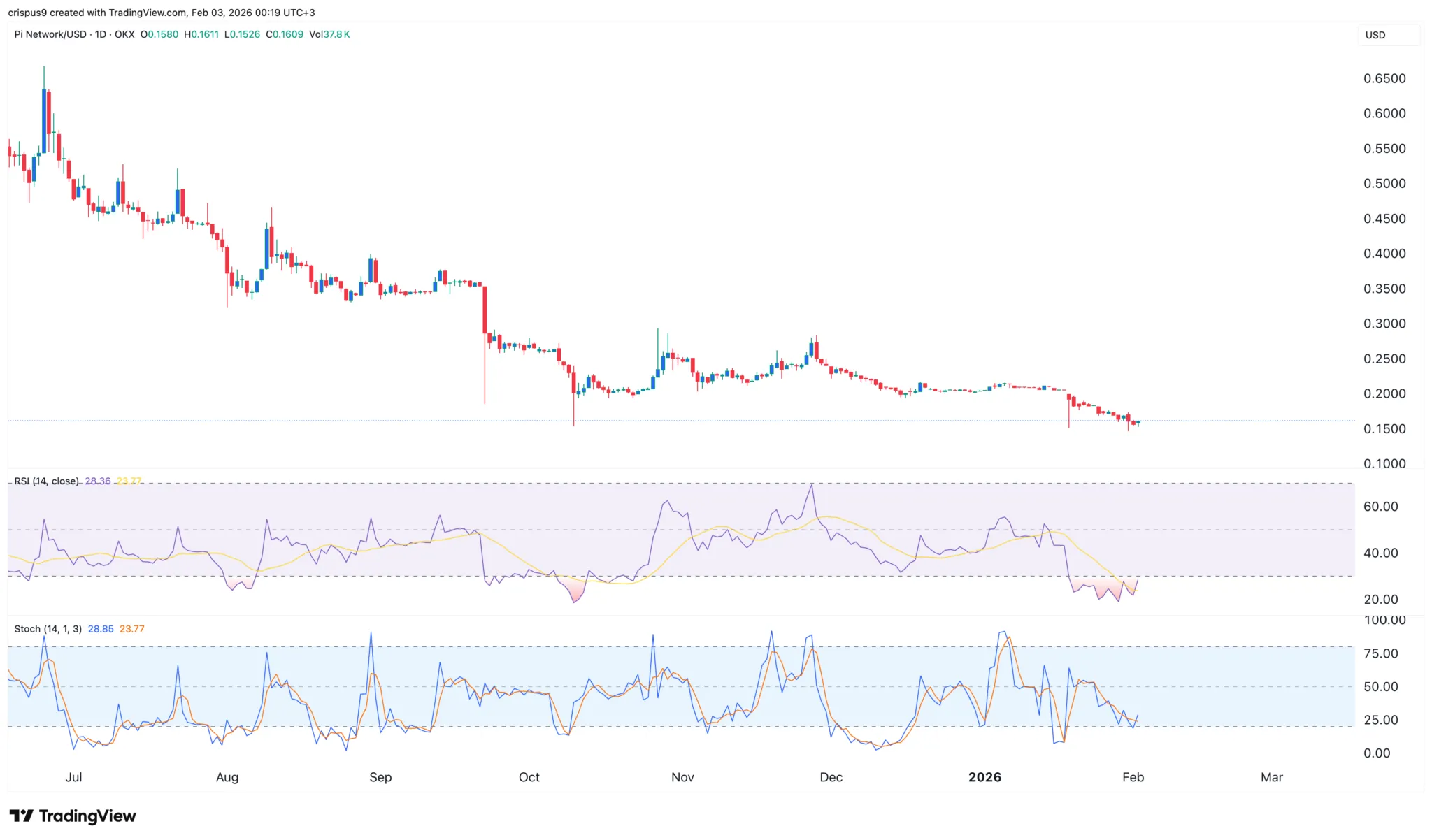
(Source: Trading View)
As Dogecoin price continues to crash, the main reason to consider buying is the extreme oversold technical condition. First, if the prolonged bear market in crypto shows signs of easing, Dogecoin could rebound. Historically, most altcoins, including some “ghost chains,” perform well during crypto bull markets, and Dogecoin might follow suit. Although the fundamentals have many issues, during highly optimistic market sentiment, capital tends to flow indiscriminately into all tokens.
Second, technical analysis shows the token is severely oversold, with RSI plunging to 27. An RSI below 30 is generally considered oversold, and a reading of 27 indicates extreme selling pressure. Similarly, the stochastic oscillator lines are also in oversold territory. This dual oversold confirmation is significant in technical analysis, often signaling an imminent short-term technical rebound.
From a purely technical perspective, such a rebound after extreme oversold conditions is a mechanical price correction, unrelated to fundamentals. When prices fall sharply, causing technical indicators to reach extremes, short-term traders may enter to capitalize on the bounce, and bears might take profits, collectively pushing prices higher in the short term. However, this technical rebound is usually short-lived and limited in strength; once resistance levels are hit or oversold conditions are restored, prices may resume decline.
Third, there is still a possibility that one or more crypto exchanges will list Dogecoin, which could boost demand. This would expose Dogecoin to millions of users worldwide, significantly increasing liquidity and awareness. Listings on major exchanges are often catalysts for explosive price increases in small-cap tokens, as they indicate the project has passed exchange vetting and gained some trust.
Additionally, the Pi Network team might address major community concerns, including decentralization, communication, product upgrades, and ecosystem development. If the team announces token burn plans, launches key applications, or improves governance, market sentiment could turn positive. However, these are “possibilities” and “if” scenarios; before actual events occur, they should be viewed as optimistic assumptions rather than investment grounds.
Multiple Bearish Factors Creating a Death Spiral
However, all signs suggest Dogecoin’s price could continue to decline over the coming weeks. First, developers have taken no measures to address community concerns. For example, the team has not announced token burn plans to reduce supply, which could help decrease circulating supply. Moreover, they seem to have taken no steps to list the token on mainstream exchanges.
Meanwhile, token unlocks have accelerated in recent months. Data from PiScan shows nearly 200 million tokens will unlock this month, and 1.29 billion tokens over the next 12 months. This ongoing increase in supply, without corresponding demand growth, will continue to depress prices. The 1.29 billion annual unlock is a significant proportion of current circulating supply, and such supply pressure is unlikely to be fully absorbed by the market.
Four Major Bearish Factors Facing Dogecoin
Liquidity exhaustion: 24-hour trading volume only $20 million, extremely abnormal for a $1.4 billion market cap
Whale exodus: Largest holder transferred $135K on Monday, $138K last week, signs of exiting
Unlock flood: 200 million tokens unlocked in February, 1.29 billion more in 12 months, huge supply pressure
Centralization risk: Team holds billions of tokens, lacking transparency and decentralized governance
Over time, demand for Pi Network diminishes, with only $20 million in 24-hour trading volume for a crypto valued over $1.4 billion—an extremely abnormal figure. Normally, daily volume should be 5-10% of market cap, i.e., $70 million to $140 million. The current $20 million indicates a market with very low activity, with most holders in a “locked” state, with no buy or sell pressure. This liquidity crunch makes Dogecoin one of the least traded tokens in the crypto industry.
Largest Whale is Abandoning Ship
At the same time, Dogecoin has not attracted demand from large investors. Data shows only about 20 whales currently hold significant amounts, and this number has been decreasing over recent weeks. More concerning, the largest whale is systematically exiting. Over the past 20 days, the biggest whale has made no purchases and shows signs of starting to sell off.
This whale transferred over $135K worth of tokens Monday, and $138K last week. This may indicate he is capitulating. Whale exits have disastrous effects on small-cap tokens, as these large holders are often key liquidity providers. When whales start dumping, due to lack of sufficient buy support, prices tend to accelerate downward. Worse, whale selling signals are often interpreted by the market as “smart money leaving,” triggering panic selling among retail investors.
Two consecutive weeks of over $2.7 million in outflows, against a daily volume of only $20 million, is a significant selling pressure. It could take about a week for the market to fully absorb the whale’s sell-off, during which prices will remain under pressure. If the whale continues to offload at similar scales, Dogecoin could fall into a vicious downward cycle.
The high centralization of Pi Network also poses long-term risks. The team holds billions of tokens, threatening the token’s long-term viability. Lack of transparent token distribution, unclear unlock schedules, and the team’s absolute control over the project are features highly disliked by decentralized communities. This centralized structure makes Dogecoin more like a company-controlled points system rather than a truly decentralized cryptocurrency.
Bottom-fishing or Rational Escape?
In conclusion, Dogecoin is in a very dangerous position. While technical oversold signals might trigger a short-term rebound, the multiple bearish fundamentals suggest any bounce could be a “panic sell” rather than a trend reversal. Liquidity exhaustion, whale exit, unlock flood, and centralization risks form a downward spiral that’s hard to break.
For investors considering bottom-fishing, it’s crucial to recognize this as a high-risk gamble. Dogecoin might see a sharp rebound at some point, but it could also fall another 50% or more. Even if a short-term bounce occurs, the long-term risk remains extremely high due to structural issues like increasing supply and stagnant demand.
For current holders, a technical rebound might be the last chance to exit. When RSI recovers from 27 to above 40, and the price rebounds 20-30%, it’s advisable to reduce or close positions rather than hope for a return to all-time highs. An asset that has fallen 94% from its peak needs a 1,566% increase to reach previous highs—an almost impossible feat in the current environment. Rational strategy is to accept losses and shift remaining funds into assets with healthier fundamentals.
Related Articles
PI (Pi Coin) has decreased by 4.02% in the past 24 hours, now trading at $0.13
Pi Network Releases Key KYC and Mainnet Migration Updates: What Pioneers Need to Know
Pi Network Testnet Expands Ecosystem! Starpath and Pitogo Social Improve User Experience
PaiCoin Weekly Price Prediction: $0.13 Critical Support Level, Major Holders Rush to Exit
Pi Network Falls Victim to Pyramid Scam! Analyst: Promised Years Ago but Still No Mainnet
