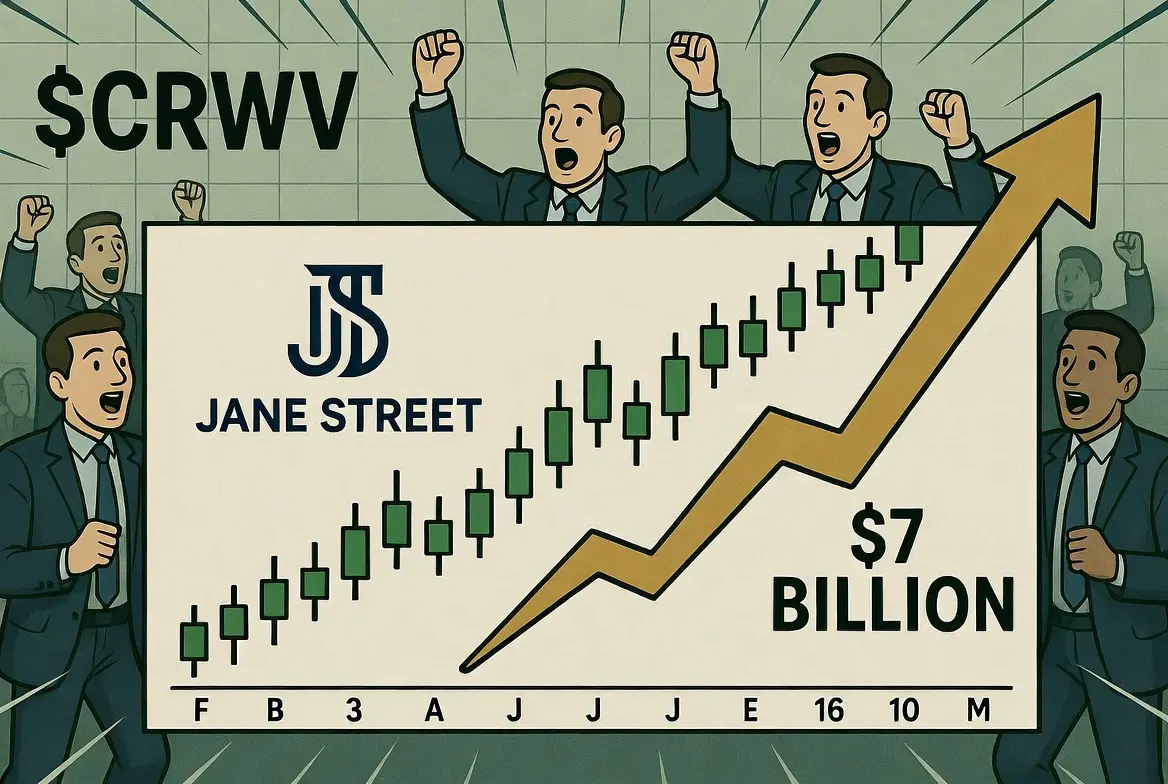
#JaneStreetBets$7BonCoreWeave #AIInfraShiftstoApplications
The Next Phase of the AI–Crypto Convergence: Beyond Infrastructure into Market Control
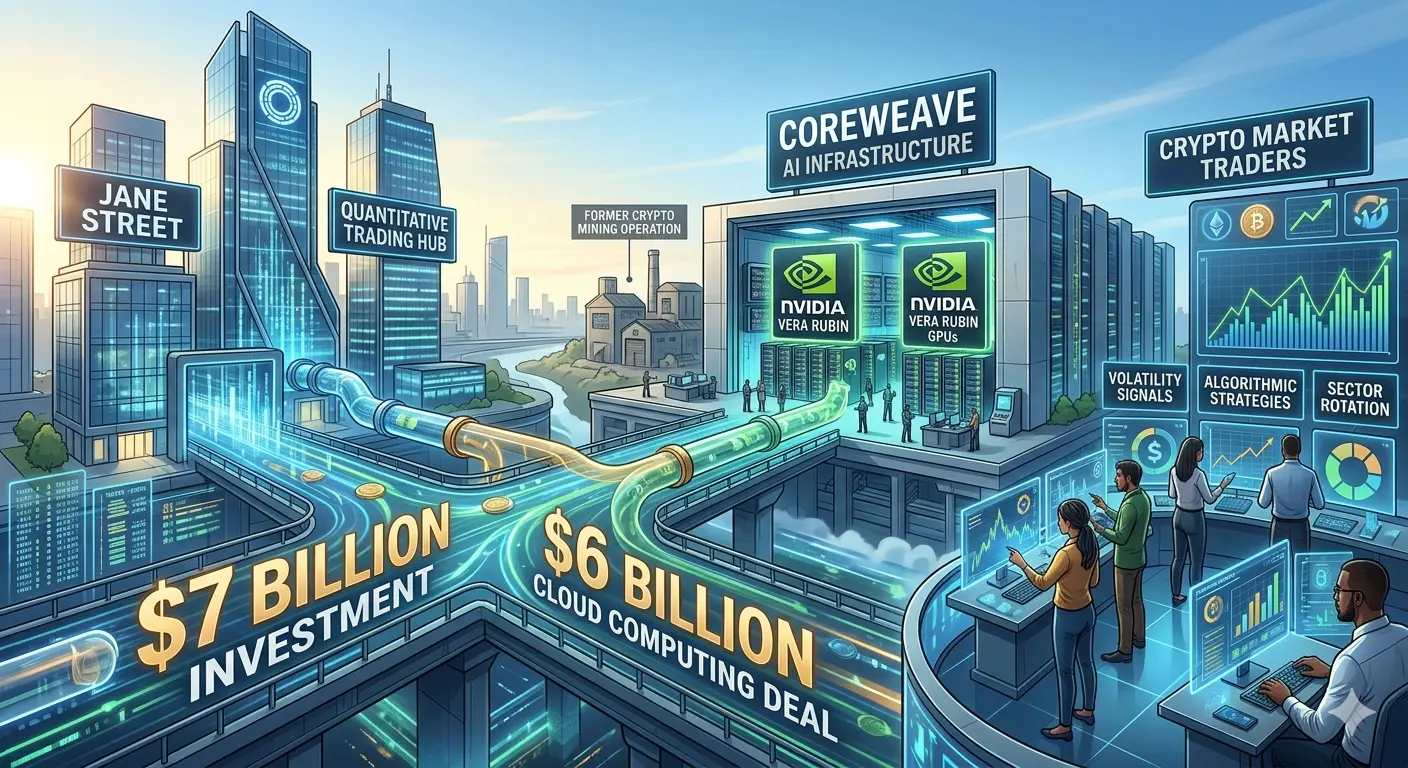
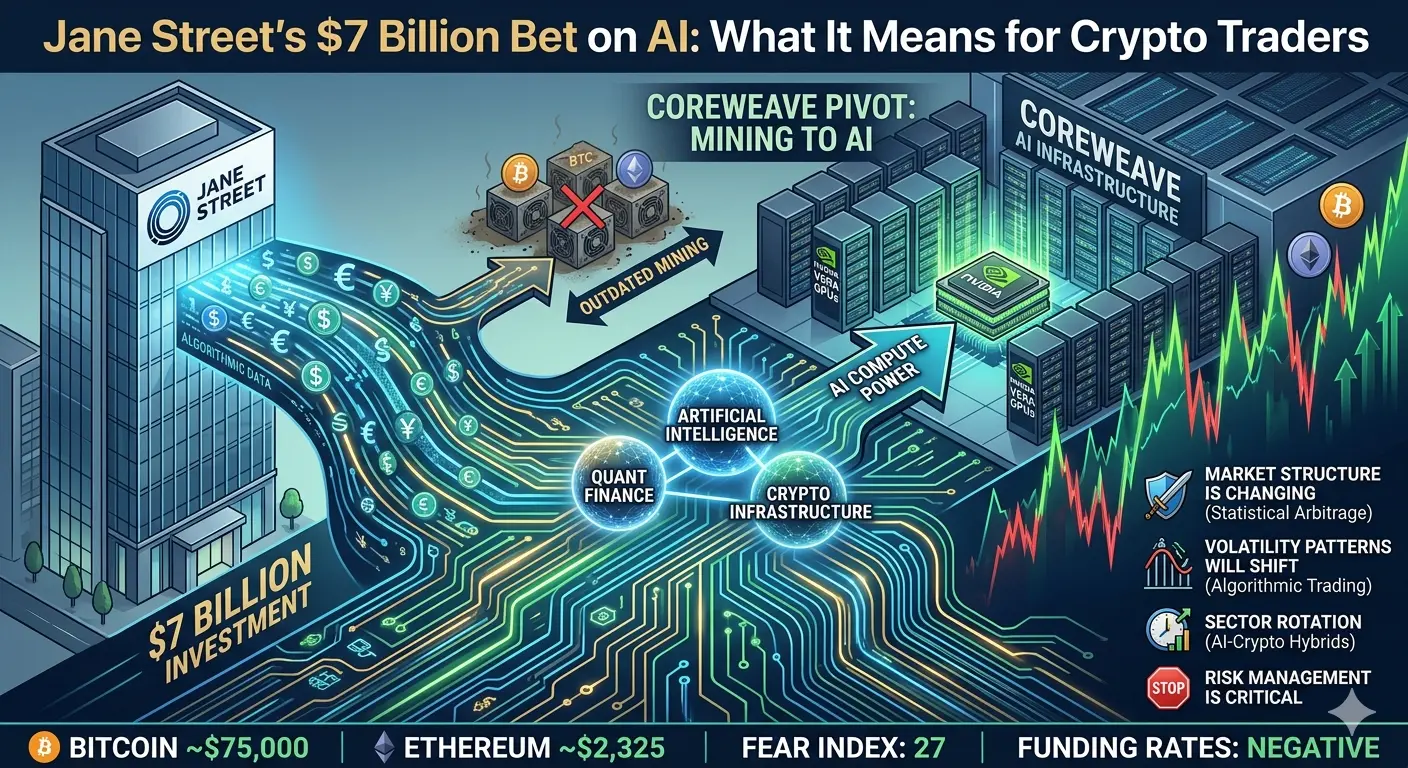
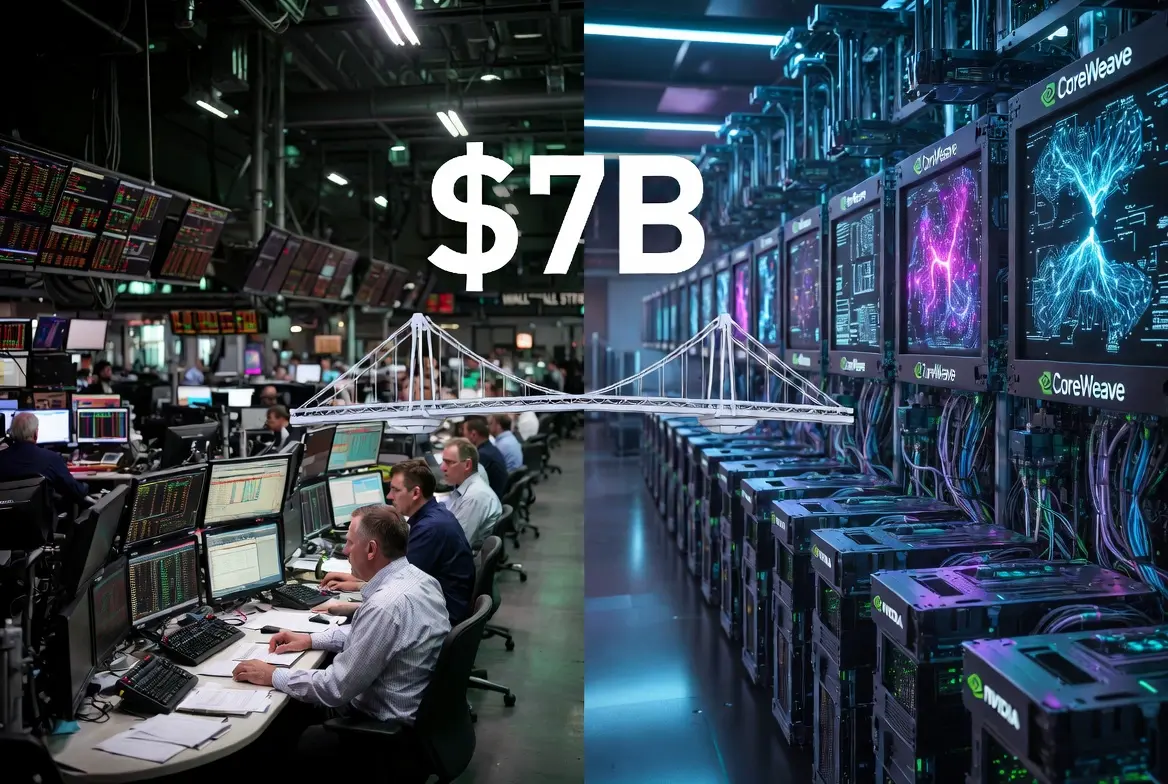
The recent multi-billion-dollar commitment by Jane Street into CoreWeave is not just another institutional allocation — it represents a deeper structural evolution that most retail traders are still underestimating. While the headlines focus on capital size, the real story lies in what this capital is enabling: a transition from passive market participation to fully autonomous, AI-driven market dominance. This is no longer about faster trading — it is about controlling how markets behave.
What we are witnessing now is the emergence of compute supremacy as financial power. In previous cycles, capital, information, and access defined market leaders. Today, compute + data + AI models are replacing all three. Firms investing billions into AI infrastructure are not just optimizing trades — they are building systems capable of predicting liquidity shifts, sentiment changes, and cross-market reactions before they even materialize. This fundamentally changes how price discovery works across crypto markets, including Bitcoin and Ethereum.
A major overlooked angle is how this impacts market fairness and accessibility. As firms like Jane Street deploy advanced machine learning systems trained on massive datasets, retail traders are increasingly operating in an environment where decisions are being countered by predictive intelligence. These AI systems can simulate thousands of market scenarios per second, exploit inefficiencies instantly, and adapt in real time. This creates a silent gap — not visible on charts — where retail traders are consistently reacting, while institutions are already positioned ahead of the move.
Another critical shift is the transformation of crypto infrastructure into AI infrastructure. Companies that once built their identity around mining or blockchain validation are now repurposing their hardware and expertise toward AI workloads. This transition is not temporary — it is a long-term reallocation of global computational resources. GPU clusters that once secured blockchain networks are now being redirected toward training large-scale AI models. Over time, this could reduce the relative growth rate of mining capacity while accelerating innovation in decentralized compute networks.
This creates a new battleground: centralized AI clouds vs decentralized compute protocols. While CoreWeave represents the centralized, high-performance approach, there is growing interest in blockchain-based alternatives that aim to distribute compute power across global participants. If these decentralized systems mature, they could introduce a new asset class within crypto — where tokens derive value from actual compute contribution rather than speculation alone. This could redefine how value is measured across the digital asset ecosystem.
From a trading perspective, the implications are even more intense. Markets influenced by AI-driven execution tend to exhibit non-linear volatility — meaning price moves are no longer smooth or predictable. Instead, traders may experience sudden liquidity gaps, aggressive stop hunts, and rapid reversals triggered by algorithmic clustering. Traditional indicators like support/resistance or RSI lose effectiveness unless combined with deeper analysis such as order flow dynamics, liquidity heatmaps, and on-chain movement patterns.
Another emerging factor is the role of AI in cross-market synchronization. AI models do not trade crypto in isolation — they analyze equities, commodities, macroeconomic data, and even social sentiment simultaneously. This means a movement in tech stocks or bond yields can trigger reactions in crypto markets within milliseconds. Retail traders focusing only on crypto charts risk missing the broader triggers driving volatility.
Additionally, the rise of AI infrastructure investment suggests that the next bull cycle may not be led purely by traditional narratives like halvings or retail hype. Instead, it could be driven by technological integration, where projects aligned with AI, data processing, and real-world utility outperform speculative assets. Tokens connected to compute networks, data indexing, or AI-powered applications may become the new leaders, while outdated narratives gradually lose momentum.
There is also a psychological shift happening in the market. As institutional AI systems become more dominant, emotional trading becomes even more dangerous. Algorithms do not fear, hesitate, or overtrade — they execute based on probability and precision. This means retail traders must evolve from emotional decision-making to structured strategies, focusing on risk management, patience, and data-backed setups.
At a macro level, this entire movement signals that crypto is entering a phase of integration rather than isolation. The boundaries between traditional finance, artificial intelligence, and blockchain technology are dissolving. What was once considered separate industries are now merging into a unified financial ecosystem driven by automation and data intelligence.
The biggest takeaway is simple but powerful: the market is not becoming harder — it is becoming smarter. And in a smarter market, survival depends on adaptation. Traders who begin to understand AI trends, follow institutional behavior, and upgrade their analytical approach will still find opportunities. Those who rely only on outdated methods may find themselves consistently outpaced.
The future of crypto trading will not just be about buying low and selling high — it will be about understanding who (or what) is on the other side of your trade. And increasingly, that “who” is not human anymore.
The Next Phase of the AI–Crypto Convergence: Beyond Infrastructure into Market Control
The recent multi-billion-dollar commitment by Jane Street into CoreWeave is not just another institutional allocation — it represents a deeper structural evolution that most retail traders are still underestimating. While the headlines focus on capital size, the real story lies in what this capital is enabling: a transition from passive market participation to fully autonomous, AI-driven market dominance. This is no longer about faster trading — it is about controlling how markets behave.
What we are witnessing now is the emergence of compute supremacy as financial power. In previous cycles, capital, information, and access defined market leaders. Today, compute + data + AI models are replacing all three. Firms investing billions into AI infrastructure are not just optimizing trades — they are building systems capable of predicting liquidity shifts, sentiment changes, and cross-market reactions before they even materialize. This fundamentally changes how price discovery works across crypto markets, including Bitcoin and Ethereum.
A major overlooked angle is how this impacts market fairness and accessibility. As firms like Jane Street deploy advanced machine learning systems trained on massive datasets, retail traders are increasingly operating in an environment where decisions are being countered by predictive intelligence. These AI systems can simulate thousands of market scenarios per second, exploit inefficiencies instantly, and adapt in real time. This creates a silent gap — not visible on charts — where retail traders are consistently reacting, while institutions are already positioned ahead of the move.
Another critical shift is the transformation of crypto infrastructure into AI infrastructure. Companies that once built their identity around mining or blockchain validation are now repurposing their hardware and expertise toward AI workloads. This transition is not temporary — it is a long-term reallocation of global computational resources. GPU clusters that once secured blockchain networks are now being redirected toward training large-scale AI models. Over time, this could reduce the relative growth rate of mining capacity while accelerating innovation in decentralized compute networks.
This creates a new battleground: centralized AI clouds vs decentralized compute protocols. While CoreWeave represents the centralized, high-performance approach, there is growing interest in blockchain-based alternatives that aim to distribute compute power across global participants. If these decentralized systems mature, they could introduce a new asset class within crypto — where tokens derive value from actual compute contribution rather than speculation alone. This could redefine how value is measured across the digital asset ecosystem.
From a trading perspective, the implications are even more intense. Markets influenced by AI-driven execution tend to exhibit non-linear volatility — meaning price moves are no longer smooth or predictable. Instead, traders may experience sudden liquidity gaps, aggressive stop hunts, and rapid reversals triggered by algorithmic clustering. Traditional indicators like support/resistance or RSI lose effectiveness unless combined with deeper analysis such as order flow dynamics, liquidity heatmaps, and on-chain movement patterns.
Another emerging factor is the role of AI in cross-market synchronization. AI models do not trade crypto in isolation — they analyze equities, commodities, macroeconomic data, and even social sentiment simultaneously. This means a movement in tech stocks or bond yields can trigger reactions in crypto markets within milliseconds. Retail traders focusing only on crypto charts risk missing the broader triggers driving volatility.
Additionally, the rise of AI infrastructure investment suggests that the next bull cycle may not be led purely by traditional narratives like halvings or retail hype. Instead, it could be driven by technological integration, where projects aligned with AI, data processing, and real-world utility outperform speculative assets. Tokens connected to compute networks, data indexing, or AI-powered applications may become the new leaders, while outdated narratives gradually lose momentum.
There is also a psychological shift happening in the market. As institutional AI systems become more dominant, emotional trading becomes even more dangerous. Algorithms do not fear, hesitate, or overtrade — they execute based on probability and precision. This means retail traders must evolve from emotional decision-making to structured strategies, focusing on risk management, patience, and data-backed setups.
At a macro level, this entire movement signals that crypto is entering a phase of integration rather than isolation. The boundaries between traditional finance, artificial intelligence, and blockchain technology are dissolving. What was once considered separate industries are now merging into a unified financial ecosystem driven by automation and data intelligence.
The biggest takeaway is simple but powerful: the market is not becoming harder — it is becoming smarter. And in a smarter market, survival depends on adaptation. Traders who begin to understand AI trends, follow institutional behavior, and upgrade their analytical approach will still find opportunities. Those who rely only on outdated methods may find themselves consistently outpaced.
The future of crypto trading will not just be about buying low and selling high — it will be about understanding who (or what) is on the other side of your trade. And increasingly, that “who” is not human anymore.