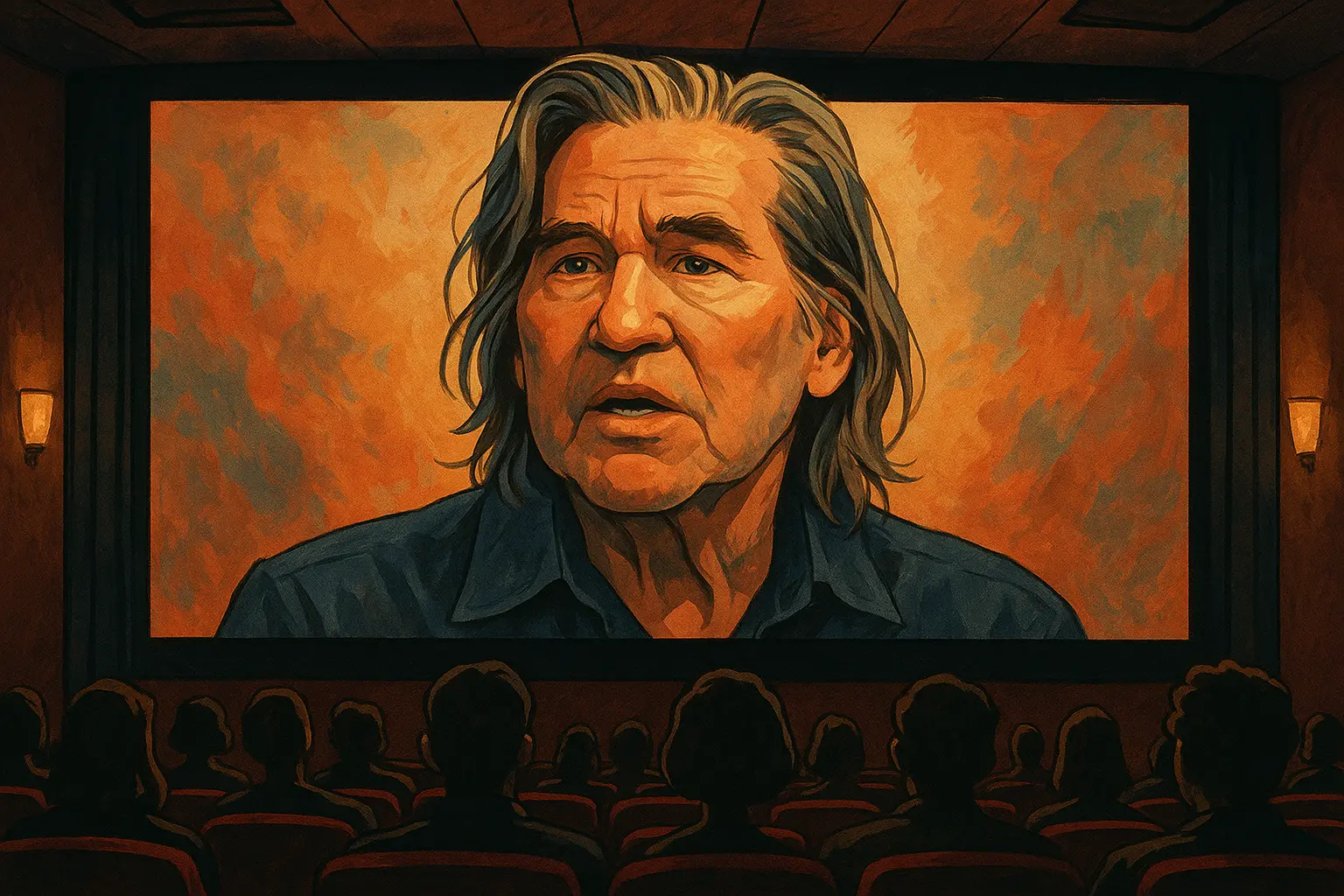
The trailer for As Deep as the Grave debuted at CinemaCon in Las Vegas on April 15, 2026, featuring a generative AI recreation of the late Val Kilmer — who died last year at 65 — as Father Fintan, a Catholic priest in a historical drama. Writer-director Coerte Voorhees and producer John Voorhees defended the decision on a panel, stating they operated within SAG-AFTRA’s framework of “consent, compensation and collaboration.” Kilmer appears in the film for one hour and 17 minutes.
How the Creators Built an Ethical Case
Kilmer had originally been cast in As Deep as the Grave years before his death, but withdrew due to health complications. After realizing the story needed Father Fintan, the Voorhees brothers approached Kilmer’s children, who were “excited and supportive” of the idea. Kilmer’s estate granted explicit permission, provided archival footage to help train the AI system, and is receiving compensation.
Coerte Voorhees was careful with his language throughout, notably declining to call the result a Val Kilmer performance. “Val Kilmer influenced this performance,” he said — a distinction that reflects the unresolved philosophical and legal terrain that any AI recreation of a human identity enters.
The SAG-AFTRA AI Framework: What the 2023 Strike Produced
The 2023 Hollywood strikes — in which AI regulation was described by SAG-AFTRA as “a mandatory subject of bargaining” — resulted in a contract framework categorizing permissible AI performance uses:
Synthetic performers: Fully fictional AI “actors” not based on any real person (e.g., Tilly Norwood by Particle6), which have drawn the most alarm from working actors
Employment-based digital replicas: AI used to enhance a currently working actor’s performance on a project they’re actively involved in
Digital alteration: Post-production modifications to appearance, accent, or voice — requiring performer consent, with narrow producer exceptions
Independently created digital replicas: AI likenesses of real performers not otherwise involved in a project — the category governing Kilmer’s appearance
The contract relies heavily on language requiring “good faith” between studios and performers. Entertainment lawyers have noted this standard is difficult to independently verify or enforce.
Not Everyone Is Convinced
The film enters a deeply fractured industry. Director Timur Bekmambetov — creator of the Screenlife format behind films like Searching — is actively expanding AI’s presence across Hollywood. Knives Out director Rian Johnson, by contrast, has called AI’s entry into filmmaking “making everything worse in every single way.”
Actor Natasha Lyonne labeled fully synthetic AI performers like Tilly Norwood a “fear tactic” and “distraction.” The Guardian called a sketch featuring Norwood “relentlessly unfunny.” Kilmer’s case is widely considered more ethically grounded — given family involvement, prior consent, and the actor’s own personal history with AI — than purely speculative resurrections, like the abandoned 2019 plan to digitally recreate James Dean for an entirely new film.
The Academy, meanwhile, is reportedly considering mandatory disclosure of AI assistance prior to awards voting following the 2025 controversy over AI-enhanced accents in The Brutalist, whose star Adrien Brody ultimately won Best Actor.
FAQ
Is using a deceased actor’s AI likeness legal?
Legality depends on jurisdiction, estate consent, and applicable union contracts. In the Kilmer case, the estate gave explicit permission and is being compensated — which satisfies the SAG-AFTRA contract’s requirements. However, enforcement of the contract’s “good faith” provisions remains an open and unresolved question in entertainment law.
Did Val Kilmer himself use AI before his death?
Yes. After losing his natural speaking voice following a throat cancer diagnosis and two tracheotomies, Kilmer used AI software to digitally recreate it. His voice was also digitally altered for Top Gun: Maverick, making him one of the first major Hollywood stars to personally use AI to extend his own screen presence — providing additional context for his estate’s decision to support the film.
What should viewers expect from As Deep as the Grave?
The film runs significantly longer than one hour and 17 minutes — the confirmed length of Kilmer’s AI-generated screen time — though the final runtime hasn’t been disclosed. The performance draws on archival footage provided by the estate and was created with active participation from Kilmer’s family. The filmmakers plan to release it later in 2026.
Disclaimer: The information on this page may come from third parties and does not represent the views or opinions of Gate. The content displayed on this page is for reference only and does not constitute any financial, investment, or legal advice. Gate does not guarantee the accuracy or completeness of the information and shall not be liable for any losses arising from the use of this information. Virtual asset investments carry high risks and are subject to significant price volatility. You may lose all of your invested principal. Please fully understand the relevant risks and make prudent decisions based on your own financial situation and risk tolerance. For details, please refer to
Disclaimer.


