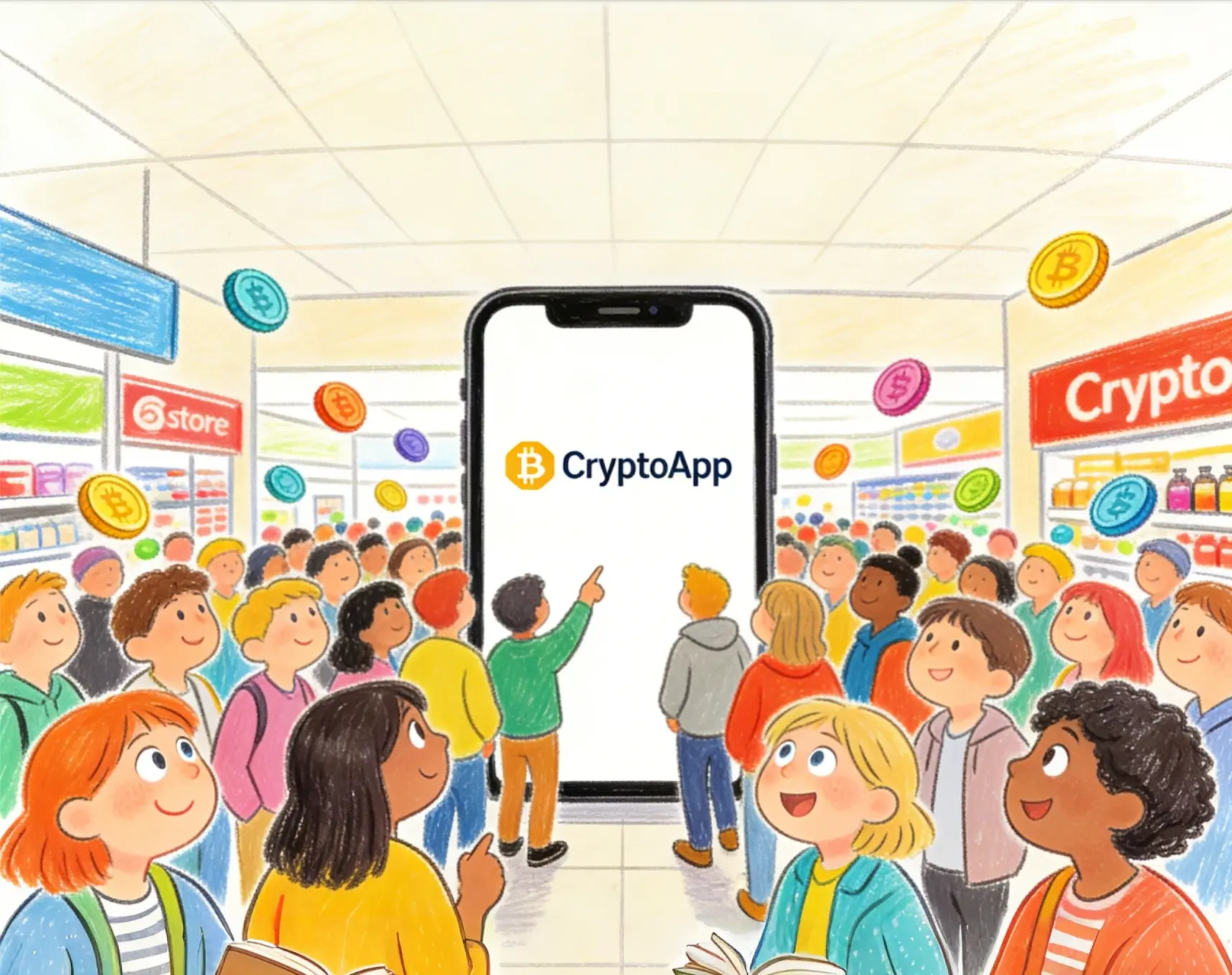
 OnePay, the Walmart-backed fintech platform, has expanded its cryptocurrency offering to more than 15 tokens, adding assets including Solana (SOL), Polygon (POL), Arbitrum (ARB), Cardano (ADA), and Dogecoin (DOGE) as it builds out an all-in-one financial services app targeting mainstream retail customers.
The platform, which launched Bitcoin and Ethereum trading in January 2026, now supports a curated set of digital assets selected based on demand, liquidity, regulatory clarity, and long-term utility, according to Ron Rojany, OnePay’s general manager for Core App and Crypto. The expansion positions OnePay to onboard millions of Walmart shoppers who have never used a dedicated crypto exchange, with the platform already offering high-yield savings accounts, credit and debit cards, loans, and a digital wallet for Walmart checkout.
The move comes as the Crypto Fear & Greed Index sits at 9—deep in “Extreme Fear” territory—signaling a counter-cyclical bet on long-term retail demand from the retail giant’s fintech arm.
OnePay’s Crypto Expansion and Token Selection Strategy
New Tokens Added to the Platform
OnePay added 10 cryptocurrencies on March 20, 2026, including XRP, Solana (SOL), Dogecoin (DOGE), Cardano (ADA), Bitcoin Cash (BCH), Chainlink (LINK), PAX Gold (PAXG), Shiba Inu (SHIB), Polkadot (DOT), and Uniswap (UNI). The platform has since added SUI, Polygon (POL), and Arbitrum (ARB), bringing its total supported digital assets to more than 15. All crypto services are powered by Zero Hash LLC and Zero Hash Liquidity Services LLC, with users able to buy, sell, and hold crypto directly within the OnePay app.
Selection Criteria
Rojany stated that OnePay plans to “continue to expand thoughtfully, prioritizing assets that meet a high bar: demand, liquidity, regulatory clarity and long-term utility.” He emphasized that the platform is “less focused on chasing the latest asset and more focused on offering a curated set of assets that align with how our customers actually use and think about their money.” OnePay is seeing “strong engagement, particularly among customers who are newer to crypto and are looking for an easy and integrated way to get started,” Rojany said, though he declined to disclose specific adoption figures.
Walmart’s Distribution Advantage and Superapp Strategy
Retail Footprint and User Base
OnePay is majority-owned by Walmart, which serves approximately 150 million weekly U.S. shoppers. The platform’s distribution channel dwarfs most crypto-native platforms, positioning it to onboard users who have never touched a dedicated exchange. The platform already offers banking services including high-yield savings accounts, credit and debit cards, loans, and wireless plans, alongside a digital wallet that customers can use at checkout in Walmart stores and on the retailer’s website. Walmart’s U.S. operations reported net sales of $462.4 billion in fiscal 2025, according to the company’s annual report.
Superapp Positioning
OnePay has positioned itself as a U.S. version of a “superapp,” modeled after China’s WeChat. The platform bundles crypto alongside traditional banking products, removing the need for a separate wallet or exchange account. For first-time crypto buyers, the friction drops significantly when trading sits inside the same app they already use for everyday spending. The integration model mirrors what PayPal and Cash App have done, but with Walmart’s offline retail footprint of more than 4,600 U.S. stores behind it.
Competitive Landscape and Regulatory Context
Rival Superapp Initiatives
Coinbase CEO Brian Armstrong outlined plans in September 2025 to build a crypto superapp offering credit cards, payments, and Bitcoin rewards to rival traditional banks. Japan’s Startale Group announced earlier in March 2026 that it would use funding from a $50 million Series A investment to develop its superapp integrating payments, asset management, and onchain services. However, OnePay’s Walmart backing and existing banking relationships give it a distribution advantage that competitors lack.
Regulatory Support
SEC Chairman Paul Atkins expressed support in September 2025 for platforms offering multiple financial services under one regulatory framework. The regulator’s updated strategy includes allowing platforms to operate as “super-apps” that can facilitate trading, lending, and staking of digital assets under one regulatory umbrella. In July 2025, Atkins stated: “I have directed the Commission staff to develop further guidance and proposals ultimately to make this ‘super-app’ vision a reality.”
Compliance and Future Outlook
Risk Disclosures and Compliance
OnePay’s crypto products are explicitly noted as not FDIC-insured and subject to investment risk disclosures, reflecting a compliance-first posture. The platform’s expansion comes as the crypto market faces pressure, with approximately $73 million in crypto liquidations hitting long positions in a single 24-hour window in late March 2026.
Future Developments
Rojany indicated that the token list will keep growing, with OnePay planning to “continue to expand thoughtfully.” Whether OnePay eventually enables crypto payments at Walmart checkout remains unconfirmed, but the infrastructure is being laid. According to unconfirmed reports, OnePay carries a $4 billion valuation and has surpassed 3 million monthly active users, figures that would place it among the fastest-growing fintech crypto platforms in the U.S.
Frequently Asked Questions
What is OnePay and how does it differ from other crypto platforms?
OnePay is a fintech platform majority-owned by Walmart that offers banking services alongside crypto trading within a single app. Unlike dedicated exchanges, OnePay integrates crypto into an app already used by millions of Walmart shoppers for everyday spending, removing the need for a separate wallet or exchange account.
Which cryptocurrencies does OnePay support?
OnePay launched with Bitcoin and Ethereum in January 2026, added 10 tokens including Solana, XRP, Dogecoin, and Cardano on March 20, and subsequently added SUI, Polygon, and Arbitrum. The platform now supports more than 15 digital assets, with plans to expand further based on demand, liquidity, and regulatory clarity.
Is OnePay’s crypto offering regulated?
OnePay’s crypto services are powered by Zero Hash LLC and Zero Hash Liquidity Services LLC. The platform’s crypto products are not FDIC-insured and include investment risk disclosures. SEC Chair Paul Atkins has expressed support for regulatory frameworks enabling superapps to offer trading, lending, and staking under one umbrella.
Disclaimer: The information on this page may come from third parties and does not represent the views or opinions of Gate. The content displayed on this page is for reference only and does not constitute any financial, investment, or legal advice. Gate does not guarantee the accuracy or completeness of the information and shall not be liable for any losses arising from the use of this information. Virtual asset investments carry high risks and are subject to significant price volatility. You may lose all of your invested principal. Please fully understand the relevant risks and make prudent decisions based on your own financial situation and risk tolerance. For details, please refer to
Disclaimer.


