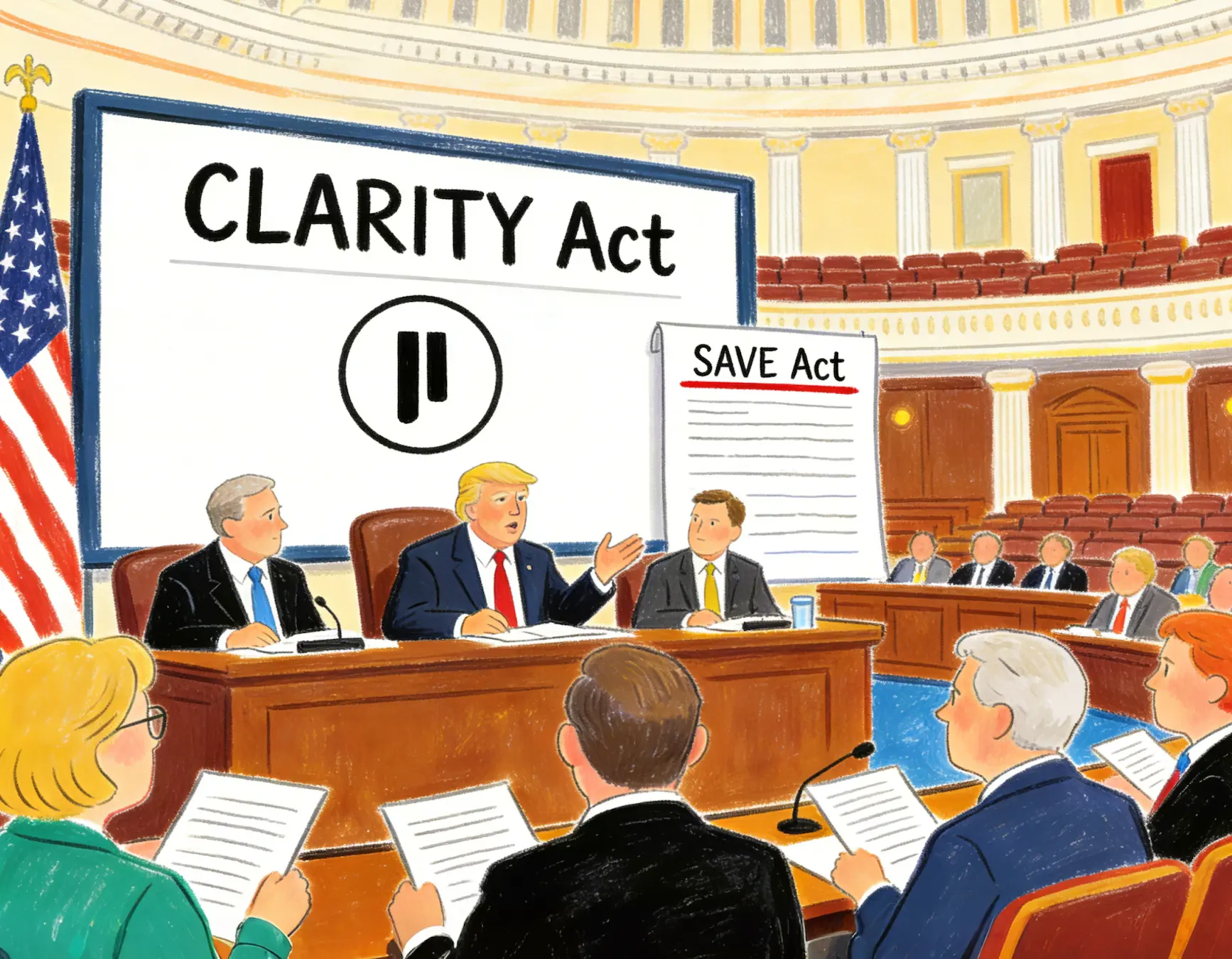
 Senate Majority Leader John Thune has indicated that the digital asset market structure legislation, known as the CLARITY Act, is unlikely to advance before April 2026 as the chamber prioritizes voting on the SAVE America Act.
Thune told reporters on March 12 that the SAVE Act would go to the Senate floor next week, with lawmakers focusing on crypto market structure and other bipartisan bills only after that vote.
SAVE America Act Takes Legislative Priority
Senate Floor Schedule
Senate Majority Leader John Thune confirmed that the SAVE America Act, legislation requiring proof of citizenship to register to vote and photo ID to cast a ballot, will receive a Senate vote during the week of March 16, 2026. The bill passed the House in February on a mostly party-line vote of 218-213.
Speaking from the Senate floor, Thune acknowledged the legislation’s uncertain prospects, stating that Republicans lack the votes to overcome an expected Democratic filibuster, which requires 60 votes for most measures in the chamber. He added that the vote would put Democrats on record regarding the issue.
Filibuster Debate Intensifies
The SAVE Act’s anticipated failure has sparked renewed debate over Senate rules. President Donald Trump has threatened not to sign any bills until the SAVE Act reaches his desk, telling reporters he will not sign other legislation until it is passed. Some Republicans have proposed eliminating or modifying the filibuster to advance the legislation.
However, Thune has rejected calls to change Senate procedure, warning of potential unintended consequences from altering long-standing chamber rules.
CLARITY Act Timeline Slips
Thune’s April Timeline
Regarding crypto market structure legislation, Thune stated that the market structure bill is expected to emerge from the Banking Committee sometime around the April time period. This projection contrasts with earlier optimism expressed by some senators who hoped the bill would pass Congress by April.
The Senate Agriculture Committee has already advanced its version of the bill, but the Senate Banking Committee postponed a January markup necessary to combine the legislation before a floor vote. That markup has not yet been rescheduled.
Stablecoin Yield Remains Core Obstacle
The primary barrier to the CLARITY Act’s progress remains a dispute over whether crypto platforms should be permitted to offer yield-like rewards on stablecoin holdings. While the GENIUS Act, signed into law in July 2025, prohibits stablecoin issuers from directly paying interest, banks argue that exchange-based rewards create de facto yield products that could drain deposits from traditional banking.
Banking industry representatives have demanded a total ban on stablecoin yield, while crypto firms including Coinbase argue such rewards are essential for customer acquisition and fair competition. Estimates suggest stablecoins could divert significant deposits from banks in coming years.
The White House convened three meetings between crypto and banking representatives in February, but no compromise has emerged. President Trump accused banks of holding the CLARITY Act “hostage” in March 3 social media posts, stating that banks are hitting record profits and should not be allowed to undermine the administration’s crypto agenda.
Legislative Procedural Hurdles
Multiple Committee Paths
The CLARITY Act faces a complex legislative path even after the Banking Committee markup. The final text must be reconciled with the Senate Agriculture Committee’s version before advancing to a full Senate vote, which would require 60 votes to overcome a potential filibuster. Several Democratic senators would need to support the legislation for it to reach that threshold.
Midterm Election Pressure
Industry observers suggest that if the bill does not reach the President’s desk by July 2026, the window may close due to midterm election campaigning. Lawmakers are expected to leave Washington in the summer to campaign, limiting floor time for legislative priorities.
Despite the delays, some industry executives maintain optimism about the bill’s chances, urging banks to negotiate in good faith. Prediction markets show cautious optimism, pricing the likelihood of enactment in 2026 at approximately 70 percent.
CBDC Ban Amendment Advances
In a separate action on March 12, the Senate voted to include an amendment in a housing bill, the 21st Century ROAD to Housing Act, that would prohibit the Federal Reserve from issuing a central bank digital currency. If passed and signed into law, the CBDC ban would remain in effect until December 2030.
The amendment represents a legislative victory for crypto advocates concerned about potential government-issued digital dollar competition with private stablecoins.
FAQ: Senate Timeline for Crypto Legislation
Q: When does Senate Majority Leader Thune expect the CLARITY Act to advance?
A: Thune indicated the market structure bill will likely not emerge from the Senate Banking Committee before April 2026, as the chamber prioritizes voting on the SAVE America Act.
Q: What is the SAVE America Act and why is it delaying crypto legislation?
A: The SAVE America Act would require proof of citizenship to register to vote and photo ID to cast ballots. Senate leadership has prioritized this legislation, pushing other bills including crypto market structure to later consideration.
Q: What is the main obstacle blocking the CLARITY Act?
A: The core dispute centers on whether crypto platforms may offer yield-like rewards on stablecoin holdings. Banking industry representatives seek a total ban, while crypto firms argue such rewards are essential for competition.
Q: Did the Senate take any other crypto-related action this week?
A: Yes, the Senate voted to include an amendment in a housing bill that would prohibit the Federal Reserve from issuing a central bank digital currency through December 2030.
Disclaimer: The information on this page may come from third parties and does not represent the views or opinions of Gate. The content displayed on this page is for reference only and does not constitute any financial, investment, or legal advice. Gate does not guarantee the accuracy or completeness of the information and shall not be liable for any losses arising from the use of this information. Virtual asset investments carry high risks and are subject to significant price volatility. You may lose all of your invested principal. Please fully understand the relevant risks and make prudent decisions based on your own financial situation and risk tolerance. For details, please refer to
Disclaimer.


