

Trade
Basic
Futures
Futures
Hundreds of contracts settled in USDT or BTC
Options
HOT
Trade European-style vanilla options
Unified Account
Maximize your capital efficiency
Demo Trading
Futures Kickoff
Get prepared for your futures trading
Futures Events
Futures Mall
Participate in events to win generous rewards
Demo Trading
Use virtual funds to experience risk-free trading
Earn
Launch
CandyDrop
Collect candies to earn airdrops
Launchpool
Quick staking, earn potential new tokens
HODLer Airdrop
Hold GT and get massive airdrops for free
Launchpad
Be early to the next big token project
Alpha Points
NEW
Trade on-chain assets and enjoy airdrop rewards!
Futures Points
NEW
Earn futures points and claim airdrop rewards
Investment
Simple Earn
Earn interests with idle tokens
Auto-Invest
Auto-invest on a regular basis
Dual Investment
Buy low and sell high to take profits from price fluctuations
Soft Staking
Earn rewards with flexible staking
Crypto Loan
0 Fees
Pledge one crypto to borrow another
Lending Center
One-stop lending hub
VIP Wealth Hub
Customized wealth management empowers your assets growth
Private Wealth Management
Customized asset management to grow your digital assets
Quant Fund
Top asset management team helps you profit without hassle
Staking
Stake cryptos to earn in PoS products
Smart Leverage
NEW
No forced liquidation before maturity, worry-free leveraged gains
GUSD Minting
Use USDT/USDC to mint GUSD for treasury-level yields

More





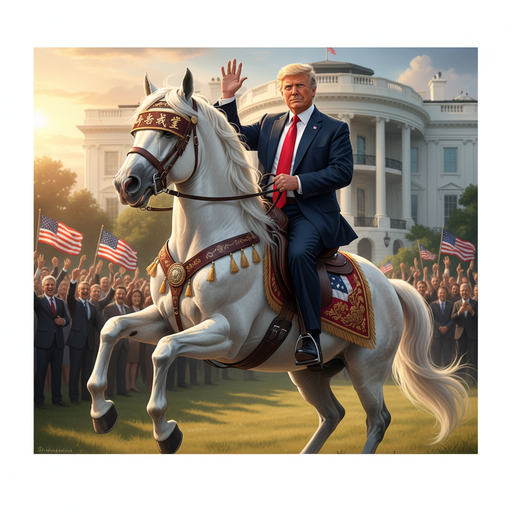

Kyle Wool: The Banker Who Turned Trump's Name Into $500 Million
When most people think of financial innovation, they don’t picture a sleepy town in upstate New York. Yet Kyle Wool, who grew up in Candor, New York, has become one of the most successful—and controversial—figures in modern finance. On the surface, his story is a classic American tale: a kid from rural America who worked his way up through major firms like Morgan Stanley and eventually found his fortune. But the real story is far more complicated. Today, Kyle Wool sits at the intersection of cryptocurrency, micro-cap stocks, and presidential politics—orchestrating deals that have quietly funneled hundreds of millions of dollars to the Trump family.
The Rise of Kyle Wool: From Brokerage to Bitcoin Billions
Kyle Wool’s entry into finance seemed unremarkable. After college, he worked at established firms managing assets for wealthy clients. His resume included managing money for a Korean professional golfer, a timeshare mogul, and even a company co-owned by Hunter Biden. But Wool was always more than just another money manager. He cultivated relationships carefully—appearing in fashion magazines, socializing with Serbian royalty, and building a network that would eventually become his greatest asset.
By 2022, Wool had transitioned into the micro-cap space, taking over as president of Dominari Holdings, a small investment bank specializing in small publicly traded companies. These companies—those with market capitalizations under $250 million—are exactly where Wool thrived. They’re volatile, they lack institutional backing, and crucially, they’re hungry for attention. That’s where the Trump family name came in.
Recognizing an opportunity, Kyle Wool made a strategic move: he relocated Dominari’s headquarters to Trump Tower in New York, directly beneath Trump Organization offices. He joined exclusive Trump clubs in Florida, organized events at Trump golf courses, and methodically built relationships with Trump’s sons. By late 2024, those relationships had begun to pay dividends.
The Trump Name as Stock Market Catalyst
Here’s where Kyle Wool’s strategy becomes brilliant—and troubling. In November 2024, just weeks after the election, word broke that Donald Trump Jr. would serve as an advisor to Unusual Machines, a struggling drone company in Orlando. The company had been hemorrhaging money, with its stock trading below $2. Within three days of the announcement that Kyle Wool brokered, the stock soared to over $20. Trump Jr.'s initial $100,000 investment was worth $3 million—a 3,000% return.
It was the first signal of a pattern that would define Kyle Wool’s rise.
Early in 2025, the strategy intensified. Kyle Wool orchestrated a deal where both Trump brothers became advisors to Dominari itself, with stakes that eventually reached $17 million for the combined position. But the real windfall came through their cryptocurrency investments. Through American Bitcoin, a mining company that Dominari helped establish, Eric Trump’s stake eventually ballooned to nearly $500 million—staggering wealth even by Trump family standards.
The mechanism is simple but effective: Trump family members announce an advisory role at a struggling company. The Trump brand generates instant buzz. Retail investors pile in, driving prices skyward. The insiders benefit enormously. It’s a version of what Wall Street used to call “the Trump effect”—leveraging celebrity to inflate stock valuations.
The Kyle Wool Playbook: Micro-Cap Mastery
What makes Kyle Wool’s operation distinct is his expertise in the micro-cap sector. These are companies that Wall Street’s establishment ignores. Some were once legitimate businesses that lost direction. Others are thinly traded shells barely hanging on to stock exchange listings. Many are headquartered in Hong Kong or mainland China.
Kyle Wool understood something crucial: these companies need attention to survive, and attention is exactly what a Trump family connection provides. He packaged this insight into Dominari’s business model: take a struggling micro-cap company, add a Trump family member as an advisor, watch the stock explode, collect fees for the deal.
Between 2025 and mid-2025, Dominari helped take 12 companies public, including drones, Bitcoin mining operations, and even Hong Kong companies operating hot pot restaurants. Dominari earned significant fees from each transaction.
The question regulators should be asking: did any of this involve stock price manipulation? By the numbers, something looks suspicious. Of the 12 IPOs Dominari touted, five saw their stock prices nearly halve after launch. The company later removed language from securities filings that explicitly mentioned seeking acquisition targets that could benefit from federal subsidies and tax credits.
Where the Red Flags Start
The deeper investigators dig into Kyle Wool’s operations, the more troubling the picture becomes.
Everbright Digital Holding serves as a case study. A Hong Kong marketing company with just seven employees, Everbright went public at $4 per share in mid-2025 with Dominari’s backing. In June, trading volume suddenly surged. The stock jumped to over $6. What drove this? According to the SEC’s later investigation, it appears to be online stock-picking clubs—groups of supposed “experts” on messaging apps like Viber and Telegram, pumping speculative stocks to retail investors.
One victim was Artsyom Yefremenka, a 30-year-old auto mechanic in Fresno, California. He invested roughly $20,000—nearly six months of his salary—after a stock-picking “expert” named Mr. James urged him to buy Everbright Digital. By mid-July, the stock collapsed below $1. Yefremenka watched his life savings evaporate during his lunch break.
Everbright Digital wasn’t alone. Healthcare company Pheton Holdings lost over 80% of its value post-IPO. Skyline Builders Group saw its share price plummet 87% in a single day in July 2025. The pattern was undeniable: small companies, often with Chinese operations, listing through micro-cap specialists like Dominari, then crashing after hype-driven pumps.
Kyle Wool and the Conflict Question
The conflicts of interest are impossible to ignore. While there’s no evidence that Kyle Wool or the Trump brothers directly influenced federal policy, the arrangement certainly creates incentives. In July 2025, the White House recommended that the IRS revisit long-standing tax guidelines for cryptocurrency mining—something the crypto industry has been demanding. American Bitcoin, the company in which Eric Trump held a $500 million stake, would directly benefit.
Similarly, the Trump administration has accelerated drone manufacturing initiatives and pushed for increased U.S.-made drone procurement at the Pentagon. Unusual Machines, the company in which Donald Trump Jr. holds an advisory stake, is positioning itself exactly in that space.
And it’s not just drones and crypto. In August 2025, Kyle Wool and the Trump brothers launched New America Acquisition I, a blank-check company to acquire a domestic manufacturer. In the initial filing, the company explicitly stated it would seek acquisition targets qualifying for federal subsidies and tax credits. After the Associated Press asked questions, that language vanished—the lawyers called it a “filing error.”
The Kyle Wool Effect: A Pattern That Demands Scrutiny
What Kyle Wool has engineered is not technically illegal. The Trump family members aren’t required to disclose the timing or extent of their stock sales because they’re advisors, not executives or directors. Kyle Wool’s firm doesn’t appear to be under SEC investigation. There’s no smoking gun connecting him to the stock-picking club scams or pump-and-dump manipulations.
But Kyle Wool has created a financial ecosystem that thrives on celebrity association, price inflation, and concentrated wealth. He’s built a career on understanding that micro-cap stocks need headlines, and Trump family headlines are the most valuable currency in today’s market.
According to former colleagues, Kyle Wool has been telling people that this period has been “life-changing.” Dominari’s Trump partnership “has opened doors” for him. Hedge funds and executives who once ignored him are suddenly knocking. In June 2025, Kyle Wool brokered a deal that gave a toy manufacturer a stake in a cryptocurrency created by billionaire Justin Sun. When Sun asked about Wool’s credibility, Eric Trump personally endorsed him.
The story of Kyle Wool is ultimately a story about what happens when political power meets financial innovation. It’s about how a banker from rural New York figured out that turning the Trump name into stock market gold was far more lucrative than traditional banking could ever be. And it’s a warning about the risks that emerge when presidential family members and financial operators with questionable track records align their interests.
As of mid-2025, the Trump family had accumulated roughly $500 million in wealth through Kyle Wool-orchestrated deals—an astonishing sum that raises serious questions about conflicts of interest, regulatory oversight, and the future of financial integrity in America.