

Trade
Basic
Futures
Futures
Hundreds of contracts settled in USDT or BTC
Options
HOT
Trade European-style vanilla options
Unified Account
Maximize your capital efficiency
Demo Trading
Futures Kickoff
Get prepared for your futures trading
Futures Events
Participate in events to win generous rewards
Demo Trading
Use virtual funds to experience risk-free trading
Earn
Launch
CandyDrop
Collect candies to earn airdrops
Launchpool
Quick staking, earn potential new tokens
HODLer Airdrop
Hold GT and get massive airdrops for free
Launchpad
Be early to the next big token project
Alpha Points
NEW
Trade on-chain assets and enjoy airdrop rewards!
Futures Points
NEW
Earn futures points and claim airdrop rewards
Investment
Simple Earn
Earn interests with idle tokens
Auto-Invest
Auto-invest on a regular basis
Dual Investment
Buy low and sell high to take profits from price fluctuations
Soft Staking
Earn rewards with flexible staking
Crypto Loan
0 Fees
Pledge one crypto to borrow another
Lending Center
One-stop lending hub
VIP Wealth Hub
Customized wealth management empowers your assets growth
Private Wealth Management
Customized asset management to grow your digital assets
Quant Fund
Top asset management team helps you profit without hassle
Staking
Stake cryptos to earn in PoS products
Smart Leverage
NEW
No forced liquidation before maturity, worry-free leveraged gains
GUSD Minting
Use USDT/USDC to mint GUSD for treasury-level yields

More



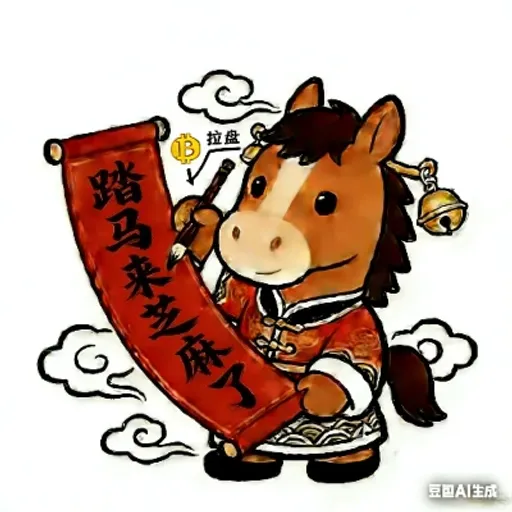


When the Psychology of Cryptocurrency Investing Meets Astrology: the Phenomenon of the Destiny K-line
Anyone investing in cryptocurrencies knows that feeling well: the moment you open a position, something irrational takes over. It’s not just technical analysis, it’s not just numbers. It’s something deeper, almost spiritual. On December 13th, this hidden aspect of investing in cryptocurrencies surfaced when a creator specialized in esotericism launched “K-line of Life”: an app that transforms birth data into a 100-year timeline chart, with red and green candles representing the user’s “financial destiny.”
The result was astonishing. In three days, the website recorded over 300,000 API requests, the announcement tweet surpassed 3.3 million views, and suddenly everyone in crypto circles was sharing their “personal K-line” as if it were a trading chart reading. Within 24 hours, an imitation token even appeared. But what truly makes this phenomenon fascinating isn’t the tool itself, but what it reveals: in the world of investing in cryptocurrencies, the line between rational analysis and the search for mystical meaning is extraordinarily thin.
The Search for Certainty in a Ruleless Market
Those who invest in cryptocurrencies face a unique paradox: no other market offers so much freedom and so much uncertainty simultaneously. The crypto market never sleeps. It operates 7 days a week, 24 hours a day, without breaks, circuit breakers, or respite. A tweet, a news story, a flood in a Chinese province: all can wipe out hundreds of millions of dollars in value within minutes.
It’s in this context that esotericism is no longer just superstition to hide. It becomes a rational response to an irrational problem: how to maintain a sense of control when control doesn’t exist?
Economist Frank Knight explained it a century ago: risk is quantifiable (you know the probabilities of a die), uncertainty is not (you don’t know if a war will break out tomorrow). Humans naturally fear uncertainty because the brain doesn’t know how to handle it. When the mind can’t find a structure, it creates an artificial one. In investing, this artificial structure is esotericism.
An astrologer with tens of thousands of followers in the crypto sector uses the “Bitcoin natal chart” (January 3, 2009, date of the genesis block) and planetary cycles to track market phases. They claim to have predicted the peaks of 2017, the bear market of 2022, and the highs of 2024. It could be coincidence, but for investors, whether it’s coincidence or not, having a “celestial map” is still more comforting than admitting no one knows what will happen.
Why Esotericism Always Seems to Work
The true genius of esotericism in the context of investing in cryptocurrencies lies in a psychological trait: it is virtually impossible to disprove.
If your natal chart says “bull market next year” and the market rises, you’ve seen the future. If it falls, it’s due to the wrong position or missed timing. If tarot cards predict volatility, then any movement—up or down—is a confirmation of the forecast. Vagueness is its superpower.
There’s also confirmation bias, one of the most powerful cognitive mechanisms of the human mind. If you believe that “the full moon will cause a crash,” you will remember every crash after a full moon and forget the months when the market rose. On social media, the phenomenon amplifies: those who gained following “astrological advice” post screenshots, those who lost remain silent. In the feed, you only see successes, creating the illusion that esotericism really works.
A study from the University of Michigan found that during a full moon, stock returns were 6.6% lower than during a new moon across 48 countries. Not because the moon actually influences markets, but because if millions of people believe it will, they will sell earlier, and the crash will actually happen. Collective superstition becomes a self-fulfilling prophecy.
For investors, this is music to their ears: it means the “method works” because enough people believe in it.
The Social Currency of Astrology in Crypto
But there’s an even more important aspect: esotericism has become a social currency in the crypto world.
Discussing technical analysis leads to conflicts: those who say support is broken are right, those who say it isn’t are wrong. It generates conflict. Discussing astrology, on the other hand, has no winners or losers. It’s a neutral ground where everyone recognizes themselves. “Is your K-line accurate?” isn’t a question that requires a correct answer; it’s an opening to share anxiety.
A crypto creator shared a revealing anecdote: followers constantly asked to add a “daily horoscope” feature to the site. When they implemented it, it wasn’t so much to make decisions, but to have a shared daily ritual. A form of collective comfort.
When you say in the Telegram group: “Today Mercury is retrograde, I won’t open positions,” no one contradicts you. In fact, someone responds: “Yes, let’s wait for it to pass.” At that moment, you’re transforming individual anxiety into collective distress, which is less frightening. According to a Pew research in 2025, 28% of American adults consult horoscopes and tarot at least once a year. Esotericism is no longer marginal; it’s mainstream.
What the “K-line of Life” Really Means
The boom of the “K-line of Life” reveals something profound about the psychology of crypto investors: deep down, we all know that our control over the market is as fragile as control over destiny.
When your K-line indicates an “annual bear market,” you won’t really liquidate all your positions. But when you lose, you’ll feel less guilty. When you miss an opportunity, you’ll feel more advised. It wasn’t your mistake; it was simply the “wrong cycle of your natal chart.”
In a market that never sleeps, that never lets you breathe, where wealth can vanish with a message on X, the goal isn’t accurate predictions. It’s the search for meaning, for structure, for companionship in uncertainty.
Astrology in the crypto world doesn’t work because it predicts the future. It works because it offers a narrative—a story that transforms random chaos into an understandable pattern. And in a market where no one has definitive answers, a good story is often all we need.