

Trade
Basic
Futures
Futures
Hundreds of contracts settled in USDT or BTC
Options
HOT
Trade European-style vanilla options
Unified Account
Maximize your capital efficiency
Demo Trading
Futures Kickoff
Get prepared for your futures trading
Futures Events
Participate in events to win generous rewards
Demo Trading
Use virtual funds to experience risk-free trading
Earn
Launch
CandyDrop
Collect candies to earn airdrops
Launchpool
Quick staking, earn potential new tokens
HODLer Airdrop
Hold GT and get massive airdrops for free
Launchpad
Be early to the next big token project
Alpha Points
NEW
Trade on-chain assets and enjoy airdrop rewards!
Futures Points
NEW
Earn futures points and claim airdrop rewards
Investment
Simple Earn
Earn interests with idle tokens
Auto-Invest
Auto-invest on a regular basis
Dual Investment
Buy low and sell high to take profits from price fluctuations
Soft Staking
Earn rewards with flexible staking
Crypto Loan
0 Fees
Pledge one crypto to borrow another
Lending Center
One-stop lending hub
VIP Wealth Hub
Customized wealth management empowers your assets growth
Private Wealth Management
Customized asset management to grow your digital assets
Quant Fund
Top asset management team helps you profit without hassle
Staking
Stake cryptos to earn in PoS products
Smart Leverage
NEW
No forced liquidation before maturity, worry-free leveraged gains
GUSD Minting
Use USDT/USDC to mint GUSD for treasury-level yields

More




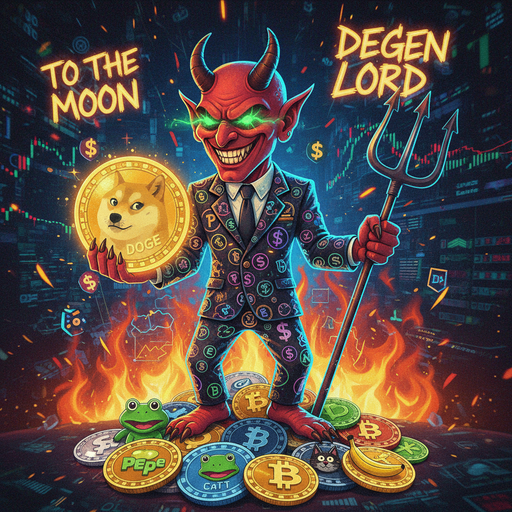

2026: The year when cryptocurrencies abandon pure speculation to embrace structure
Five leading fintech research giants have analyzed hundreds of industry data pages. The emerging consensus is surprising: the 4-year speculative cycles are dying, and 2026 will be the first year of true structural maturity.
Here’s what these institutions are really saying, without the noise of academic reports.
From Price Cycles to Structural Economy: The Paradigm Shift
The strongest message from Coinbase, a16z Crypto, Four Pillars, Messari, and Delphi Digital research is consistent: the traditional Bitcoin halving cycle theory is losing explanatory power. The future will not be driven by short-term narratives and cyclical volatility, but by real structural fundamentals: institutional liquidity, regulatory clarity, mature infrastructure, and real-world applications.
In other words, the industry is growing. It is becoming a true alternative asset class, not a casino with technological themes.
The three forces that will transform 2026
Convergence of global liquidity: Delphi Digital predicts that by 2026, central banks’ monetary policies will converge toward coordinated rate cuts and liquidity injections. After the Federal Reserve’s Quantitative Tightening era, hard assets like gold and Bitcoin will benefit from a substantial influx of capital. This will not be pure speculation but tactical portfolio reallocation.
Regulatory clarity: Four Pillars emphasizes that US bills (GENIUS and CLARITY) will stabilize the regulatory environment, transforming the market from a “Wild West” to a formal economic sector. This regulatory predictability will attract serious institutional capital.
Infrastructure maturation: All five institutions agree that technical fragmentation is giving way to integrated systems, super-apps, and increasingly efficient settlement layer translation.
Agentic Finance: AI Agents Will Become the Main Traders
One of the most recurring themes is the emergence of “Agentic Finance” — a completely new category of economic actors.
We’re not talking about simple chatbots or automatic trading bots. We’re talking about AI agents that will autonomously manage capital, execute complex DeFi strategies, rebalance portfolios, and optimize on-chain yields without human intervention.
Practical implications
a16z Crypto foresees a crucial shift: the move from KYC (Know Your Customer) to KYA (Know Your Agent). AI agents will need cryptographically signed digital credentials to operate in markets. This is not a minor technical detail — it represents a new level of identity infrastructure that blockchains will need to support.
At the same time, Coinbase highlights that AI agents will heavily utilize native crypto payment channels, creating an exponential demand for lightning-fast, low-cost settlement layers. Traditional payment systems cannot handle the continuous volume of microtransactions between machines. Only blockchains can do that.
Tokenomics 2.0: From Governance to Revenue
Old “governance coins” — tokens that gave voting rights but nothing else — are becoming obsolete.
Coinbase identifies a clear trend: the shift to “Tokenomics 2.0”, models where tokens are directly linked to platform revenues. Buy-and-burn, fee sharing, revenue participation — mechanisms that align token holders’ interests with the network’s real success.
Messari adds another layer: the emergence of “Ownership Coins”, a new category combining economic, legal, and governance rights. These tokens solve a critical problem in DAOs: lack of accountability. Messari predicts that the first projects in this category will reach market caps of 1-2 billion dollars.
Ownership Coins and Privacy: Forgotten Categories Reborn
Messari surprises with a contrarian thesis: 2026 will see a rebirth of the privacy sector.
Assets like Zcash (ZEC) will no longer be seen merely as “privacy coins” for speculation, but as essential hedging tools against increasing surveillance and corporate control. In a world where on-chain tracking becomes more sophisticated (and potentially invasive), technological privacy will be rediscovered as a fundamental value.
a16z Crypto reinforces this point: in a context where open-source code is the norm, state privacy (the ability to keep transactions and application states private) will be the most distinctive competitive advantage for a blockchain. Chains supporting native privacy will have strong network effects.
Super-Apps and Integration: Complexity Disappears Behind the Interface
Today, using DeFi means understanding wallets, gas fees, bridges, slippage, liquidation risk. It’s a complex process that discourages most ordinary users.
Four Pillars predicts this will change radically with the emergence of “Super-Apps”: integrated platforms powered by stablecoins, including payments, investments, and loans in a single user-friendly interface. Blockchain will remain the underlying engine, but technical details will fade away.
The same perspective emerges from Coinbase’s outlook: “Digital Asset Trading 2.0” (DAT 2.0) represents a more professional and simplified trading market, where “sovereign block space” (the blockchain’s computational space) becomes a transparent commercial resource.
Institutional Liquidity: The Real Money Is Coming
Delphi Digital highlights an important shift in market structure: the massive expansion of ETFs will bring liquidity from traditional finance (TradFi) directly into the crypto market.
This will not be retail speculative liquidity. It will be tactical allocations from institutional funds, hedge funds, and professional asset managers. This liquidity will enter the market not as experimental hedging tools but as an integral part of standard portfolios.
The volume and stability of these flows will change the very nature of crypto volatility.
DePIN and AI: When Decentralized Infrastructure Meets Data
Messari identifies a often-overlooked opportunity: DePIN (Decentralized Physical Infrastructure Networks) will find real markets by meeting the growing demand for AI computing and data.
It’s not a fantasy vision. It’s pragmatism: AI training and inference models require massive computational power, and centralized providers are starting to hit capacity limits. Decentralized compute networks, supported by incentive tokens, can scale where centralization fails.
The Role of Regulation: From Obstacle to Catalyst
One of the most important shifts is how regulation is now perceived. Not as an enemy, but as an enabler.
Four Pillars emphasizes that US crypto legislation drafts are creating a credible regulatory framework. This clarity will not stifle innovation — it will enhance it. It allows serious institutional capital to enter the market without the risk of future regulatory whiplash.
In parallel, a16z Crypto highlights how complex asset management (rebalancing portfolios, tax loss harvesting, tax optimization) will finally be democratized through the combination of AI and crypto payment channels. Services that are currently accessible only to high-net-worth individuals will become available to ordinary users.
RWA Assets and Tokenization: Hyper-Realism
Four Pillars underscores a concrete trend: tokenization of stocks, bonds, and traditional assets will accelerate. But not as a speculative experiment — as a practical utility.
Value will be measured in reduced service costs, increased transparency, and faster settlement. When attention shifts from hype to utility metrics, the category matures.
Zero-Knowledge Virtual Machines: The Invisible Technology That Will Scale Everything
A technical detail that will go unnoticed by most but will be crucial: Four Pillars emphasizes the importance of ZKVM (Zero-Knowledge Virtual Machines) and Proof Markets on Ethereum.
These are not cosmetic innovations. They are the infrastructure that will enable managing the volume of new regulatory flows, RWA tokenization, and computational complexity in 2026. Blockchains that lack them will simply be left behind.
Social Trading and Copy Trading: The Sophistication of Speculation
Delphi Digital notes that even in social trading and meme coin sectors, the trend is toward greater sophistication.
Simple meme coin speculation will evolve into advanced copy trading, where strategies themselves become tokenized and tradable products. Platforms like Pump.fun will mature, attracting more sophisticated operators.
Speculation does not disappear — it evolves. It becomes more structured, more transparent, less purely emotional.
The Final Picture: Maturity vs. Cycles
All five institutions converge on a final message: 2026 will reward projects that build real infrastructure, genuine distribution capabilities, and broad trust.
It will not be the year for those chasing cycles and narratives. It will be the year for those understanding structural capital flows, quietly building, and laying the technical groundwork for the next decade.
Leading research institutions see a crypto industry that stops behaving like the Wild West and begins acting as a mature economic sector. With regulation, institutional liquidity, robust infrastructure, and useful applications.
The speculative cycle is not dying because the market is wise. It is dying because the market is growing.