OpenAI proposed a robot tax and a three-day weekend policy. However, the CEO is embroiled in an internal scandal, and with a valuation as high as $85.2 billion and high costs, secondary-market investors are shifting their preference to rival Anthropic.
OpenAI issues AI policy proposal to reshape new rules for wealth and work
As governments around the world work to address the economic impacts brought by AI, OpenAI has released a set of policy proposals outlining how to reshape the way wealth and work are handled when an “AI intelligence era” arrives.
OpenAI’s proposal is essentially a wish list, as well as a public statement meant to help elected officials, investors, and the public understand how a company valued at $85.2 billion sees the era shift in which artificial intelligence changes the workforce and the economy.
OpenAI’s four major policy initiatives
For the economic transition of the intelligent era, OpenAI mainly has the following four initiatives:
Tax reform and a robot tax
OpenAI suggests shifting the tax burden from labor to capital. The company warns that as AI-driven growth may expand corporate profits and reduce reliance on workers’ income, it will hollow out the tax base that funds social safety, medical assistance, and housing aid.
To that end, OpenAI proposes imposing higher taxes on corporate income and top-level capital gains, while also raising the possibility of levying a robot tax, so that robots replacing human workers would pay the same amount of taxes.
Establish a national public wealth fund
To ensure that all citizens can share in the economic growth brought by artificial intelligence, OpenAI proposes establishing a public wealth fund.
This would allow even people who aren’t investing in the market to automatically receive public shares in AI companies and infrastructure, and any investment returns from the fund would be distributed directly to citizens, ensuring wealth doesn’t concentrate in the hands of a few.
Subsidize a four-day workweek without reducing pay
Regarding labor benefits, OpenAI proposes subsidizing a four-day workweek system without reducing pay, and suggests that companies increase the pension contribution rate, shoulder a larger share of medical and healthcare costs, and subsidize childcare or eldercare expenses.
In addition, OpenAI also recommends establishing portable benefits accounts, so that benefits such as medical care and retirement savings can follow workers as they switch industries, without being restricted by a single employer.
Accelerate power grid and infrastructure expansion
To support the development of AI’s massive electricity demand, OpenAI proposes setting up a new public-private cooperation model to raise funds and speed up the expansion of energy infrastructure. OpenAI also suggests accelerating construction by providing subsidies, tax credits, or equity investments, and argues that AI should be treated as a public utility, with industry and government working together to ensure its pricing is reasonable and that it is widely used.
At the time this proposal was released, anxiety about AI was intensifying, mainly stemming from concerns about jobs being replaced, wealth concentrating, and data center construction across the country. It also coincided with the Trump administration pushing forward national AI policy and the period ahead of the midterm elections, indicating that OpenAI is trying to position itself to strike a balance between the two parties.
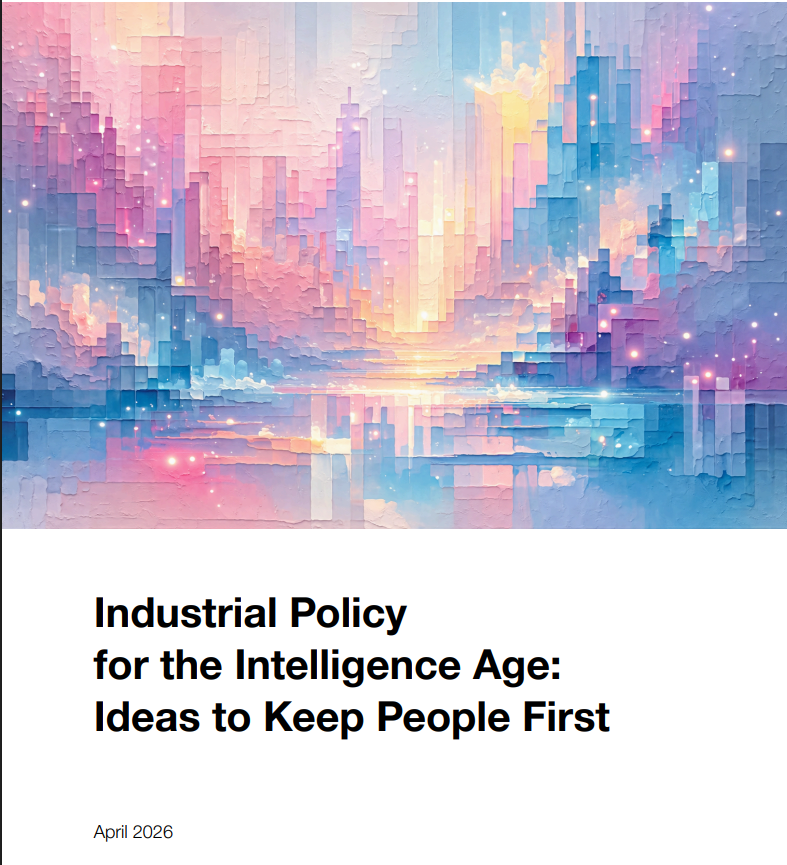
Image source: OpenAI OpenAI issues AI policy proposal to reshape new rules for wealth and work
Before OpenAI issues its AI policy proposal, CEO Sam Altman faces a media backlash
Before OpenAI released its AI policy proposal, CEO Sam Altman was facing major media pressure.
An in-depth investigative report from The New Yorker said that in 2023, OpenAI co-founder and at the time chief scientist Ilya Sutskever had written an internal memo accusing Sam Altman of deceptive conduct regarding the company’s safety agreements and other key operational matters.
The New Yorker said that these trust issues led the OpenAI board to fire Altman, concluding that he had not consistently been candid with the board. The firing sparked an uproar inside the company: employees threatened to collectively resign in protest, while heavyweight investors such as Josh Kushner threatened to withhold operating funds unless Altman was reinstated.
There were disagreements inside OpenAI on governance and safety issues. Former OpenAI members, including Ilya Sutskever and Anthropic co-founder Dario Amodei, all believed that Altman put the company’s growth and product expansion above the original mission that prioritized safety.
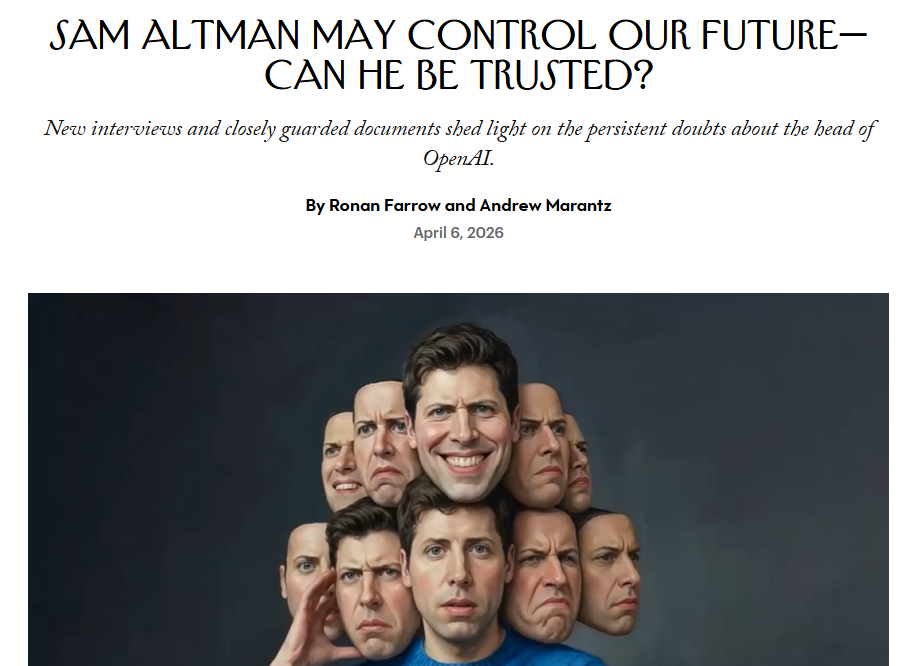
Image source: The New Yorker report headline cover Before OpenAI issues its policy proposal, CEO Sam Altman faces a media backlash from The New Yorker.
OpenAI stock is also losing favor in the secondary market
On the other hand, according to a report by Bloomberg, OpenAI’s stock has already begun losing favor in the secondary market, and investors are rapidly shifting to its biggest competitor, Anthropic.
Ken Smythe, founder of Next Round Capital, revealed that in recent weeks, several institutional investors—including hedge funds and venture capital firms holding large amounts of shares—want to sell OpenAI stock worth roughly $600 million, but can’t find buyers to take it. The buyers have indicated that they have $2 billion in cash ready to invest in Anthropic.
Some investors have also begun to be cautious about OpenAI’s continually rising operating costs. OpenAI has promised that in the coming years it will spend more money than Anthropic on infrastructure to support development.
However, although OpenAI has a large consumer base, it has made relatively slow progress in winning more profitable enterprise customers. By contrast, Anthropic has an advantage in the enterprise market with higher profit margins, so the market views its growth trajectory as clearer and stronger than OpenAI’s.
Further reading:
OpenAI teams up with the U.S. military—sparks a wave of boycotts! Claude App download overtakes—understand the underlying ethics and political power struggle
Disclaimer: The information on this page may come from third parties and does not represent the views or opinions of Gate. The content displayed on this page is for reference only and does not constitute any financial, investment, or legal advice. Gate does not guarantee the accuracy or completeness of the information and shall not be liable for any losses arising from the use of this information. Virtual asset investments carry high risks and are subject to significant price volatility. You may lose all of your invested principal. Please fully understand the relevant risks and make prudent decisions based on your own financial situation and risk tolerance. For details, please refer to
Disclaimer.


