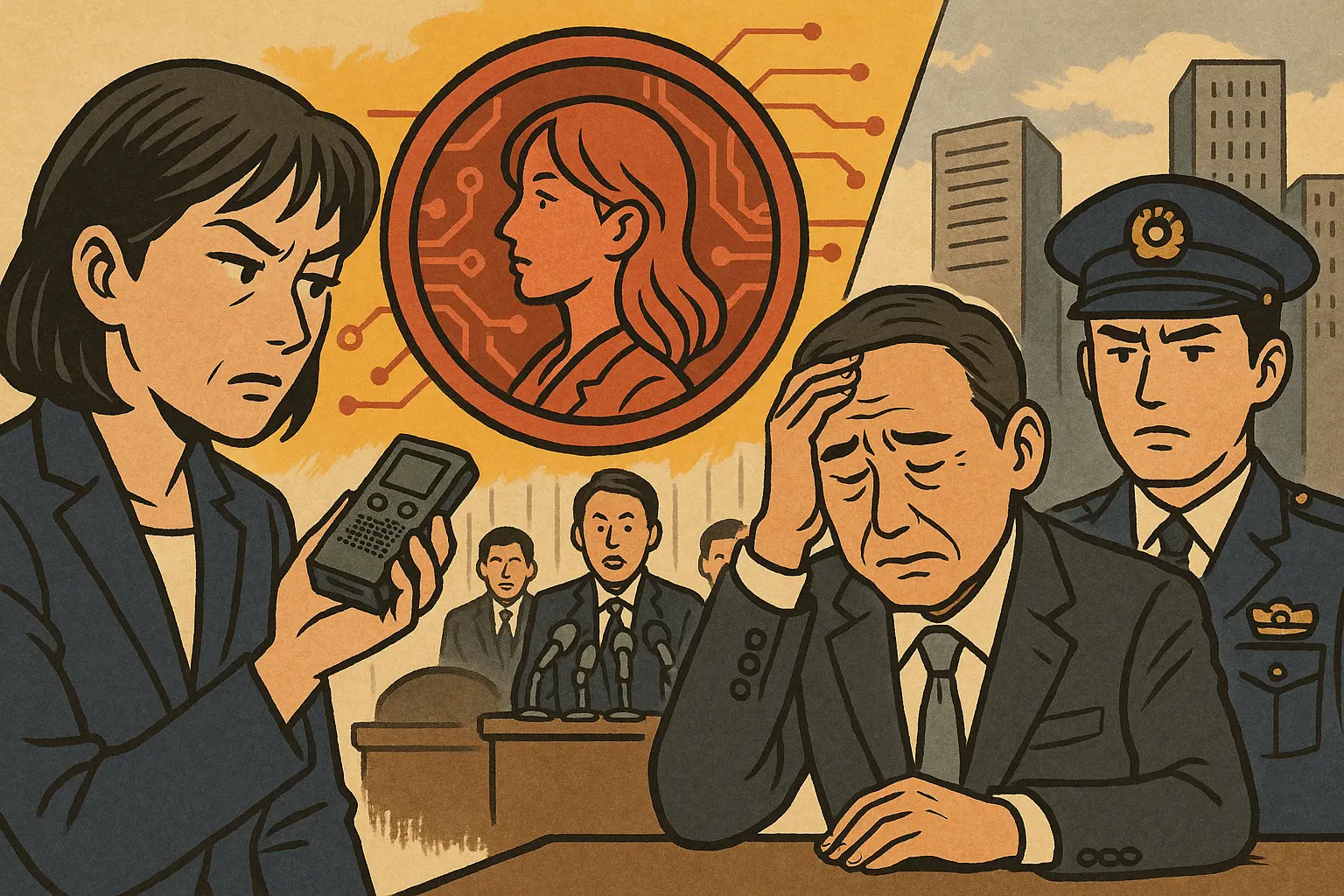
A Japanese meme coin, SANAE TOKEN, scandal has continued to simmer throughout April. The Japanese gossip magazine Shukan Bunshun reported that audio obtained by the media shows that the prime minister’s chief secretary had expressed support for the token issuance project, directly contradicting Sanae Takaichi’s public denial on March 2 that she was aware of it.
SANAE TOKEN Timeline: a 40x surge to a 58% crash
SANAE TOKEN launched on the Solana network on February 25, 2026, issued by the community-organized NoBorder DAO, with key figure serial entrepreneur Yuji Mizoguchi at the center. Framed around the “Japan is Back” plan, the official website promoted SANAE TOKEN with the name and portrait of Prime Minister Sanae Takaichi as its core, and included a timeline of her political career, positioning SANAE TOKEN as “not just a meme, but Japan’s hope.”
On the first day after launch, the token price surged more than 40x. However, on March 2, 2026, Sanae Takaichi publicly denied any connection to the token, claiming that neither she nor her office had been informed of any token-related information. This statement triggered a 58% single-day plunge in SANAE TOKEN. The Japan Financial Services Agency subsequently launched an investigation into NoBorder DAO on the grounds that it did not hold a license for operating a crypto exchange. The token operator later stopped issuing tokens.
Shukan Bunshun audio report: Did the Prime Minister’s Office already know?
Shukan Bunshun is known for breaking stories about Japanese political and business scandals, and its latest report brings the most critical controversy in this case. Ken Matsui, the developer of SANAE TOKEN, told the magazine that his team had informed Sanae Takaichi’s office in advance that the project was of a crypto-asset nature. This claim directly conflicts with the Prime Minister’s public denial that the office was told no token information.
Even more explosive, Shukan Bunshun said it obtained audio records of Prime Minister’s chief secretary Chihiro Takaichi going back more than twenty years. The audio allegedly shows that Chihiro Takaichi had expressed a positive evaluation of the token issuance project. As of Tuesday, Chihiro Takaichi’s office had not responded to the above report. Since Sanae Takaichi took office with her second cabinet on February 18, 2026, she has never held a press conference. The ongoing lack of information transparency has further deepened public doubts about the truth behind the incident.
FSA Crypto Regulatory Reform Bill: accelerating the legislative timeline for the SANAE TOKEN case
Moving forward in parallel with the political controversy is a major reform of Japan’s crypto regulatory framework. In the bill the Financial Services Agency will submit to the Diet this week for the first time, digital assets will be moved from the Payment Services Act to the Financial Instruments and Exchange Act, formally bringing them under the scope of financial instruments regulation.
Core FSA bill regulatory provisions
Triple increase in maximum prison sentence: the maximum term for unlicensed crypto sales rises from three years to ten years
Major increase in fines: the ceiling increases from 3M yen to 10M yen
Criminal investigation authorization: Japan’s Securities and Exchange Surveillance Commission (SESC) for the first time receives authority to conduct criminal investigations into crypto businesses
Investor refund protection: default cancellation of transactions with unregistered operators, making it easier for investors to seek refunds—this clause directly corresponds to the unlicensed operating problem of NoBorder DAO in the SANAE TOKEN case
Frequently Asked Questions
What kind of token is SANAE TOKEN, and what is its connection to Japan’s prime minister?
SANAE TOKEN is a meme coin issued on the Solana network in February 2026 by NoBorder DAO, with the name and portrait of Prime Minister Sanae Takaichi as the core of its promotion. Sanae Takaichi herself denied knowledge of the token on March 2, but Shukan Bunshun later reported that it obtained audio showing that the Prime Minister’s Office may have known about it long ago. The truth of the incident remains under dispute.
What main changes did Japan’s FSA crypto regulatory bill propose?
According to reports by Asahi Shimbun and Nikkei, for the first time the bill reclassifies cryptoassets from payment instruments into financial instruments. The maximum prison term for unlicensed crypto sales increases to ten years, the fine cap rises to 10M yen, the SESC receives criminal investigation authorization, and transactions with unregistered operators are canceled by default, strengthening investor refund protections.
Can SANAE TOKEN investors obtain compensation through the new bill?
In the FSA proposed bill, the clause “default cancellation of transactions with unregistered operators,” if passed, would make it easier for SANAE TOKEN investors to seek refunds from NoBorder DAO. However, the bill is still under review by the Diet, and the specific compensation mechanism and scope have yet to be confirmed in the final legislation.
Disclaimer: The information on this page may come from third parties and does not represent the views or opinions of Gate. The content displayed on this page is for reference only and does not constitute any financial, investment, or legal advice. Gate does not guarantee the accuracy or completeness of the information and shall not be liable for any losses arising from the use of this information. Virtual asset investments carry high risks and are subject to significant price volatility. You may lose all of your invested principal. Please fully understand the relevant risks and make prudent decisions based on your own financial situation and risk tolerance. For details, please refer to
Disclaimer.


