What Is BlockDAG?
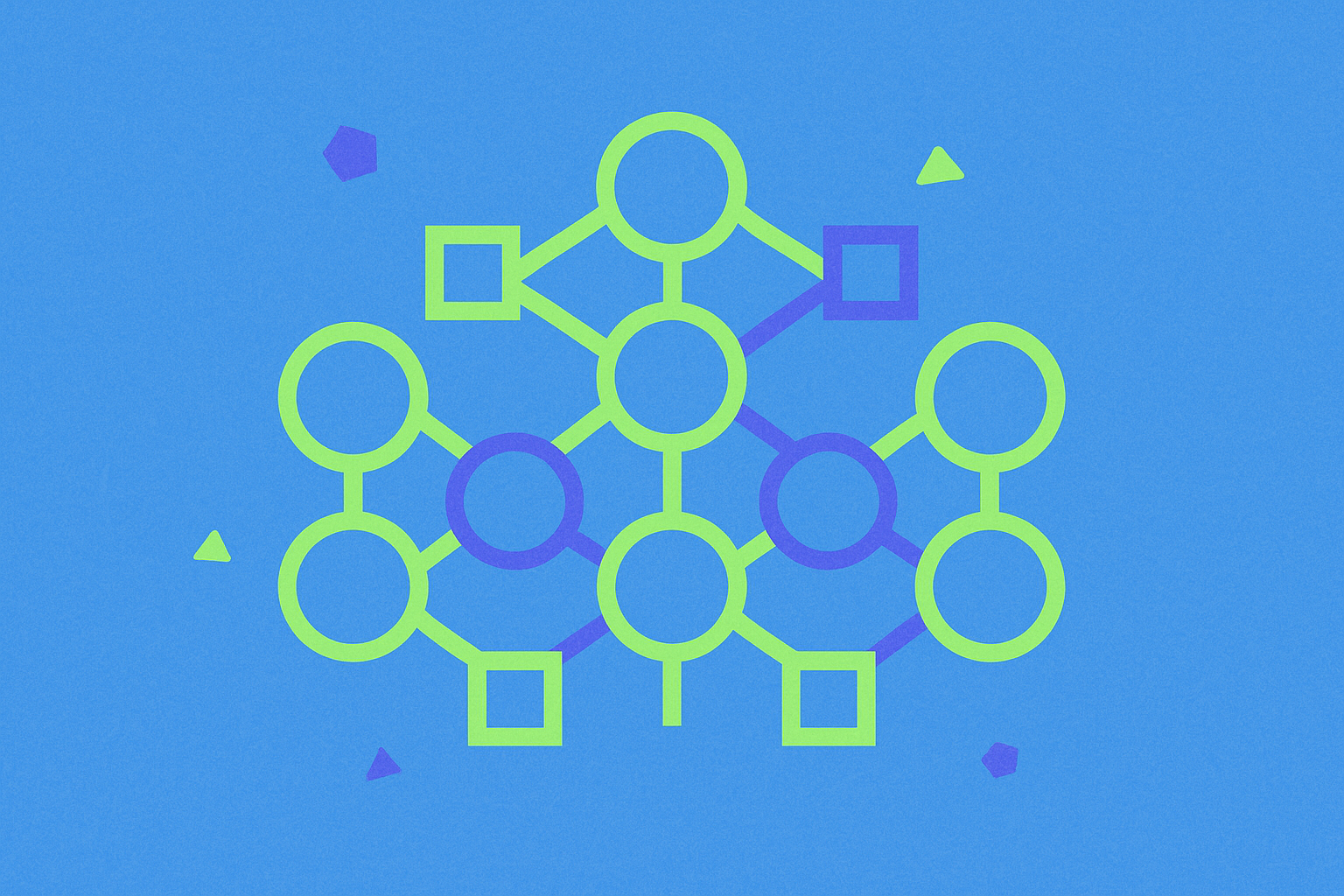
BlockDAG (BDAG) refers to a class of crypto networks and their native tokens built on a Directed Acyclic Graph (DAG) architecture. A DAG is a type of data structure that allows multiple blocks to be generated in parallel and combined according to topological order, rather than lining up sequentially as with traditional blockchains. This design significantly boosts TPS (transactions per second) and confirmation speed while reducing network congestion.
In terms of token utility, BDAG is typically used to pay network fees, reward nodes participating in consensus and maintaining network security, and may also play a role in governance. For newcomers, it can be understood as a high-throughput public chain or protocol and its native token designed for scalable transaction processing.
Current Price, Market Cap, and Circulating Supply of BlockDAG (BDAG)
If BDAG is listed on mainstream data aggregators, three core metrics are defined as follows: price refers to the current trading price per token; market cap is generally estimated as “market cap = price × circulating supply”; circulating supply means the number of tokens currently available for trading, which is not the same as total supply. Token lockups and unlock schedules will impact circulating supply and short-term price volatility.
As of 2026-01-22, commonly referenced data sources include CoinMarketCap, CoinGecko, as well as the project’s whitepaper or official announcements. These figures fluctuate in real time—refer to the latest listings for up-to-date information. If BDAG is in a presale or early stage, market cap may not be accurately calculated and circulating supply may be low or unavailable, which is a typical scenario (Sources: CoinMarketCap, CoinGecko, project whitepaper; Date: 2026-01-22).
When evaluating these metrics, consider monitoring total supply, token allocation, lockup and unlock schedules, trading depth, and market-making quality—factors that affect market stability and slippage risk.
Who Created BlockDAG (BDAG) and When?
According to publicly available information, BlockDAG as a concept and project has gained attention over the past few years. The team has introduced its parallel block production approach based on DAG via the official website, whitepaper, and media channels, and has launched community-building and token presale or testnet activities. As information can evolve rapidly at different stages, it is recommended to refer to the publication timelines on the official website and whitepaper, and to track major milestones such as mainnet launches and key version releases (Sources: official website and whitepaper; Date: 2026-01-22).
For beginners, it is important to distinguish three key milestones: concept release, testnet launch, and mainnet launch. The mainnet is the production network where real transactions and applications run; the testnet provides an environment for development and testing.
How Does BlockDAG (BDAG) Work?
In a DAG-based system, multiple blocks can be produced in parallel. The network uses topological sorting and reference relationships to determine transaction ordering and validity, which eliminates the need for all users to queue on a single chain. This parallelization enhances TPS and reduces confirmation time.
A consensus mechanism ensures network-wide agreement on transactions and blocks. Different projects may use Proof-of-Work (PoW), Proof-of-Stake (PoS), or hybrid schemes to prevent double-spending and enhance security. Finality—meaning that once confirmed, a transaction cannot be reversed—is often achieved rapidly in DAG architectures to serve high-throughput applications.
The fee model and tokenomics define transaction costs and network incentives. Fees set too low may attract spam transactions; excessive fees can degrade user experience. Projects must balance security with usability.
What Can BlockDAG (BDAG) Be Used For?
In payment scenarios, higher throughput and faster confirmations improve micro-payment experiences by reducing wait times. In gaming and NFT trading, parallel processing supports peak activity—such as frequent in-game settlements and asset trades.
For DeFi applications, low latency enhances matching engines and clearing processes. Faster confirmations can reduce chargeback risk and operating costs in cross-border payments or merchant acquiring. The token can also serve as a tool for governance and node incentives, supporting long-term network maintenance.
What Are the Main Risks and Regulatory Considerations for BlockDAG (BDAG)?
Technology adoption risk: Parallel block production increases system complexity; poor implementation may result in security vulnerabilities or performance issues.
Development risk: Delays in mainnet rollout, reduced features, or unmet expectations can impact market confidence and community trust.
Contract and security risk: If smart contracts or bridges are involved, be cautious of contract bugs, cross-chain bridge exploits, or counterfeit token contracts.
Liquidity and concentration risk: Early-stage projects often have concentrated lockups/unlocks that may cause selling pressure; insufficient market-making can lead to high slippage and volatile prices.
Account and private key risk: Exchange accounts should enable security settings; for self-custody wallets, securely back up mnemonic phrases and private keys to prevent social engineering attacks or phishing attempts.
Compliance and regional restrictions: Regulatory attitudes toward crypto assets differ by jurisdiction—always comply with local laws and tax requirements.
How Do I Buy and Safely Store BlockDAG (BDAG) on Gate?
Step 1: Go to gate.com to register an account. Set a strong password and enable two-factor authentication (2FA) for improved login and withdrawal security.
Step 2: Complete KYC verification to increase account limits, ensure compliance, and reduce the likelihood of risk controls.
Step 3: Deposit funds or use fiat to purchase USDT on Gate. You may also transfer assets from other chains—pay close attention to deposit networks and memo/tag requirements.
Step 4: Search for "BDAG" on Gate. If listed, access the spot trading page to review order book depth, volume, and price range. Carefully assess slippage and trading fees.
Step 5: Place your trade. Beginners can use limit orders to control execution price; building your position in batches helps reduce impact costs. After trading, check your asset balance and order history.
Step 6: Store securely. For long-term holding, withdraw your tokens to a non-custodial wallet. A non-custodial wallet means you control your private keys—securely back up your mnemonic phrase offline (avoid screenshots or cloud storage).
Step 7: Enable additional security features. For exchange accounts, set withdrawal whitelists and fund passwords; for self-custody wallets, consider hardware wallets or multi-signature setups for greater protection.
Step 8: If BDAG is not yet listed on Gate, keep your USDT in your account and monitor Gate announcements, the project’s official website, and contract information. Avoid purchasing from unknown sources—be wary of fake contracts or phishing sites.
How Does BlockDAG (BDAG) Compare with Kaspa?
Technical positioning: Both emphasize BlockDAG architecture with parallel block production. However, Kaspa has an operational mainnet with an established community and developer ecosystem; BDAG may still be in early-stage development.
Consensus and performance: Kaspa uses a PoW-compatible BlockDAG with transparent optimization plans; BDAG’s specific consensus algorithm and technical details should be verified via its whitepaper or codebase—do not rely solely on marketing metrics.
Token issuance and liquidity: Kaspa’s emission curve and circulation data are widely available; for presale or newly launched BDAG tokens, closely review total supply, lockup/unlock schedules to assess potential sell pressure and liquidity quality.
Ecosystem and tooling: Kaspa is supported by multiple wallets and community tools; BDAG’s tooling maturity should be tracked via official updates and third-party integrations. Prioritize actual usability and security over raw metrics when comparing.
Summary of BlockDAG (BDAG)
BlockDAG (BDAG) leverages DAG architecture to boost parallel transaction processing and confirmation speed—serving high-throughput use cases like payments, gaming, and DeFi. On the market side, focus on the interplay between price, circulating supply, and market cap; assess short-term volatility based on token lockup/unlock schedules. For accurate data queries, refer to CoinMarketCap, CoinGecko, or the project whitepaper on the day of inquiry. In practice, follow Gate’s steps for registration, KYC, trading, self-custody storage—and always reinforce account/private key security. Comparing with Kaspa helps clarify technical paths and ecosystem differences. The future value of BDAG depends on mainnet delivery, developer adoption, real-world applications; for beginners, staged investment with continuous evaluation of technical progress, liquidity quality, compliance requirements, and security risks is advised.
FAQ
When Was BlockDAG Launched?
BlockDAG was launched in 2023 as an innovative blockchain project based on Directed Acyclic Graph (DAG) technology. Unlike traditional blockchains, it achieves higher network efficiency and throughput by processing transactions in parallel. The project quickly attracted attention within the crypto community and has been advancing both technology upgrades and ecosystem growth.
What Milestones Has BlockDAG Achieved Since Launch?
Since its release, BlockDAG has completed several important technical and ecosystem milestones. The team has consistently released testnets, progressed toward mainnet deployment, built a developer community, and established partnerships. These achievements reflect BlockDAG’s journey from conceptual validation to real-world application.
What Is the Mainnet Timeline for BlockDAG?
BlockDAG’s mainnet rollout follows the project team’s phased roadmap. Before the official mainnet launch, it typically goes through testnet stages to validate technical stability. For the most accurate mainnet timeline updates, monitor announcements from Gate or official project channels.
What Technical Advancements Has BlockDAG Made Since Launch?
Since its inception, BlockDAG has achieved optimizations in its DAG consensus mechanism, transaction confirmation speed, and network scalability. The project routinely publishes technical updates highlighting performance improvements such as enhanced network stability or successful security audits—these directly impact its utility and market performance.
How Can Beginners Stay Updated on BlockDAG News After Launch?
You can stay informed about BlockDAG through multiple channels: visit the official website or social media accounts; follow BDAG’s price movements on Gate; join official communities for first-hand updates. This ensures you remain up-to-date on project developments and market trends.
Glossary of Key BlockDAG (DAG) Terms
- Directed Acyclic Graph (DAG): A data structure enabling multiple transaction chains to be processed in parallel—dramatically improving blockchain throughput and transaction confirmation speed.
- Parallel processing: BlockDAG can validate multiple transaction blocks simultaneously rather than sequentially as with traditional blockchains.
- Consensus mechanism: The distributed algorithm used by BlockDAG to ensure all network nodes agree on transaction order.
- Scalability: The ability of BlockDAG to significantly increase network capacity and throughput while maintaining decentralization via its DAG structure.
- Node validation: Network participants validate and record transactions to maintain BlockDAG’s integrity and security.
- Low-latency transactions: The DAG architecture enables drastically reduced confirmation times—achieving near-instant settlements.
Further Reading & References on BlockDAG (DAG)