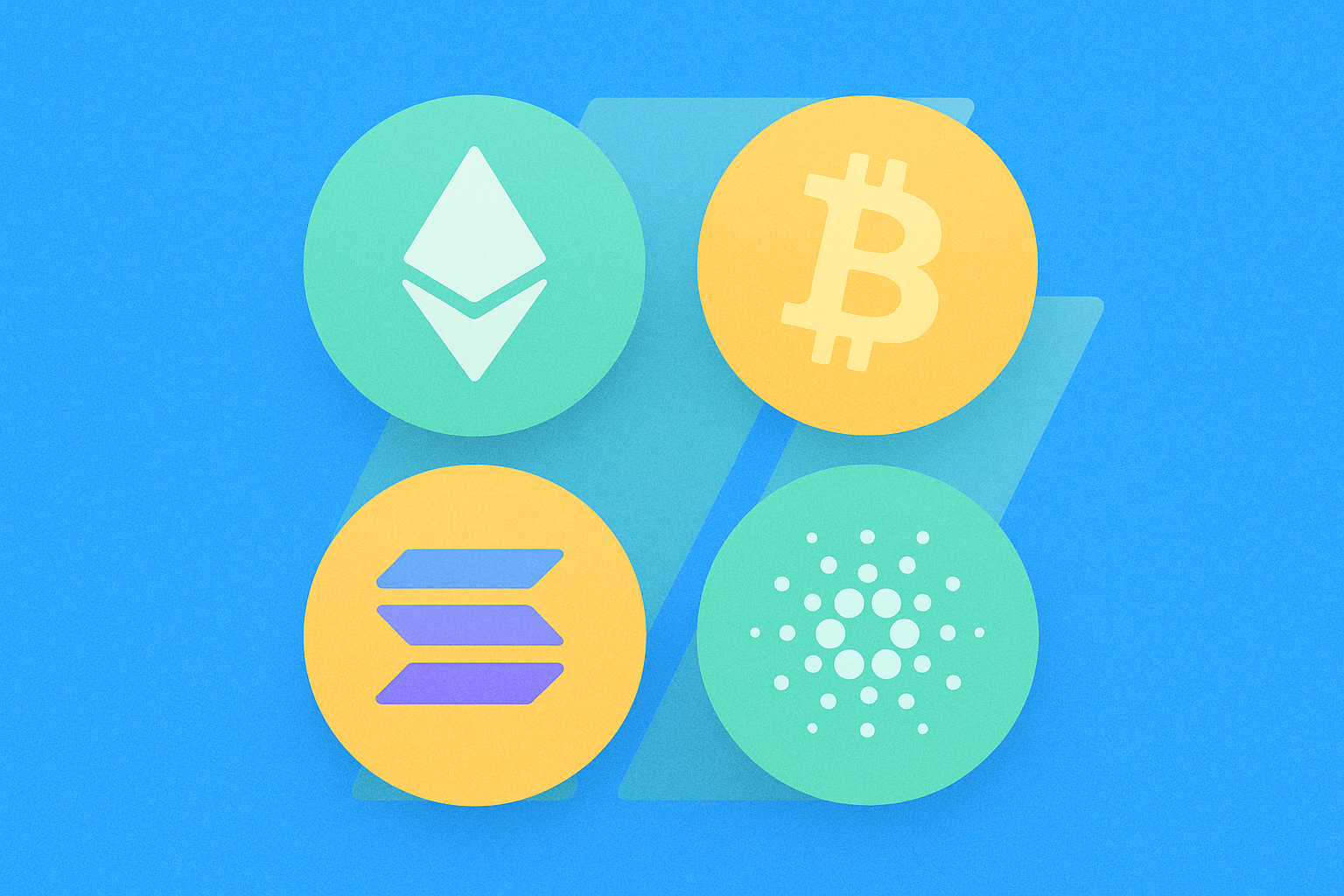
This comprehensive guide explores Layer 1 blockchain solutions and their essential role in blockchain scalability. Layer 1 represents fundamental improvements to base protocol architecture through consensus upgrades, block parameter adjustments, and sharding. The article examines major Layer 1 blockchains including Ethereum, Bitcoin, Solana, and Cardano, analyzing their distinct approaches to the blockchain trilemma. It contrasts Layer 1 with Layer 2 off-chain solutions, detailing their respective advantages and disadvantages. The guide explains how Layer 1 provides permanent, network-wide security foundations while Layer 2 offers flexible, specialized scaling. Ideal for developers, investors, and blockchain enthusiasts seeking to understand scalability mechanisms, this resource demonstrates how hybrid Layer 1 and Layer 2 strategies drive mainstream blockchain adoption on platforms like Gate.
Key Points
Layer 1 refers to the fundamental approach of directly improving the blockchain's base protocol itself to enhance scalability, while Layer 2 utilizes supplementary external solutions to reduce the burden on the main blockchain. Understanding the distinction between these two scaling approaches is crucial for anyone involved in blockchain technology.
The primary methods for Layer 1 scaling include consensus mechanism modifications, adjustments to block size and generation time, and sharding implementation. Each of these methods targets different aspects of the blockchain's core architecture to improve overall network performance and transaction throughput.
Layer 2 solutions encompass various technologies such as rollups, nested blockchains, state channels, and sidechains. These solutions work by processing transactions off the main chain while still leveraging the security of the underlying Layer 1 blockchain.
The blockchain trilemma represents a fundamental limitation in blockchain technology, stating that it is impossible to simultaneously achieve perfect security, decentralization, and scalability. This concept helps explain why different blockchain projects make different trade-offs in their design choices.
Layer 1 Scaling Solutions
Layer 1 blockchains serve as the foundational protocol layer of any blockchain network. These base layer networks are responsible for processing and finalizing all transactions, maintaining the distributed ledger, and ensuring network security through their consensus mechanisms. Layer 1 scaling solutions aim to enhance scalability by making fundamental improvements to the blockchain's base layer architecture.
These improvements can involve significant protocol upgrades that affect how the network operates at its core. By modifying the base layer, Layer 1 solutions can provide permanent and comprehensive improvements to network capacity, though they often require substantial development effort and network-wide consensus for implementation.
Layer 1 Coin Types
Ethereum represents one of the most significant examples of Layer 1 evolution, having transitioned from a Proof of Work consensus mechanism to Proof of Stake. This transition, known as "The Merge," dramatically improved the network's scalability and energy efficiency while maintaining its security and decentralization properties.
Cardano, Solana, and Avalanche were designed from the ground up with scalability as a primary consideration. These networks implemented innovative consensus mechanisms and architectural designs to handle higher transaction volumes without sacrificing security or decentralization.
Bitcoin, while optimized for decentralization and security, has limited throughput capacity. Its conservative approach to protocol changes prioritizes network stability and security over raw transaction processing speed, making it an excellent example of the blockchain trilemma in action.
Sui represents a newer generation of Layer 1 blockchains, specifically designed to achieve high scalability, low costs, and fast processing speeds. It employs novel approaches to transaction processing and state management to overcome traditional blockchain limitations.
Layer 1 Scaling Technologies
Block Size and Block Generation Time Adjustment
Block Size Expansion involves increasing the amount of data that can be included in a single block. By enlarging block size, more transactions can be processed in each block, effectively increasing the network's overall throughput. However, larger blocks require more bandwidth and storage, which can impact decentralization by making it harder for individual nodes to participate in the network.
Block Generation Time Reduction focuses on decreasing the interval between the creation of new blocks. Faster block generation means transactions can be confirmed more quickly, improving user experience and network responsiveness. This approach must be carefully balanced against security considerations, as too-fast block times can lead to increased orphan blocks and potential security vulnerabilities.
Consensus Mechanism Upgrades
Transition from Proof of Work to Proof of Stake represents one of the most impactful Layer 1 improvements. The PoS mechanism significantly reduces energy consumption by eliminating the need for computationally intensive mining operations. Additionally, PoS enables faster transaction finality, as validators can reach consensus more quickly than miners in PoW systems. This transition also opens up new possibilities for network governance and economic incentive structures.
Sharding
Sharding is an advanced technique that divides the blockchain network's state into multiple smaller partitions called "shards." Each shard can process transactions in parallel with other shards, dramatically increasing the network's overall capacity. This approach is similar to database sharding in traditional systems, where data is distributed across multiple servers to improve performance. However, implementing sharding in a blockchain context requires careful consideration of security and cross-shard communication mechanisms.
Advantages
Scalability stands as the most prominent advantage of Layer 1 blockchain solutions. By improving the base protocol, these solutions can provide sustainable, long-term increases in network capacity that benefit all users and applications built on the platform.
Layer 1 solutions offer high scalability and cost-effectiveness while maintaining strong decentralization and security properties. This balance is achieved through careful protocol design that considers all aspects of the blockchain trilemma.
Layer 1 improvements enhance the overall network ecosystem development by providing a more robust foundation for decentralized applications and services. As the base layer becomes more capable, developers can build more sophisticated and resource-intensive applications.
Disadvantages
The inability of Layer 1 networks to scale indefinitely represents a common challenge across the blockchain industry. Even with significant protocol improvements, there are fundamental limitations to how much a single blockchain can scale while maintaining its security and decentralization properties.
Large blockchains like Bitcoin face particular difficulties in processing transactions during periods of high demand. Network congestion can lead to increased transaction fees and longer confirmation times, negatively impacting user experience and limiting the network's utility for certain use cases.
Layer 2 Scaling Solutions
Layer 2 scaling solutions employ a fundamentally different approach by moving transaction processing burden off the main blockchain protocol to an off-chain architecture. These solutions maintain a connection to the Layer 1 blockchain for security and final settlement while handling the bulk of transaction processing in a more efficient environment.
By operating above the base layer, Layer 2 solutions can implement specialized optimizations and techniques that would be impractical or impossible at the Layer 1 level. This flexibility allows for rapid innovation and experimentation in scaling approaches.
Layer 2 Coin Types
zkSync and Starknet utilize ZK-rollup technology to bundle thousands of transactions into a single cryptographic proof. These zero-knowledge proofs allow the Layer 1 blockchain to verify the validity of many transactions without processing each one individually, dramatically reducing the computational and storage burden on the main chain.
Lightning Network serves as a Layer 2 solution specifically designed for Bitcoin, enabling instant micropayments through payment channels. Participants can conduct numerous transactions off-chain and only settle the final balance on the Bitcoin blockchain, reducing fees and confirmation times for small transactions.
Optimism and Arbitrum employ optimistic rollup technology to scale Ethereum. These solutions assume transactions are valid by default and only perform computation in case of disputes, allowing for significant throughput improvements while maintaining strong security guarantees.
Advantages
Layer 2 solutions do not affect the performance or functionality of the underlying blockchain. This independence allows for experimentation and upgrades without requiring changes to the base protocol, reducing coordination costs and technical risks.
Layer 2 solutions excel at executing multiple small transactions quickly and efficiently. By processing transactions off-chain and batching them for settlement, these solutions can achieve throughput levels that would be impossible on Layer 1 alone.
Disadvantages
Layer 2 solutions can negatively impact blockchain connectivity and composability. When applications and users are spread across multiple Layer 2 networks, it becomes more difficult to interact seamlessly across the ecosystem, potentially fragmenting liquidity and user bases.
Layer 2 networks do not provide the same level of security as the main chain. While they derive security from the Layer 1 blockchain, the additional complexity and trust assumptions introduced by Layer 2 systems can create new attack vectors and vulnerabilities.
Layer 2 Problem-Solving Approaches
Rollups
Rollups represent a sophisticated technique that bundles multiple transactions together, creates a single proof of their validity, and submits this proof to the Layer 1 blockchain. This approach dramatically reduces the amount of data that must be stored and processed on the main chain while maintaining strong security guarantees.
ZK Rollups process numerous transactions outside the main blockchain and submit zero-knowledge proofs to verify their validity. These cryptographic proofs allow the Layer 1 blockchain to confirm that all transactions were processed correctly without re-executing them, providing both scalability and strong security guarantees.
Optimistic Rollups operate under the assumption that all transactions are valid by default. During a challenge period, network participants can submit fraud proofs if they detect invalid transactions. If no challenges are raised, the transactions are finalized. This approach offers high throughput while maintaining security through economic incentives and dispute resolution mechanisms.
Nested Blockchains
Nested blockchains create a hierarchical structure where one blockchain operates within another. The parent chain delegates work to child chains, which process transactions and return results to the parent. This architecture allows for specialized child chains optimized for specific use cases while maintaining connection to a secure parent chain.
State Channels
State channels enable bidirectional communication between the blockchain and off-chain transaction channels, improving transaction capacity and speed. Participants can conduct numerous transactions off-chain and only submit the final state to the blockchain, dramatically reducing fees and confirmation times for frequent interactions between the same parties.
Sidechains
Sidechains operate as independent transaction chains adjacent to the main blockchain, using their own consensus mechanisms separate from the main chain. These parallel chains can implement different rules and optimizations while maintaining a connection to the main chain for asset transfers and final settlement.
What Are Layer 3 Solutions
Layer 3 represents an additional abstraction layer built on top of Layer 2 solutions. This emerging concept extends the scaling hierarchy to enable even more specialized functionality and optimization.
Primary Goals of Layer 3
Enhanced Interoperability allows different blockchain networks to seamlessly exchange data and value. Layer 3 solutions can serve as bridges and communication protocols that connect disparate blockchain ecosystems, enabling more fluid movement of assets and information.
Application-Specific Optimization provides functionality tailored to the requirements of specific decentralized applications. By creating specialized environments at Layer 3, developers can optimize for particular use cases without compromising the general-purpose nature of lower layers.
Higher-Level Abstraction creates an environment where users can easily interact with blockchain technology without worrying about complex technical details. This abstraction makes blockchain applications more accessible to mainstream users and developers.
Understanding the Blockchain Trilemma
The blockchain trilemma describes the fundamental challenge of simultaneously achieving three critical properties: security, decentralization, and scalability. This concept, popularized by Ethereum co-founder Vitalik Buterin, suggests that blockchain systems can only optimize for two of these three properties at once.
Core Principles of the Trilemma
Blockchain networks can possess only two of these three attributes perfectly, making it impossible to achieve all three simultaneously at the highest level. This limitation stems from fundamental trade-offs in distributed system design.
Bitcoin maximizes decentralization and security but has limited scalability. Its conservative approach to protocol changes and block size ensures robust security and censorship resistance at the cost of transaction throughput.
Ethereum attempts to balance all three properties through Layer 2 rollups and sharding. By combining base layer improvements with off-chain scaling solutions, Ethereum aims to achieve acceptable levels of all three properties rather than maximizing two at the expense of the third.
Solana prioritizes scalability and performance but maintains relatively lower decentralization levels. Its high-performance architecture requires more powerful hardware to run validator nodes, creating higher barriers to participation.
Layer 1 vs Layer 2: Key Differences
1. Definition
Layer 1 Scaling Solutions modify the base layer of the blockchain protocol to improve performance and capacity. These changes affect the fundamental architecture of the blockchain itself, requiring network-wide adoption and consensus.
Layer 2 employs off-chain solutions that share the burden of the base blockchain protocol. These solutions operate independently while leveraging the security of the underlying Layer 1 blockchain.
2. Operating Method
Layer 1 solutions modify the core protocol through changes to consensus mechanisms, block parameters, or network architecture. These modifications become permanent parts of the blockchain's fundamental operation.
Layer 2 solutions operate independently of the base blockchain protocol, processing transactions off-chain and periodically settling results on the main chain. This independence allows for greater flexibility and faster innovation cycles.
3. Solution Types
Layer 1 blockchain solutions improve networks through methods such as consensus protocol enhancements and sharding implementation. These approaches require deep changes to the blockchain's core functionality.
Layer 2 scaling solutions have virtually unlimited variety. Any protocol, network, or application can function as an off-chain Layer 2 solution, provided it maintains appropriate security connections to the Layer 1 blockchain.
4. Quality Characteristics
Layer 1 networks serve as the ultimate information processing authority, using native tokens to access network resources. They provide the foundation of trust and security for the entire ecosystem.
Layer 2 networks offer additional characteristics beyond the same functionality as Layer 1 blockchains, reducing transaction costs while increasing throughput. They achieve this by optimizing for specific use cases and leveraging the security of the base layer.
The Future of Scalability
Both Layer 1 and Layer 2 scaling approaches have distinct advantages and disadvantages. The future of blockchain technology will likely involve evolved blockchains that combine Layer 1 and Layer 2 solutions in sophisticated ways.
Successful blockchain ecosystems will leverage the strengths of each approach: using Layer 1 improvements for fundamental security and decentralization, while employing Layer 2 solutions for specialized scaling and application-specific optimizations. This hybrid approach offers the best path toward resolving the blockchain trilemma and enabling mainstream adoption of blockchain technology.
FAQ
What is the essential difference between Layer 1 and Layer 2?
Layer 1 is the main blockchain network(such as Bitcoin or Ethereum). Layer 2 is a secondary protocol built on top of Layer 1 to enhance scalability and reduce transaction costs. Common Layer 2 solutions include Lightning Network and Rollups.
Layer 2相比Layer 1有哪些优势和劣势?
Layer 2 advantages: faster transactions, lower fees, higher throughput. Disadvantages: reduced security guarantees, less decentralization, increased complexity. Layer 1 offers superior security and decentralization but slower speed and higher costs.
Why are Layer 2 transaction costs cheaper?
Layer 2 reduces transaction costs by processing transactions off-chain and batching them on the main network. This decreases gas fee demand and improves efficiency while maintaining decentralization and security.
What are the mainstream Layer 2 solutions (Optimism, Arbitrum, Polygon, etc.)?
Mainstream Layer 2 solutions include Optimism, Arbitrum, and Polygon. These use rollup technology to boost transaction speed and reduce fees significantly. Arbitrum leads in transaction volume, while Optimism focuses on developer experience, and Polygon offers cross-chain compatibility.
Layer 2的安全性如何保证?会不会比Layer 1风险更高?
Layer 2继承L1安全性,但引入排序器中心化风险。Stage 2 L2完全去中心化最安全;Stage 1由安全委员会监管相对可靠;Stage 0风险最高。强制提现和账户抽象等机制可增强安全。整体而言,成熟L2安全性与L1相当,但需关注项目阶段。
How to transfer assets from Layer 1 to Layer 2?
Use a compatible wallet to initiate a transfer to Layer 2. Confirm the transaction on the destination chain. To exit Layer 2, initiate a withdrawal back to Layer 1.
What application scenarios are suitable for Layer 2? When should Layer 1 be used?
Layer 2 suits high-frequency transactions and DApps requiring low fees and fast confirmation. Use Layer 1 for applications prioritizing maximum security, decentralization, and settlement finality. Layer 2 scales throughput; Layer 1 ensures network integrity.
* The information is not intended to be and does not constitute financial advice or any other recommendation of any sort offered or endorsed by Gate.