Discover the right way to interpret cryptocurrency price consolidation and trade on Gate. Master consolidation patterns, trading strategies, and breakout analysis techniques. This is a complete guide designed for intermediate-level traders.
What Is Crypto Consolidation
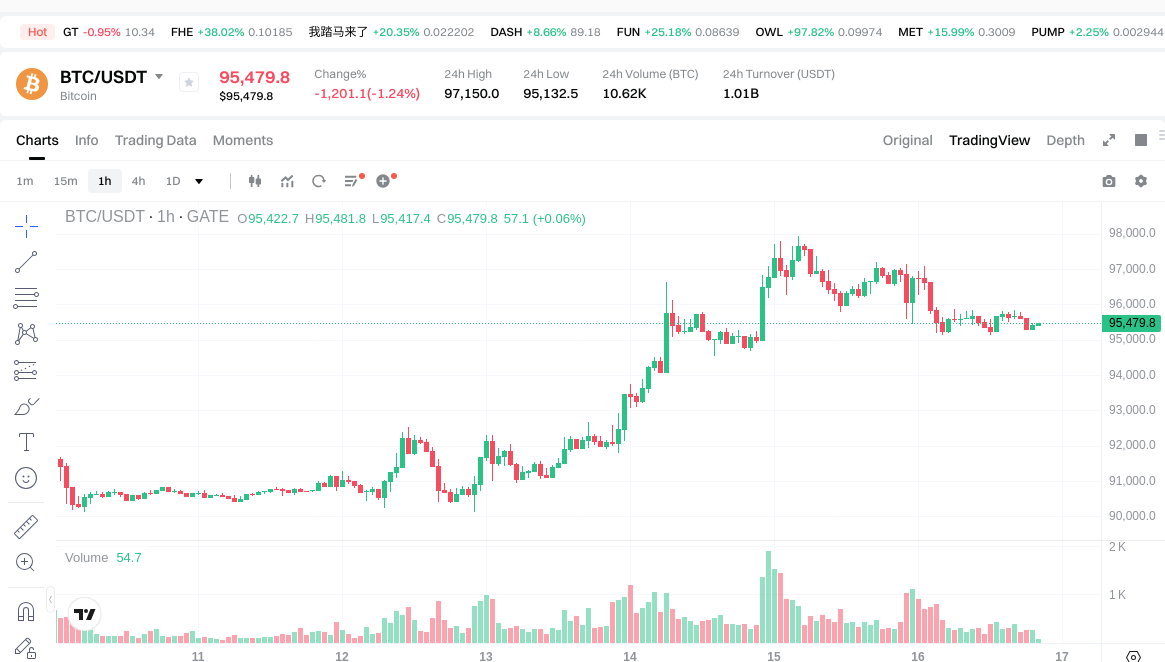
Crypto consolidation refers to a market phase marked by minimal price volatility. During this period, crypto assets show neither significant gains nor losses, and price charts typically form a “sideways” or horizontal channel.
Understanding how consolidation works and being able to anticipate the direction of a breakout after this phase is essential for successful trading. This insight enables traders to build effective strategies and minimize risk.
Consolidation is often viewed as a market pause, where buyers and sellers reach relative equilibrium and participants assess conditions before making further decisions.
Consolidation in Stocks
To fully understand crypto consolidation, it’s helpful to start by examining similar patterns in the stock market. The fundamentals of any exchange are universal: one group aims to buy an asset, the other to sell.
Stock traders look for strong price movements that offer opportunities for profit. The amplitude of price fluctuations is key to success.
Significant price rallies or declines present excellent trading opportunities, but are usually accompanied by greater volatility and risk. That’s why being able to forecast price movement following a consolidation pattern is a crucial skill for traders.
Market Trends and Patterns
A trend is a sustained price movement over a defined period. Consistent price increases form an uptrend or bull market, while steady declines signal a downtrend or bear market.
Trading patterns are recurring price formations that traders use for technical analysis and to predict future market behavior. These patterns draw on historical experience and market psychology.
Identifying trading patterns helps traders make better decisions about when to enter or exit positions, significantly increasing the odds of successful trades.
The Consolidation Trading Pattern
Consolidation is a distinctive trading pattern in which an asset’s price moves mainly within a horizontal channel, showing neither upward nor downward trends. This pattern applies both to single assets and entire markets.
On the chart, consolidation may appear as a pennant, rectangle, or triangle. Triangles are further classified as symmetrical, ascending (suggesting a possible bullish trend), or descending (indicating a potential bearish trend).
Once the accumulation phase ends, the asset typically undergoes a “breakout”—a sharp move up or down out of the consolidation zone. A breakout that continues the previous trend is called a trend continuation, while a breakout in the opposite direction signals a trend reversal.
The Role of Trading Volume
Trading volume is one of the most important indicators to watch for when identifying breakouts. This measures the quantity of the asset traded during a specific session.
Strong, credible breakouts are usually accompanied by significant increases in trading volume. This demonstrates genuine market interest and confirms the strength of the move.
In contrast, major price swings without corresponding volume increases are often signs of a false breakout. These moves are quickly corrected, and the price returns to the consolidation zone, making losses likely for inexperienced traders.
Example: Consolidation and Breakout
Consider a hypothetical scenario involving biotechnology firm YourBestYears. The company announces a promising development, sparking investor interest and driving the stock price higher.
Months pass without substantial updates, interest wanes, and the stock enters a consolidation phase—trading within a narrow range and lacking clear direction.
Eventually, the company announces regulatory approval for its product. Buyers rush to acquire shares, ending the consolidation phase and triggering an upward breakout that extends the previous uptrend.
Alternatively, if regulators deny approval, the consolidation phase breaks downward, signaling a trend reversal and the start of a decline.
Consolidation in Cryptocurrency: Key Features
While the core meaning of consolidation in crypto mirrors that of stocks, there are notable differences. Consolidation periods are less common in crypto than in traditional assets, largely due to the market’s higher volatility.
Forces driving crypto market movements differ significantly from those impacting traditional assets. The crypto sector is highly affected by increasing global regulatory attention.
Consolidation in crypto often occurs when traders and investors are waiting on key regulatory decisions. Sometimes, market players view consolidation as a natural correction after a rapid price surge—allowing the market to “digest” earlier moves.
Trading Crypto With Consolidation Patterns
When trading crypto during consolidation, traders usually choose one of two main strategies:
The first is to wait for a breakout. Here, the trader avoids opening positions—either with or against the trend—until a confirmed breakout occurs. Confirmation typically comes when resistance or support is broken along with a notable increase in trading volume. This conservative method helps reduce the risk of chasing a false breakout.
The second strategy is active trading within the consolidation phase. In some respects, risk is lower during this period because volatility is subdued and the price range is more predictable. Traders may execute short-term trades, buying near the lower bound and selling near the upper bound. However, returns tend to be modest, and caution is needed to avoid false breakouts that can cause losses.
Trading Effectiveness During Crypto Consolidation
Trading effectiveness during consolidation depends heavily on the trader’s strategy. Some market participants thrive in volatile, chaotic conditions, while others prefer calmer periods with more predictable moves.
If the price, after a strong rally or drop, starts moving sideways near a key resistance or support level, traders can use this phase to maximize profit potential. A disciplined approach, deep understanding of technical indicators, and skilled market analysis allow traders to capitalize on breakout impulses from the consolidation zone.
Success during consolidation requires discipline, patience, and strict adherence to risk management rules.
Crypto Consolidation Duration
Consolidation in crypto can last anywhere from a few days to several weeks or even months. Even seasoned analysts find it challenging to accurately predict the length of consolidation and the direction of the next price movement.
Consolidation duration is influenced by many factors: overall market conditions, anticipation of major news, regulatory actions, macroeconomic shifts, and market sentiment. Short-term consolidations may last a few days—often ahead of important news or data releases. Longer consolidation periods, spanning weeks or months, are usually tied to fundamental industry changes or expectations around major regulatory events.
How to Track Crypto Consolidation
To effectively track consolidation phases, it’s essential to stay up to date with crypto news and continually build technical analysis skills. This enables confident position entries and clear interpretation of any cryptocurrency chart.
Reviewing charts of leading cryptocurrencies helps analyze past consolidation periods, identify recurring patterns, and incorporate these insights into trading strategies.
However, it’s important to remember that relying solely on historical data does not guarantee accurate forecasts. The crypto market is always evolving, new influences emerge, and past patterns may not repeat precisely in the future.
Consolidation in Business
In business, “consolidation” has a different meaning—it refers to the merging of companies. When a business consolidation occurs, two or more legal entities combine to form a single company.
Objectives may include increasing market share, achieving operational synergies, realizing economies of scale, expanding geographic reach, or accessing new technologies and markets. Business consolidation is a popular growth strategy across many industries.
Asset Consolidation in Investment Portfolios
A diversified investment portfolio is one of the most reliable ways to protect against major losses. By consolidating assets, traders and investors can rebalance—selling some assets to buy others.
This helps maintain the desired portfolio allocation and effectively hedge risk. For instance, if a particular asset class has increased sharply and dominates the portfolio, the investor can take profits and reallocate funds to undervalued assets, reducing overall portfolio exposure.
Bitcoin Transaction Consolidation
“Bitcoin consolidation” can also refer to a specific technique for optimizing transactions on the Bitcoin network. Every BTC transaction requires a miner fee, and making many small transactions can result in substantial cumulative fees.
In this context, consolidation means combining several small transactions or UTXO (unspent transaction outputs) into a single larger transaction. This technique can significantly reduce network fees, especially when Bitcoin transaction fees are low. Savvy users routinely consolidate their Bitcoin addresses during periods of low network congestion to minimize future transaction costs.
FAQ
What Is Crypto Consolidation and How Does It Work?
Crypto consolidation is a price stabilization phase following a major move. The price fluctuates within a band defined by support and resistance levels. Traders analyze this phase to predict the next direction. After consolidation, a breakout occurs upward or downward, usually with high trading volume.
What Are the Benefits and Risks of Crypto Consolidation?
Benefits: price stabilization, the ability to analyze trends, and strategy planning. Risks: uncertainty of breakout direction, stalled growth, and false breakout signals.
How Does Crypto Consolidation Affect Prices and Volatility?
Crypto consolidation lowers volatility, as prices trade within a narrow range between support and resistance. Investors anticipate a breakout, creating market tension. After consolidation, prices can swing sharply up or down, accompanied by increased trading volume and volatility.
What Are Examples of Successful Crypto Consolidation?
Successful cases include mergers of major platforms and companies in the crypto sector, which have strengthened market positions and expanded services. Consolidation boosts liquidity, reduces risk, and supports blockchain ecosystem growth by pooling resources and technologies.
How Does Crypto Consolidation Differ From Blockchain Project Mergers?
Crypto consolidation merges several tokens into one while retaining value. Project mergers bring platforms together for optimization. Consolidation deals with tokens, while mergers pertain to blockchain systems.
* The information is not intended to be and does not constitute financial advice or any other recommendation of any sort offered or endorsed by Gate.