Kumar_Sanu

vip
Age 0.1 Yıl
Peak Tier 0
No content yet
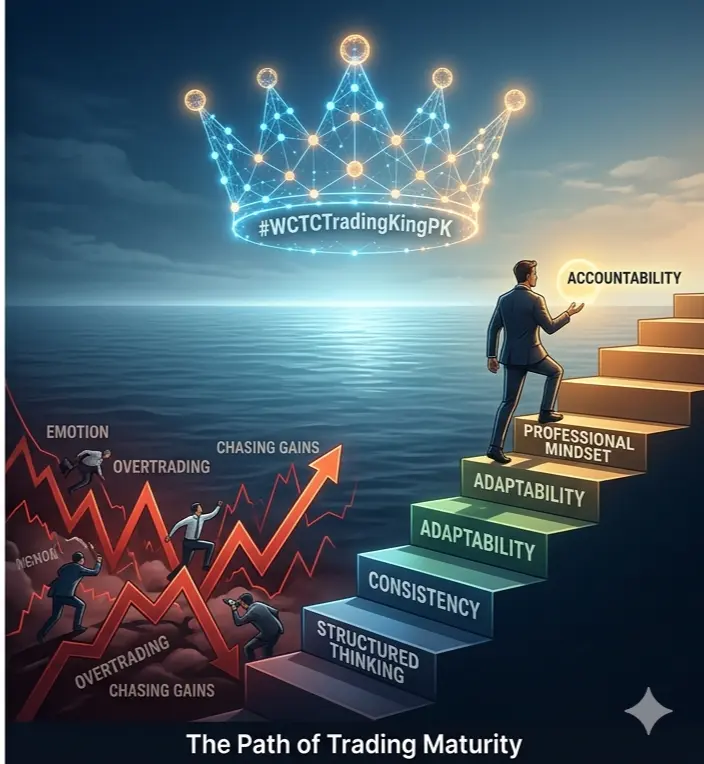
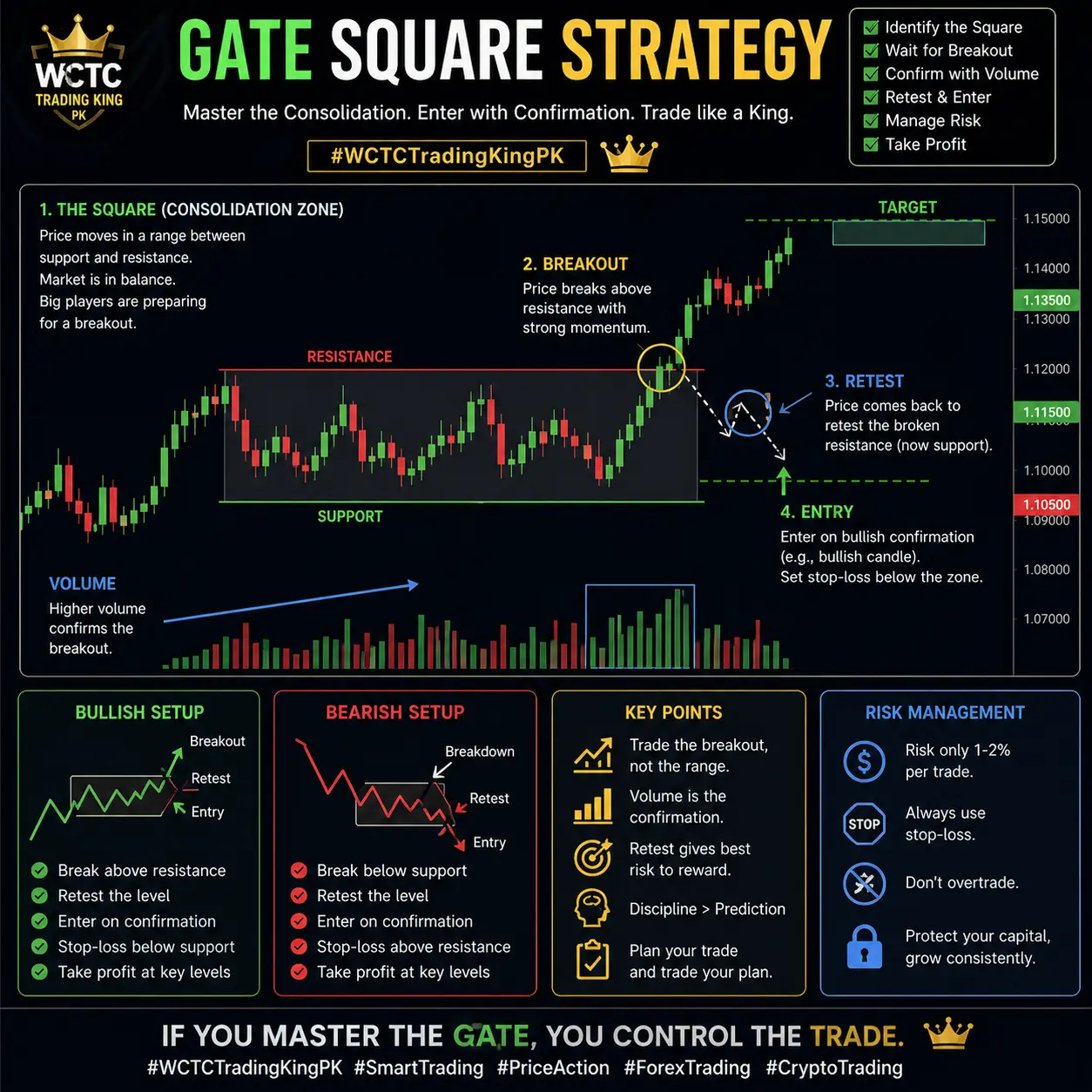
#WCTCTradingKingPK
Mastering the Gate Square Strategy
In the fast-paced world of trading, where emotions often dictate decisions and volatility tests patience, having a structured approach is not just an advantage—it’s a necessity. One such refined concept gaining attention among disciplined traders is the Gate Square Strategy. This method isn’t about chasing hype or relying on blind signals; it’s about understanding market structure, identifying key zones, and executing trades with precision.
Let’s break it down in a way that brings clarity and practical value.
---
🔷 What is the Gate Squar
post-image
  • Reward
  • Comment
  • Repost
  • Share
#WCTCTradingChallengeShare8MUSDT
Deep-Dive Analysis — Competition Strategy, Capital Dynamics, and the Psychology of High-Stakes Trading
The hashtag #WCTCTradingChallengeShare8MUSDT highlights one of the most aggressive and high-reward trading competitions in the crypto space, where millions in rewards are designed to attract both professional traders and ambitious newcomers. But beyond the prize pool, this event represents something deeper: a real-time battlefield of strategy, psychology, and risk management under pressure.
---
1. Current Situation: Opportunit
Vortex_King
#WCTCTradingChallengeShare8MUSDT
Deep-Dive Analysis — Competition Strategy, Capital Dynamics, and the Psychology of High-Stakes Trading
The hashtag #WCTCTradingChallengeShare8MUSDT highlights one of the most aggressive and high-reward trading competitions in the crypto space, where millions in rewards are designed to attract both professional traders and ambitious newcomers. But beyond the prize pool, this event represents something deeper: a real-time battlefield of strategy, psychology, and risk management under pressure.
---
1. Current Situation: Opportunity Wrapped in Risk
The competition environment is fundamentally different from normal trading conditions. With a large prize pool driving participation, traders are incentivized to maximize returns within a limited time frame. This creates a high-intensity environment where decision-making accelerates and risk tolerance increases.
Participants are not just trading the market—they are competing against each other. This shifts the objective from consistent profitability to relative performance, meaning traders often take more aggressive positions to outperform rivals.
---
2. Competition Structure: How the Game Is Played
In competitions like this, rankings are usually based on return on investment rather than absolute profit. This changes behavior significantly. A trader with a smaller account can outperform larger participants by taking higher risks and achieving higher percentage gains.
This structure creates a dynamic where:
High leverage becomes attractive
Short-term trades dominate
Risk management is often compromised
Understanding this structure is essential because it explains why competition trading often looks very different from professional portfolio management.
---
3. Market Behavior During Competitions
Large trading competitions can influence market behavior. Increased activity leads to higher volume, sharper price movements, and more volatility.
This happens because:
Many traders enter similar positions simultaneously
Liquidations increase due to leverage
Momentum builds quickly in both directions
As a result, the market becomes more reactive and less predictable, creating both opportunities and dangers for participants.
---
4. Trader Psychology: Pressure Changes Everything
Psychology plays a massive role in competition trading. The presence of a leaderboard creates constant pressure to perform.
Common psychological effects include:
Overtrading to climb rankings
Revenge trading after losses
Increased emotional decision-making
Even experienced traders can struggle in this environment because the competitive element amplifies stress and reduces patience.
---
5. Strategy Types: Conservative vs Aggressive Approaches
There are generally two types of strategies in such competitions.
Conservative traders focus on steady gains, aiming to avoid large losses and maintain consistent growth. While this approach reduces risk, it may not be enough to reach top rankings.
Aggressive traders take high-risk positions, often using leverage to maximize returns. This approach can lead to rapid gains but also rapid losses.
Most top performers use a hybrid strategy, starting aggressively and then shifting to risk control once they achieve a strong position on the leaderboard.
---
6. Risk Management: The Deciding Factor
Despite the competitive nature, risk management remains the most important factor.
Key principles include:
Limiting exposure per trade
Avoiding excessive leverage
Protecting profits once achieved
The biggest mistake participants make is focusing only on gains while ignoring downside risk. In reality, surviving the competition is just as important as winning it.
---
7. Timing and Market Conditions
Timing plays a crucial role in success. Entering the competition during favorable market conditions can significantly improve performance.
Trending markets provide clearer opportunities, while ranging markets require more precise execution. Understanding the current market environment allows traders to adjust strategies accordingly.
---
8. Capital Allocation: Smart Distribution
Effective capital allocation can make a major difference. Instead of committing all funds to a single strategy, successful traders diversify their approach within the competition.
For example:
A portion allocated to high-risk trades
A portion reserved for stable strategies
A reserve kept for opportunistic entries
This layered approach helps balance risk and reward, increasing the chances of staying competitive throughout the event.
---
9. Scenario Analysis: Possible Outcomes
Scenario 1: High-Risk Success
Traders who take aggressive positions early may achieve rapid gains and secure top rankings, but this requires precise timing and favorable conditions.
Scenario 2: Gradual Climb
Steady performers may slowly rise through the rankings, relying on consistency rather than explosive gains.
Scenario 3: Early Elimination
Overexposure and poor risk management can lead to quick losses, removing traders from contention early in the competition.
Each scenario highlights the importance of balancing ambition with discipline.
---
10. Market Impact Beyond the Competition
Events like this extend beyond individual participants. They increase overall market engagement, attract new users, and generate significant trading volume.
This can lead to:
Increased liquidity
Higher volatility
Greater attention on specific assets
Such competitions often act as catalysts for short-term market activity.
---
11. Strategic Insight: How to Approach the Challenge
To navigate a high-stakes trading competition effectively, traders should focus on:
Clear strategy planning before entering
Discipline in execution
Emotional control under pressure
Continuous adaptation based on performance
Success is not just about making profits—it’s about making the right decisions consistently under competitive conditions.
---
12. Final Insight: A Test of Skill and Discipline
The story behind #WCTCTradingChallengeShare8MUSDT is not just about winning a prize—it’s about proving trading ability in one of the most demanding environments possible.
The competition rewards not only boldness but also control, not only strategy but also psychology.
The key takeaway is simple:
In high-stakes trading competitions, the winners are not just the most aggressive traders—they are the ones who can balance risk, strategy, and discipline under pressure.
  • Reward
  • Comment
  • Repost
  • Share
#WCTCTradingKingPK
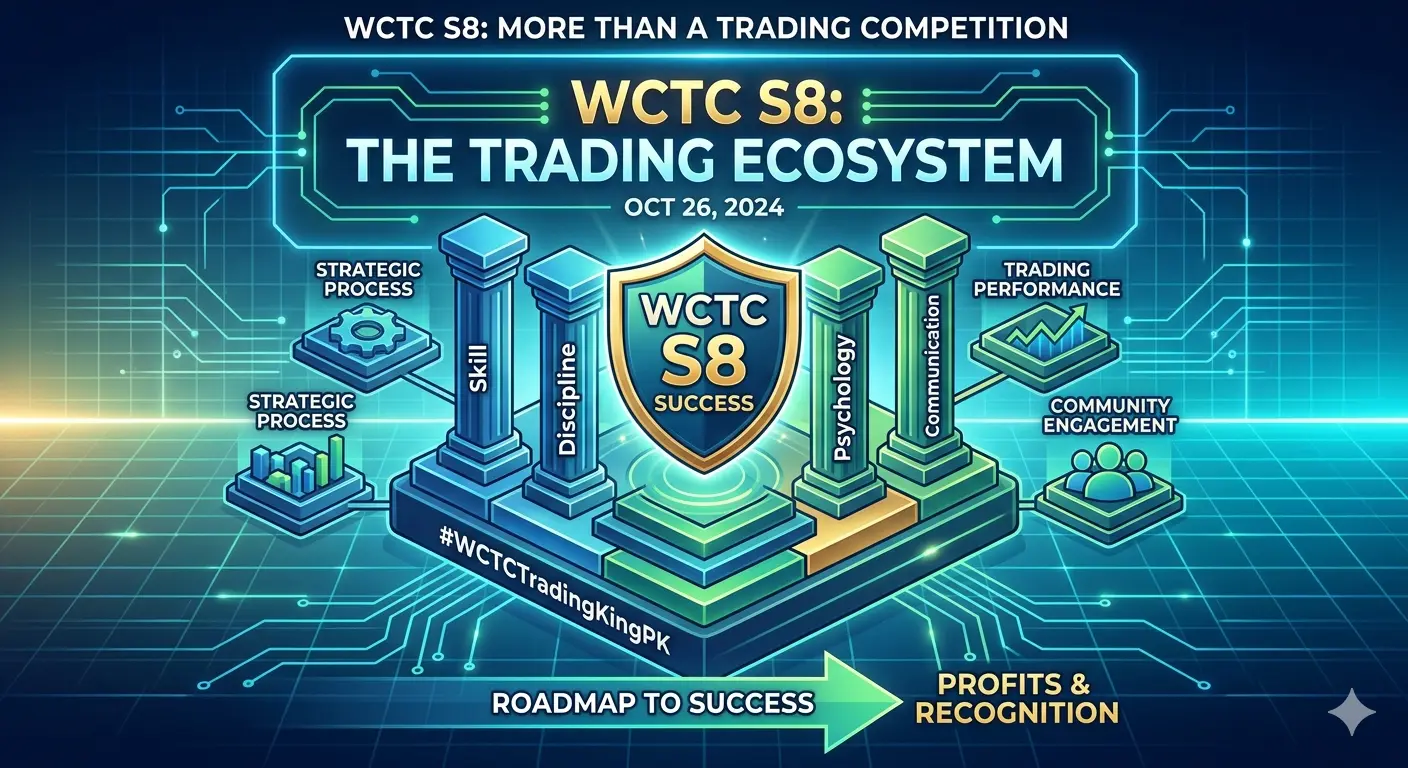
WCTC S8 is not just a trading competition, it is a complete ecosystem where skill, discipline, psychology, and communication come together to define success, and anyone entering this arena must first understand that participation itself is a strategic process rather than a simple act of placing trades, because the real challenge lies in how effectively you can combine trading performance with the ability to present your journey, your thinking, and your execution in a way that creates value for both yourself and the broader community, which is why approaching this competitio
Vortex_King
#WCTCTradingKingPK
WCTC S8 is not just a trading competition, it is a complete ecosystem where skill, discipline, psychology, and communication come together to define success, and anyone entering this arena must first understand that participation itself is a strategic process rather than a simple act of placing trades, because the real challenge lies in how effectively you can combine trading performance with the ability to present your journey, your thinking, and your execution in a way that creates value for both yourself and the broader community, which is why approaching this competition without a clear roadmap often leads to inconsistent results, emotional decisions, and missed opportunities that could otherwise be converted into both profits and recognition.
The first and most critical step in participating effectively is to deeply understand the purpose behind using #WCTCTradingKingPK, because this hashtag is not just a tagging requirement but a gateway into a larger competitive conversation where traders are showcasing their strategies, sharing their insights, and competing for visibility, which means every post you create becomes part of your identity and your reputation, so instead of posting randomly, you need to think of each post as a reflection of your trading mindset, your analytical ability, and your level of discipline, as this is what ultimately separates average participants from those who dominate both performance and engagement.
Once the purpose is clear, the second step is to define your personal participation strategy, because not every trader approaches the market in the same way and trying to imitate others often leads to confusion and inconsistency, so you must decide whether you want to position yourself as a strategy-focused trader who breaks down charts and technical setups in detail, an experience-driven trader who shares real trade journeys including wins and losses, or an educator who focuses on providing earning tips and risk management insights, and while it is possible to combine these approaches, having a primary focus allows you to build a consistent voice that people can recognize and trust over time.
The third step involves building a structured content framework that ensures your posts remain valuable and consistent throughout the competition, because one of the biggest mistakes traders make is posting without direction, which results in scattered ideas and weak engagement, so instead you should create clear content pillars such as market analysis, trade setups, risk management techniques, psychological insights, and performance updates, and by consistently posting within these pillars, you not only establish authority but also make it easier for your audience to understand what they can expect from you, which increases both engagement and credibility.
The fourth step is mastering the art of market analysis, because every strong trading decision begins with understanding the broader market context, and this includes identifying whether the market is trending or ranging, analyzing key support and resistance levels, observing volume behavior, and staying aware of macroeconomic or geopolitical factors that may influence price movement, and when you share this analysis in your posts, you are not only improving your own decision-making process but also providing valuable insights to others, which enhances your reputation as a knowledgeable participant in the competition.
The fifth step is developing a clear and repeatable trading strategy, because without a defined system, trading becomes emotional and inconsistent, and a strong strategy must include precise entry conditions, confirmation signals, defined exit points, and strict risk management rules, so instead of relying on vague ideas like buying low and selling high, you should explain exactly what conditions must be met before entering a trade, what signals confirm your decision, where you will exit if the trade goes in your favor, and where you will cut your losses if it goes against you, as this level of clarity not only improves your trading performance but also makes your content more educational and impactful.
The sixth step is focusing on risk management, which is the foundation of long-term success in any trading competition, because even the best strategy can fail if risk is not controlled properly, and this means limiting the amount of capital you risk on each trade, avoiding excessive leverage, and always using stop loss orders to protect yourself from unexpected market movements, and when you consistently demonstrate strong risk management in both your trades and your posts, you build trust and show that you are not just chasing profits but managing your capital responsibly, which is a key trait of successful traders.
The seventh step is sharing your trading experiences in an honest and transparent way, because authenticity is one of the most powerful tools for building engagement and credibility, and this includes not only showcasing your winning trades but also discussing your losses and the lessons learned from them, as this provides a more realistic view of trading and helps others understand that success is not about avoiding losses entirely but about managing them effectively, and by sharing your emotional journey, including moments of doubt, confidence, and discipline, you create a deeper connection with your audience.
The eighth step is creating high-quality educational content that provides real value, because the competition rewards not just performance but also contribution, and this means going beyond surface-level advice and offering detailed explanations of strategies, risk management techniques, and market insights, and when your content helps others improve their trading skills, it naturally attracts more engagement, which increases your visibility and strengthens your position in the competition, making education a powerful tool for both personal growth and competitive advantage.
The ninth step is mastering engagement and communication, because even the best content can go unnoticed if it is not presented effectively, and this involves writing in a clear and structured paragraph style, using strong openings to capture attention, and encouraging interaction by asking questions or inviting feedback, and responding to comments and engaging with other participants further enhances your visibility and shows that you are an active member of the community, which can significantly impact your overall success in the competition.
The tenth step is maintaining psychological discipline, because trading in a competitive environment introduces additional pressure that can lead to emotional decisions, and common mistakes include overtrading in an attempt to climb the leaderboard quickly, chasing losses after a bad trade, and comparing your performance with others, all of which can negatively impact your results, so it is important to stay focused on your own strategy, remain patient, and treat each trade as part of a larger process rather than a single opportunity to prove yourself.
The eleventh step is tracking your performance and continuously improving, because successful traders are those who learn from their experiences and adapt their strategies over time, and this involves monitoring key metrics such as win rate, risk-reward ratio, and overall consistency, and regularly reviewing your trades to identify patterns, strengths, and weaknesses, and by making adjustments based on this analysis, you can refine your approach and increase your chances of achieving better results as the competition progresses.
The twelfth step is building your personal brand, which is an often overlooked but highly important aspect of participating in WCTC S8, because the way you present yourself, the consistency of your content, and the value you provide all contribute to how others perceive you, and a strong personal brand not only increases your engagement but also creates long-term opportunities beyond the competition, so instead of focusing solely on short-term results, you should aim to establish yourself as a reliable and knowledgeable trader whose insights are worth following.
The thirteenth step is integrating trading and content creation into a daily routine, because consistency is key to success in both areas, and this means setting aside time each day to analyze the market, execute trades based on your strategy, create and share content, and engage with the community, and by following a structured routine, you can maintain a steady flow of activity that keeps you relevant and competitive throughout the duration of the event.
The fourteenth step is understanding the importance of adaptability, because markets are constantly changing and strategies that work in one condition may not work in another, so you must be willing to adjust your approach based on market behavior, and this includes recognizing when trends are shifting, when volatility is increasing or decreasing, and when your current strategy needs to be modified, and by staying flexible and open to change, you can maintain an edge in a dynamic trading environment.
The fifteenth and final step is approaching the competition with a long-term mindset, because while the immediate goal may be to win rewards and achieve recognition, the true value lies in the skills, experience, and discipline you develop לאורך the way, and by focusing on continuous improvement, maintaining consistency, and providing value to others, you not only increase your chances of success in WCTC S8 but also build a foundation for long-term growth as a trader.
In conclusion, participating in WCTC S8 using #WCTCTradingKingPK is a comprehensive process that requires a combination of strategic planning, disciplined execution, and effective communication, and those who approach it with a clear plan, a strong focus on risk management, and a commitment to creating valuable content will stand out from the crowd, not just as competitors but as leaders within the trading community, making this competition an opportunity not only to win prizes but to elevate your entire trading journey to the next level.
repost-content-media
  • Reward
  • Comment
  • Repost
  • Share
#WCTCTradingKingPK
WCTC S8 is not just a trading competition, it is a complete ecosystem where skill, discipline, psychology, and communication come together to define success, and anyone entering this arena must first understand that participation itself is a strategic process rather than a simple act of placing trades, because the real challenge lies in how effectively you can combine trading performance with the ability to present your journey, your thinking, and your execution in a way that creates value for both yourself and the broader community, which is why approaching this competitio
Vortex_King
#WCTCTradingKingPK
WCTC S8 is not just a trading competition, it is a complete ecosystem where skill, discipline, psychology, and communication come together to define success, and anyone entering this arena must first understand that participation itself is a strategic process rather than a simple act of placing trades, because the real challenge lies in how effectively you can combine trading performance with the ability to present your journey, your thinking, and your execution in a way that creates value for both yourself and the broader community, which is why approaching this competition without a clear roadmap often leads to inconsistent results, emotional decisions, and missed opportunities that could otherwise be converted into both profits and recognition.
The first and most critical step in participating effectively is to deeply understand the purpose behind using #WCTCTradingKingPK, because this hashtag is not just a tagging requirement but a gateway into a larger competitive conversation where traders are showcasing their strategies, sharing their insights, and competing for visibility, which means every post you create becomes part of your identity and your reputation, so instead of posting randomly, you need to think of each post as a reflection of your trading mindset, your analytical ability, and your level of discipline, as this is what ultimately separates average participants from those who dominate both performance and engagement.
Once the purpose is clear, the second step is to define your personal participation strategy, because not every trader approaches the market in the same way and trying to imitate others often leads to confusion and inconsistency, so you must decide whether you want to position yourself as a strategy-focused trader who breaks down charts and technical setups in detail, an experience-driven trader who shares real trade journeys including wins and losses, or an educator who focuses on providing earning tips and risk management insights, and while it is possible to combine these approaches, having a primary focus allows you to build a consistent voice that people can recognize and trust over time.
The third step involves building a structured content framework that ensures your posts remain valuable and consistent throughout the competition, because one of the biggest mistakes traders make is posting without direction, which results in scattered ideas and weak engagement, so instead you should create clear content pillars such as market analysis, trade setups, risk management techniques, psychological insights, and performance updates, and by consistently posting within these pillars, you not only establish authority but also make it easier for your audience to understand what they can expect from you, which increases both engagement and credibility.
The fourth step is mastering the art of market analysis, because every strong trading decision begins with understanding the broader market context, and this includes identifying whether the market is trending or ranging, analyzing key support and resistance levels, observing volume behavior, and staying aware of macroeconomic or geopolitical factors that may influence price movement, and when you share this analysis in your posts, you are not only improving your own decision-making process but also providing valuable insights to others, which enhances your reputation as a knowledgeable participant in the competition.
The fifth step is developing a clear and repeatable trading strategy, because without a defined system, trading becomes emotional and inconsistent, and a strong strategy must include precise entry conditions, confirmation signals, defined exit points, and strict risk management rules, so instead of relying on vague ideas like buying low and selling high, you should explain exactly what conditions must be met before entering a trade, what signals confirm your decision, where you will exit if the trade goes in your favor, and where you will cut your losses if it goes against you, as this level of clarity not only improves your trading performance but also makes your content more educational and impactful.
The sixth step is focusing on risk management, which is the foundation of long-term success in any trading competition, because even the best strategy can fail if risk is not controlled properly, and this means limiting the amount of capital you risk on each trade, avoiding excessive leverage, and always using stop loss orders to protect yourself from unexpected market movements, and when you consistently demonstrate strong risk management in both your trades and your posts, you build trust and show that you are not just chasing profits but managing your capital responsibly, which is a key trait of successful traders.
The seventh step is sharing your trading experiences in an honest and transparent way, because authenticity is one of the most powerful tools for building engagement and credibility, and this includes not only showcasing your winning trades but also discussing your losses and the lessons learned from them, as this provides a more realistic view of trading and helps others understand that success is not about avoiding losses entirely but about managing them effectively, and by sharing your emotional journey, including moments of doubt, confidence, and discipline, you create a deeper connection with your audience.
The eighth step is creating high-quality educational content that provides real value, because the competition rewards not just performance but also contribution, and this means going beyond surface-level advice and offering detailed explanations of strategies, risk management techniques, and market insights, and when your content helps others improve their trading skills, it naturally attracts more engagement, which increases your visibility and strengthens your position in the competition, making education a powerful tool for both personal growth and competitive advantage.
The ninth step is mastering engagement and communication, because even the best content can go unnoticed if it is not presented effectively, and this involves writing in a clear and structured paragraph style, using strong openings to capture attention, and encouraging interaction by asking questions or inviting feedback, and responding to comments and engaging with other participants further enhances your visibility and shows that you are an active member of the community, which can significantly impact your overall success in the competition.
The tenth step is maintaining psychological discipline, because trading in a competitive environment introduces additional pressure that can lead to emotional decisions, and common mistakes include overtrading in an attempt to climb the leaderboard quickly, chasing losses after a bad trade, and comparing your performance with others, all of which can negatively impact your results, so it is important to stay focused on your own strategy, remain patient, and treat each trade as part of a larger process rather than a single opportunity to prove yourself.
The eleventh step is tracking your performance and continuously improving, because successful traders are those who learn from their experiences and adapt their strategies over time, and this involves monitoring key metrics such as win rate, risk-reward ratio, and overall consistency, and regularly reviewing your trades to identify patterns, strengths, and weaknesses, and by making adjustments based on this analysis, you can refine your approach and increase your chances of achieving better results as the competition progresses.
The twelfth step is building your personal brand, which is an often overlooked but highly important aspect of participating in WCTC S8, because the way you present yourself, the consistency of your content, and the value you provide all contribute to how others perceive you, and a strong personal brand not only increases your engagement but also creates long-term opportunities beyond the competition, so instead of focusing solely on short-term results, you should aim to establish yourself as a reliable and knowledgeable trader whose insights are worth following.
The thirteenth step is integrating trading and content creation into a daily routine, because consistency is key to success in both areas, and this means setting aside time each day to analyze the market, execute trades based on your strategy, create and share content, and engage with the community, and by following a structured routine, you can maintain a steady flow of activity that keeps you relevant and competitive throughout the duration of the event.
The fourteenth step is understanding the importance of adaptability, because markets are constantly changing and strategies that work in one condition may not work in another, so you must be willing to adjust your approach based on market behavior, and this includes recognizing when trends are shifting, when volatility is increasing or decreasing, and when your current strategy needs to be modified, and by staying flexible and open to change, you can maintain an edge in a dynamic trading environment.
The fifteenth and final step is approaching the competition with a long-term mindset, because while the immediate goal may be to win rewards and achieve recognition, the true value lies in the skills, experience, and discipline you develop לאורך the way, and by focusing on continuous improvement, maintaining consistency, and providing value to others, you not only increase your chances of success in WCTC S8 but also build a foundation for long-term growth as a trader.
In conclusion, participating in WCTC S8 using #WCTCTradingKingPK is a comprehensive process that requires a combination of strategic planning, disciplined execution, and effective communication, and those who approach it with a clear plan, a strong focus on risk management, and a commitment to creating valuable content will stand out from the crowd, not just as competitors but as leaders within the trading community, making this competition an opportunity not only to win prizes but to elevate your entire trading journey to the next level.
repost-content-media
  • Reward
  • Comment
  • Repost
  • Share
#WCTCTradingKingPK
WCTC S8 is not just a trading competition, it is a complete ecosystem where skill, discipline, psychology, and communication come together to define success, and anyone entering this arena must first understand that participation itself is a strategic process rather than a simple act of placing trades, because the real challenge lies in how effectively you can combine trading performance with the ability to present your journey, your thinking, and your execution in a way that creates value for both yourself and the broader community, which is why approaching this competitio
Vortex_King
#WCTCTradingKingPK
WCTC S8 is not just a trading competition, it is a complete ecosystem where skill, discipline, psychology, and communication come together to define success, and anyone entering this arena must first understand that participation itself is a strategic process rather than a simple act of placing trades, because the real challenge lies in how effectively you can combine trading performance with the ability to present your journey, your thinking, and your execution in a way that creates value for both yourself and the broader community, which is why approaching this competition without a clear roadmap often leads to inconsistent results, emotional decisions, and missed opportunities that could otherwise be converted into both profits and recognition.
The first and most critical step in participating effectively is to deeply understand the purpose behind using #WCTCTradingKingPK, because this hashtag is not just a tagging requirement but a gateway into a larger competitive conversation where traders are showcasing their strategies, sharing their insights, and competing for visibility, which means every post you create becomes part of your identity and your reputation, so instead of posting randomly, you need to think of each post as a reflection of your trading mindset, your analytical ability, and your level of discipline, as this is what ultimately separates average participants from those who dominate both performance and engagement.
Once the purpose is clear, the second step is to define your personal participation strategy, because not every trader approaches the market in the same way and trying to imitate others often leads to confusion and inconsistency, so you must decide whether you want to position yourself as a strategy-focused trader who breaks down charts and technical setups in detail, an experience-driven trader who shares real trade journeys including wins and losses, or an educator who focuses on providing earning tips and risk management insights, and while it is possible to combine these approaches, having a primary focus allows you to build a consistent voice that people can recognize and trust over time.
The third step involves building a structured content framework that ensures your posts remain valuable and consistent throughout the competition, because one of the biggest mistakes traders make is posting without direction, which results in scattered ideas and weak engagement, so instead you should create clear content pillars such as market analysis, trade setups, risk management techniques, psychological insights, and performance updates, and by consistently posting within these pillars, you not only establish authority but also make it easier for your audience to understand what they can expect from you, which increases both engagement and credibility.
The fourth step is mastering the art of market analysis, because every strong trading decision begins with understanding the broader market context, and this includes identifying whether the market is trending or ranging, analyzing key support and resistance levels, observing volume behavior, and staying aware of macroeconomic or geopolitical factors that may influence price movement, and when you share this analysis in your posts, you are not only improving your own decision-making process but also providing valuable insights to others, which enhances your reputation as a knowledgeable participant in the competition.
The fifth step is developing a clear and repeatable trading strategy, because without a defined system, trading becomes emotional and inconsistent, and a strong strategy must include precise entry conditions, confirmation signals, defined exit points, and strict risk management rules, so instead of relying on vague ideas like buying low and selling high, you should explain exactly what conditions must be met before entering a trade, what signals confirm your decision, where you will exit if the trade goes in your favor, and where you will cut your losses if it goes against you, as this level of clarity not only improves your trading performance but also makes your content more educational and impactful.
The sixth step is focusing on risk management, which is the foundation of long-term success in any trading competition, because even the best strategy can fail if risk is not controlled properly, and this means limiting the amount of capital you risk on each trade, avoiding excessive leverage, and always using stop loss orders to protect yourself from unexpected market movements, and when you consistently demonstrate strong risk management in both your trades and your posts, you build trust and show that you are not just chasing profits but managing your capital responsibly, which is a key trait of successful traders.
The seventh step is sharing your trading experiences in an honest and transparent way, because authenticity is one of the most powerful tools for building engagement and credibility, and this includes not only showcasing your winning trades but also discussing your losses and the lessons learned from them, as this provides a more realistic view of trading and helps others understand that success is not about avoiding losses entirely but about managing them effectively, and by sharing your emotional journey, including moments of doubt, confidence, and discipline, you create a deeper connection with your audience.
The eighth step is creating high-quality educational content that provides real value, because the competition rewards not just performance but also contribution, and this means going beyond surface-level advice and offering detailed explanations of strategies, risk management techniques, and market insights, and when your content helps others improve their trading skills, it naturally attracts more engagement, which increases your visibility and strengthens your position in the competition, making education a powerful tool for both personal growth and competitive advantage.
The ninth step is mastering engagement and communication, because even the best content can go unnoticed if it is not presented effectively, and this involves writing in a clear and structured paragraph style, using strong openings to capture attention, and encouraging interaction by asking questions or inviting feedback, and responding to comments and engaging with other participants further enhances your visibility and shows that you are an active member of the community, which can significantly impact your overall success in the competition.
The tenth step is maintaining psychological discipline, because trading in a competitive environment introduces additional pressure that can lead to emotional decisions, and common mistakes include overtrading in an attempt to climb the leaderboard quickly, chasing losses after a bad trade, and comparing your performance with others, all of which can negatively impact your results, so it is important to stay focused on your own strategy, remain patient, and treat each trade as part of a larger process rather than a single opportunity to prove yourself.
The eleventh step is tracking your performance and continuously improving, because successful traders are those who learn from their experiences and adapt their strategies over time, and this involves monitoring key metrics such as win rate, risk-reward ratio, and overall consistency, and regularly reviewing your trades to identify patterns, strengths, and weaknesses, and by making adjustments based on this analysis, you can refine your approach and increase your chances of achieving better results as the competition progresses.
The twelfth step is building your personal brand, which is an often overlooked but highly important aspect of participating in WCTC S8, because the way you present yourself, the consistency of your content, and the value you provide all contribute to how others perceive you, and a strong personal brand not only increases your engagement but also creates long-term opportunities beyond the competition, so instead of focusing solely on short-term results, you should aim to establish yourself as a reliable and knowledgeable trader whose insights are worth following.
The thirteenth step is integrating trading and content creation into a daily routine, because consistency is key to success in both areas, and this means setting aside time each day to analyze the market, execute trades based on your strategy, create and share content, and engage with the community, and by following a structured routine, you can maintain a steady flow of activity that keeps you relevant and competitive throughout the duration of the event.
The fourteenth step is understanding the importance of adaptability, because markets are constantly changing and strategies that work in one condition may not work in another, so you must be willing to adjust your approach based on market behavior, and this includes recognizing when trends are shifting, when volatility is increasing or decreasing, and when your current strategy needs to be modified, and by staying flexible and open to change, you can maintain an edge in a dynamic trading environment.
The fifteenth and final step is approaching the competition with a long-term mindset, because while the immediate goal may be to win rewards and achieve recognition, the true value lies in the skills, experience, and discipline you develop לאורך the way, and by focusing on continuous improvement, maintaining consistency, and providing value to others, you not only increase your chances of success in WCTC S8 but also build a foundation for long-term growth as a trader.
In conclusion, participating in WCTC S8 using #WCTCTradingKingPK is a comprehensive process that requires a combination of strategic planning, disciplined execution, and effective communication, and those who approach it with a clear plan, a strong focus on risk management, and a commitment to creating valuable content will stand out from the crowd, not just as competitors but as leaders within the trading community, making this competition an opportunity not only to win prizes but to elevate your entire trading journey to the next level.
repost-content-media
  • Reward
  • Comment
  • Repost
  • Share
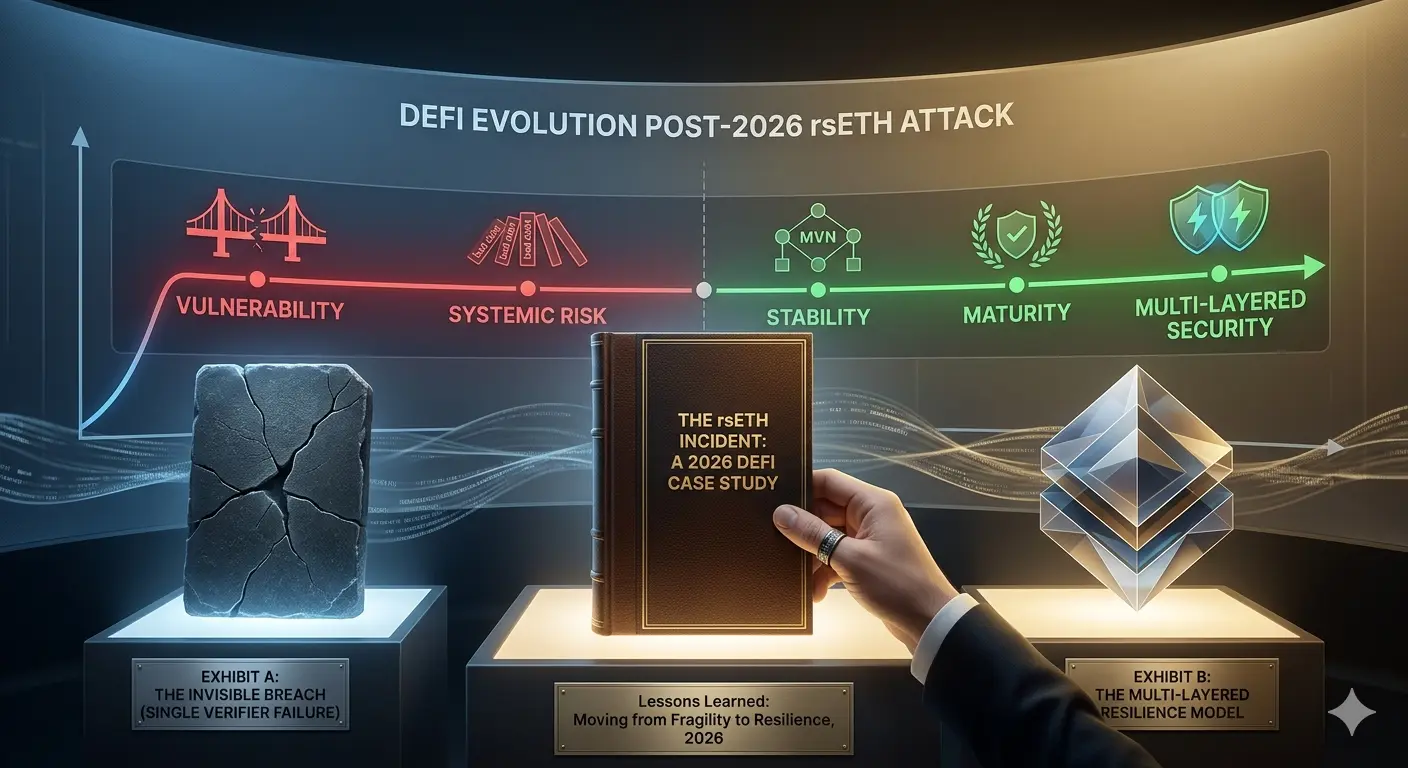
#rsETHAttackUpdate
The rsETH attack has quickly become one of the most important events in the 2026 crypto landscape, not just because of the massive financial impact but because of what it revealed about hidden risks inside DeFi infrastructure, and to truly understand this situation, it is necessary to break it down step by step, because on the surface it looks like just another hack, but in reality it represents a deeper structural weakness that affects cross-chain systems, lending protocols, and the entire concept of composability that DeFi is built upon.
The first step in understanding th
Vortex_King
#rsETHAttackUpdate
The rsETH attack has quickly become one of the most important events in the 2026 crypto landscape, not just because of the massive financial impact but because of what it revealed about hidden risks inside DeFi infrastructure, and to truly understand this situation, it is necessary to break it down step by step, because on the surface it looks like just another hack, but in reality it represents a deeper structural weakness that affects cross-chain systems, lending protocols, and the entire concept of composability that DeFi is built upon.
The first step in understanding this attack is identifying what actually happened, and the core event took place on April 18, 2026, when attackers exploited KelpDAO’s rsETH bridge system and managed to extract approximately $292 million worth of assets, which makes it one of the largest DeFi exploits of the year, and what makes this incident particularly dangerous is that it was not a traditional smart contract hack, meaning there was no obvious bug in the code, but instead the attackers targeted the off-chain infrastructure that supports the protocol, which is a much harder type of vulnerability to detect and defend against.
The second step is understanding the technical root cause of the exploit, which centers around the concept of a single point of failure, because the rsETH bridge relied on a 1-of-1 verification system known as a DVN, meaning only one verifier was responsible for approving cross-chain messages, and this design choice created a critical weakness, because if that single verifier could be manipulated, the entire system could be tricked into accepting false data, and that is exactly what the attackers achieved by compromising the data sources used by the verifier rather than attacking the verifier itself.
The third step involves analyzing how the attackers executed the exploit, which was highly sophisticated and involved multiple layers of manipulation, because they first gained control over certain RPC nodes that feed data into the verification system, and then launched DDoS attacks on other legitimate nodes to force the system to rely only on the compromised ones, effectively creating a false reality where the system believed that tokens had been burned on another chain when in fact no such transaction had occurred, and this allowed the attackers to mint or release unbacked rsETH tokens out of thin air.
The fourth step is understanding the scale of the damage, because the attackers were able to generate approximately 116,500 rsETH tokens, which represented a significant portion of the circulating supply, and these tokens were essentially unbacked, meaning they had no real value behind them, but because the system treated them as legitimate, they could be used across DeFi protocols as if they were real assets, which created a cascading effect across multiple platforms.
The fifth step is analyzing what the attackers did next, which highlights a key evolution in hacking strategies, because instead of immediately selling the stolen tokens on the open market, which would have caused price collapse and reduced profits, they used the unbacked rsETH as collateral on lending platforms such as Aave, allowing them to borrow real assets like ETH against fake collateral, and this strategy enabled them to extract hundreds of millions in real value while leaving the system with worthless collateral.
The sixth step is examining the impact on lending protocols, particularly Aave, because the use of unbacked rsETH as collateral created a massive amount of bad debt within the system, estimated to be over $170 million, and this situation is particularly dangerous because lending protocols rely on the assumption that collateral has real value, so when that assumption breaks, the entire system faces instability, and depositors may ultimately bear the losses if recovery mechanisms are not sufficient.
The seventh step is understanding the systemic risk revealed by this incident, because DeFi is built on interconnected protocols, meaning one failure can spread across the ecosystem, and in this case, the failure of a bridge system led to issues in lending markets, liquidity pools, and cross-chain operations, showing that composability, while powerful, also introduces new forms of risk that are not always fully understood or accounted for by users and developers.
The eighth step is analyzing the response from the ecosystem, which was relatively سريع but still not fast enough to prevent the initial damage, because KelpDAO paused its contracts within about 46 minutes of the attack, preventing further losses, and additional actions were taken by various entities including freezing certain funds and coordinating with security teams, and more recently, major DeFi protocols have come together to launch recovery initiatives aimed at covering losses and stabilizing the system.
The ninth step is evaluating the role of security architecture in this incident, because one of the most important lessons is that relying on a single verifier or a single layer of security is no longer acceptable for high-value systems, and modern DeFi infrastructure must adopt multi-layered verification mechanisms, such as multiple independent validators, cross-checking systems, and continuous monitoring of cross-chain activity, to reduce the risk of similar exploits in the future.
The tenth step is understanding why this attack is more dangerous than traditional hacks, because it bypassed on-chain detection systems entirely, meaning that from the blockchain’s perspective, all transactions appeared valid, and this highlights a growing challenge in crypto security, where attacks target the assumptions and external dependencies of systems rather than their internal logic, making them harder to detect and prevent using traditional tools.
The eleventh step is analyzing market sentiment following the attack, because such events typically create fear and uncertainty, leading to short-term volatility in related assets, especially those connected to DeFi and cross-chain ecosystems, and traders often react by reducing exposure to riskier assets, increasing demand for more secure and established tokens, and reassessing the safety of protocols they interact with, which can lead to broader market shifts beyond the immediate impact of the exploit.
The twelfth step is identifying key lessons for traders and investors, because events like this highlight the importance of understanding not just the assets you hold but also the infrastructure behind them, and this includes evaluating the security of bridges, the reliability of collateral assets, and the risk management practices of protocols, as blindly trusting high yields or popular platforms without analyzing their underlying systems can lead to significant losses.
The thirteenth step is considering the long-term implications for the DeFi industry, because while this incident has exposed serious vulnerabilities, it also provides an opportunity for improvement, as developers and protocols are now more aware of the risks associated with cross-chain systems and are likely to implement stronger security measures, and over time, this can lead to a more robust and resilient ecosystem, although the transition period may involve increased caution and slower growth.
The fourteenth step is understanding the role of coordination and recovery efforts, because unlike traditional finance, DeFi relies heavily on community and protocol cooperation to resolve crises, and the formation of initiatives to cover losses and stabilize affected systems shows that the industry is capable of responding collectively, although the effectiveness of these efforts will depend on execution and transparency in the coming weeks.
The fifteenth and final step is forming a strategic perspective moving forward, because traders and investors must adapt to the evolving risk landscape by diversifying their exposure, avoiding overreliance on single protocols, and maintaining a strong focus on risk management, as the potential for high returns in DeFi always comes with underlying risks that must be carefully managed rather than ignored.
In conclusion, the rsETH attack is not just a single घटना but a defining moment that highlights the hidden complexities and risks within the DeFi ecosystem, and while the immediate financial impact is significant, the deeper lesson lies in understanding how interconnected systems can fail and how important it is to build stronger, more resilient infrastructure, and for traders, developers, and investors alike, this incident serves as a reminder that success in crypto is not just about chasing opportunities but about understanding and managing risk at every level.
repost-content-media
  • Reward
  • Comment
  • Repost
  • Share
#US-IranTalksStall
#美伊谈判陷入僵局
The current geopolitical situation between the United States and Iran has entered a highly sensitive phase where negotiations appear stalled and tensions are rising across multiple fronts, and to properly analyze the situation it is important to move step by step because surface-level headlines often exaggerate immediate risks while ignoring the deeper strategic calculations being made by both sides, which ultimately determine whether the situation escalates into open conflict or remains within controlled tension boundaries that influence global markets without tr
Vortex_King
#US-IranTalksStall
#美伊谈判陷入僵局
The current geopolitical situation between the United States and Iran has entered a highly sensitive phase where negotiations appear stalled and tensions are rising across multiple fronts, and to properly analyze the situation it is important to move step by step because surface-level headlines often exaggerate immediate risks while ignoring the deeper strategic calculations being made by both sides, which ultimately determine whether the situation escalates into open conflict or remains within controlled tension boundaries that influence global markets without triggering full-scale disruption.
The first step in this discussion is understanding the nature of the current deadlock in negotiations, because what appears as a breakdown is often a strategic pause where both sides attempt to strengthen their bargaining positions, and Iran signaling military readiness while the United States increases regional deployments does not necessarily mean war is imminent, but rather reflects a classic pressure tactic where each side tries to gain leverage before returning to the negotiating table, and historically such standoffs have often resulted in temporary escalations followed by renewed dialogue rather than immediate conflict.
The second step is evaluating whether a ceasefire or diplomatic framework is likely to collapse, and here it is important to consider that both the United States and Iran have strong incentives to avoid full-scale war, as such a conflict would carry enormous economic, political, and military costs for both sides, which suggests that while tensions may increase and isolated incidents could occur, a complete breakdown of ceasefire conditions is less likely in the short term unless triggered by an unexpected event such as a direct confrontation or miscalculation in the region.
The third step is analyzing the strategic importance of the Strait of Hormuz, because this narrow waterway is one of the most critical النفط chokepoints in the world, with a significant portion of global oil supply passing through it ежедневно, and any disruption in this area would have immediate and far-reaching consequences for energy markets, but at the same time, blocking the Strait completely would be an extreme measure that could provoke a large-scale international response, making it more likely that any escalation would involve partial disruptions, increased inspections, or targeted incidents rather than a full blockade.
The fourth step is assessing the probability of the Strait of Hormuz being blocked, and while the risk has increased due to heightened tensions, a complete and sustained blockade remains a low-probability scenario because it would not only harm global markets but also severely impact Iran’s own economic interests, as its oil exports depend on the same route, so a more realistic scenario involves temporary disruptions, heightened security risks for tankers, and increased insurance costs, all of which can still significantly influence oil prices without requiring a full closure of the passage.
The fifth step is examining how oil prices are likely to react if the conflict escalates further, because oil markets are highly sensitive to geopolitical risks, and even the perception of potential disruption can drive prices higher, and in a scenario where tensions intensify, we can expect a sharp spike in oil prices due to supply uncertainty, followed by continued volatility as traders react to new developments, and if actual disruptions occur, prices could enter a sustained upward trend driven by reduced supply and increased risk premiums.
The sixth step is understanding the broader impact on global financial markets, because rising oil prices often lead to increased inflationary pressure, which can influence central bank policies, currency valuations, and equity markets, and in such an environment, risk assets like cryptocurrencies and stocks may initially face selling pressure as investors move towards safer assets, but over time, certain sectors such as energy and commodities may benefit from the situation, creating a mixed and highly dynamic market environment.
The seventh step is analyzing trader sentiment during such geopolitical tensions, because markets are not driven purely by fundamentals but also by perception and emotion, and during periods of uncertainty, fear tends to dominate, leading to rapid shifts in capital allocation, and traders often react to headlines rather than confirmed developments, which can create exaggerated price movements and short-term trading opportunities for those who are able to remain calm and analyze the situation objectively.
The eighth step is considering different possible scenarios and their outcomes, because the future path of this situation depends on how events unfold, and in a de-escalation scenario where negotiations resume and tensions ease, oil prices may stabilize or decline, and global markets could recover as risk appetite returns, while in a moderate escalation scenario involving limited disruptions, oil prices may remain elevated with continued volatility, and in a worst-case scenario involving direct conflict or major disruptions in the Strait of Hormuz, we could see a significant and sustained increase in oil prices along with widespread impact on global markets.
The ninth step is focusing on risk management for traders and investors, because geopolitical events are inherently unpredictable, and attempting to predict exact outcomes can be risky, so instead it is important to prepare for multiple scenarios, manage exposure carefully, and avoid overleveraging positions based on speculative expectations, as sudden news developments can lead to rapid market reversals that catch unprepared traders off guard.
The tenth and final step is forming a balanced judgment based on all available information, and at present, the most likely outcome appears to be continued tension with intermittent escalations rather than immediate full-scale conflict or complete blockade of the Strait of Hormuz, but the situation remains fluid and can change quickly, which means traders and analysts must stay alert, continuously update their perspectives, and adapt their strategies as new information emerges.
In conclusion, the US-Iran situation represents a complex geopolitical chess game where both sides are carefully balancing pressure and restraint, and while the risks to oil markets and global financial systems are real, the probability of extreme outcomes remains relatively limited in the near term, making it essential for market participants to focus on structured analysis, disciplined decision-making, and flexible strategies in order to navigate the uncertainty effectively.
repost-content-media
  • Reward
  • Comment
  • Repost
  • Share
#TopCopyTradingScout
🏆 #跟单金牌星探 #GateCopyTrading – Deep Discussion on How to Participate and Win in Copy Trading Campaign
The idea behind this campaign is much bigger than just rewards, because it is designed to identify skilled traders, encourage community participation, and promote smarter copy trading practices, and to truly benefit from it, you need to understand that success here depends not only on activity but on the quality of your decisions, your ability to evaluate traders, and how effectively you present your experience, which means approaching it with a structured mindset rather t
Vortex_King
#TopCopyTradingScout
🏆 #跟单金牌星探 #GateCopyTrading – Deep Discussion on How to Participate and Win in Copy Trading Campaign
The idea behind this campaign is much bigger than just rewards, because it is designed to identify skilled traders, encourage community participation, and promote smarter copy trading practices, and to truly benefit from it, you need to understand that success here depends not only on activity but on the quality of your decisions, your ability to evaluate traders, and how effectively you present your experience, which means approaching it with a structured mindset rather than treating it as a random giveaway opportunity.
The first step is understanding what copy trading actually represents, because many participants jump in without fully grasping its mechanics, and copy trading is essentially a system where you replicate the trades of experienced traders automatically, allowing beginners to participate in the market without deep technical knowledge, but this does not mean it is risk-free, because your results depend entirely on the performance, discipline, and strategy of the trader you choose to follow, making the selection process the most critical factor in determining success.
The second step is learning how to identify top traders, which is the core requirement of the “Sharp Eyes Recognize Excellence” activity, because recommending traders is not about picking those with the highest recent profits but about analyzing consistency, risk management, and long-term performance, and strong traders usually show stable growth curves, controlled drawdowns, and disciplined position sizing rather than sudden spikes followed by heavy losses, which often indicate risky behavior that may not be sustainable over time.
The third step is evaluating trading strategies before recommending anyone, because different traders operate with different approaches such as scalping, swing trading, or long-term positioning, and each strategy carries its own risk profile, so it is important to understand whether a trader’s style matches your risk tolerance and market conditions, because a strategy that performs well in a trending market may fail in a ranging market, and recognizing this helps you make more informed and credible recommendations.
The fourth step is sharing your copy trading experience in a meaningful way, because simply stating that you followed a trader is not enough to stand out, and instead you should explain why you chose that trader, what results you observed, what challenges you faced, and what lessons you learned, as this level of detail adds value to your content and increases engagement, making your participation more impactful and more likely to be recognized.
The fifth step is understanding the “Strong Support” activity, which focuses on sharing screenshots and supporting expert traders, and while this may seem straightforward, the key to maximizing its value lies in context, because screenshots alone do not tell a complete story, so you should accompany them with explanations of the trades, the strategy behind them, and your personal insights, turning simple visuals into educational content that benefits others as well.
The sixth step is analyzing the role of social proof in copy trading, because when you share results and support traders publicly, you contribute to their visibility and credibility, and this creates a feedback loop where popular traders attract more followers, which can influence market dynamics and trading behavior, so it is important to ensure that the traders you promote genuinely demonstrate skill and discipline rather than just short-term success driven by luck or high-risk strategies.
The seventh step is leveraging the “Social Media Guru” activity effectively, because cross-posting content is not just about sharing links but about presenting your insights in a way that attracts attention and engagement, and this means using clear messaging, highlighting key takeaways, and creating content that resonates with a broader audience, as higher engagement increases your chances of earning rewards while also building your personal brand as a knowledgeable participant in the trading community.
The eighth step is understanding the importance of risk management in copy trading, because even when following experienced traders, losses are inevitable, and without proper risk control, a single bad trade can significantly impact your portfolio, so it is essential to diversify across multiple traders, allocate capital carefully, and avoid overexposure to any single strategy, ensuring that your overall risk remains manageable.
The ninth step is recognizing common mistakes that participants make, because many people focus only on rewards and ignore the underlying risks, leading them to follow traders blindly, chase high returns without understanding the strategy, or switch traders too frequently based on short-term performance, all of which can result in inconsistent results and unnecessary losses, so maintaining a disciplined and informed approach is crucial.
The tenth step is building a consistent participation strategy, because success in this campaign depends on sustained effort rather than one-time activity, and this means regularly analyzing traders, updating your recommendations, sharing new experiences, and engaging with the community, as consistency not only improves your chances of winning rewards but also enhances your understanding of the market and copy trading dynamics.
The eleventh step is focusing on learning and improvement, because beyond the rewards, this campaign offers an opportunity to develop valuable skills such as evaluating trading performance, understanding different strategies, and managing risk effectively, and by approaching it as a learning experience, you can gain insights that will benefit you long after the campaign ends.
The twelfth step is understanding the psychology behind copy trading, because emotions such as fear and greed can influence your decisions even when you are not directly trading, and for example, you may feel tempted to stop following a trader after a loss or increase your investment after a winning streak, both of which can lead to poor outcomes, so maintaining emotional discipline and sticking to a well-defined plan is essential.
The thirteenth step is creating high-quality content that stands out, because with many participants sharing posts, only those who provide real value and clear insights will gain attention, and this means writing in a structured paragraph style, explaining your reasoning step by step, and avoiding vague or generic statements, as detailed and thoughtful content is more likely to be recognized and rewarded.
The fourteenth step is building credibility within the community, because trust plays a significant role in how your recommendations are perceived, and by consistently sharing honest experiences, acknowledging both successes and failures, and providing balanced analysis, you can establish yourself as a reliable source of information, which increases engagement and influence.
The fifteenth and final step is approaching the campaign with a long-term mindset, because while the rewards are attractive, the real value lies in the experience and knowledge you gain, and by focusing on improving your skills, building connections, and understanding market behavior, you can turn this opportunity into a stepping stone for greater success in trading and investing.
In conclusion, participating in this copy trading campaign is not just about completing tasks but about developing a deeper understanding of trading dynamics, improving your decision-making process, and contributing valuable insights to the community, and those who approach it with a strategic and disciplined mindset will not only increase their chances of winning rewards but also gain long-term benefits that extend far beyond the campaign itself.
repost-content-media
  • Reward
  • Comment
  • Repost
  • Share
#TopCopyTradingScout
🏆 #跟单金牌星探 #GateCopyTrading – Deep Discussion on How to Participate and Win in Copy Trading Campaign
The idea behind this campaign is much bigger than just rewards, because it is designed to identify skilled traders, encourage community participation, and promote smarter copy trading practices, and to truly benefit from it, you need to understand that success here depends not only on activity but on the quality of your decisions, your ability to evaluate traders, and how effectively you present your experience, which means approaching it with a structured mindset rather t
Vortex_King
#TopCopyTradingScout
🏆 #跟单金牌星探 #GateCopyTrading – Deep Discussion on How to Participate and Win in Copy Trading Campaign
The idea behind this campaign is much bigger than just rewards, because it is designed to identify skilled traders, encourage community participation, and promote smarter copy trading practices, and to truly benefit from it, you need to understand that success here depends not only on activity but on the quality of your decisions, your ability to evaluate traders, and how effectively you present your experience, which means approaching it with a structured mindset rather than treating it as a random giveaway opportunity.
The first step is understanding what copy trading actually represents, because many participants jump in without fully grasping its mechanics, and copy trading is essentially a system where you replicate the trades of experienced traders automatically, allowing beginners to participate in the market without deep technical knowledge, but this does not mean it is risk-free, because your results depend entirely on the performance, discipline, and strategy of the trader you choose to follow, making the selection process the most critical factor in determining success.
The second step is learning how to identify top traders, which is the core requirement of the “Sharp Eyes Recognize Excellence” activity, because recommending traders is not about picking those with the highest recent profits but about analyzing consistency, risk management, and long-term performance, and strong traders usually show stable growth curves, controlled drawdowns, and disciplined position sizing rather than sudden spikes followed by heavy losses, which often indicate risky behavior that may not be sustainable over time.
The third step is evaluating trading strategies before recommending anyone, because different traders operate with different approaches such as scalping, swing trading, or long-term positioning, and each strategy carries its own risk profile, so it is important to understand whether a trader’s style matches your risk tolerance and market conditions, because a strategy that performs well in a trending market may fail in a ranging market, and recognizing this helps you make more informed and credible recommendations.
The fourth step is sharing your copy trading experience in a meaningful way, because simply stating that you followed a trader is not enough to stand out, and instead you should explain why you chose that trader, what results you observed, what challenges you faced, and what lessons you learned, as this level of detail adds value to your content and increases engagement, making your participation more impactful and more likely to be recognized.
The fifth step is understanding the “Strong Support” activity, which focuses on sharing screenshots and supporting expert traders, and while this may seem straightforward, the key to maximizing its value lies in context, because screenshots alone do not tell a complete story, so you should accompany them with explanations of the trades, the strategy behind them, and your personal insights, turning simple visuals into educational content that benefits others as well.
The sixth step is analyzing the role of social proof in copy trading, because when you share results and support traders publicly, you contribute to their visibility and credibility, and this creates a feedback loop where popular traders attract more followers, which can influence market dynamics and trading behavior, so it is important to ensure that the traders you promote genuinely demonstrate skill and discipline rather than just short-term success driven by luck or high-risk strategies.
The seventh step is leveraging the “Social Media Guru” activity effectively, because cross-posting content is not just about sharing links but about presenting your insights in a way that attracts attention and engagement, and this means using clear messaging, highlighting key takeaways, and creating content that resonates with a broader audience, as higher engagement increases your chances of earning rewards while also building your personal brand as a knowledgeable participant in the trading community.
The eighth step is understanding the importance of risk management in copy trading, because even when following experienced traders, losses are inevitable, and without proper risk control, a single bad trade can significantly impact your portfolio, so it is essential to diversify across multiple traders, allocate capital carefully, and avoid overexposure to any single strategy, ensuring that your overall risk remains manageable.
The ninth step is recognizing common mistakes that participants make, because many people focus only on rewards and ignore the underlying risks, leading them to follow traders blindly, chase high returns without understanding the strategy, or switch traders too frequently based on short-term performance, all of which can result in inconsistent results and unnecessary losses, so maintaining a disciplined and informed approach is crucial.
The tenth step is building a consistent participation strategy, because success in this campaign depends on sustained effort rather than one-time activity, and this means regularly analyzing traders, updating your recommendations, sharing new experiences, and engaging with the community, as consistency not only improves your chances of winning rewards but also enhances your understanding of the market and copy trading dynamics.
The eleventh step is focusing on learning and improvement, because beyond the rewards, this campaign offers an opportunity to develop valuable skills such as evaluating trading performance, understanding different strategies, and managing risk effectively, and by approaching it as a learning experience, you can gain insights that will benefit you long after the campaign ends.
The twelfth step is understanding the psychology behind copy trading, because emotions such as fear and greed can influence your decisions even when you are not directly trading, and for example, you may feel tempted to stop following a trader after a loss or increase your investment after a winning streak, both of which can lead to poor outcomes, so maintaining emotional discipline and sticking to a well-defined plan is essential.
The thirteenth step is creating high-quality content that stands out, because with many participants sharing posts, only those who provide real value and clear insights will gain attention, and this means writing in a structured paragraph style, explaining your reasoning step by step, and avoiding vague or generic statements, as detailed and thoughtful content is more likely to be recognized and rewarded.
The fourteenth step is building credibility within the community, because trust plays a significant role in how your recommendations are perceived, and by consistently sharing honest experiences, acknowledging both successes and failures, and providing balanced analysis, you can establish yourself as a reliable source of information, which increases engagement and influence.
The fifteenth and final step is approaching the campaign with a long-term mindset, because while the rewards are attractive, the real value lies in the experience and knowledge you gain, and by focusing on improving your skills, building connections, and understanding market behavior, you can turn this opportunity into a stepping stone for greater success in trading and investing.
In conclusion, participating in this copy trading campaign is not just about completing tasks but about developing a deeper understanding of trading dynamics, improving your decision-making process, and contributing valuable insights to the community, and those who approach it with a strategic and disciplined mindset will not only increase their chances of winning rewards but also gain long-term benefits that extend far beyond the campaign itself.
repost-content-media
  • Reward
  • Comment
  • Repost
  • Share
#TopCopyTradingScout
🏆 #跟单金牌星探 #GateCopyTrading – Deep Discussion on How to Participate and Win in Copy Trading Campaign
The idea behind this campaign is much bigger than just rewards, because it is designed to identify skilled traders, encourage community participation, and promote smarter copy trading practices, and to truly benefit from it, you need to understand that success here depends not only on activity but on the quality of your decisions, your ability to evaluate traders, and how effectively you present your experience, which means approaching it with a structured mindset rather t
Vortex_King
#TopCopyTradingScout
🏆 #跟单金牌星探 #GateCopyTrading – Deep Discussion on How to Participate and Win in Copy Trading Campaign
The idea behind this campaign is much bigger than just rewards, because it is designed to identify skilled traders, encourage community participation, and promote smarter copy trading practices, and to truly benefit from it, you need to understand that success here depends not only on activity but on the quality of your decisions, your ability to evaluate traders, and how effectively you present your experience, which means approaching it with a structured mindset rather than treating it as a random giveaway opportunity.
The first step is understanding what copy trading actually represents, because many participants jump in without fully grasping its mechanics, and copy trading is essentially a system where you replicate the trades of experienced traders automatically, allowing beginners to participate in the market without deep technical knowledge, but this does not mean it is risk-free, because your results depend entirely on the performance, discipline, and strategy of the trader you choose to follow, making the selection process the most critical factor in determining success.
The second step is learning how to identify top traders, which is the core requirement of the “Sharp Eyes Recognize Excellence” activity, because recommending traders is not about picking those with the highest recent profits but about analyzing consistency, risk management, and long-term performance, and strong traders usually show stable growth curves, controlled drawdowns, and disciplined position sizing rather than sudden spikes followed by heavy losses, which often indicate risky behavior that may not be sustainable over time.
The third step is evaluating trading strategies before recommending anyone, because different traders operate with different approaches such as scalping, swing trading, or long-term positioning, and each strategy carries its own risk profile, so it is important to understand whether a trader’s style matches your risk tolerance and market conditions, because a strategy that performs well in a trending market may fail in a ranging market, and recognizing this helps you make more informed and credible recommendations.
The fourth step is sharing your copy trading experience in a meaningful way, because simply stating that you followed a trader is not enough to stand out, and instead you should explain why you chose that trader, what results you observed, what challenges you faced, and what lessons you learned, as this level of detail adds value to your content and increases engagement, making your participation more impactful and more likely to be recognized.
The fifth step is understanding the “Strong Support” activity, which focuses on sharing screenshots and supporting expert traders, and while this may seem straightforward, the key to maximizing its value lies in context, because screenshots alone do not tell a complete story, so you should accompany them with explanations of the trades, the strategy behind them, and your personal insights, turning simple visuals into educational content that benefits others as well.
The sixth step is analyzing the role of social proof in copy trading, because when you share results and support traders publicly, you contribute to their visibility and credibility, and this creates a feedback loop where popular traders attract more followers, which can influence market dynamics and trading behavior, so it is important to ensure that the traders you promote genuinely demonstrate skill and discipline rather than just short-term success driven by luck or high-risk strategies.
The seventh step is leveraging the “Social Media Guru” activity effectively, because cross-posting content is not just about sharing links but about presenting your insights in a way that attracts attention and engagement, and this means using clear messaging, highlighting key takeaways, and creating content that resonates with a broader audience, as higher engagement increases your chances of earning rewards while also building your personal brand as a knowledgeable participant in the trading community.
The eighth step is understanding the importance of risk management in copy trading, because even when following experienced traders, losses are inevitable, and without proper risk control, a single bad trade can significantly impact your portfolio, so it is essential to diversify across multiple traders, allocate capital carefully, and avoid overexposure to any single strategy, ensuring that your overall risk remains manageable.
The ninth step is recognizing common mistakes that participants make, because many people focus only on rewards and ignore the underlying risks, leading them to follow traders blindly, chase high returns without understanding the strategy, or switch traders too frequently based on short-term performance, all of which can result in inconsistent results and unnecessary losses, so maintaining a disciplined and informed approach is crucial.
The tenth step is building a consistent participation strategy, because success in this campaign depends on sustained effort rather than one-time activity, and this means regularly analyzing traders, updating your recommendations, sharing new experiences, and engaging with the community, as consistency not only improves your chances of winning rewards but also enhances your understanding of the market and copy trading dynamics.
The eleventh step is focusing on learning and improvement, because beyond the rewards, this campaign offers an opportunity to develop valuable skills such as evaluating trading performance, understanding different strategies, and managing risk effectively, and by approaching it as a learning experience, you can gain insights that will benefit you long after the campaign ends.
The twelfth step is understanding the psychology behind copy trading, because emotions such as fear and greed can influence your decisions even when you are not directly trading, and for example, you may feel tempted to stop following a trader after a loss or increase your investment after a winning streak, both of which can lead to poor outcomes, so maintaining emotional discipline and sticking to a well-defined plan is essential.
The thirteenth step is creating high-quality content that stands out, because with many participants sharing posts, only those who provide real value and clear insights will gain attention, and this means writing in a structured paragraph style, explaining your reasoning step by step, and avoiding vague or generic statements, as detailed and thoughtful content is more likely to be recognized and rewarded.
The fourteenth step is building credibility within the community, because trust plays a significant role in how your recommendations are perceived, and by consistently sharing honest experiences, acknowledging both successes and failures, and providing balanced analysis, you can establish yourself as a reliable source of information, which increases engagement and influence.
The fifteenth and final step is approaching the campaign with a long-term mindset, because while the rewards are attractive, the real value lies in the experience and knowledge you gain, and by focusing on improving your skills, building connections, and understanding market behavior, you can turn this opportunity into a stepping stone for greater success in trading and investing.
In conclusion, participating in this copy trading campaign is not just about completing tasks but about developing a deeper understanding of trading dynamics, improving your decision-making process, and contributing valuable insights to the community, and those who approach it with a strategic and disciplined mindset will not only increase their chances of winning rewards but also gain long-term benefits that extend far beyond the campaign itself.
repost-content-media
  • Reward
  • Comment
  • Repost
  • Share
#TopCopyTradingScout
🏆 #跟单金牌星探 #GateCopyTrading – Deep Discussion on How to Participate and Win in Copy Trading Campaign
The idea behind this campaign is much bigger than just rewards, because it is designed to identify skilled traders, encourage community participation, and promote smarter copy trading practices, and to truly benefit from it, you need to understand that success here depends not only on activity but on the quality of your decisions, your ability to evaluate traders, and how effectively you present your experience, which means approaching it with a structured mindset rather t
Vortex_King
#TopCopyTradingScout
🏆 #跟单金牌星探 #GateCopyTrading – Deep Discussion on How to Participate and Win in Copy Trading Campaign
The idea behind this campaign is much bigger than just rewards, because it is designed to identify skilled traders, encourage community participation, and promote smarter copy trading practices, and to truly benefit from it, you need to understand that success here depends not only on activity but on the quality of your decisions, your ability to evaluate traders, and how effectively you present your experience, which means approaching it with a structured mindset rather than treating it as a random giveaway opportunity.
The first step is understanding what copy trading actually represents, because many participants jump in without fully grasping its mechanics, and copy trading is essentially a system where you replicate the trades of experienced traders automatically, allowing beginners to participate in the market without deep technical knowledge, but this does not mean it is risk-free, because your results depend entirely on the performance, discipline, and strategy of the trader you choose to follow, making the selection process the most critical factor in determining success.
The second step is learning how to identify top traders, which is the core requirement of the “Sharp Eyes Recognize Excellence” activity, because recommending traders is not about picking those with the highest recent profits but about analyzing consistency, risk management, and long-term performance, and strong traders usually show stable growth curves, controlled drawdowns, and disciplined position sizing rather than sudden spikes followed by heavy losses, which often indicate risky behavior that may not be sustainable over time.
The third step is evaluating trading strategies before recommending anyone, because different traders operate with different approaches such as scalping, swing trading, or long-term positioning, and each strategy carries its own risk profile, so it is important to understand whether a trader’s style matches your risk tolerance and market conditions, because a strategy that performs well in a trending market may fail in a ranging market, and recognizing this helps you make more informed and credible recommendations.
The fourth step is sharing your copy trading experience in a meaningful way, because simply stating that you followed a trader is not enough to stand out, and instead you should explain why you chose that trader, what results you observed, what challenges you faced, and what lessons you learned, as this level of detail adds value to your content and increases engagement, making your participation more impactful and more likely to be recognized.
The fifth step is understanding the “Strong Support” activity, which focuses on sharing screenshots and supporting expert traders, and while this may seem straightforward, the key to maximizing its value lies in context, because screenshots alone do not tell a complete story, so you should accompany them with explanations of the trades, the strategy behind them, and your personal insights, turning simple visuals into educational content that benefits others as well.
The sixth step is analyzing the role of social proof in copy trading, because when you share results and support traders publicly, you contribute to their visibility and credibility, and this creates a feedback loop where popular traders attract more followers, which can influence market dynamics and trading behavior, so it is important to ensure that the traders you promote genuinely demonstrate skill and discipline rather than just short-term success driven by luck or high-risk strategies.
The seventh step is leveraging the “Social Media Guru” activity effectively, because cross-posting content is not just about sharing links but about presenting your insights in a way that attracts attention and engagement, and this means using clear messaging, highlighting key takeaways, and creating content that resonates with a broader audience, as higher engagement increases your chances of earning rewards while also building your personal brand as a knowledgeable participant in the trading community.
The eighth step is understanding the importance of risk management in copy trading, because even when following experienced traders, losses are inevitable, and without proper risk control, a single bad trade can significantly impact your portfolio, so it is essential to diversify across multiple traders, allocate capital carefully, and avoid overexposure to any single strategy, ensuring that your overall risk remains manageable.
The ninth step is recognizing common mistakes that participants make, because many people focus only on rewards and ignore the underlying risks, leading them to follow traders blindly, chase high returns without understanding the strategy, or switch traders too frequently based on short-term performance, all of which can result in inconsistent results and unnecessary losses, so maintaining a disciplined and informed approach is crucial.
The tenth step is building a consistent participation strategy, because success in this campaign depends on sustained effort rather than one-time activity, and this means regularly analyzing traders, updating your recommendations, sharing new experiences, and engaging with the community, as consistency not only improves your chances of winning rewards but also enhances your understanding of the market and copy trading dynamics.
The eleventh step is focusing on learning and improvement, because beyond the rewards, this campaign offers an opportunity to develop valuable skills such as evaluating trading performance, understanding different strategies, and managing risk effectively, and by approaching it as a learning experience, you can gain insights that will benefit you long after the campaign ends.
The twelfth step is understanding the psychology behind copy trading, because emotions such as fear and greed can influence your decisions even when you are not directly trading, and for example, you may feel tempted to stop following a trader after a loss or increase your investment after a winning streak, both of which can lead to poor outcomes, so maintaining emotional discipline and sticking to a well-defined plan is essential.
The thirteenth step is creating high-quality content that stands out, because with many participants sharing posts, only those who provide real value and clear insights will gain attention, and this means writing in a structured paragraph style, explaining your reasoning step by step, and avoiding vague or generic statements, as detailed and thoughtful content is more likely to be recognized and rewarded.
The fourteenth step is building credibility within the community, because trust plays a significant role in how your recommendations are perceived, and by consistently sharing honest experiences, acknowledging both successes and failures, and providing balanced analysis, you can establish yourself as a reliable source of information, which increases engagement and influence.
The fifteenth and final step is approaching the campaign with a long-term mindset, because while the rewards are attractive, the real value lies in the experience and knowledge you gain, and by focusing on improving your skills, building connections, and understanding market behavior, you can turn this opportunity into a stepping stone for greater success in trading and investing.
In conclusion, participating in this copy trading campaign is not just about completing tasks but about developing a deeper understanding of trading dynamics, improving your decision-making process, and contributing valuable insights to the community, and those who approach it with a strategic and disciplined mindset will not only increase their chances of winning rewards but also gain long-term benefits that extend far beyond the campaign itself.
repost-content-media
  • Reward
  • 2
  • Repost
  • Share
CryptoDiscovery:
To The Moon 🌕
View More
#OpenAIReleasesGPT-5.5
The release of GPT-5.5 marks a major turning point in the evolution of artificial intelligence, not just as another incremental upgrade but as a shift toward what many are calling agentic AI, where systems are no longer passive responders but active problem-solvers capable of handling complex, multi-step tasks with minimal human guidance, and to truly understand its impact, it is necessary to break down this development step by step because beneath the headlines lies a deeper transformation in how humans interact with technology and how digital work itself is being rede
Vortex_King
#OpenAIReleasesGPT-5.5
The release of GPT-5.5 marks a major turning point in the evolution of artificial intelligence, not just as another incremental upgrade but as a shift toward what many are calling agentic AI, where systems are no longer passive responders but active problem-solvers capable of handling complex, multi-step tasks with minimal human guidance, and to truly understand its impact, it is necessary to break down this development step by step because beneath the headlines lies a deeper transformation in how humans interact with technology and how digital work itself is being redefined.
The first step is understanding what GPT-5.5 actually represents, because it is not simply a faster or smarter version of previous models but a system designed for real-world execution, meaning it can plan tasks, use tools, verify its own outputs, and continue working toward a goal without constant prompting, which positions it closer to a digital assistant that can think through problems rather than just answer questions.
The second step is analyzing the improvements in reasoning and intelligence, because GPT-5.5 introduces stronger multi-step thinking capabilities, allowing it to break down complex problems into smaller parts, solve them sequentially, and refine its own results, which is a significant leap from earlier models that often required detailed prompts for each stage of a task, and this improvement makes it far more useful for domains like coding, research, and advanced analysis.
The third step is examining its performance in coding and technical tasks, which is one of the most highlighted upgrades, as GPT-5.5 shows major improvements in debugging, writing code, and executing command-line operations, even outperforming competing models on key benchmarks, and this capability is already being integrated into tools like Codex and enterprise workflows, demonstrating its practical value beyond theoretical performance.
The fourth step is understanding its role in automation and productivity, because GPT-5.5 is designed to handle workflows rather than isolated tasks, meaning it can assist with writing documents, conducting research, organizing data, and even planning projects, all within a single interaction, which moves AI closer to becoming a “digital coworker” rather than just a tool, fundamentally changing how individuals and businesses approach daily work.
The fifth step is evaluating its efficiency and cost structure, because despite being more powerful, GPT-5.5 is optimized to use fewer tokens in many scenarios, making it more efficient in real-world usage, and while API pricing has increased compared to earlier versions, improvements in output efficiency help balance the overall cost, which is particularly important for developers and enterprises scaling AI applications.
The sixth step is analyzing benchmark performance and competitive positioning, because GPT-5.5 currently leads several major AI benchmarks and has regained a leading position in the ongoing competition between top AI labs, surpassing models from rivals in areas like reasoning, coding, and real-world task execution, which highlights the rapid pace of innovation and the increasingly competitive nature of the AI industry.
The seventh step is understanding the concept of “agentic AI,” which is central to GPT-5.5’s design philosophy, because the model is built to act more independently by planning actions, using tools, and iterating on results, and this represents a shift from reactive AI to proactive AI systems that can handle complex workflows with minimal human intervention, potentially transforming industries that rely on knowledge work.
The eighth step is examining safety and risk management improvements, because as AI capabilities increase, so do potential risks, and GPT-5.5 has been developed with enhanced safeguards, including extensive red-teaming, targeted testing for sensitive domains like cybersecurity and biology, and stricter monitoring frameworks, reflecting a growing focus on responsible deployment alongside capability growth.
The ninth step is recognizing the limitations that still exist, because despite its advancements, GPT-5.5 is not perfect, and issues like hallucinations—where the model generates confident but incorrect information—still persist, although improvements have been made, and this means users must continue to verify critical outputs, especially in high-stakes fields such as finance, law, and healthcare.
The tenth step is analyzing real-world adoption, because early integration into companies and platforms shows how quickly such models are being deployed, with organizations already using GPT-5.5 to enhance productivity, automate workflows, and improve decision-making processes, indicating that the gap between research and practical application is shrinking rapidly.
The eleventh step is understanding its availability and rollout strategy, because GPT-5.5 is being introduced primarily to paid tiers such as Plus, Pro, Business, and Enterprise users, reflecting a strategy where advanced capabilities are initially targeted toward professional and high-value use cases before broader distribution.
The twelfth step is evaluating its impact on the global AI race, because the release comes amid intense competition from companies developing rival models, and each new launch pushes the boundaries further, accelerating innovation while also raising questions about regulation, ethics, and long-term societal impact, as AI systems become increasingly powerful and integrated into everyday life.
The thirteenth step is considering its economic implications, because AI models like GPT-5.5 are not just technological tools but economic drivers that can reshape industries, reduce operational costs, and create new opportunities, while also potentially disrupting traditional job roles, making it essential for individuals and organizations to adapt to this changing landscape.
The fourteenth step is exploring its future trajectory, because GPT-5.5 is not the final destination but part of a continuous evolution toward more advanced systems, and each iteration brings us closer to AI that can operate autonomously across multiple domains, suggesting that future models may further blur the line between human and machine capabilities in knowledge work.
The fifteenth and final step is forming a broader conclusion about what this release represents, because GPT-5.5 is not just an upgrade but a signal that AI is transitioning from a supportive tool to a central component of digital workflows, and those who understand and adapt to this shift will be better positioned to leverage its capabilities, while those who ignore it may struggle to keep up in an increasingly AI-driven world.
In conclusion, #OpenAIReleasesGPT-5.5 is more than a trending topic—it is a milestone in the journey toward intelligent, autonomous systems that can think, plan, and execute tasks in ways that were previously unimaginable, and while challenges remain, the direction is clear: AI is becoming smarter, more integrated, and more essential to how we work and interact with technology.
repost-content-media
  • Reward
  • Comment
  • Repost
  • Share
#IntelandTexasInstrumentsSurge
The recent surge in semiconductor giants like Intel and Texas Instruments is not just a random market move, but a clear signal that the AI-driven chip cycle is entering a new phase, where demand is expanding beyond GPUs into CPUs, analog chips, and full data center infrastructure, and to fully understand this trend, it is essential to break it down step by step because the drivers behind this rally are deeply connected to technological shifts, institutional capital flows, and long-term industry transformation.
The first step is understanding the trigger behind t
Vortex_King
#IntelandTexasInstrumentsSurge
The recent surge in semiconductor giants like Intel and Texas Instruments is not just a random market move, but a clear signal that the AI-driven chip cycle is entering a new phase, where demand is expanding beyond GPUs into CPUs, analog chips, and full data center infrastructure, and to fully understand this trend, it is essential to break it down step by step because the drivers behind this rally are deeply connected to technological shifts, institutional capital flows, and long-term industry transformation.
The first step is understanding the trigger behind the surge, and the biggest catalyst came from Intel’s unexpectedly strong earnings and forward guidance, which showed that demand for its CPUs—especially in AI-related workloads—has surged far beyond expectations, pushing its stock to record highs not seen since the dot-com era, with gains of over 20% in a single session, signaling a major turnaround for a company that had struggled in previous years.
The second step is recognizing the shift in AI demand dynamics, because for years the AI boom was dominated by GPUs, but now the market is realizing that CPUs and supporting infrastructure are equally critical for AI inference, data processing, and deployment, which has brought companies like Intel back into the spotlight, as their chips are essential for running AI systems at scale rather than just training them.
The third step is analyzing how this momentum extended to Texas Instruments, because unlike Intel, which focuses on high-performance processors, Texas Instruments specializes in analog and embedded chips, and its surge is driven by a different but equally important factor—massive growth in data center infrastructure, where demand for power management, signal conversion, and connectivity components has increased sharply, with reports showing data center demand jumping as much as 90% year over year.
The fourth step is understanding the broader semiconductor rally, because this is not limited to just two companies, as the entire chip sector has been experiencing strong upward momentum, with semiconductor indices hitting record highs and multiple companies posting double-digit gains, indicating that investors are betting on a long-term AI supercycle rather than a short-term trend.
The fifth step is examining the role of institutional confidence, because large investors and analysts have significantly raised price targets and upgraded ratings for these companies following their earnings reports, reflecting growing belief that the current growth is sustainable, and this influx of institutional capital is one of the key drivers behind the rapid price appreciation.
The sixth step is analyzing the financial performance behind the rally, because both companies delivered strong fundamental results, with Texas Instruments showing accelerated revenue growth and earnings improvement after a slow period, while Intel demonstrated a powerful recovery driven by AI demand and improved operational efficiency, and this combination of strong earnings and positive outlook is what gives the rally credibility rather than making it purely speculative.
The seventh step is understanding the concept of an AI supercycle, because what we are witnessing is not just increased demand but a structural shift where AI is becoming integrated into every sector, including cloud computing, industrial automation, automotive systems, and robotics, and this creates sustained demand for a wide range of semiconductor products, from high-end processors to low-level analog components.
The eighth step is evaluating the role of supply and infrastructure expansion, because semiconductor companies are not only benefiting from demand but also investing heavily in expanding production capacity, with Intel reclaiming manufacturing assets and strengthening its foundry business, which positions it to capture more market share as demand continues to grow.
The ninth step is analyzing market sentiment, because the rally reflects a shift from skepticism to optimism, especially in Intel’s case, where investors are now seeing a credible turnaround story, and this change in perception often leads to rapid price revaluation as markets adjust expectations based on new information.
The tenth step is considering the risks associated with such rapid growth, because while the fundamentals are strong, sharp price increases can lead to overvaluation concerns, and some analysts have already cautioned that expectations may be running ahead of reality, which means any slowdown in demand or negative news could trigger corrections.
The eleventh step is understanding the competitive landscape, because companies like AMD, Nvidia, and others are also benefiting from the AI boom, and competition remains intense, which means that maintaining growth will require continuous innovation and strategic execution from both Intel and Texas Instruments.
The twelfth step is analyzing the long-term outlook, because despite short-term volatility, the overall trajectory for semiconductor companies remains positive, driven by the increasing adoption of AI technologies across industries, which suggests that the current rally may be part of a larger multi-year growth trend rather than a temporary spike.
The thirteenth step is focusing on trading implications, because for traders, such surges create both opportunities and risks, and while momentum can continue in the short term, entering after large price increases requires careful risk management, as pullbacks are common after strong rallies, especially in high-growth sectors.
The fourteenth step is identifying key levels and trends, because after such rapid gains, stocks often enter consolidation phases where they form new support and resistance levels, and monitoring these patterns can help traders determine whether the rally is continuing or losing strength.
The fifteenth and final step is forming a balanced conclusion, because the surge in Intel and Texas Instruments is a clear reflection of the expanding AI economy, where demand is no longer limited to a single segment but is spreading across the entire semiconductor value chain, creating opportunities for multiple players, but at the same time, the speed of the rally suggests that caution is necessary, as markets can quickly shift from optimism to correction.
In conclusion, #IntelandTexasInstrumentsSurge represents a powerful moment in the evolution of the tech market, where AI is driving a broad-based semiconductor boom, and while the long-term outlook remains strong, success in navigating this trend will depend on understanding both the opportunities and the risks, and approaching the market with a disciplined and informed strategy.
repost-content-media
  • Reward
  • Comment
  • Repost
  • Share
#Gate13thAnniversaryLive
The 13th anniversary celebration of Gate is more than just a milestone event, it represents a full-cycle reflection of how a crypto exchange evolves from a trading platform into a global ecosystem, and to truly understand the significance of this moment, it is important to break it down step by step because such events are not only symbolic but also strategic, shaping user engagement, market positioning, and future growth direction in a highly competitive industry where attention, trust, and innovation are constantly being tested.
The first step is understanding why a
Vortex_King
#Gate13thAnniversaryLive
The 13th anniversary celebration of Gate is more than just a milestone event, it represents a full-cycle reflection of how a crypto exchange evolves from a trading platform into a global ecosystem, and to truly understand the significance of this moment, it is important to break it down step by step because such events are not only symbolic but also strategic, shaping user engagement, market positioning, and future growth direction in a highly competitive industry where attention, trust, and innovation are constantly being tested.
The first step is understanding why anniversaries matter in the crypto space, because unlike traditional financial institutions, crypto platforms operate in a rapidly changing environment where survival itself is a sign of strength, and reaching a 13-year milestone signals resilience, adaptability, and the ability to navigate multiple market cycles including bull runs, crashes, regulatory shifts, and technological transformations, which builds confidence among users and investors.
The second step is analyzing the purpose behind a “live” anniversary event, because this format is not just for celebration but for real-time engagement, allowing users, traders, and the broader community to participate actively, and live events create a sense of urgency and excitement that recorded announcements cannot achieve, which helps platforms strengthen their connection with users while also promoting new campaigns, features, and opportunities.
The third step is examining the role of incentives in such events, because rewards, competitions, and giveaways are not random but carefully designed mechanisms to increase participation and activity, and by offering bonuses, trading competitions, and exclusive perks, the platform encourages users to engage more deeply, which increases trading volume, platform visibility, and overall ecosystem activity.
The fourth step is understanding how trading competitions tie into the anniversary narrative, because events like WCTC or copy trading campaigns are often integrated into these celebrations to create a competitive environment where users can showcase their skills while simultaneously contributing to platform growth, and this dual-purpose approach benefits both the users, who gain rewards and recognition, and the platform, which gains increased activity and exposure.
The fifth step is analyzing user psychology during such events, because limited-time campaigns create a sense of urgency that drives participation, and traders are more likely to take action when they feel they might miss out on opportunities, which is why deadlines, countdowns, and exclusive rewards play a crucial role in shaping user behavior, but at the same time, this environment can lead to impulsive decisions if not managed carefully.
The sixth step is evaluating the marketing strategy behind the anniversary, because large-scale events like this are designed to generate global attention, attract new users, and reinforce brand identity, and by combining social media campaigns, influencer collaborations, and community-driven content, the platform creates a multi-channel presence that amplifies its reach far beyond its existing user base.
The seventh step is understanding the importance of community building, because long-term success in crypto is heavily dependent on user loyalty and engagement, and anniversary events provide an opportunity to strengthen this connection by recognizing user contributions, encouraging participation, and creating a shared experience that reinforces a sense of belonging within the ecosystem.
The eighth step is analyzing the impact on trading activity, because such events often lead to increased market participation, higher trading volumes, and greater liquidity, which can create short-term opportunities for traders but also introduce higher volatility, making it important to approach the market with a clear strategy and risk management plan.
The ninth step is considering the role of innovation announcements, because anniversary events are often used as a platform to introduce new products, features, or partnerships, and these announcements can influence market sentiment and user behavior, especially if they signal future growth or improved functionality within the platform.
The tenth step is understanding the competitive landscape, because in a market with multiple exchanges competing for attention, large-scale events like a 13th anniversary serve as a way to differentiate and stand out, and by offering unique campaigns and engaging content, the platform positions itself as active, innovative, and user-focused.
The eleventh step is focusing on risk awareness for participants, because while the rewards and opportunities are attractive, it is important for traders to maintain discipline and avoid overtrading or taking excessive risks in pursuit of short-term gains, as the excitement of the event can sometimes lead to decisions that do not align with long-term trading strategies.
The twelfth step is analyzing long-term benefits for users, because beyond immediate rewards, participation in such events can provide valuable experience, exposure to different trading strategies, and opportunities to learn from other traders, which contributes to overall growth and development in the crypto space.
The thirteenth step is evaluating the role of content creation, because sharing experiences, strategies, and insights during the event not only increases engagement but also helps build personal branding within the community, and those who consistently provide value are more likely to gain recognition and influence over time.
The fourteenth step is understanding the global nature of the event, because crypto operates across borders, and such celebrations bring together participants from different regions, creating a diverse and dynamic environment where ideas, strategies, and perspectives are exchanged, enriching the overall experience.
The fifteenth and final step is forming a broader perspective on what this anniversary represents, because it is not just a celebration of the past but a signal of future direction, highlighting the platform’s commitment to growth, innovation, and community engagement, and for participants, it is an opportunity to be part of that journey while enhancing their own skills and presence in the crypto ecosystem.
In conclusion, #Gate13thAnniversaryLive is more than an event, it is a strategic moment that combines celebration, competition, and community building into a single experience, and those who approach it with a clear plan, disciplined mindset, and active participation will not only benefit from the rewards but also gain valuable insights and opportunities that extend beyond the event itself.
repost-content-media
  • Reward
  • Comment
  • Repost
  • Share
#Gate13thAnniversaryLive
The 13th anniversary of Gate is not just a celebration, it feels more like a checkpoint in a long journey where the crypto industry itself has evolved alongside the platform, and if you look closely, events like this are less about marking time and more about showing direction, because in a space where trends change rapidly and competition is intense, surviving and growing for over a decade signals something deeper—adaptability, strategic thinking, and a strong connection with users that goes beyond simple trading activity.
If we break this down from a different angle
Vortex_King
#Gate13thAnniversaryLive
The 13th anniversary of Gate is not just a celebration, it feels more like a checkpoint in a long journey where the crypto industry itself has evolved alongside the platform, and if you look closely, events like this are less about marking time and more about showing direction, because in a space where trends change rapidly and competition is intense, surviving and growing for over a decade signals something deeper—adaptability, strategic thinking, and a strong connection with users that goes beyond simple trading activity.
If we break this down from a different angle, the first thing to notice is how such events reshape user behavior, because whenever a major anniversary goes live, it creates a temporary ecosystem of heightened activity where traders, investors, and even beginners become more engaged than usual, not just because of rewards but because of the atmosphere itself, which blends excitement, competition, and curiosity, pushing people to explore features they might otherwise ignore in normal market conditions.
Another important layer is how the platform uses storytelling during these events, because a 13-year journey is filled with market cycles, from early adoption phases to major bull runs and deep bear markets, and by highlighting this history, the platform subtly reinforces trust, showing users that it has navigated uncertainty before and continues to evolve, which is a powerful message in an industry where many projects fail to survive even a few years.
Looking at the trading side, anniversary events often act like a catalyst for short-term market activity within the platform, because increased participation naturally leads to higher liquidity and faster price movements, and while this creates opportunities for traders to capitalize on volatility, it also introduces risk, especially for those who get carried away by the event-driven momentum without a clear plan, which is why disciplined traders treat such periods as strategic windows rather than emotional triggers.
From a psychological perspective, the energy of a live event changes how people think and act, because the combination of limited-time rewards, community buzz, and visible participation from others creates a sense of urgency that can be both motivating and dangerous, motivating in the sense that it encourages action and learning, but dangerous if it leads to impulsive decisions, which is why maintaining a calm and structured approach becomes even more important during such high-energy phases.
There is also a strong community dimension that often goes unnoticed, because events like this bring together users from different backgrounds, trading styles, and experience levels, creating an environment where ideas are exchanged, strategies are discussed, and experiences are shared, and this interaction adds depth to the event, turning it from a simple campaign into a collaborative experience where participants can learn from each other while competing at the same time.
Another interesting aspect is how these events highlight the evolution of crypto platforms themselves, because what started as simple exchanges are now multi-layered ecosystems offering trading, copy trading, competitions, staking, and more, and anniversary events showcase this transformation by integrating multiple features into a single experience, allowing users to interact with the platform in more dynamic and engaging ways.
From a strategic point of view, participating in such an event effectively requires more than just activity, it requires awareness, because not every opportunity needs to be taken and not every reward is worth the risk, so smart participants focus on areas where they have an edge, whether that is trading, content creation, or community engagement, and they build their participation around those strengths instead of trying to do everything at once.
It is also worth considering how these events contribute to personal growth, because beyond the immediate excitement and rewards, they provide a chance to test your skills in a more active environment, to observe how markets behave under increased participation, and to refine your strategies based on real-time feedback, which can be far more valuable than the rewards themselves if approached with the right mindset.
At the same time, there is a branding opportunity hidden within these celebrations, because those who actively share insights, strategies, and experiences during the event can position themselves as knowledgeable participants within the community, and over time, this visibility can turn into influence, which is something that extends far beyond the duration of the anniversary itself.
When you zoom out and look at the bigger picture, #Gate13thAnniversaryLive is not just about one platform or one event, it reflects how the crypto industry continues to grow and mature, blending technology, finance, and community into experiences that go beyond traditional markets, and this evolution is what makes such events significant, as they highlight both how far the industry has come and where it might be heading next.
In the end, the real value of participating in an event like this lies in how you approach it, because you can either treat it as a short-term opportunity driven by rewards and hype, or you can use it as a platform to learn, grow, and build your presence within the crypto space, and those who choose the second path are often the ones who gain the most, not just during the event, but long after it has ended.
repost-content-media
  • Reward
  • Comment
  • Repost
  • Share
#WCTCTradingKingPK
In the world of competitive trading, very few opportunities truly test both skill and mindset at the same time, and WCTC S8 stands out because it forces participants to move beyond isolated trades and into a complete system of thinking, execution, and communication, where success is not just measured by profit but by how clearly you understand your strategy, how consistently you apply it, and how effectively you share it with others, making participation itself a reflection of your overall trading maturity rather than just your short-term performance.
The first layer of mas
Vortex_King
#WCTCTradingKingPK
In the world of competitive trading, very few opportunities truly test both skill and mindset at the same time, and WCTC S8 stands out because it forces participants to move beyond isolated trades and into a complete system of thinking, execution, and communication, where success is not just measured by profit but by how clearly you understand your strategy, how consistently you apply it, and how effectively you share it with others, making participation itself a reflection of your overall trading maturity rather than just your short-term performance.
The first layer of mastering #WCTCTradingKingPK begins with understanding that trading in a competition environment is fundamentally different from trading alone, because here every decision is made under psychological pressure, where rankings, visibility, and comparison with others can influence behavior, and this often leads inexperienced participants to overtrade or take unnecessary risks, while disciplined traders focus on process over position, knowing that consistency over time is what ultimately defines success in such environments.
The next step is building a strategy that is not only profitable but repeatable, because in a volatile market, one good trade means very little if it cannot be replicated under similar conditions, and this is where structured thinking becomes essential, as traders must define their entry logic, confirmation signals, and exit rules with clarity, ensuring that each trade is based on a system rather than emotion, which allows them to maintain stability even when market conditions become unpredictable.
Equally important is the role of market context, because no strategy exists in isolation, and understanding whether the market is trending, consolidating, or reversing can significantly impact the effectiveness of any approach, which is why successful participants continuously analyze the broader environment before making decisions, adjusting their strategies accordingly instead of forcing trades in conditions where their edge is limited.
Another critical dimension is risk management, which acts as the foundation of long-term performance, because in a competition where volatility is high and opportunities appear constantly, the temptation to increase exposure can be strong, but those who survive and thrive are the ones who control their risk per trade, protect their capital, and avoid the trap of chasing quick gains, understanding that preserving capital is what allows them to stay in the game long enough to capitalize on high-probability setups.
As participation also involves sharing under #WCTCTradingKingPK, communication becomes a skill in itself, because explaining your strategy and experience forces you to think more clearly about your own decisions, and this process often reveals strengths and weaknesses that might otherwise go unnoticed, turning content creation into a tool for self-improvement rather than just a requirement for engagement.
There is also a strong psychological element tied to visibility, because when traders share their performance publicly, they become more aware of their actions, which can either improve discipline or create pressure depending on how they handle it, and those who treat public sharing as accountability tend to develop stronger habits, while those who focus too much on external validation may struggle with consistency.
The competitive aspect of WCTC S8 also highlights the importance of adaptability, because markets rarely behave in a predictable manner for extended periods, and strategies that work in one phase may fail in another, which means traders must remain flexible, continuously evaluating their performance and adjusting their approach based on changing conditions rather than sticking rigidly to a method that no longer fits the environment.
Another factor that separates top participants is their ability to balance trading and engagement, because while performance is crucial, visibility and interaction also play a role in overall success, and this requires time management and prioritization, ensuring that neither trading quality nor content value is compromised, which can be challenging but ultimately rewarding for those who manage it effectively.
From a learning perspective, participating in #WCTCTradingKingPK provides a unique opportunity to observe how other traders think and operate, because the shared strategies, experiences, and insights create a collective knowledge base that can accelerate growth, allowing participants to refine their own approaches by learning from both the successes and mistakes of others.
At the same time, it is important to remain independent in decision-making, because while learning from others is valuable, blindly following popular strategies can lead to losses, especially in a fast-moving market where conditions change quickly, so successful traders filter information carefully, adopting what aligns with their own system and ignoring what does not.
Another key element is consistency, because in a competition environment, short bursts of success are often overshadowed by long-term stability, and traders who maintain steady performance, controlled risk, and disciplined execution are more likely to achieve sustainable results than those who rely on occasional high-risk trades to boost their rankings.
As the competition progresses, patience becomes increasingly important, because early stages may be dominated by aggressive strategies that produce quick gains, but over time, these approaches often lead to drawdowns, allowing more disciplined participants to move ahead, which reinforces the idea that long-term thinking is more effective than short-term excitement.
Looking at the broader impact, #WCTCTradingKingPK is not just about winning rewards but about building a professional mindset, because the combination of trading, analysis, and communication mirrors the real-world demands of high-level trading, where success depends on a balance of technical skill, emotional control, and strategic thinking.
In the end, the true value of participating in WCTC S8 lies in the transformation it encourages, pushing traders to move beyond casual involvement and into a more structured and disciplined approach, where every trade, every post, and every decision contributes to a larger system of growth, and those who embrace this process are the ones who not only perform well in the competition but also develop the skills needed to succeed in the broader financial markets.
repost-content-media
  • Reward
  • Comment
  • Repost
  • Share
#CryptoMarketSeesVolatility #CryptoMarketSeesVolatility
The cryptocurrency market is once again moving through a phase of heightened volatility, and this environment is both an opportunity and a trap depending on how a trader approaches it, because volatility itself is not inherently bullish or bearish but rather a reflection of uncertainty, liquidity shifts, and aggressive positioning by market participants, which means understanding the structure behind these movements becomes far more important than simply reacting to price swings, as those who trade without context often get caught in fake
Vortex_King
#CryptoMarketSeesVolatility #CryptoMarketSeesVolatility
The cryptocurrency market is once again moving through a phase of heightened volatility, and this environment is both an opportunity and a trap depending on how a trader approaches it, because volatility itself is not inherently bullish or bearish but rather a reflection of uncertainty, liquidity shifts, and aggressive positioning by market participants, which means understanding the structure behind these movements becomes far more important than simply reacting to price swings, as those who trade without context often get caught in fake breakouts, sudden reversals, and emotional decision-making cycles that erode capital over time.
The first step in analyzing current volatility is understanding the broader market structure, because without identifying whether the market is trending, ranging, or transitioning, it becomes extremely difficult to make informed decisions, and at present, the market is showing characteristics of an unstable trend environment where sharp upward movements are followed by equally aggressive corrections, indicating that liquidity is being hunted on both sides, and this type of structure often suggests that large players are accumulating positions while retail traders are being shaken out through rapid fluctuations that create confusion and hesitation.
The second step is examining the role of macroeconomic and geopolitical influences, because the crypto market does not operate in isolation, and factors such as interest rate expectations, inflation data, global tensions, and institutional sentiment all play a role in shaping investor behavior, and during periods of uncertainty, capital tends to move more aggressively, leading to sudden spikes in volatility as traders reposition themselves based on new information or expectations, which is why staying aware of the broader economic landscape is essential for interpreting price action accurately rather than treating it as random movement.
The third step involves analyzing liquidity zones, which are key areas where price is likely to react strongly, because volatility is often driven by the market seeking liquidity above resistance levels and below support levels, and when these zones are breached, it triggers stop losses and liquidations that accelerate price movement, creating the sharp spikes and drops that define volatile conditions, and traders who understand this concept can position themselves more strategically by anticipating where liquidity is concentrated rather than chasing price after it has already moved.
The fourth step is identifying support and resistance levels with precision, because in a volatile market, these levels become even more critical as they act as decision points for both buyers and sellers, and strong support levels often lead to sharp bounces while strong resistance levels can trigger rapid rejections, but it is important to note that in high volatility environments, false breakouts are more common, which means traders should look for confirmation signals such as volume expansion or retests before committing to a position, rather than entering trades purely based on initial breakouts.
The fifth step is understanding trader sentiment, because volatility is closely linked to emotional extremes in the market, and when fear dominates, prices can drop rapidly as traders panic sell, while excessive greed can drive prices up quickly as traders chase momentum, and these emotional cycles create opportunities for disciplined traders who are able to remain calm and objective, buying when others are fearful and taking profits when others become overly optimistic, but this requires strong psychological control and a clear strategy to avoid being influenced by the crowd.
The sixth step is adapting trading strategies to suit volatile conditions, because strategies that work in stable markets may fail when volatility increases, and in such environments, shorter timeframes often become more effective as price moves quickly between levels, while risk management must be tightened to account for larger price swings, and traders may also need to reduce position sizes to maintain control over risk, as the probability of sudden reversals increases significantly during periods of high volatility.
The seventh step is implementing strict risk management, which becomes even more important in volatile markets, because the potential for both gains and losses is amplified, and this means using stop losses consistently, limiting the amount of capital risked on each trade, and avoiding excessive leverage that can lead to rapid liquidation, as many traders are tempted to increase leverage during volatile periods in an attempt to maximize profits, but this often results in the opposite outcome when the market moves unexpectedly.
The eighth step is recognizing the difference between healthy volatility and chaotic volatility, because not all volatility is the same, and healthy volatility occurs within a structured trend where price respects key levels and provides clear trading opportunities, while chaotic volatility is characterized by unpredictable and erratic movements that lack clear direction, making it difficult to apply traditional strategies, and identifying which type of volatility is present can help traders decide whether to be aggressive or cautious in their approach.
The ninth step is focusing on patience and discipline, because one of the biggest mistakes traders make during volatile periods is overtrading, driven by the desire to capitalize on every price movement, but this often leads to poor decision-making and increased losses, and instead, traders should wait for high-probability setups that align with their strategy, even if it means missing some opportunities, as preserving capital is more important than capturing every move in the market.
The tenth step is continuously evaluating performance and adjusting strategies, because volatility provides valuable feedback on what works and what does not, and by analyzing past trades, identifying mistakes, and refining strategies, traders can improve their ability to navigate similar conditions in the future, and this process of continuous learning is essential for long-term success in the crypto market, where conditions are constantly evolving and adaptability is a key advantage.
In conclusion, the current phase of volatility in the crypto market is a double-edged sword that offers significant opportunities for those who approach it with a structured and disciplined mindset, while posing substantial risks for those who rely on impulsive decisions and lack a clear strategy, and by understanding market structure, analyzing liquidity and key levels, adapting strategies to changing conditions, and maintaining strict risk management, traders can not only survive but thrive in volatile environments, turning uncertainty into opportunity and building a stronger foundation for future trading success.
repost-content-media
  • Reward
  • Comment
  • Repost
  • Share
#ETHMemeCoinFLORKSurges
#ETHMemeCoinFLORKSurges — Pro Trading Blueprint (Deep Dive)
What you’ve outlined is already a strong framework. Now let’s turn it into a professional-grade, deeply explained trading playbook—the kind experienced traders actually follow when dealing with high-volatility meme assets inside the Ethereum ecosystem.
This isn’t just about levels. It’s about understanding behavior, timing execution, and controlling risk under pressure.
---
📊 1. Current Market Snapshot — Understanding the Battlefield
Before placing a single trade, a professional trader reads context, not just
ETH-0,64%
Vortex_King
#ETHMemeCoinFLORKSurges
#ETHMemeCoinFLORKSurges — Pro Trading Blueprint (Deep Dive)
What you’ve outlined is already a strong framework. Now let’s turn it into a professional-grade, deeply explained trading playbook—the kind experienced traders actually follow when dealing with high-volatility meme assets inside the Ethereum ecosystem.
This isn’t just about levels. It’s about understanding behavior, timing execution, and controlling risk under pressure.
---
📊 1. Current Market Snapshot — Understanding the Battlefield
Before placing a single trade, a professional trader reads context, not just price.
Right now, FLORK has shown a classic three-stage structure:
An impulsive vertical pump
A sharp pullback (profit-taking phase)
A stabilization range (decision zone)
The defined intraday range:
High ≈ 1.54e-05
Low ≈ 1.00e-05
This range is extremely important because it represents where buyers and sellers previously agreed on value.
In trading psychology terms:
The top (1.54e-05) = where sellers became dominant
The bottom (1.00e-05) = where buyers defended aggressively
Now price is compressing between these zones, meaning: 👉 The market is preparing for its next expansion move
This is exactly the phase where professionals position themselves—not during hype, but during stabilization.
---
🎯 2. Live Chart-Style Zones — The Real Logic Behind Levels
These zones are not random numbers. Each one represents liquidity, psychology, and order flow.
---
🟢 SUPPORT ZONES — Where Demand Lives
🔹 S1 – Immediate Support (1.08e-05 – 1.12e-05)
This is a micro support zone, formed during short-term consolidation.
What’s happening here:
Scalpers and short-term traders are actively buying dips
Small liquidity clusters are forming
Price reacts quickly but doesn’t stay long
This zone is not strong enough for long-term holds, but perfect for: 👉 Quick reaction trades (scalping)
If price keeps bouncing here repeatedly, it signals: ➡️ Buyers are still active
➡️ Momentum is not dead yet
---
🔹 S2 – Strong Pullback Zone (0.98e-05 – 1.05e-05)
This is the most important zone in the entire structure.
Why?
Because it aligns with:
Previous demand area
Psychological round level (~1.00e-05)
High-volume accumulation zone
This is where: 👉 Smart money typically enters
👉 Weak hands already exited
When price returns here, two things happen:
1. Retail panics (“it’s dumping”)
2. Professionals accumulate quietly
That’s why this is your: ✅ Best swing entry zone
---
🔹 S3 – Deep Support (0.85e-05 – 0.95e-05)
This is a make-or-break zone.
If price reaches here:
Either strong reversal (capitulation bounce)
Or full trend breakdown
This zone represents: 👉 Maximum fear in the market
Only experienced traders operate here because:
Volatility is extreme
Direction is uncertain
---
🔴 RESISTANCE ZONES — Where Supply Takes Over
---
🔹 R1 – Local Resistance (1.30e-05 – 1.35e-05)
This is where price previously failed to continue upward.
Meaning:
Sellers are waiting here
Early buyers take profits here
If price approaches this zone again: 👉 Expect hesitation or rejection
Only a high-volume breakout can clear this level.
---
🔹 R2 – Breakout Zone (1.50e-05 – 1.60e-05)
This is the gateway to continuation.
Why it matters:
Previous high = strong psychological barrier
Break above = new bullish leg
If this level breaks cleanly: 👉 It signals trend continuation, not just a bounce
---
🔹 R3 – Euphoria Zone (1.80e-05 – 2.10e-05)
This is where:
Retail FOMO peaks
Smart money exits
This zone is driven by emotion, not logic.
Professionals don’t buy here—they: 👉 Sell into strength
---
🚀 3. Trade Setups — Turning Analysis into Action
Now we convert structure into real executable trades.
---
✅ SETUP 1: Safe Swing Trade
This is the highest probability setup.
Entry:
1.00e-05 – 1.05e-05
You’re buying:
Near strong support
After panic selling
Before momentum returns
---
Stop Loss:
0.92e-05
This is placed:
Below structure
Where your trade idea becomes invalid
---
Take Profit Strategy:
TP1: 1.30e-05 → reduce risk
TP2: 1.50e-05 → secure gains
TP3: 1.80e-05 → maximize move
---
Deep Logic:
This trade works because:
You’re entering where risk is lowest
You’re exiting where others get greedy
👉 That’s professional positioning
---
⚡ SETUP 2: Breakout Trade
This is a momentum-based strategy.
Entry:
Above 1.35e-05, but ONLY if:
Strong volume
Clean candle close
---
Stop Loss:
1.25e-05
---
Take Profit:
TP1: 1.50e-05
TP2: 1.70e-05
TP3: 2.00e-05
---
Deep Logic:
You’re not predicting—you’re reacting.
This trade captures: 👉 Expansion phase after consolidation
But remember: ⚠️ Most breakouts fail without volume
---
🔥 SETUP 3: Scalping Strategy
This is for fast execution traders.
Entry:
Near 1.08e-05 bounce
---
Stop Loss:
1.03e-05
---
Take Profit:
1.15e-05 – 1.22e-05
---
Deep Logic:
You’re exploiting:
Small inefficiencies
Short-term reactions
This is not about big moves—it’s about: 👉 Consistency
---
🧠 4. Smart Money Behavior — Reading the Invisible
Markets don’t move randomly. Large players control flow.
Key signs of accumulation:
Sudden strong bounce from S2
High volume without news
Price refuses to drop further
This means: 👉 Big players are buying quietly
---
Bear Trap Insight
If price:
Dumps aggressively
Then recovers instantly
That’s a liquidity grab
It traps sellers, then: 👉 Price moves upward fast
---
⚠️ 5. Trap Zones — Where Most Traders Lose
Meme coins are designed to punish emotional trading.
---
❌ Avoid Buying:
Near 1.50e-05 resistance
During vertical green candles
Why?
Because: 👉 You’re buying from smart money, not with them
---
🚨 Fake Breakouts
Classic trap:
Price breaks resistance
No volume
Immediate rejection
Result: 👉 Retail loses, whales win
---
📊 6. Scenario Planning — Thinking Ahead
---
🟢 Bullish Case
If price:
Holds above 1.05e-05
Breaks 1.35e-05
Then: 👉 Momentum continues toward 2.00e-05+
---
🔴 Bearish Case
If price:
Breaks 0.98e-05
Then: 👉 Expect drop toward 0.85e-05
---
⚖️ 7. Risk Management — The Real Edge
Most traders fail here, not in analysis.
Rules:
Risk only 1–2% per trade
Never average down blindly
Always define exit before entry
---
Core Principle:
👉 Survival > Profit
---
🧩 8. Execution Plan — Professional Workflow
A disciplined trader follows process, not emotion:
1. Mark zones clearl
2. Wait patiently (no rush)
3. Confirm with:
Volume
Price behavio
4. Enter with plan
5. Set SL instantly
6. Take profits step-by-step
🧠 Final Edge Insight
FLORK behaves exactly like early runs of Dogecoin and Shiba Inu:
Explosive growth
Violent pullbacks
Emotion-driven moves
The difference between winners and losers is simple:
👉 Winners follow structure
👉 Losers follow hype
---
🏁 Closing Thought
This is not just a trade—it’s a probability game under uncertainty.
You don’t need to catch the whole move.
You just need to:
Enter smart
Manage risk
Exit with discipline
That’s how professionals extract profit from chaos.
repost-content-media
  • Reward
  • Comment
  • Repost
  • Share
#OpenAIReleasesGPT-5.5
1. Introduction: A New Era of AI Evolution
The release of GPT-5.5 marks a significant milestone in the evolution of artificial intelligence, signaling a shift from simple conversational models toward fully integrated digital intelligence systems. Unlike previous upgrades that focused mainly on incremental improvements, this release reflects a deeper transformation in how AI interacts with users, executes tasks, and integrates into daily workflows. OpenAI positions GPT-5.5 as its “smartest and most intuitive model yet,” emphasizing usability, reasoning, and real-world ap
Vortex_King
#OpenAIReleasesGPT-5.5
1. Introduction: A New Era of AI Evolution
The release of GPT-5.5 marks a significant milestone in the evolution of artificial intelligence, signaling a shift from simple conversational models toward fully integrated digital intelligence systems. Unlike previous upgrades that focused mainly on incremental improvements, this release reflects a deeper transformation in how AI interacts with users, executes tasks, and integrates into daily workflows. OpenAI positions GPT-5.5 as its “smartest and most intuitive model yet,” emphasizing usability, reasoning, and real-world application rather than just raw performance.
This transition is critical because it redefines AI not as a tool you occasionally consult, but as a persistent collaborator embedded in work, research, and decision-making processes. The implications extend beyond technology into economics, labor markets, and human productivity itself.
---
2. Core Release Overview: What Makes GPT-5.5 Different
At its core, GPT-5.5 introduces a blend of higher intelligence, better efficiency, and stronger task execution capabilities. The model builds upon previous versions but significantly enhances its ability to handle complex, multi-step problems without losing context. It is designed to perform not only isolated tasks but entire workflows, such as analyzing data, generating reports, and executing structured operations.
One of the defining characteristics is its ability to “stay on task longer”, meaning it can persist through complicated instructions and complete them without requiring repeated user intervention. This persistence represents a major step toward agent-like behavior, where AI can function semi-independently within defined boundaries.
---
3. Performance Breakthrough: Benchmarks and Capabilities
GPT-5.5 demonstrates strong performance across multiple benchmarks, particularly in areas that reflect real-world usefulness. For example, it achieves high scores in coding tasks, financial modeling, and general knowledge work, outperforming many competing models in these domains.
More importantly, these benchmarks are not just academic—they represent practical capabilities such as writing production-level code, analyzing large datasets, and generating structured business outputs. This makes GPT-5.5 especially valuable for enterprises and professionals who rely on efficiency and accuracy in high-stakes environments.
The model also shows improved tool usage, meaning it can interact with external systems more effectively. This includes generating spreadsheets, navigating workflows, and integrating with software tools, pushing it closer to functioning as a digital assistant rather than a text generator.
---
4. Agentic Behavior: From Tool to Digital Operator
One of the most important shifts in GPT-5.5 is its move toward agentic intelligence. This means the model is not just responding to prompts but actively understanding tasks, planning steps, and executing them.
In practical terms, this allows GPT-5.5 to:
Break down complex problems
Execute multi-step processes
Adapt its approach based on intermediate results
This behavior represents a major leap because it reduces the need for users to micromanage the AI. Instead of giving detailed instructions for every step, users can define goals, and the AI handles execution.
This shift is what many experts describe as the beginning of AI agents, systems that can operate autonomously within defined parameters.
---
5. Real-World Applications: Where GPT-5.5 Excels
GPT-5.5 is particularly strong in areas that require structured thinking and sustained reasoning. These include:
Software development and debugging
Financial modeling and analysis
Academic and scientific research
Business operations and planning
For example, early users have reported that the model can analyze large datasets, generate insights, and even propose next steps in research workflows.
This makes it more than just a productivity tool—it becomes a decision-support system capable of augmenting human intelligence in meaningful ways.
---
6. Integration with Workflows: AI as a Daily Companion
A key focus of GPT-5.5 is seamless integration into everyday workflows. Rather than requiring users to switch contexts or tools, the model is designed to operate across multiple environments, including coding platforms, productivity software, and communication systems.
This integration is what transforms AI from an occasional assistant into a continuous presence in the workplace. Users can rely on it for tasks ranging from writing emails to managing complex projects, significantly reducing cognitive load.
The long-term implication is clear: AI is becoming an essential layer of modern work infrastructure.
---
7. Economic Impact: Productivity and Labor Transformation
The release of GPT-5.5 has significant economic implications. By automating complex tasks, it has the potential to increase productivity across multiple industries. Companies can achieve more with fewer resources, leading to cost savings and efficiency gains.
However, this also raises questions about the future of work. As AI systems become more capable, certain roles may become less relevant, while new roles emerge that focus on managing and collaborating with AI.
This shift is not just technological—it is structural, affecting how organizations operate and how individuals build careers in an AI-driven economy.
---
8. Developer Ecosystem: API and Accessibility
OpenAI has made GPT-5.5 accessible through APIs, allowing developers to integrate its capabilities into their own applications. Pricing starts at relatively affordable levels, making it accessible to startups and enterprises alike.
This accessibility is crucial because it enables innovation across the ecosystem. Developers can build new tools, automate workflows, and create entirely new business models powered by GPT-5.5.
The result is a rapidly expanding ecosystem where AI is not just a product but a platform for innovation.
---
9. Safety and Security: Managing Advanced Capabilities
With increased capability comes increased responsibility. GPT-5.5 includes enhanced safety measures designed to prevent misuse, particularly in sensitive domains such as cybersecurity and biology.
OpenAI has also launched initiatives like a bug bounty program to identify vulnerabilities and improve the model’s defenses.
These efforts highlight the importance of proactive risk management in AI development. As models become more powerful, ensuring their safe and ethical use becomes a top priority.
---
10. Limitations: The Reality Behind the Hype
Despite its advancements, GPT-5.5 is not without limitations. One of the most notable challenges is hallucination, where the model generates confident but incorrect information.
Additionally, while the model is highly capable, it still requires human oversight in critical applications. It is not a replacement for expertise but rather a tool that enhances it.
Understanding these limitations is essential for using the model effectively and responsibly.
---
11. Competitive Landscape: AI Race Intensifies
The release of GPT-5.5 comes amid intense competition in the AI industry, with companies like Anthropic and Google developing their own advanced models.
This competition drives rapid innovation, leading to frequent updates and improvements. While this benefits users, it also creates a fast-moving landscape where staying up-to-date becomes increasingly challenging.
GPT-5.5’s strong performance reinforces OpenAI’s position as a leader in this space, but the race is far from over.
---
12. Future Outlook: Toward AI Super Systems
Looking ahead, GPT-5.5 represents a step toward what some describe as AI super systems—integrated platforms capable of handling a wide range of tasks autonomously.
This vision includes:
Fully autonomous digital agents
Seamless integration across devices
Continuous learning and adaptation
While this future is not fully realized yet, GPT-5.5 brings us significantly closer to it.
---
13. Strategic Implications: What This Means for Users
For individuals and businesses, the key takeaway is clear: AI literacy is becoming essential. Understanding how to use tools like GPT-5.5 effectively will be a critical skill in the coming years.
Those who adapt quickly will gain a competitive advantage, while those who do not may struggle to keep up with the pace of change.
---
14. Final Thoughts: A Defining Moment in AI
The release of GPT-5.5 is more than just a product update—it is a defining moment in the evolution of artificial intelligence. It signals a shift toward systems that are not only smarter but also more integrated, more capable, and more impactful.
As AI continues to evolve, the line between human and machine collaboration will blur, creating new opportunities and challenges. GPT-5.5 is not the end of this journey—it is the beginning of a new phase, one where AI becomes an integral part of how we think, work, and innovate.
repost-content-media
  • Reward
  • Comment
  • Repost
  • Share
#OpenAIReleasesGPT-5.5
1. Introduction: A New Era of AI Evolution
The release of GPT-5.5 marks a significant milestone in the evolution of artificial intelligence, signaling a shift from simple conversational models toward fully integrated digital intelligence systems. Unlike previous upgrades that focused mainly on incremental improvements, this release reflects a deeper transformation in how AI interacts with users, executes tasks, and integrates into daily workflows. OpenAI positions GPT-5.5 as its “smartest and most intuitive model yet,” emphasizing usability, reasoning, and real-world ap
Vortex_King
#OpenAIReleasesGPT-5.5
1. Introduction: A New Era of AI Evolution
The release of GPT-5.5 marks a significant milestone in the evolution of artificial intelligence, signaling a shift from simple conversational models toward fully integrated digital intelligence systems. Unlike previous upgrades that focused mainly on incremental improvements, this release reflects a deeper transformation in how AI interacts with users, executes tasks, and integrates into daily workflows. OpenAI positions GPT-5.5 as its “smartest and most intuitive model yet,” emphasizing usability, reasoning, and real-world application rather than just raw performance.
This transition is critical because it redefines AI not as a tool you occasionally consult, but as a persistent collaborator embedded in work, research, and decision-making processes. The implications extend beyond technology into economics, labor markets, and human productivity itself.
---
2. Core Release Overview: What Makes GPT-5.5 Different
At its core, GPT-5.5 introduces a blend of higher intelligence, better efficiency, and stronger task execution capabilities. The model builds upon previous versions but significantly enhances its ability to handle complex, multi-step problems without losing context. It is designed to perform not only isolated tasks but entire workflows, such as analyzing data, generating reports, and executing structured operations.
One of the defining characteristics is its ability to “stay on task longer”, meaning it can persist through complicated instructions and complete them without requiring repeated user intervention. This persistence represents a major step toward agent-like behavior, where AI can function semi-independently within defined boundaries.
---
3. Performance Breakthrough: Benchmarks and Capabilities
GPT-5.5 demonstrates strong performance across multiple benchmarks, particularly in areas that reflect real-world usefulness. For example, it achieves high scores in coding tasks, financial modeling, and general knowledge work, outperforming many competing models in these domains.
More importantly, these benchmarks are not just academic—they represent practical capabilities such as writing production-level code, analyzing large datasets, and generating structured business outputs. This makes GPT-5.5 especially valuable for enterprises and professionals who rely on efficiency and accuracy in high-stakes environments.
The model also shows improved tool usage, meaning it can interact with external systems more effectively. This includes generating spreadsheets, navigating workflows, and integrating with software tools, pushing it closer to functioning as a digital assistant rather than a text generator.
---
4. Agentic Behavior: From Tool to Digital Operator
One of the most important shifts in GPT-5.5 is its move toward agentic intelligence. This means the model is not just responding to prompts but actively understanding tasks, planning steps, and executing them.
In practical terms, this allows GPT-5.5 to:
Break down complex problems
Execute multi-step processes
Adapt its approach based on intermediate results
This behavior represents a major leap because it reduces the need for users to micromanage the AI. Instead of giving detailed instructions for every step, users can define goals, and the AI handles execution.
This shift is what many experts describe as the beginning of AI agents, systems that can operate autonomously within defined parameters.
---
5. Real-World Applications: Where GPT-5.5 Excels
GPT-5.5 is particularly strong in areas that require structured thinking and sustained reasoning. These include:
Software development and debugging
Financial modeling and analysis
Academic and scientific research
Business operations and planning
For example, early users have reported that the model can analyze large datasets, generate insights, and even propose next steps in research workflows.
This makes it more than just a productivity tool—it becomes a decision-support system capable of augmenting human intelligence in meaningful ways.
---
6. Integration with Workflows: AI as a Daily Companion
A key focus of GPT-5.5 is seamless integration into everyday workflows. Rather than requiring users to switch contexts or tools, the model is designed to operate across multiple environments, including coding platforms, productivity software, and communication systems.
This integration is what transforms AI from an occasional assistant into a continuous presence in the workplace. Users can rely on it for tasks ranging from writing emails to managing complex projects, significantly reducing cognitive load.
The long-term implication is clear: AI is becoming an essential layer of modern work infrastructure.
---
7. Economic Impact: Productivity and Labor Transformation
The release of GPT-5.5 has significant economic implications. By automating complex tasks, it has the potential to increase productivity across multiple industries. Companies can achieve more with fewer resources, leading to cost savings and efficiency gains.
However, this also raises questions about the future of work. As AI systems become more capable, certain roles may become less relevant, while new roles emerge that focus on managing and collaborating with AI.
This shift is not just technological—it is structural, affecting how organizations operate and how individuals build careers in an AI-driven economy.
---
8. Developer Ecosystem: API and Accessibility
OpenAI has made GPT-5.5 accessible through APIs, allowing developers to integrate its capabilities into their own applications. Pricing starts at relatively affordable levels, making it accessible to startups and enterprises alike.
This accessibility is crucial because it enables innovation across the ecosystem. Developers can build new tools, automate workflows, and create entirely new business models powered by GPT-5.5.
The result is a rapidly expanding ecosystem where AI is not just a product but a platform for innovation.
---
9. Safety and Security: Managing Advanced Capabilities
With increased capability comes increased responsibility. GPT-5.5 includes enhanced safety measures designed to prevent misuse, particularly in sensitive domains such as cybersecurity and biology.
OpenAI has also launched initiatives like a bug bounty program to identify vulnerabilities and improve the model’s defenses.
These efforts highlight the importance of proactive risk management in AI development. As models become more powerful, ensuring their safe and ethical use becomes a top priority.
---
10. Limitations: The Reality Behind the Hype
Despite its advancements, GPT-5.5 is not without limitations. One of the most notable challenges is hallucination, where the model generates confident but incorrect information.
Additionally, while the model is highly capable, it still requires human oversight in critical applications. It is not a replacement for expertise but rather a tool that enhances it.
Understanding these limitations is essential for using the model effectively and responsibly.
---
11. Competitive Landscape: AI Race Intensifies
The release of GPT-5.5 comes amid intense competition in the AI industry, with companies like Anthropic and Google developing their own advanced models.
This competition drives rapid innovation, leading to frequent updates and improvements. While this benefits users, it also creates a fast-moving landscape where staying up-to-date becomes increasingly challenging.
GPT-5.5’s strong performance reinforces OpenAI’s position as a leader in this space, but the race is far from over.
---
12. Future Outlook: Toward AI Super Systems
Looking ahead, GPT-5.5 represents a step toward what some describe as AI super systems—integrated platforms capable of handling a wide range of tasks autonomously.
This vision includes:
Fully autonomous digital agents
Seamless integration across devices
Continuous learning and adaptation
While this future is not fully realized yet, GPT-5.5 brings us significantly closer to it.
---
13. Strategic Implications: What This Means for Users
For individuals and businesses, the key takeaway is clear: AI literacy is becoming essential. Understanding how to use tools like GPT-5.5 effectively will be a critical skill in the coming years.
Those who adapt quickly will gain a competitive advantage, while those who do not may struggle to keep up with the pace of change.
---
14. Final Thoughts: A Defining Moment in AI
The release of GPT-5.5 is more than just a product update—it is a defining moment in the evolution of artificial intelligence. It signals a shift toward systems that are not only smarter but also more integrated, more capable, and more impactful.
As AI continues to evolve, the line between human and machine collaboration will blur, creating new opportunities and challenges. GPT-5.5 is not the end of this journey—it is the beginning of a new phase, one where AI becomes an integral part of how we think, work, and innovate.
repost-content-media
  • Reward
  • Comment
  • Repost
  • Share
  • Pin