

Trade
Basic
Futures
Futures
Hundreds of contracts settled in USDT or BTC
TradFi
Gold
Trade global traditional assets with USDT in one place
Options
Hot
Trade European-style vanilla options
Unified Account
Maximize your capital efficiency
Demo Trading
Futures Kickoff
Get prepared for your futures trading
Futures Events
Participate in events to win generous rewards
Demo Trading
Use virtual funds to experience risk-free trading
Earn
Launch
CandyDrop
Collect candies to earn airdrops
Launchpool
Quick staking, earn potential new tokens
HODLer Airdrop
Hold GT and get massive airdrops for free
Launchpad
Be early to the next big token project
Alpha Points
Trade on-chain assets and enjoy airdrop rewards!
Futures Points
Earn futures points and claim airdrop rewards
Investment
Simple Earn
Earn interests with idle tokens
Auto-Invest
Auto-invest on a regular basis
Dual Investment
Buy low and sell high to take profits from price fluctuations
Soft Staking
Earn rewards with flexible staking
Crypto Loan
0 Fees
Pledge one crypto to borrow another
Lending Center
One-stop lending hub
VIP Wealth Hub
Customized wealth management empowers your assets growth
Private Wealth Management
Customized asset management to grow your digital assets
Quant Fund
Top asset management team helps you profit without hassle
Staking
Stake cryptos to earn in PoS products
Smart Leverage
New
No forced liquidation before maturity, worry-free leveraged gains
GUSD Minting
Use USDT/USDC to mint GUSD for treasury-level yields

More


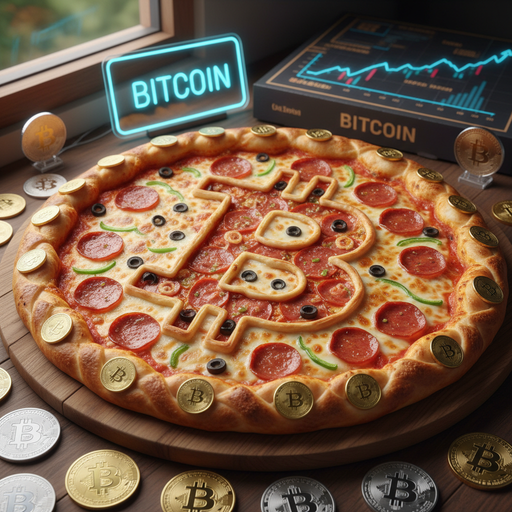



When Bitcoin Cost $1: How a 2010 Digital Art Deal Nearly Predicted the NFT Era
Imagine someone offering you digital artwork for 500 Bitcoin when the bitcoin price in 2010 hovered around $0.002 per coin. That’s exactly what happened on the Bitcointalk forum back then — a transaction worth roughly $1 in total value. Fast forward to today, and that same 500 BTC would fetch hundreds of millions of dollars. But beyond the staggering numbers, this forgotten moment raises a compelling question: was this the world’s first NFT-like transaction, years before the technology even had a name?
A Piece of Crypto History Most Never Heard About
On a day 16 years ago, an early Bitcoin enthusiast made an unusual proposal: trading digital art for cryptocurrency. The offer barely registered at the time. Bitcoin was still a curiosity, and the idea of assigning value to digital-only items through a peer-to-peer transaction seemed oddly ahead of its time. Yet looking back, this exchange embodied something profound—the fundamental concept that would later revolutionize how we think about digital ownership and collectibles.
The 2010 bitcoin price of mere fractions of a cent made the entire deal appear almost trivial. Few people imagined Bitcoin would ever become a store of value. Fewer still understood that this early attempt at digital art exchange was quietly planting seeds for an entirely new asset class.
Digital Ownership Before Blockchain Standards Existed
When this 500 BTC art deal occurred, Ethereum hadn’t launched yet, and smart contracts existed only in theory. The infrastructure we now associate with NFTs—standardized blockchain metadata, decentralized marketplaces, and automated ownership verification—was nowhere to be found. Yet the principle was unmistakably present: assigning unique value to a one-of-a-kind digital creation and exchanging it through a cryptographic network.
This 2010 transaction lacked the technical sophistication of modern NFTs, but it captured their essence. It demonstrated that the vision—digital scarcity backed by cryptocurrency—was alive in the minds of Bitcoin’s earliest adopters, long before the term “non-fungible token” became mainstream.
Why This Forgotten Transaction Still Resonates Today
Today’s NFT market stands as a multi-billion dollar industry, reshaping art valuations, gaming economies, and digital identity verification. The journey from that $1 transaction in 2010 to today’s sophisticated blockchain infrastructure reveals something important: the core idea predated the technology.
This forgotten moment deserves a place in cryptocurrency’s hall of fame—not just for what it represents, but for what it predicted. Whether or not it qualifies as the literal first NFT, it certainly demonstrates the visionary thinking of early Bitcoin participants. They understood that cryptocurrency could enable more than just financial transactions; it could fundamentally restructure how value and ownership are assigned in the digital realm.
As Bitcoin continues to evolve and the broader crypto ecosystem matures, these early experiments remind us that sometimes the most revolutionary ideas start with the simplest gestures—like one person offering art for 500 Bitcoin.