

Ethereum scaling network Polygon’s native crypto (MATIC) has been leading altcoin gains. Over the past week, MATIC surged by approximately 20%, briefly hitting a 5-month high of $0.86. This increase is fueled by a growing level of trade activity and a more positive overall sentiment in the broader crypto market.
The upcoming developments, particularly Polygon 2.0, could potentially drive the rally further.
According to Nansen’s latest quarterly report shared exclusively with CryptoPotato, Polygon has shown network resilience amid rising demand for layer and cheaper alternatives and a “developer-friendly environment.”
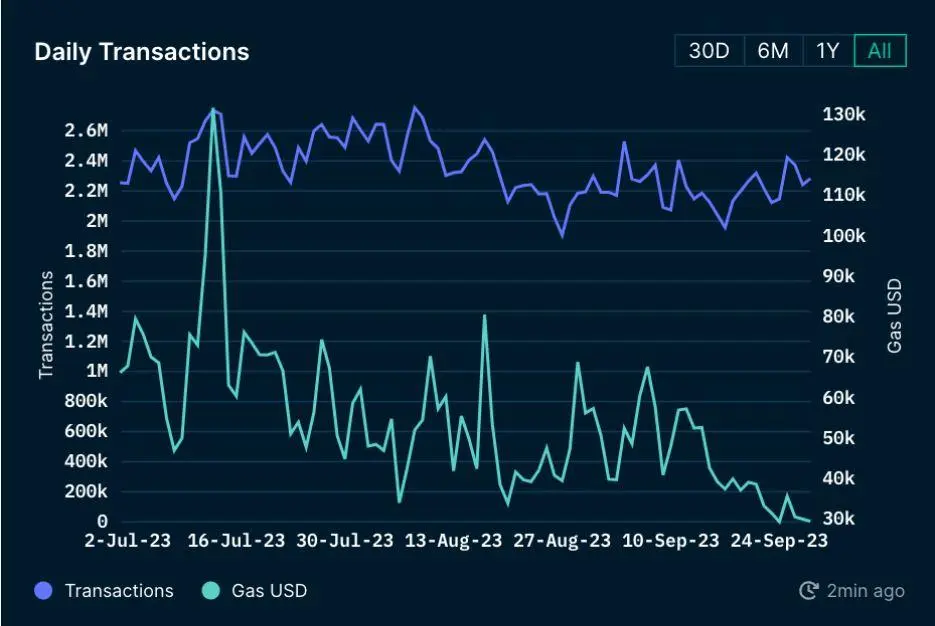 Polygon Daily TransactionsDuring the third quarter of 2023, the daily gas fees on the Polygon PoS network experienced notable volatility, fluctuating between approximately $29,000 and $132,000. In the previous quarter, fees ranged from $68,000 to $236,000.
Simultaneously, the daily transaction counts reached a peak of around 2.8 million transactions and decreased to a low of about 1.9 million transactions throughout the quarter, according to data compiled by the blockchain intelligence platform.
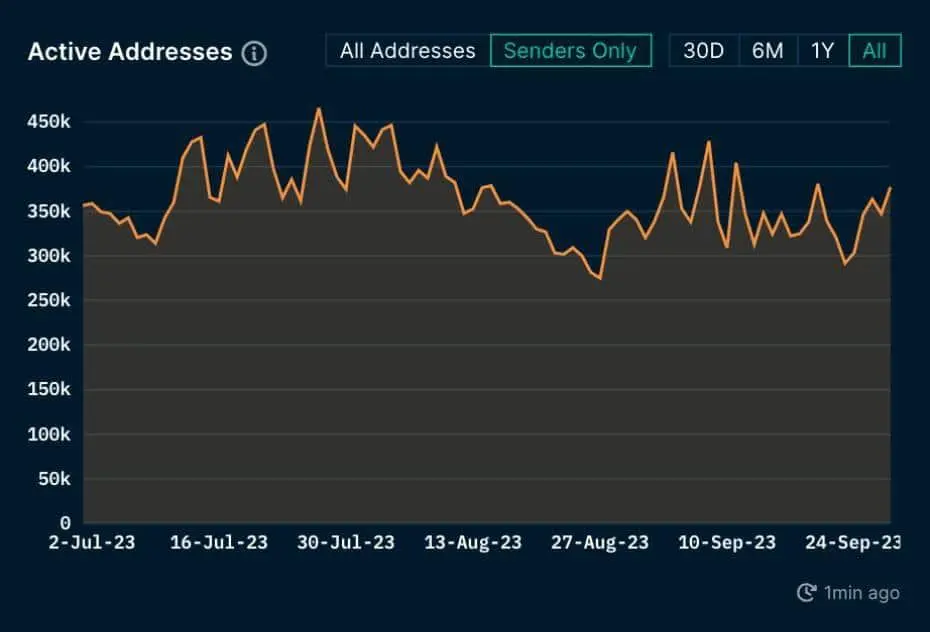 Polygon Active AddressesIn the same period, the number of daily active addresses on Polygon PoS demonstrated consistent stability, ranging from 275,000 to 466,000. This consistent range indicates that Polygon PoS has effectively maintained a strong user base, ensuring a steady level of daily user interactions.
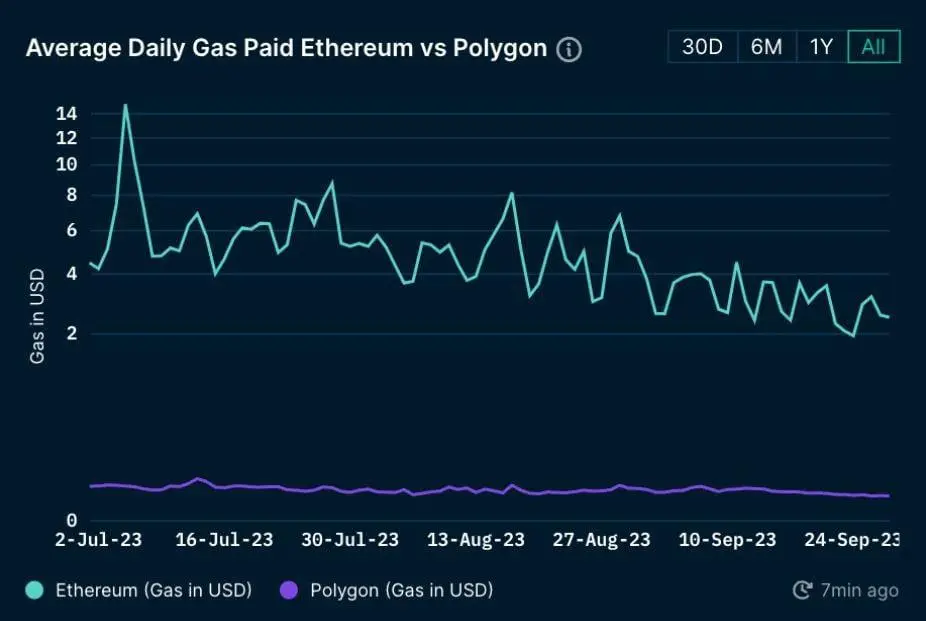 Polygon Average Daily GasIn Q3 2023, the peak average daily gas fee for transactions on Polygon was $0.05, while gas fees throughout the quarter ranged from $0.01 to $0.05. In contrast, Ethereum’s fees during the same period fluctuated between $1.95 and $15.
In terms of user engagement on Polygon PoS, Tether, and USDC stood out, boasting 1.6 million and 1.32 million users, respectively. On the other hand, when it comes to transaction volume on Polygon PoS during Q3, Chainlink took the lead, recording an impressive 47.08 million transactions.
This quarter also saw Polygon Labs double down on the ZK research. In addition to Polygon PoS, Polygon Labs has created several scaling frameworks, including Polygon zkEVM and the Polygon Chain Development Kit (CDK).
Since its launch in March, Polygon zkEVM has attracted approximately $100 million in TVL.
Meanwhile, the Chain Development Kit (CDK), which was released in August this year, is an open-source codebase that enables developers to create their own customizable layer 2 chains using Polygon’s ZK technology.
Several projects, including Canto, Astar, Gnosis, and IDEX, have revealed their plans to build ZK layer-2 solutions leveraging the new software toolkit over the past few months.
Polygon Labs is currently working on Polygon Miden, a ZK-rollup that is designed to deliver a faster, more secure network with minimal transaction costs. It is set for a Q4 testnet launch.


