Introduction
Ethereum remains the most secure and widely used smart contract platform in the blockchain ecosystem. This makes it a natural base layer for restaking innovation. The core idea is to extend Ethereum’s trust and validator economy to third-party services and applications, without compromising the network’s base security.
EigenLayer: The First Restaking Protocol on Ethereum
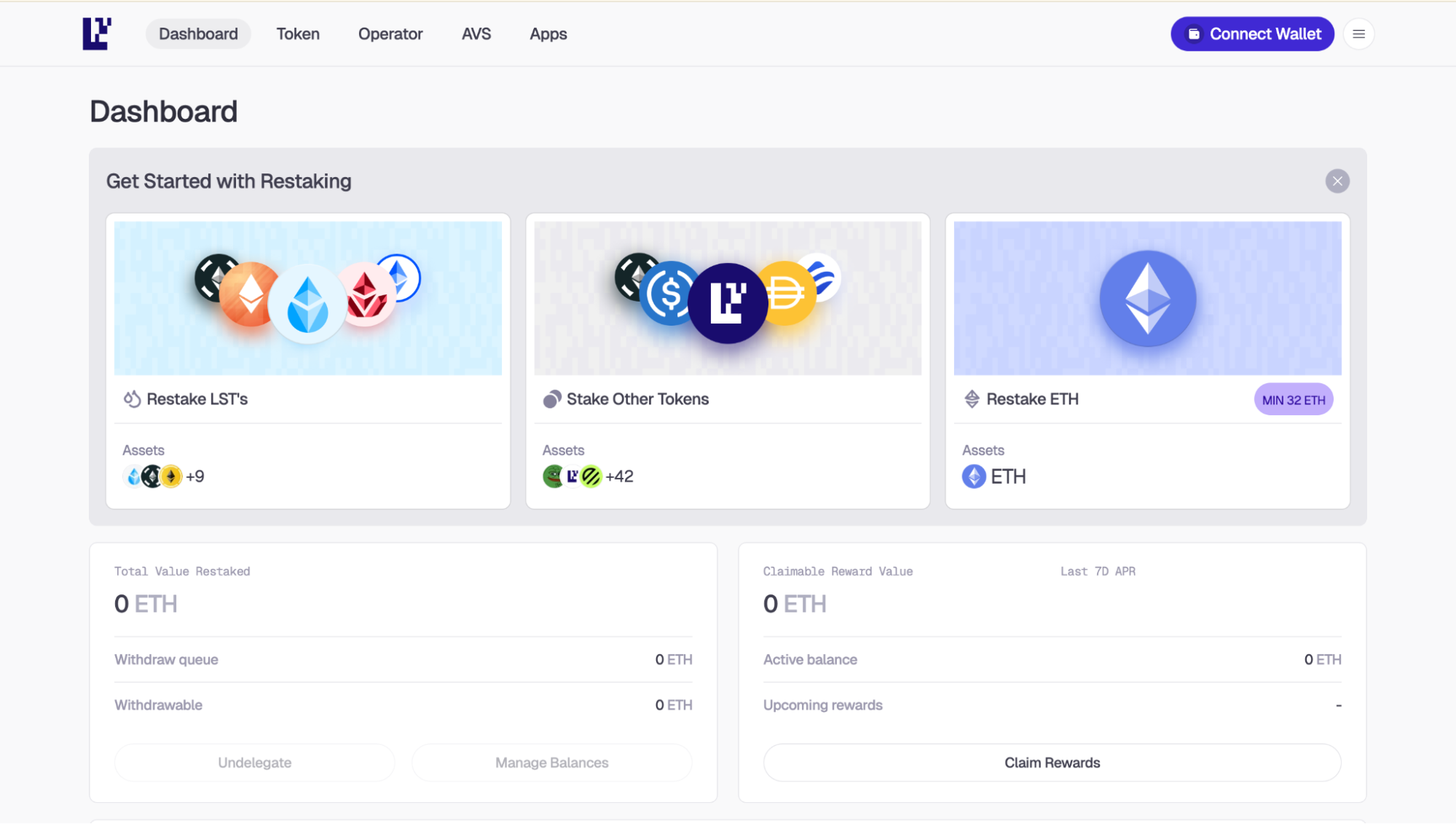
EigenLayer introduced the concept of programmable trust built on Ethereum staking. It allows Ethereum validators or holders of liquid staking tokens (LSTs) – such as Lido’s stETH or Rocket Pool’s rETH – to opt in to additional slashing conditions defined by third-party services. These services are known as Actively Validated Services (AVSs).
Instead of building their own validator network from scratch, AVSs leverage Ethereum’s stakers to run their protocol logic – whether for data availability (e.g., EigenDA), oracle networks, bridges, or rollup settlement layers. This reduces the time and capital required for these services to bootstrap economic security.
EigenLayer’s architecture includes three core actors:
- Restakers who opt into AVS-specific slashing conditions,
- Operators who run off-chain software on behalf of AVSs,
- AVSs which define the logic, incentives, and slashing conditions.
Slashing is enforced through a challenge-based dispute system. As of 2025, EigenLayer is rolling out its slashing functionality in phases, following a test period where operators could build trust without risk. The introduction of slashing transforms EigenLayer into a fully enforceable restaking system where economic penalties are real and verifiable.
EigenDA, a data availability layer developed by the EigenLayer team, serves as the flagship AVS. It delivers high-throughput, decentralized data availability – achieving 15 MB/s capacity, surpassing alternatives like Celestia. This performance has made EigenDA a key backend for rollups and Layer-2 solutions in 2025.
EigenLayer also recently introduced permissionless operator onboarding, opening the ecosystem to any operator that meets technical standards. This decentralizes AVS servicing and increases market competition.
Karak: Multi-Asset and Modular Expansion
Karak, originally launched under the name “Karak Network” in late 2023, has emerged as a competitor to EigenLayer by targeting a broader market. Unlike EigenLayer, which focuses on Ethereum-native assets and infrastructure, Karak introduces multi-asset restaking, allowing assets from multiple chains—including stablecoins, ETH L2 tokens, and even wrapped BTC to be restaked into its system.
This flexibility significantly expands the total restakable capital. Karak operates a permissioned system where AVSs apply for onboarding, and restakers can choose which assets to delegate. Slashing conditions are modular and enforced through Karak’s smart contract-based arbitration framework.
Karak emphasizes capital efficiency and composability, allowing restaked capital to be used simultaneously in DeFi strategies and staking operations. For example, a user might restake USDC to secure a data layer, while simultaneously using that USDC in a lending protocol that integrates Karak’s validation contracts.
This dual utility opens powerful financial opportunities but introduces deeper complexity in tracking risk. The ability to use one asset in multiple staking and DeFi roles simultaneously raises concerns about rehypothecation – the practice of pledging the same collateral in multiple places – which can lead to cascading liquidations or slashing in the event of market volatility or AVS failure.
Symbiotic: A Composable and Decentralized Alternative
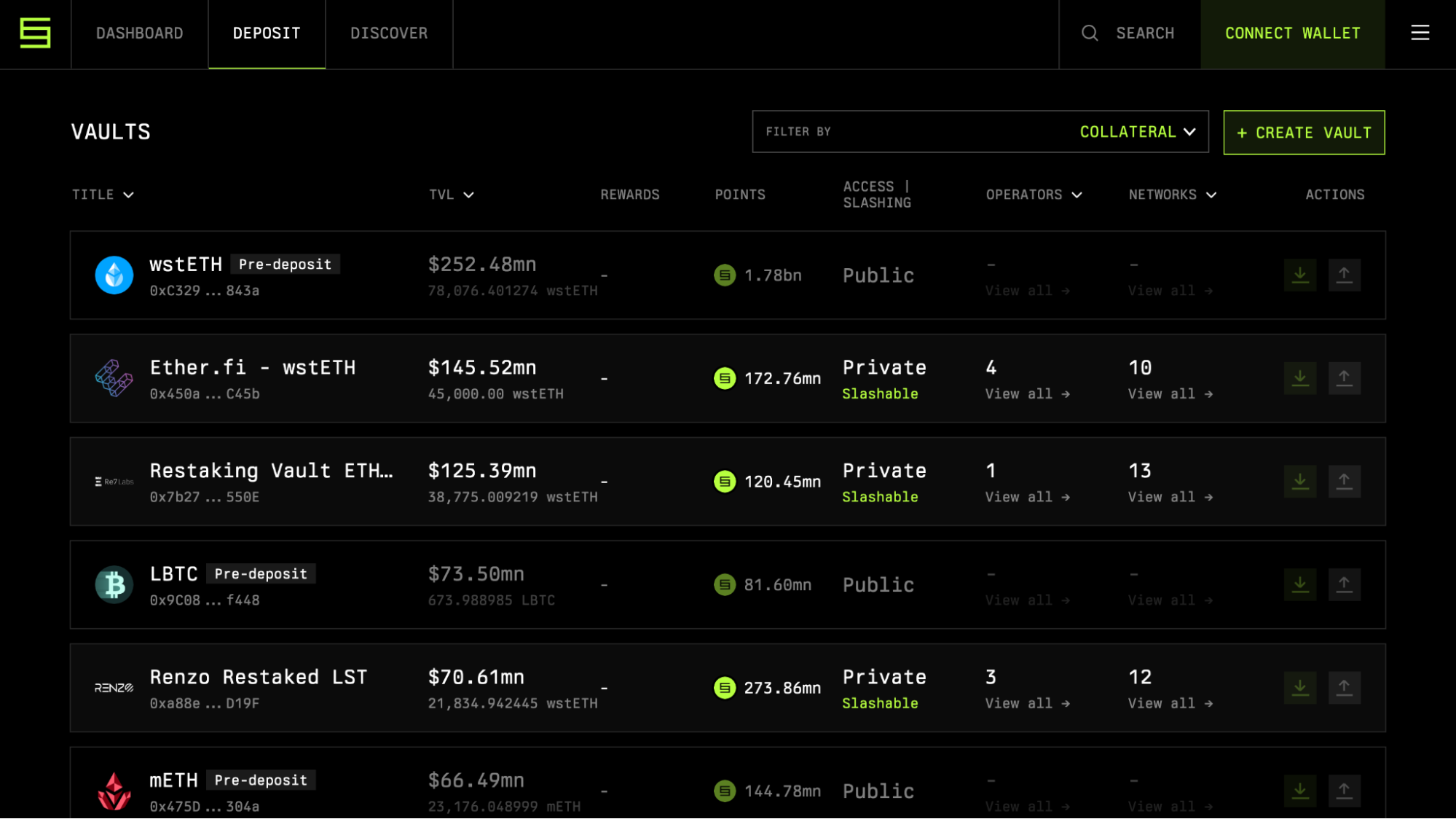
Symbiotic is the most recent major entrant into the Ethereum restaking space, launching in June 2025 and reaching over $200 million in total value locked (TVL) within its first 24 hours. Its design emphasizes composability, decentralization, and permissionlessness from the start.
Symbiotic introduces a novel architecture where users can create custom staking vaults – called “symbiotic modules” – that define asset types, risk models, and slashing logic. This makes the protocol highly adaptable for both institutional and experimental use cases.
What differentiates Symbiotic from EigenLayer and Karak is its bottom-up governance and focus on horizontal scaling. Rather than onboarding AVSs centrally, Symbiotic enables the creation of open AVS marketplaces, where multiple operators can serve multiple AVSs through overlapping restaking pools.
It also supports a diverse range of restakable assets, including both LSTs and non-EVM native tokens wrapped on Ethereum. Its approach to slashing involves community-curated dispute mechanisms, encouraging transparency but introducing governance friction.
Unlike EigenLayer’s phased rollout, Symbiotic launched with fully enabled slashing contracts and optional dispute bonding mechanisms. This “high-risk, high-trust” approach appeals to DeFi-native protocols seeking composability over rigidity.
Liquid Restaking Tokens (LRTs)
In mid-2025, a new primitive called Liquid Restaking Tokens (LRTs) has emerged, built on top of restaking platforms like EigenLayer. Similar to liquid staking tokens (LSTs), LRTs represent tokenized claims on restaked positions. They offer liquidity and composability, allowing users to restake capital while retaining the ability to trade, lend, or use that position across DeFi.
Leading LRT protocols – such as Ether.fi, Puffer, and Renzo – have gained traction by abstracting the complexity of restaking and enabling non-technical users to earn rewards from AVSs without directly running validators or selecting operators. These LRTs also increase TVL for restaking protocols by attracting passive capital.
However, they introduce new risks: rehypothecation across multiple platforms, unclear slashing propagation, and dilution of accountability. These are key concerns being debated in restaking governance circles as LRT adoption rises.
Security and Risk Comparison
All three platforms – EigenLayer, Karak, and Symbiotic – enable Ethereum-based restaking but differ in architecture, slashing mechanisms, governance, and supported assets. EigenLayer’s focus is protocol-level trust and validator reuse. Karak targets cross-chain capital efficiency. Symbiotic emphasizes open design and rapid composability.
Security varies accordingly. EigenLayer’s slashing relies on pre-defined AVS logic and a permissioned operator model, offering a controlled rollout. Karak decentralizes capital but relies on modular slashing enforcement, making risk more dynamic. Symbiotic maximizes openness, which could introduce unvetted AVSs and poorly secured restaking vaults if not audited properly.
The systemic risk increases if the same operators serve many AVSs across platforms without adequate fail-safes. If one operator is slashed, all services tied to that restaking pool may be affected. This correlation risk is a central concern in 2025, especially as staking volumes exceed billions in combined value.