In the decentralized finance (DeFi) ecosystem, protocol tokens typically play a critical role in coordinating incentives and distributing value. Beyond providing base assets such as stablecoins or yield-bearing instruments, protocols rely on token mechanisms to attract users, guide liquidity, and support ecosystem expansion, enabling long-term sustainability.
By introducing UNITAS (UP) into its stablecoin system, Unitas links incentive mechanisms with yield generation structures. This design positions UNITAS as a key connector between USDu (stable asset), sUSDu (yield-bearing asset), and overall protocol growth, allowing it to function as both a coordination and expansion layer within the system.

The Role and Core Functions of UNITAS in the Unitas Ecosystem
Within Unitas’s three-layer architecture, UNITAS (UP) primarily serves as the “incentive and coordination layer.”
Its core functions include guiding user participation in the protocol, for example by rewarding users who hold or use assets such as USDu and sUSDu. At the same time, UNITAS helps attract liquidity into the system, expanding the scale of strategy execution and enhancing yield potential.
In addition, UNITAS supports governance, allowing holders to participate in parameter adjustments and decisions regarding the protocol’s future direction. This design makes it not only a reward mechanism, but also a key bridge between user behavior and protocol operations.
UNITAS Supply and Allocation Model
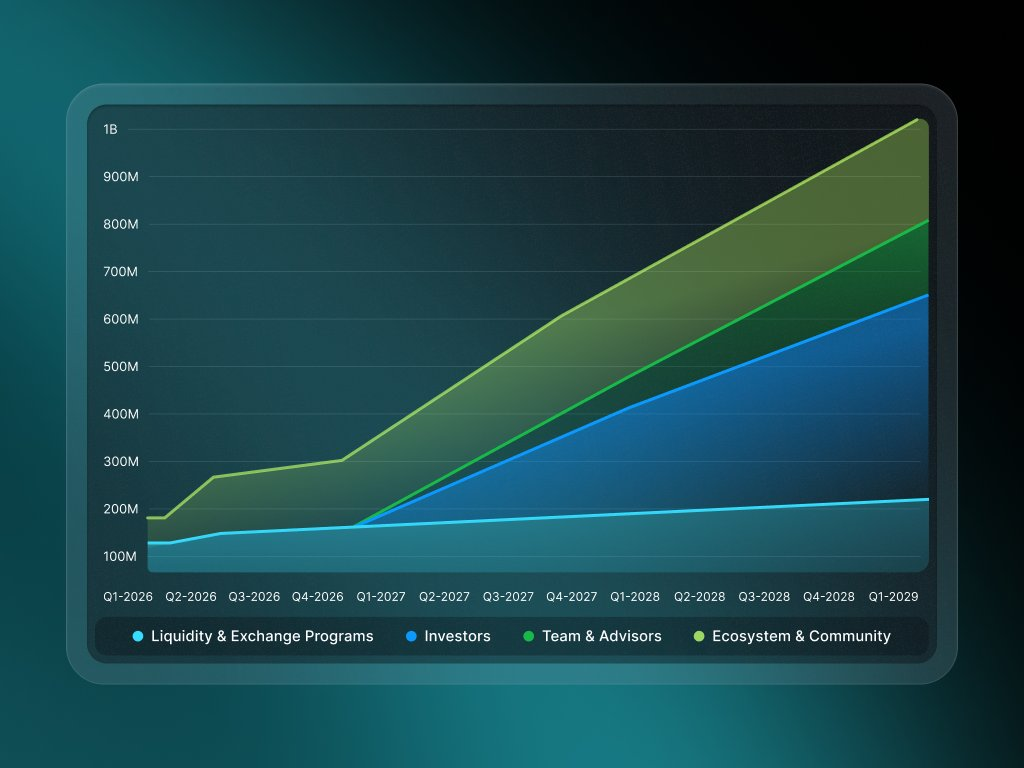
The supply structure of UNITAS is designed around long-term ecosystem development and incentive distribution. The total supply is 1 billion tokens (1B), with an initial circulating supply of approximately 12.6% at the Token Generation Event (TGE).
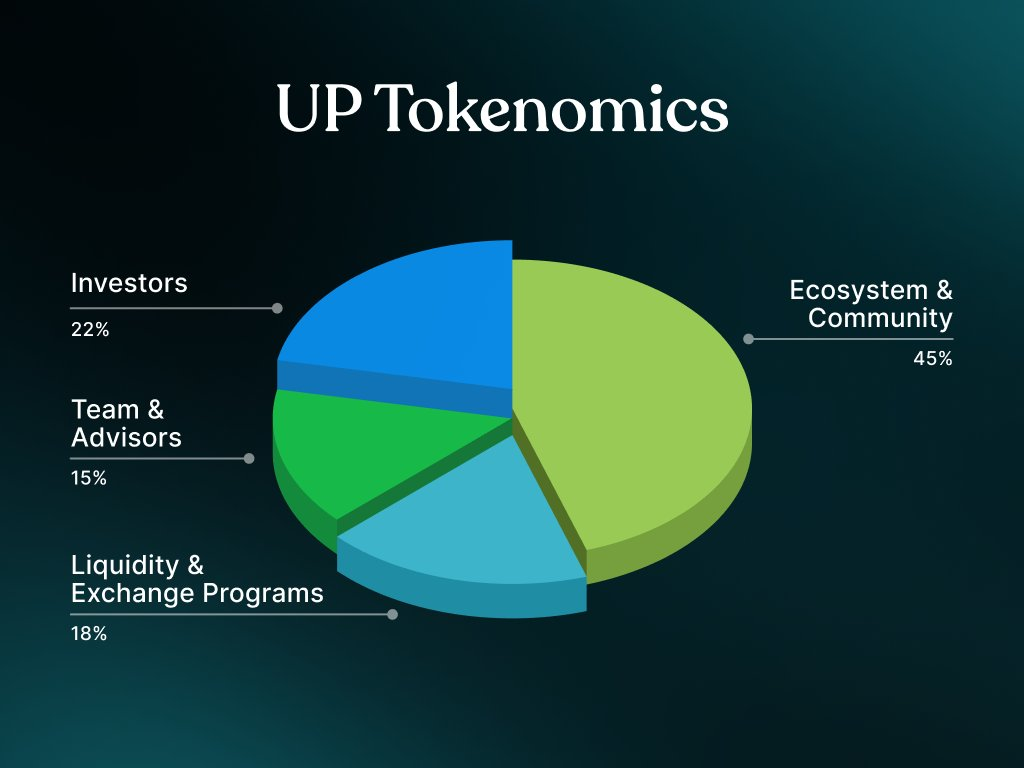
The allocation is divided into the following categories:
This distribution reflects a clear “ecosystem-first” approach, with nearly half of the tokens dedicated to supporting user growth and ecosystem expansion. Specifically:
The Ecosystem & Community allocation (45%) supports long-term protocol development, including:
The Liquidity & Exchange Programs allocation (18%) strengthens market infrastructure, including:
Through this structure, UNITAS supply not only supports incentive distribution but also enables continued expansion across trading, liquidity, and ecosystem layers.
Core Incentive Mechanism of UNITAS
The incentive model of UNITAS is built around a “use-to-earn” concept, where the core principle is simple: the more users participate, the more rewards they receive.
In practice, the protocol tracks user behavior, such as asset holding duration and participation scale, to allocate $UP rewards. This encourages long-term engagement rather than short-term activity.
The goals of this mechanism include:
-
Increasing the adoption and usage of USDu
-
Enhancing participation in sUSDu
-
Driving growth in total value locked (TVL)
Through this design, UNITAS becomes a key driver of user growth and capital retention within the protocol.
How Does UNITAS Capture Protocol Value?
UNITAS (UP) holders are the primary beneficiaries of protocol revenue and participate through defined distribution mechanisms.
Revenue generated from USDu and future yield strategies, including tokenized equities, metals, and other real-world assets (RWA), flows through the same allocation framework. A portion of realized revenue is distributed to token holders based on staking and governance-defined parameters.
Advantages and Potential Challenges of the UNITAS Token Model
The UNITAS model adopts a points-based incentive mechanism, directly linking distribution to user behavior, which improves incentive efficiency. It also helps mitigate the uneven early distribution issues seen in traditional token models and encourages long-term participation.
By tying incentives to USDu usage, UNITAS supports stablecoin ecosystem growth and strengthens overall network effects.
However, the long-term sustainability of the incentive mechanism remains critical. Over-reliance on token emissions may create supply pressure. In addition, if value capture mechanisms are not clearly defined, the long-term linkage between the token and the protocol could weaken.
Market conditions may also influence user participation, which in turn can impact the effectiveness of the tokenomic model.
Conclusion
UNITAS plays a central role in incentive coordination within the Unitas ecosystem. Its tokenomic design revolves around supply allocation, incentive structures, and value capture. By aligning user participation, yield generation, and ecosystem expansion, UNITAS aims to build an economic system that supports the long-term sustainability of yield-bearing stablecoins.
At its core, the model seeks to establish a “usage, incentives, growth” cycle, enabling the protocol to evolve continuously in a dynamic market environment.
FAQs
What is the primary use of the UNITAS token?
UNITAS is mainly used to incentivize user participation, support ecosystem expansion, and potentially enable governance.
Does UNITAS participate in the USDu stablecoin peg?
No. USDu stability is maintained through underlying assets and strategy mechanisms.
Where does UNITAS derive its value?
Primarily from protocol usage demand, incentive structures, and potential value capture mechanisms.
Does UNITAS have a fixed supply?
It depends on the issuance mechanism, which may include phased releases or dynamic adjustments.
What is the relationship between UNITAS, USDu, and sUSDu?
USDu is used for circulation, sUSDu for yield accumulation, while UNITAS serves as the incentive and coordination layer.
Why do yield-bearing stablecoins need UNITAS?
It helps coordinate user behavior, guide liquidity, and support protocol growth, acting as a critical complementary layer within the stablecoin system.







