


Definition of NFT
NFT, abbreviated from Non-Fungible Token, is the only form of encrypted token of digital assets. It is a special protocol created on the blockchain and has features like uniqueness, exclusiveness, liquidity, traceability, programmability, indivisibility, etc.
NFT does not merely exist in digital space. Also, it can represent ownership of any type of physical asset. As a "digital twin" of physical items, the exchange of NFTs would represent a transfer of ownership of corresponding items in the real world.
To put it simply, NFT is the "anti-counterfeiting code" for a work created with blockchain technology. By turning the works into a unique digital token, it gives the digital works the features of traceability, clear copyright, and tradability.
1. Difference between NFT and FT
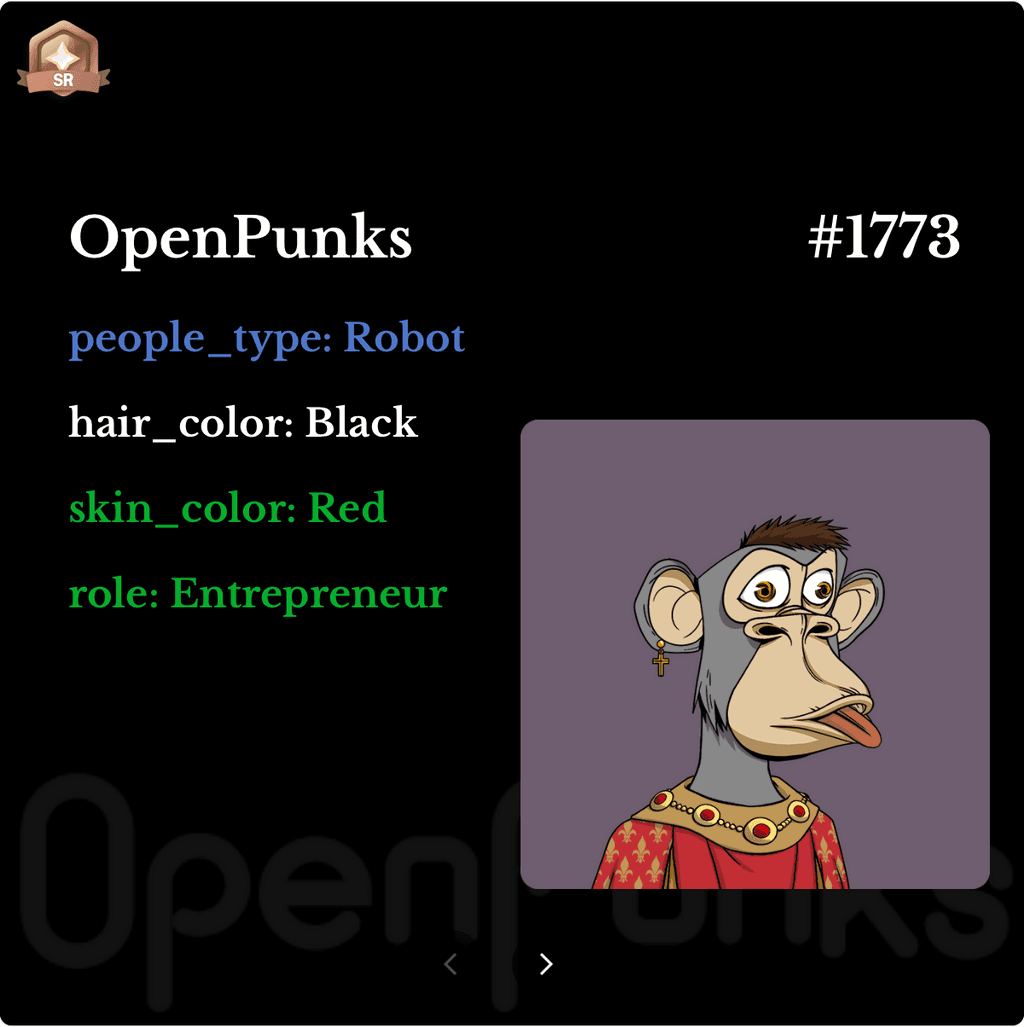
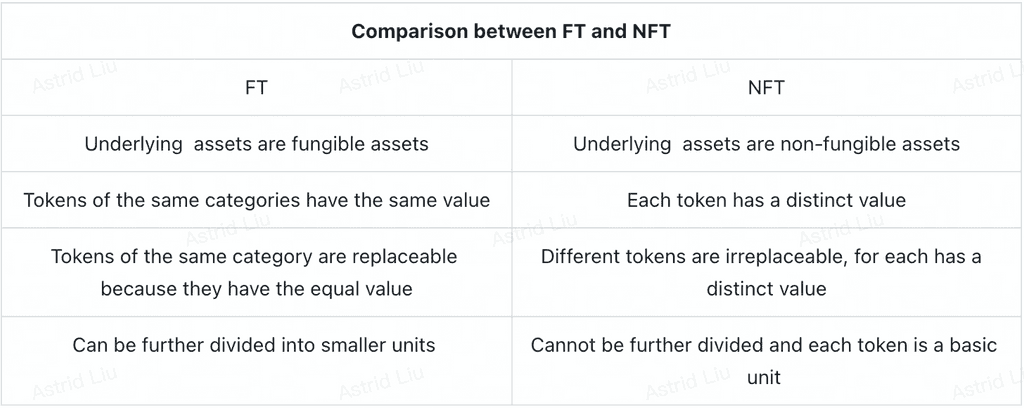
NFT (Non-Fungible Token) features uniqueness and indivisibility. Cryptokitties and tokenized digital tickets are all typical non-fungible tokens.
In contrast, FT (Fungible Token) can be replaced, are homogeneous, and can be divided infinitely. Typical FT includes BTC and ETH.
2. Advantages of NFTs
Uniqueness, indivisibility, clear ownership, cross-game attributes;
The difference between NFT and FT (fungible tokens) is that each NFT has its own unique attributes that distinguish it from other NFTs. Such uniqueness determines that each NFT has its own value.
Standards for NFT's Underlying Protocols
Essentially, NFT is an Ethereum-based smart contract, and its architecture corresponds to 3 Ethereum protocol standards. Ethereum defines four forms of tokens through smart contracts, including the ERC-20 that represents FT tokens, as well as ERC--fungible tokens), ERC-998 (CNFT, the composable non-fungible tokens) and ERC-1155 ( a tokens collection that can accommodate and manage various types of tokens).
- ERC-20: It refers to fungible tokens. Each token has an equal and divisible value and is compatible with Ethereum wallets and wallets that support Ethereum.
- ERC-721: It refers to the non-fungible token. Only one item can be traded in per transaction, and multiple items must be traded in separate transactions.
- ERC-998: It is a composable non-fungible token CNFT. An ERC-998 CNFT may include multiple ERC-721 and ERC-20 objects that are arranged in a certain hierarchy. Transferring CNFT entails moving the complete hierarchy and connections it includes.
- ERC-1155: It is a collection that accommodates and manages various types of tokens. Items are stored in a central smart contract and can be combined and packaged into a "Token package" with an independent ID. Traders can send multiple items to the designated party through a transaction, which improves transaction efficiency and reduces transaction costs.
Why do we need NFT?
The traditional methods of documenting the transactions of works of art and rare goods, typically in the form of centralized data or paper certificates, have a low level of credibility because the relevant documents are easily counterfeited or altered. NFT, as a blockchain-based transaction certificate, can not only serve as a representation of the ownership of assets and a record of the procedures involved in price discovery, but also it can serve as a target for investments. As the saying goes, "everything can be NFTed." Numerous scenarios, including those involving gaming props, electronic tickets, collectibles, music, and encrypted art, have used NFT. The products in the above circumstances all have one thing in common: they are valuable, unique, and irreplaceable, which makes NFT the ideal method for marking their digital ownership on the blockchain. The most common use of NFT among them is in the realm of encrypted art, where it has an irreplaceable value for both investors and investees.
Creation of NFTs
NFT has the features of rarity (Rare), indivisibility (Indivisible), and uniqueness (Unique), and share the same attributes as the tokens on the blockchain. Based on these properties, NFT will not only serve as conclusive evidence of the artist's ownership of the work, but also they can record the ownership and pricing changes in the future. In addition, the NFT trading market provides a convenient channel for the artwork to be displayed and sold.
In traditional art transactions, the creators cannot obtain additional income as long as the works have been sold out, even if the value of the works rises significantly after sale. However, in the NFT trading market, creators can continue to receive a certain percentage of income generated from the resale of works after they are sold out, called "royalty". More than only proof of uniqueness and the job of facilitating transactions, NFT provides unlimited creative energy to producers by allowing them to partake in the revenues of their works in perpetuity.
The Gate NFT trading platform makes NFT creation convenient, allowing users to create their NFT works at an extremely low cost and sometimes even free. Unlike the high gas fee required for creation on ETH chain, which is unaffordable for some users, the Gate NFT market greatly reduces the creation threshold for users . Users may refer to the NFT works guide on how to monetize their NFT works.
The Logic of NFT transaction
- To investors
NFT stands out from conventional investment targets because it has clear ownership, is transferrable, and is authentic. The scarcity and liquidity of NFTs, in addition to the attribute of carrying clear ownership evidence, make them great investment objects. Investors can receive short-term speculative returns as well as more fans or ecological rights by investing in NFTs. In addition, investors might use them as a social networking tool or just include them in their collection of memorabilia.
How to turn assets into NFT? - Creators can deploy NFT contracts on NFT-enabled blockchains to point them to data content and assets through external links, and creators can customize the contents contained there.
- How does NFT circulate?
- Sale: NFT owners can set the price, sell them on the open market for that price, or put them up for auction.
- Purchase: First, users need to hold a digital wallet that can store NFTs and cryptocurrencies. After purchasing NFTs, the key to proof of ownership will be stored in the wallet, while the NFTs are still stored on the blockchain, with the ownership information visible to everyone. Most transactions will generate a trading fee.
- The NFT marketplace will make a great trading platform for NFTs. Please keep in mind that you cannot use a credit card or PayPal for NFT transactions. The trading will instead use cryptocurrency and crypto wallets. On Gate's NFT trading platform, USDT is the most common payment currency while trading NFTs. Users buy the desired cryptocurrencies on the Gate exchange and then use those cryptocurrencies to buy the desired NFT works on the NFT trading market.
Terms and Explanations
- Mint: Creators extract and record the "digital content" and mint information based on the blockchain open protocol, including work descriptions, attributes, convertible objects, copyright information, etc.
- Deposit: The user deposits assets by minting works or depositing NFT assets to Gate's NFT wallet address.
- Withdraw: NFT owners can transfer the NFT assets to a supported wallet address to withdraw the asset.
Future Prospects for NFT
We see endless opportunities and potential in NFTs. The optimism is not only based on the product's record-high sales volumes, but also on the fact that NFTs expand the potential applications of blockchain technology outside of the traditional financial sector. NFTs can be expected to become an essential part of the blockchain ecosystem and potentially the entire macroeconomy by connecting with physical assets in the digital realm. In addition to the numerous application scenarios for NFTs that already exist, we think that creative developers will explore new and exciting applications for the technology in the future.
Gate reserves the final right to interpret the product.
For further assistance, please visit the Gate official support page or contact our customer support team.
Disclaimer
The content provided herein is for reference and educational purposes only and does not constitute any financial, investment, trading, or legal advice, nor does it constitute an offer or solicitation to buy or sell any digital assets. Gate makes no express or implied representations or warranties regarding the accuracy, completeness, or timeliness of the information contained herein. Product features, interfaces, rules, and fee structures may be updated or adjusted at any time. Please refer to the latest announcements and the actual information displayed on the Gate platform for the most accurate details.
Digital asset investments involve significant risk, and prices may fluctuate substantially. You may lose the entire amount of your investment. Please make decisions cautiously based on your own financial situation and risk tolerance after fully understanding the associated risks. If necessary, you are advised to consult an independent professional financial or legal advisor.
For more information about potential risks, please refer to Gate's Risk Disclosure and User Agreement.
