


Futures
Access hundreds of perpetual contracts
TradFi
Gold
One platform for global traditional assets
Options
Hot
Trade European-style vanilla options
Unified Account
Maximize your capital efficiency
Demo Trading
Introduction to Futures Trading
Learn the basics of futures trading
Futures Events
Join events to earn rewards
Demo Trading
Use virtual funds to practice risk-free trading
Launch
CandyDrop
Collect candies to earn airdrops
Launchpool
Quick staking, earn potential new tokens
HODLer Airdrop
Hold GT and get massive airdrops for free
Launchpad
Be early to the next big token project
Alpha Points
Trade on-chain assets and earn airdrops
Futures Points
Earn futures points and claim airdrop rewards


More




Hormuz "Chokehold," IEA Warns of "Largest Supply Crisis in History," Oil Demand Growth Forecast Cut 25% This Year
The escalation of the Strait of Hormuz situation has triggered a severe supply shock: the International Energy Agency (IEA) latest monthly report states that this conflict has caused the largest supply disruption in history, affecting 7.5% of global oil supply. As a result, the agency has significantly revised down its global oil demand and supply forecasts.
On March 12, Bloomberg reported that in its report released Thursday, the IEA stated that global daily oil supply has decreased by 8 million barrels this month, mainly due to the Iran situation, with transit flow through the Strait of Hormuz dropping over 90%. Demand has also been impacted, with rising oil prices, flight cancellations, and economic uncertainties dragging down growth. The IEA has cut its 2026 global oil demand growth forecast from 850,000 barrels per day to 640,000 barrels per day, a reduction of about 25%. On the supply side, the 2026 global oil supply increase forecast has been revised down from 2.4 million barrels per day to 1.1 million barrels per day.
To stabilize the market, IEA member countries agreed on Wednesday to release a record 400 million barrels from emergency reserves. Due to the ongoing escalation of the Strait of Hormuz situation, Brent crude oil prices briefly surged above $100 per barrel on Thursday.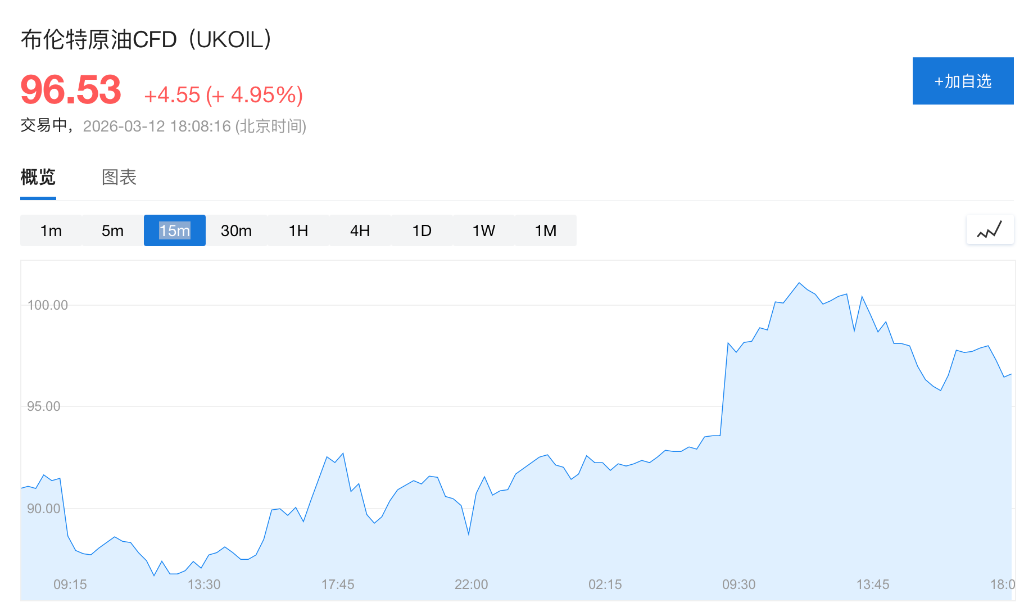
Hormuz Blockade: The Largest Supply Shock in History
Due to Middle East tensions, oil tankers have halted transit through the Strait of Hormuz. Data from the IEA shows that oil transit flow through the strait has plummeted over 90%. Last year, approximately 20 million barrels of crude oil and refined products were transported daily through this route.
The actual shipping disruptions have forced Gulf producers collectively to cut supply by about 10 million barrels per day. Although countries like Saudi Arabia and the UAE have the capacity to redirect some exports via alternative routes, the overall supply loss remains unprecedented. The IEA also warns that the closure of the strait threatens about 4 million barrels per day of regional refining capacity. Restricted raw material supplies will limit other regions’ ability to compensate for the supply gap, with diesel and jet fuel shortages being particularly acute.
Demand and Surplus Forecasts Narrowing Simultaneously
The supply shock is rapidly impacting demand. The latest IEA report has revised down the 2026 global oil consumption growth forecast by about 25% to 640,000 barrels per day — the lowest since the forecast was introduced in April last year. The downward revision is mainly driven by rising oil prices, flight cancellations, and macroeconomic uncertainties.
On the supply side, production losses in the Middle East have been offset by increased output from non-OPEC+ producers, including Kazakhstan and Russia. The IEA notes that these factors have narrowed the 2026 global oil surplus forecast by over one-third, down to about 2.4 million barrels per day. Before the crisis, driven by growth in the US, Canada, Guyana, and Brazil, the agency had expected a record supply surplus this year.
Member Countries Release 400 Million Barrels from Emergency Reserves
In response to the market volatility, IEA Executive Director Fatih Birol announced on Wednesday that its 32 member countries will coordinate to release a record 400 million barrels of emergency oil reserves. However, key details such as the release pace and duration have not yet been disclosed.
U.S. Energy Secretary Chris Wirth stated that the U.S. will contribute 172 million barrels from the Strategic Petroleum Reserve, but full delivery is expected to take about 120 days.
Risk Warning and Disclaimer
Market risks exist; investments should be made cautiously. This article does not constitute personal investment advice and does not consider individual users’ specific investment goals, financial situations, or needs. Users should consider whether any opinions, views, or conclusions herein are suitable for their particular circumstances. Investment is at your own risk.