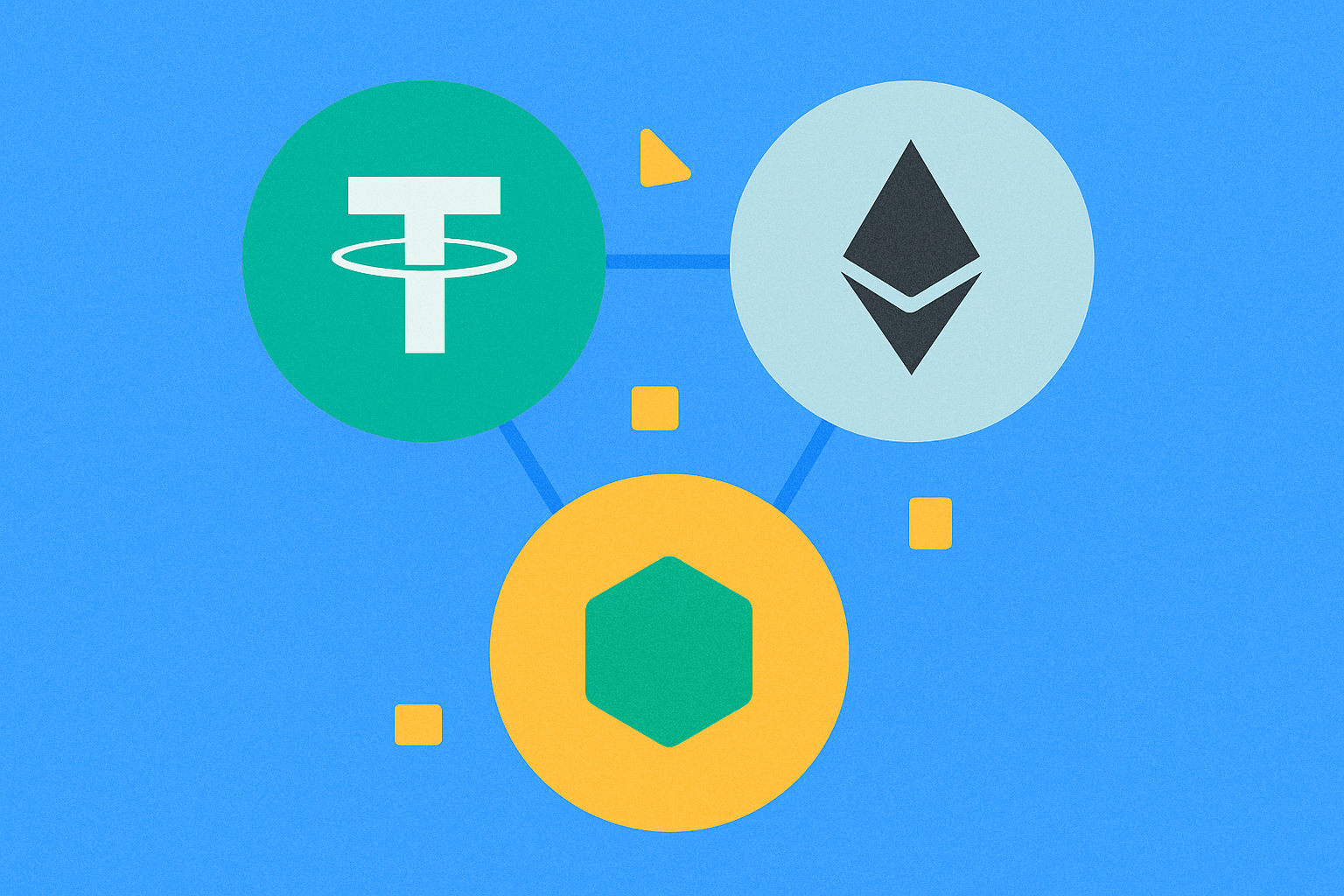
Cross-chain swaps are a technical mechanism that allows users to directly exchange crypto assets between different blockchain networks without relying on centralized exchanges or custodians. This technology leverages smart contracts, hashed timelock contracts, or cross-chain bridge protocols to enable secure asset transfers and exchanges across heterogeneous blockchains. In the context of an increasingly flourishing multi-chain ecosystem, cross-chain swaps break down data silos between blockchains, enabling interoperability of native assets across networks like Bitcoin, Ethereum, and Binance Smart Chain. This technology not only enhances asset liquidity and market efficiency but also provides broader application scenarios for decentralized finance, promoting interconnection and collaborative development across blockchain ecosystems. For users, cross-chain swaps reduce transaction costs and time while minimizing trust dependencies on centralized institutions, aligning with the core blockchain principles of decentralization and self-sovereignty.\n\n## Origin and Development Background\n\n The origins of cross-chain swap technology can be traced back to 2013, when Tier Nolan first proposed the concept of atomic swaps—enabling trustless exchanges between two different blockchains through hashed timelock contracts. This conceptual breakthrough marked the transition of cross-chain technology from theory to practice. Early atomic swaps were primarily applied between blockchains with similar technology stacks, such as Bitcoin and Litecoin, with the exchange process executed entirely through on-chain contracts without third-party custody.\n\nWith the diversification of blockchain ecosystems, the emergence of Ethereum's smart contract platform provided more flexible implementation paths for cross-chain swaps. After 2017, decentralized exchanges and cross-chain protocol projects like Cosmos and Polkadot successively launched, extending the applicability of cross-chain swaps to more heterogeneous blockchains through relay chains and cross-chain messaging mechanisms. During this period, cross-chain bridge technology began to emerge, achieving more efficient cross-chain liquidity by locking assets on the source chain and minting mapped assets on the target chain.\n\nIn recent years, with the rapid development of Layer 2 solutions and multi-chain DeFi ecosystems, cross-chain swap technology has further matured. Projects have significantly improved the speed and user experience of cross-chain transactions by optimizing verification mechanisms and introducing liquidity pools and automated market maker models. Meanwhile, industry demands for enhanced security and decentralization have driven technical solutions to evolve from single-trust models toward more secure approaches such as multi-signature verification and zero-knowledge proofs. Cross-chain swaps have evolved from early technical experiments into core infrastructure supporting multi-chain ecosystem interconnection.\n\n## Working Mechanism and Technical Implementation\n\n The underlying operating mechanism of cross-chain swaps primarily relies on three technical approaches: hashed timelock contracts, cross-chain bridge protocols, and decentralized relay networks. Each solution involves trade-offs in security, efficiency, and degree of decentralization.\n\n1. Hashed Timelock Contracts (HTLC) \nThis represents the earliest implemented cross-chain swap solution, completing transactions through coordinated smart contracts on two chains. Trading parties lock assets on their respective blockchains with identical hash values and time constraints. Only when one party provides the correct hash preimage (key) can the other party unlock the assets. If the exchange is not completed within the specified timeframe, assets automatically return to their original owners. This mechanism ensures transaction atomicity—either both parties successfully exchange assets or the transaction is completely canceled, with no scenario where one party profits while the other loses. The advantage of HTLC lies in eliminating third-party trust requirements, but its drawbacks include complex transaction processes, requirements for both parties to be online simultaneously, and limitations imposed by blockchain block generation speeds.\n\n2. Cross-Chain Bridges and Lock-Mint Models \nCross-chain bridges achieve cross-chain transfers by locking assets on the source chain and minting equivalent mapped tokens on the target chain. Users deposit assets into custody contracts on the source chain, and after validator node confirmation, contracts on the target chain mint corresponding wrapped tokens. When users need to redeem original assets, tokens on the target chain are burned and assets on the source chain are unlocked. The core of this model depends on validator node trustworthiness, therefore most cross-chain bridges adopt multi-signature or decentralized verification mechanisms to reduce single-point risks. The advantage of cross-chain bridges lies in supporting complex asset types and large-scale liquidity transfers, but their security depends on validator node integrity and technical implementation rigor.\n\n3. Relay Chains and Cross-Chain Messaging \nProjects represented by Cosmos and Polkadot implement cross-chain communication through relay chain architectures. Relay chains serve as hubs, responsible for validating and transmitting messages and asset transfer instructions between different parachains. Individual parachains interact with relay chains through standardized cross-chain communication protocols, achieving asset and data interoperability. The advantage of this model lies in strong scalability and support for parallel multi-chain processing, but it requires parachains to comply with unified technical standards, and relay chain security directly impacts the security of the entire ecosystem.\n\nRegardless of the technical approach adopted, cross-chain swaps must address challenges such as consensus mechanism differences, inconsistent transaction confirmation times, and malicious attack prevention. The industry continues to optimize the efficiency and security of cross-chain swaps through the introduction of new technologies like zero-knowledge proofs and optimistic verification.\n\n## Risks and Challenges\n\n Although cross-chain swap technology has brought significant improvements in liquidity and interoperability to blockchain ecosystems, its development still faces multiple risks and challenges that directly impact user asset security and widespread technological adoption.\n\n1. Smart Contract Vulnerabilities and Technical Security Risks \nCross-chain swaps heavily rely on smart contracts to execute complex logic, and any code vulnerabilities could lead to asset theft or transaction failures. Historically, multiple cross-chain bridge projects have suffered hacker attacks due to contract vulnerabilities, with losses amounting to hundreds of millions of dollars. Because cross-chain contracts involve multi-chain coordination, audit difficulty far exceeds single-chain applications, and attackers may exploit weak points in cross-chain message verification to launch replay attacks, double-spending attacks, or tamper with transaction data. Additionally, differences in virtual machine environments and programming languages across blockchains increase the complexity and error probability of cross-chain contract development.\n\n2. Centralization Risks and Trust Assumptions \nMany cross-chain swap solutions rely on validator nodes, multi-signature wallets, or custodians to complete asset locking and release. The presence of these intermediary roles introduces centralization risks—if validator nodes are compromised, private keys are leaked, or internal malfeasance occurs, user assets may suffer losses. Even with multi-signature mechanisms, collusion among signers or exploitation of technical vulnerabilities could still lead to unauthorized fund transfers. Some cross-chain bridges adopt optimistic verification mechanisms to improve efficiency, assuming transaction legitimacy and delaying verification, which accelerates speed but also increases the window for malicious transactions to pass through.\n\n3. Insufficient Liquidity and Transaction Slippage \nThe efficiency of cross-chain swaps depends on sufficient liquidity pools, but in certain niche blockchains or emerging networks, fewer liquidity providers result in significant price slippage and high fees for large transactions. Additionally, liquidity is dispersed across multiple cross-chain bridges and protocols without forming a unified liquidity network, requiring users to compare prices and rates across different platforms, increasing operational complexity and time costs.\n\n4. Regulatory Uncertainty and Compliance Risks \nCross-chain swaps involve blockchain networks across multiple jurisdictions, with varying regulatory attitudes toward cross-border crypto asset transfers among countries. Some nations may view cross-chain swaps as illegal fund transfers or money laundering tools, requiring projects to implement strict KYC and AML measures. This conflicts with decentralization principles and may limit cross-chain swap adoption. Meanwhile, the anonymity and irreversibility of cross-chain transactions make it difficult for regulatory agencies to track fund flows, increasing enforcement difficulties and potentially triggering stricter policy restrictions.\n\n5. User Operational Complexity and Cognitive Barriers \nFor ordinary users, understanding the technical principles and operational procedures of cross-chain swaps is not straightforward. Users need to manage wallet addresses across multiple chains, pay fees for different networks, and wait for varying confirmation times—errors in any step could result in asset loss. Furthermore, users find it difficult to assess the security and credibility of cross-chain bridges, making them vulnerable to phishing websites or fraudulent projects. The industry needs to lower usage barriers and risks through simplified user interfaces, educational resources, and establishment of reputation rating systems.\n\nThe maturation of cross-chain swap technology requires continuous industry improvements in security audits, decentralization levels, regulatory compliance, and user experience to truly achieve secure interconnection and widespread application across blockchain ecosystems.\n\n## Industry Value and Future Trends\n\n As key infrastructure connecting multi-chain ecosystems, cross-chain swaps are profoundly transforming the landscape and development trajectory of the cryptocurrency industry. Their core value lies in breaking down blockchain silos, enabling free flow of assets and data, and providing users with more efficient and flexible financial services. With continuous technological evolution and sustained market demand growth, cross-chain swaps will play increasingly important roles in the following aspects.\n\nFirstly, cross-chain swaps significantly enhance asset liquidity and market efficiency. Traditional centralized exchanges, while supporting multi-asset trading, suffer from withdrawal restrictions, censorship risks, and single-point failure issues. Cross-chain swaps enable users to directly transfer assets between different blockchains through decentralized protocols without relying on third parties, reducing transaction friction and time costs. This seamless asset mobility capability provides deeper liquidity pools for DeFi ecosystems and establishes technical foundations for innovative applications such as arbitrage trading, cross-chain lending, and multi-chain asset management.\n\nSecondly, cross-chain swaps promote interoperability and collaborative development across blockchain ecosystems. With the rise of high-performance public chains like Ethereum, Solana, and Avalanche, multi-chain coexistence has become an industry norm. Cross-chain swap technology allows developers to leverage advantages of different chains to build cross-chain applications and services. For example, users can hold assets on Ethereum while utilizing BSC's low-fee advantages for trading, or participate in DeFi protocol liquidity mining on Polygon. This cross-chain collaboration model promotes technological innovation and optimized resource allocation while avoiding performance bottlenecks and ecosystem isolation of single chains.\n\nMoreover, cross-chain swaps provide critical support for the popularization and application of decentralized finance. The core principles of DeFi are openness, transparency, and permissionless access, but early DeFi applications were primarily concentrated on Ethereum, limiting users with high gas fees and network congestion. Cross-chain swap technology enables DeFi applications to deploy across multiple chains, allowing users to participate through networks suited to their needs, significantly lowering participation barriers. Meanwhile, cross-chain liquidity aggregators provide users with better trading prices and lower slippage by consolidating liquidity across multiple chains, enhancing DeFi product competitiveness and user experience.\n\nLooking ahead, cross-chain swap technology will evolve toward greater security, efficiency, and decentralization. The application of cryptographic technologies such as zero-knowledge proofs and secure multi-party computation will further enhance privacy and security of cross-chain transactions. The combination of Layer 2 scaling solutions with cross-chain protocols will significantly reduce transaction costs and confirmation times. Simultaneously, the industry is exploring unified cross-chain standards and protocols to reduce technical fragmentation and compatibility issues. The gradual clarification of regulatory frameworks will also provide guidance for compliant development of cross-chain swaps, promoting technology from niche applications toward mainstream financial markets.\n\nCross-chain swaps are not only products of technological innovation but also an inevitable trend in the blockchain industry's journey toward maturity and interconnection. They will provide users with freer and more secure asset management methods, create broader innovation spaces for developers, and ultimately drive the entire blockchain ecosystem toward genuine value interconnection and collaborative prosperity.