As the crypto market gradually undergoes structural integration with the traditional financial system, "tokenized stocks" are transitioning from conceptual exploration to practical experimentation. Tokenized stocks do not merely represent a change in the form of trading U.S. stocks. They entail a systematic restructuring of asset issuance methods, trading hours, and market accessibility. They show the crypto world's genuine demand for compliant assets, and also highlight the inherent boundaries of on-chain finance in terms of law, custody, and rights mapping. Understanding tokenized stocks essentially means understanding how TradFi and Crypto compromise, reorganize, and coexist with each other.
With Bitcoin and Ethereum ETFs officially entering the mainstream financial system, the crypto market is transitioning from being “trading-driven” to “allocation-driven.” ETFs are not just new investment instruments—they represent critical infrastructure that transforms the way capital enters the market, influences pricing mechanisms, and reshapes market segmentation.
In the digital world, "identity“ has long been treated merely as a login tool, while the power structures and trust mechanisms behind it were rarely examined. As Web3, decentralized finance, and on-chain governance continue to evolve, identity is no longer just a key for system access—it now carries credit, permissions, and value distribution. This course starts from that fundamental shift and guides you to rethink the evolving role of identity in digital society, exploring how decentralized identity becomes a critical foundation for rebuilding trust in Web3.
Prediction markets are emerging as one of the fastest-growing and most institutionally watched sectors in Web3. As real-world events become increasingly intertwined with on-chain assets, market participants are using prices to surface probabilistic consensus—turning prediction markets into a new kind of financial infrastructure that reflects collective sentiment, decision-making, and expectations about the future. This course explores why prediction markets are often described as "price oracles for real-world events," why traditional polling and survey methods are losing effectiveness, and how on-chain prediction markets leverage transparency, decentralized settlement, and real-time data flows to build a credible, market-driven system for estimating future outcomes.
In the Web3 world, blockchain accounts are not only tools for asset storage but also serve as the core entry point for user identity, transaction signing, and smart contract interaction. Unlike traditional internet models that rely on centralized platforms to manage identity, blockchain accounts leverage cryptographic mechanisms to enable the self-generation and decentralized control of private keys, public keys, and addresses. With the development of smart contract accounts and account abstraction, users are gradually gaining a more flexible and programmable operational experience. This course will start from the foundational structure, guiding you to understand the differences between EOAs and contract accounts, and further explore the future evolution of Web3 user experience.
The expansion of decentralized finance has turned the right to sequence transactions from a hidden variable in blockchain’s underlying mechanisms into a core force shaping market efficiency, user experience, and infrastructure evolution. This course centers around MEV (Maximal Extractable Value) to systematically analyze how the complete value chain—from transaction ordering, arbitrage, and liquidation to block construction and PBS architecture—is formed. It will help you understand why today's on-chain markets are no longer first-come-first-served, but rather a competitive environment driven by strategy, data, and sequencing engineering. Through real-world ecosystem structures and technical logic, this course will guide you through the entire process of how blockchain market behavior is being reshaped.
In the early stages of the crypto market, price fluctuations were primarily driven by spot trading and capital inflows, with a relatively simple market structure. However, with the rapid development of the derivatives market, leverage has gradually become the dominant force, profoundly reshaping how the market operates. Today, products such as perpetual swaps, margin trading, and leveraged ETFs account for the majority of trading volume, marking the market’s transition into a leverage-centric phase. Within this structure, price movements are no longer determined solely by supply and demand, but are increasingly influenced by position structures, funding rates, and liquidation mechanisms. Many sharp fluctuations are triggered not by news or fundamentals, but by changes in leverage structures and cascading liquidations.
Financial markets have never been mere venues for trading assets; rather, they constitute a system that continuously prices risk, time, and uncertainty. From risk premiums and cost of capital in the traditional financial system, to the disaggregation and repackaging of risk through derivatives, and further to the volatility amplification driven by leverage structures and automated liquidation mechanisms in the crypto market, the underlying logic of finance consistently revolves around how risk is measured, allocated, and repriced. With the rise of blockchain technology and global liquidity networks, the core principles of traditional finance have not disappeared; instead, they have been recoded and reconstructed within a new technological context. This course begins with risk pricing as its starting point, systematically examining the structural differences and intrinsic connections between traditional finance and the crypto market, helping learners establish a holistic financial cognition framework that spans markets and asset classes.
Blockchain is regarded as a technological foundation capable of providing trusted computing and decentralized collaboration, ensuring the security and verifiability of on-chain data through consensus mechanisms and cryptographic structures. However, this highly secure design also brings a significant limitation: the blockchain itself is a closed system that cannot directly access real-world information. As more financial and commercial applications begin to operate on-chain, the importance of external data has become increasingly prominent. Whether it is asset prices, macroeconomic indicators, or real-world events, this information has become a critical condition for the proper functioning of smart contracts. How to introduce off-chain data onto the chain while ensuring security and trustworthiness has become a core issue that the Web3 ecosystem must solve, and oracles are the key infrastructure born out of this context.
Real World Assets (RWA) are becoming an important bridge connecting Traditional Finance (TradFi) and blockchain finance. Through asset tokenization, real-world assets such as government bonds, real estate, credit, and precious metals can be introduced into blockchain networks, achieving higher liquidity, lower entry barriers, and a more transparent trading environment.
Stablecoins have evolved from settlement tools for crypto transactions into the core infrastructure of the on-chain financial system. Whether it's trading, lending, or cross-chain liquidity, most on-chain financial activities revolve around stablecoins. In a sense, they constitute the "monetary layer" of the blockchain world. This course begins with stablecoins to systematically outline the logic behind the formation of on-chain finance: from the credit structure of stablecoins, to liquidity networks, and then to the DeFi credit market. It also compares these with the institutional differences in traditional finance, helping readers understand how on-chain finance is gradually forming a new infrastructure structure.
The evolution of asset issuance is essentially the evolution of capital formation methods and financial power structures. From the institutionalized equity financing of IPOs, to the decentralized token issuance experiments of ICOs, to the flexible share mechanism of ETFs, and the on-chain mapping of real-world assets (RWAs), different issuance structures are reshaping pricing mechanisms, supply logic, and wealth distribution pathways. This course takes the "issuance mechanism" as its core perspective, systematically reviewing the structural changes in asset issuance and establishing a comprehensive cognitive framework that bridges traditional finance and digital asset markets.
In both traditional finance and blockchain, liquidity is always the core force supporting smooth transactions. It not only affects price volatility and trading costs but also directly determines market stability and participants' decision-making space. This course will guide you from basic concepts to an in-depth analysis of the relationship between liquidity formation mechanisms, market structure, and trading behavior, while exploring the operational logic of market makers, order books, and DeFi automated market-making. Through systematic learning, you will understand how liquidity shapes market prices, reduces risk, and how it will play a crucial role in the future of on-chain finance.
Explore X Layer (previously known as X1 Network) through our comprehensive course, designed to provide a deep dive into the architecture, functionalities, and strategic significance of this blockchain platform. This course is structured to equip learners with a thorough understanding of X Layer's role in advancing blockchain interoperability, its ecosystem components, and the future trajectory of blockchain technology. Delve into the mechanics of X Layer and discover how it is shaping the landscape of decentralized applications and services.
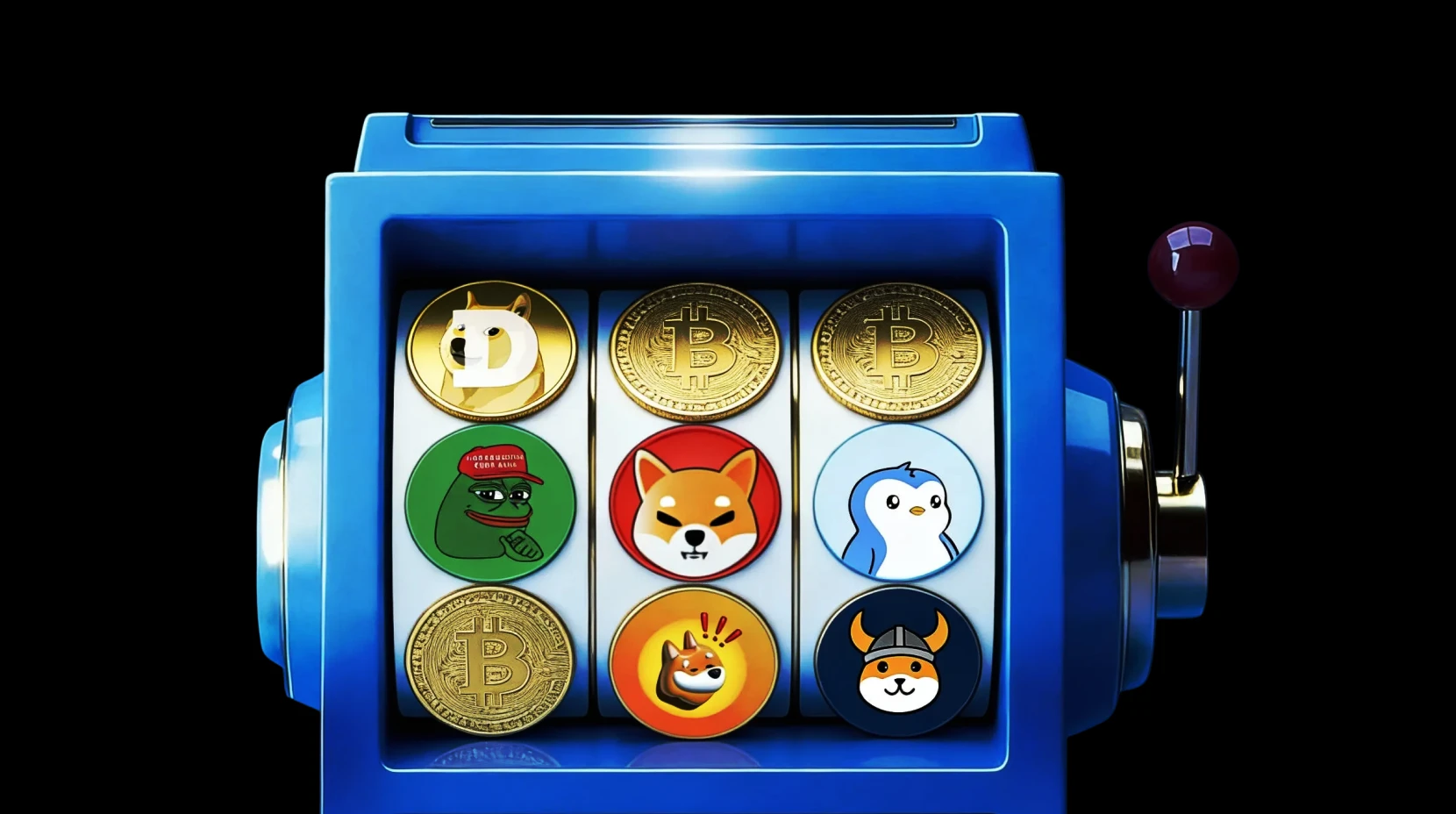
Meme coins have long been regarded as a market phenomenon characterized by high volatility and low barriers to entry. However, the dynamics behind them are not entirely random. This course systematically analyzes the operational mechanisms and risk boundaries of the meme coin market from three perspectives: emotional finance, on-chain behavior, and capital structure. The goal is to help learners develop a clearer framework for participating in the meme coin market.