
Futures
Access hundreds of perpetual contracts
TradFi
Gold
One platform for global traditional assets
Options
Hot
Trade European-style vanilla options
Unified Account
Maximize your capital efficiency
Demo Trading
Introduction to Futures Trading
Learn the basics of futures trading
Futures Events
Join events to earn rewards
Demo Trading
Use virtual funds to practice risk-free trading
Launch
CandyDrop
Collect candies to earn airdrops
Launchpool
Quick staking, earn potential new tokens
HODLer Airdrop
Hold GT and get massive airdrops for free
Launchpad
Be early to the next big token project
Alpha Points
Trade on-chain assets and earn airdrops
Futures Points
Earn futures points and claim airdrop rewards


More


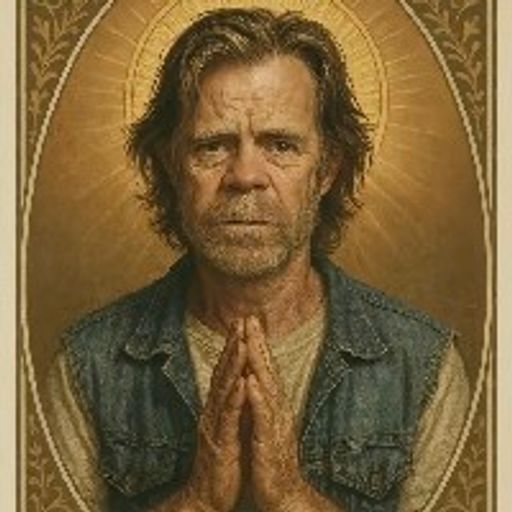


The Eight-Year Blueprint: How Takashi Kotegawa Built a $150M Fortune on $15,000 and Raw Discipline
When most people talk about million-dollar traders, they imagine lottery-ticket luck or inherited wealth. But Takashi Kotegawa’s story is different—and far more instructive. Starting with just $15,000 in the early 2000s, this Japanese trader systematically accumulated $150 million through a combination of obsessive technical analysis, ironclad emotional control, and an almost monastic dedication to his craft. His nickname, BNF (Buy N’ Forget), hints at his philosophy: the less ego in your trades, the better your results.
Starting From Absolute Zero: Takashi Kotegawa’s Foundation
In a Tokyo apartment during the early 2000s, a young man sat down with an inheritance of $13,000-$15,000 and made a decision that would reshape his life. Takashi Kotegawa had no finance degree, no Wall Street connections, no mentor, and no privileged background. What he had was time—lots of it—and an insatiable curiosity about how markets actually worked.
Most people would’ve been intimidated. Takashi Kotegawa wasn’t. He treated his seed capital as a serious challenge, not a windfall. For 15 hours daily, he drilled into candlestick patterns, company financials, and price charts. While his peers socialized, he was building something rarer than talent: expertise through sheer repetition.
The early years weren’t flashy. They were grinding. But they were also essential. By the mid-2000s, Kotegawa had already developed the pattern recognition skills that would define his career. The markets, he’d learned, weren’t random. They followed rhythms. And rhythms could be learned.
The Moment Everything Changed: 2005’s Market Chaos
History handed Takashi Kotegawa a test in 2005—not one he sought, but one he was perfectly prepared for. Japan’s financial markets erupted into chaos. First came the Livedoor scandal, a corporate fraud case that shattered investor confidence. Then came something stranger: the “Fat Finger” incident, where a Mizuho Securities trader made a catastrophic typo, selling 610,000 shares at 1 yen each instead of selling 1 share at 610,000 yen.
The market didn’t just dip. It panicked. Prices plummeted as confusion spread.
This is where most traders freeze or run. Takashi Kotegawa did neither. Because he’d spent years studying technical patterns and market psychology, he instantly recognized what others couldn’t: this wasn’t a collapse—it was a mispricing. Panic had driven prices below rational levels. And when prices fall below rational levels, there’s opportunity.
He bought aggressively. Within minutes, he’d netted approximately $17 million.
This wasn’t luck. It was preparation meeting crisis. The massive gain validated everything he’d been doing: technical analysis worked, emotional discipline worked, and staying calm while everyone panicked was worth fortunes.
The Three Pillars of Takashi Kotegawa’s Trading System
What exactly was Takashi Kotegawa doing differently? His approach wasn’t complex—it was precisely detailed.
First: Spot the Dislocated
Kotegawa ignored earnings reports and CEO statements. Instead, he hunted for stocks that had cratered due to fear, not fundamentals. When panic selling drove valuations below intrinsic worth, the alarm bell rang. He called these “oversold” conditions, and they represented his primary hunting ground.
Second: Read the Reversal Signals
After identifying an oversold stock, he didn’t guess when it would bounce. He used technical tools—RSI indicators, moving averages, support levels—to predict potential reversals. These weren’t hunches. They were patterns encoded in market data, waiting to be decoded by someone disciplined enough to see them.
Third: Execute with Ruthless Precision
When signals aligned, Takashi Kotegawa entered swiftly. If the trade went against him—no hesitation, no hope, no “it might come back.” He cut losses immediately. Winners he let run until the pattern broke. This wasn’t sentimental. It was mathematical.
His holding periods ranged from hours to a few days. Speed and discipline were inseparable in his system. The goal wasn’t to predict the future—it was to react faster and more systematically than the emotional majority.
The Secret Weapon: When Your Emotions Become Your Competitive Advantage
Most traders fail not because they lack knowledge, but because they lack emotional governance. Fear whispers to hold losers. Greed whispers to chase winners. Impatience whispers to overtrade. Ego whispers to prove doubters wrong. These whispers destroy accounts daily.
Takashi Kotegawa heard these whispers too. He just didn’t listen.
His principle was deceptively simple: “If you focus too much on money, you cannot be successful.” This wasn’t Buddhist philosophy—it was cold calculation. When you’re chasing money, you make emotional decisions. When you’re executing a system, you make logical ones.
He treated a well-managed loss as more valuable than a lucky win. Why? Because luck is temporary. Discipline compounds. A trader who systematically cuts 5% losses while capturing 15% wins will eventually overwhelm anyone chasing grand slams. Takashi Kotegawa understood this at a bone-deep level.
So he followed his system with near-religious consistency. Hot tips? Ignored. Financial news? Tuned out. Social pressure? Irrelevant. The only signal that mattered was the signal in the price action. Everything else was noise. Noise was profit’s deadliest enemy.
The Unglamorous Reality: How Takashi Kotegawa Actually Spent His Days
Despite possessing $150 million, Takashi Kotegawa’s daily life was almost monastic. He monitored 600-700 stocks continuously, managing 30-70 open positions simultaneously while constantly scanning for new opportunities. His workdays stretched from dawn to past midnight.
To sustain this without burnout, he stripped away distractions entirely. He ate instant noodles to save time. He skipped parties. He never bought sports cars or luxury watches or trophy apartments. His Tokyo penthouse was a calculated investment in portfolio diversity, not a display of wealth.
For Takashi Kotegawa, simplicity was an edge. Less overhead meant more capital for trading. Fewer distractions meant sharper focus. A boring life was an advantage in competitive markets.
The one notable exception came when he purchased a $100 million commercial building in Akihabara. But even this wasn’t about ostentation—it was portfolio diversification, a real estate hedge against equity concentration.
Beyond that single property, Takashi Kotegawa remained almost invisible. Most people have never heard his real name, knowing him only by his trading alias: BNF (Buy N’ Forget). This anonymity was intentional. He understood that silence and obscurity provided something money couldn’t buy: the ability to operate without followers, pressure, or the gravitational pull of fame.
Why Takashi Kotegawa’s 2000s Strategy Dominates Today’s Crypto World
A Japanese stock trader from two decades ago might seem irrelevant to modern crypto traders. The technology is newer. The pace is faster. The markets are different.
Except the fundamental rules haven’t changed—and that’s precisely what most modern traders get wrong.
Today’s crypto space is drowning in hype. Influencers peddle “secret formulas.” Communities pump tokens on social media. Traders make impulsive decisions based on narratives rather than data. They chase overnight riches and find overnight ruin instead.
Takashi Kotegawa’s playbook is the antidote:
Avoid the Noise: Crypto markets run 24/7 and produce endless commentary. BNF ignored daily news and social chatter. He filtered out everything except pure price and volume data. In an age of constant notifications, this filtration is superpowers.
Trust Data Over Stories: Narratives are seductive (“This token will revolutionize finance!”). Price action is honest. Takashi Kotegawa studied what markets were actually doing, not what they theoretically should do.
Discipline Beats Genius: Success in crypto trading isn’t about high IQ. It’s about consistent rule-following. BNF’s edge came from an extraordinary work ethic and emotional control, not innate brilliance.
Cut Losers Fast, Let Winners Breathe: Most amateur traders do the reverse—they cling to losers and sell winners too early. Takashi Kotegawa did the opposite: ruthless speed on losses, patience on winners. This single principle separates elite traders from the rest.
Silence is a Competitive Edge: Every post, every stream, every “secret” shared is attention diverted from markets. Takashi Kotegawa understood that the most successful traders are usually the quietest ones. Less talking meant more thinking.
Why Great Traders Like Takashi Kotegawa Are Built, Not Born
Takashi Kotegawa’s transformation from $15,000 to $150 million wasn’t destiny. It was the result of thousands of hours spent studying, thousands of trades executed with discipline, thousands of moments where he chose system over ego.
He didn’t inherit wealth. He didn’t attend an elite university. He didn’t have connections. What he had was willingness to work harder than his competitors, emotional control under pressure, and the humility to follow a system even when his instincts screamed otherwise.
If you want to trade with Takashi Kotegawa’s systematic precision, here’s what separates aspirants from achievers:
Takashi Kotegawa’s legacy isn’t measured in headlines or social media followers. It’s measured in quiet, consistent returns built on unshakeable discipline. That template remains the most powerful in trading today.